

Keeping kids active, entertained, and well-behaved at home can be a daily challenge. Whether they’re playing board games, learning games, or simple family activities, children sometimes break rules, argue, or behave in ways that disrupt the fun. That’s where fun and fair game punishments come in.
These aren’t harsh punishments or strict consequences. Instead, they’re light-hearted, growth-focused actions that teach kids responsibility, teamwork, and emotional control — all while keeping the positive spirit of play alive. At The Kids Point, we believe that discipline through fun can be far more effective than discipline through fear.
This guide will help parents create an environment where kids learn from mistakes without feeling discouraged, and where every game becomes a chance to grow.
Why Fun and Fair Punishments Work for Kids
Kids learn best through play. They’re more likely to remember actions, rules, and lessons when they feel emotionally safe. Fun and fair punishments:
Encourage Responsibility Without Fear
Instead of yelling or forcing time-outs, playful consequences make kids understand that mistakes have outcomes — but those outcomes don’t have to be stressful.
Strengthen Emotional Regulation
Kids often struggle with frustration or losing gracefully. Light penalties help them manage emotions while staying engaged in the game.
Keep the Family Bond Strong
When consequences remain friendly, there’s less conflict. Everyone enjoys the experience, even when the rules need to be enforced.
Promote Fairness and Consistency
Kids thrive when rules are predictable. Fair consequences set a clear structure and help maintain peace.
Qualities of a Good Game Punishment
Before we jump into examples, here’s what makes a game punishment truly effective and child-friendly:
Non-embarrassing: Avoid anything that humiliates the child or affects their self-esteem.
Quick and Lightweight: A game consequence should never take too long or derail the activity.
Related to the Game or Behavior: Consequences should gently reinforce the lesson — patience, honesty, sharing, etc.
Age-appropriate: A 5-year-old and a 12-year-old need very different kinds of consequences.
Sometimes Funny, Always Fair: Humor reduces tension and helps kids accept the result gracefully.
Fun and Fair Game Punishments for Kids at Home
Below is a long list of creative, parent-approved ideas. Mix and match depending on your child’s age, the type of game, and your family’s comfort level.
Light Physical Fun Punishments
These are perfect for energetic kids who need a playful way to release frustration or refocus.
Do a Silly Dance for 10 Seconds: Kids love watching each other dance, and it breaks the tension immediately.
Jump Like a Bunny Five Times: A simple, cheerful physical activity that makes losing less frustrating.
Walk Backward Around the Room Once: It feels funny and resets their mood.
Freeze Like a Statue for 15 Seconds: Self-control disguised as fun.
Roar Like a Dinosaur: Perfect for younger kids who love pretend play.
These mini physical tasks help kids move their bodies and shift their emotional state after disappointment or rule-breaking.
Creative and Imaginative Punishments
Kids enjoy anything that lets them use their creativity. These consequences feel more like play than punishment.
Draw a Funny Face on Paper: A quick drawing that makes everyone laugh.
Make Up a Silly Rhyme About the Game: Boosts language skills while adding humor.
Pretend to Be a Robot for One Round: Robotic movements lighten the mood and remind kids of the game’s purpose — fun!
Act Out Their Favorite Animal for 15 Seconds: Cute, imaginative, and very effective for younger kids.
Make a Creative Gesture Before Their Next Turn: A clap, a wiggle, or a superhero pose.
Social and Team-Building Punishments
These options reinforce positive behaviors like sharing, patience, and empathy.
Give a Compliment to Another Player: This teaches kindness and helps balance emotions.
Say One Thing You Like About the Game: Encourages gratitude and positive thinking.
Help Set Up the Next Round: A small responsibility that reinforces participation.
Let Another Player Choose Your Next Move (Once): Kids learn trust and collaboration.
Share a Quick Joke or Riddle: Builds a joyful atmosphere.
Game-Related Punishments
These are directly connected to game mechanics and work well for board games, card games, and strategy games.
Skip One Turn: A classic choice that teaches patience.
Swap a Card or Token with the Winner of the Round: A harmless penalty that changes the dynamic.
Start the Next Round with One Less Item: Great for memory or matching games.
Move Back One Space: Works perfectly for board games like Snakes & Ladders.
Pick a Mystery Task from a “Penalty Jar”: Fill a small jar with silly punishments written on paper.
Household Task Punishments (Quick & Easy)
Perfect for older kids who understand responsibility.
Put Away Two Toys: Simple and useful.
Bring Water for Everyone Playing: Encourages helpfulness.
Wipe the Table After the Game: A tiny chore that teaches accountability.
Organize a Small Shelf or Drawer for One Minute: Short and productive.
Fold Two Items of Laundry: A non-stressful, real-life responsibility.
These work well when parents want to turn behavior correction into productive action without creating resentment.
Learning-Friendly Punishments
Great for families who want to add educational value to game time.
Read One Short Fact Aloud: Pick from science, history, or geography cards.
Solve a Quick Math Problem: Try a simple multiplication or addition challenge.
Spell a Word Backward: A fun brain teaser.
Name Three Animals That Start with a Letter: Supports vocabulary and memory.
Identify One Safety Rule or Household Rule: Reinforces important life skills.
Funny and Playful Punishments
These are perfect when you want to keep the laughter alive during game time.
Talk in a Silly Voice for the Next Round: Kids love using character voices.
Wear a Funny Hat Until the Next Turn: Even a kitchen towel works!
Balance a Pillow on Your Head for 10 Seconds: A fun challenge that entertains everyone.
Make a Silly Face for 5 Seconds: Instant giggles guaranteed.
Pretend Your Hands Are Stuck Together: Safe, silly, and playful.
How to Use Game Punishments Effectively
Simply having a list of fun punishments isn’t enough — the success depends on how parents introduce and manage them.
Set Clear Rules Before Starting the Game
Explain the rules and punishments upfront so kids know what to expect. Predictability reduces tantrums.
Keep the Tone Playful, Not Strict
Your energy sets the mood. A warm, light tone helps the child accept consequences gracefully.
Let Kids Help Choose the Punishments
When kids participate in creating the rules, they take ownership and feel more invested in following them.
You can ask:
- “Which silly punishments should we add today?”
- “Should skipping a turn be one of the consequences?”
Match Punishments With Age Levels
For toddlers: Use silly, physical, and imaginative consequences.
For ages 6–9: Mix playful and lightly educational consequences.
For ages 10+: Introduce simple household tasks and responsibility-related consequences.
Don’t Overuse Consequences
If punishments happen too frequently, kids may lose interest. Focus on gentle reminders first.
Praise Good Behavior More Than Punish Mistakes
Positive reinforcement builds confidence and teaches long-term discipline.
Sample Punishment Chart for Home
You can create a simple home chart like this:
| Behavior | Consequence |
| Breaking a rule | Do a silly dance |
| Arguing with a sibling | Give a compliment |
| Cheating in the game | Skip one turn |
| Refusing to share | Help set up the next round |
| Getting too frustrated | Take a deep breath and roar like a dinosaur |
Charts make the process visible, consistent, and fair.
Benefits of Fun Game Punishments at Home
Here’s what families can gain from using enjoyable, structured consequences:
Less Conflict at Home: Kids respond better to fun, so fights and tears decrease.
Better Listening Skills: Children understand that actions have outcomes.
Stronger Family Bonding: Shared laughter brings parents and kids closer.
Improved Emotional Skills: Kids learn patience, gratitude, and sportsmanship naturally.
More Meaningful Play: Game time becomes a space for learning, self-awareness, and connection.
Examples of Punishment Systems You Can Try
Here are three easy systems parents can implement instantly:
The “Penalty Jar” System
Fill a jar with pieces of paper containing silly punishments. Each time a child breaks a rule, they draw one.
Great for ages 4–12.
The “Spin the Wheel” Punishment Board
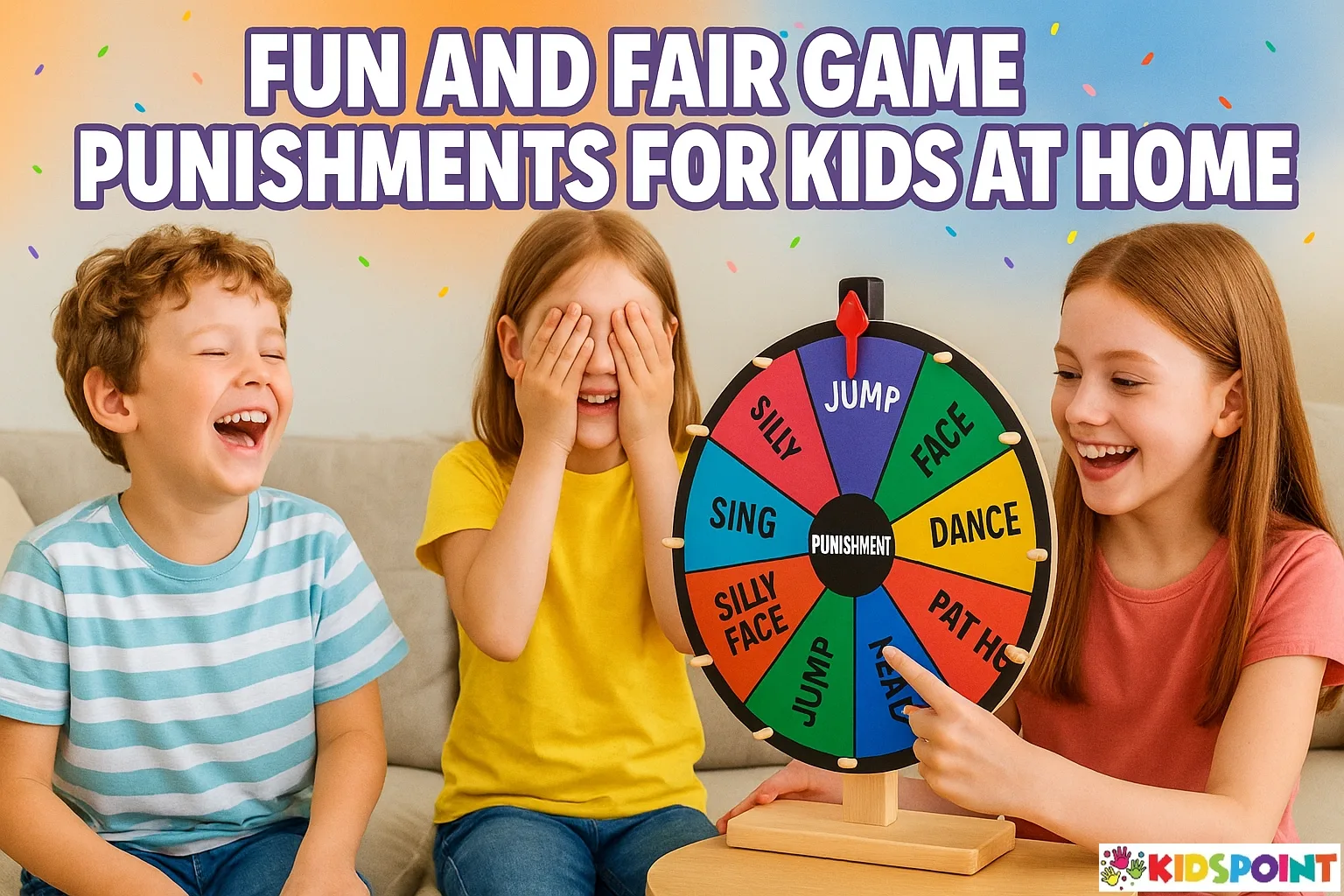
Create or print a wheel with segments like “Make a joke,” “Skip a turn,” or “Hop like a frog.” Kids love the excitement of the unknown.
The “Choice Between Two Consequences” Method
Offer two fun punishments and let the child decide. This technique reduces resistance and improves cooperation.
Tips for Keeping Game Time Positive
- Keep punishments short and harmless.
- Avoid punishments related to food (like skipping snacks).
- Never use embarrassment as a consequence.
- Monitor your child’s emotional state — take breaks if needed.
- Encourage laughter and teamwork throughout the game.
- Remind kids that the goal is fun, not perfection.
- Celebrate sportsmanship as much as winning.
Frequently Asked Questions
Are fun game punishments actually effective for discipline?
Yes. Light, playful consequences help kids learn responsibility without fear, and they maintain a positive learning environment.
What age group benefits most from game punishments?
Kids between 4 and 12 benefit the most, but punishments can be adapted for younger or older children.
How do I make sure punishments stay fair?
Set rules before starting the game, involve kids in choosing punishments, and stay consistent with each consequence.
Can these punishments replace traditional discipline?
They work well during games or family activities but shouldn’t replace essential household rules or safety boundaries.
What if my child gets upset after receiving a punishment?
Keep your tone warm, remind them it’s part of the game, and offer encouragement to help them rejoin with a positive mindset.
Final Thoughts
Fun and fair game punishments transform ordinary playtime into a balanced mix of enjoyment, learning, and emotional growth. Instead of using harsh discipline or tension-filled time-outs, parents can guide kids through positive, joyful consequences that maintain harmony and structure at home.
At The Kids Point, we believe that when families use playful discipline, kids learn more effectively and feel more supported. By incorporating silly tasks, quick responsibilities, and imaginative challenges, you’re not just correcting behavior — you’re building confidence, strengthening communication, and creating memories your child will cherish.
With the right approach, every game becomes a learning journey. And every consequence becomes another chance to grow.