

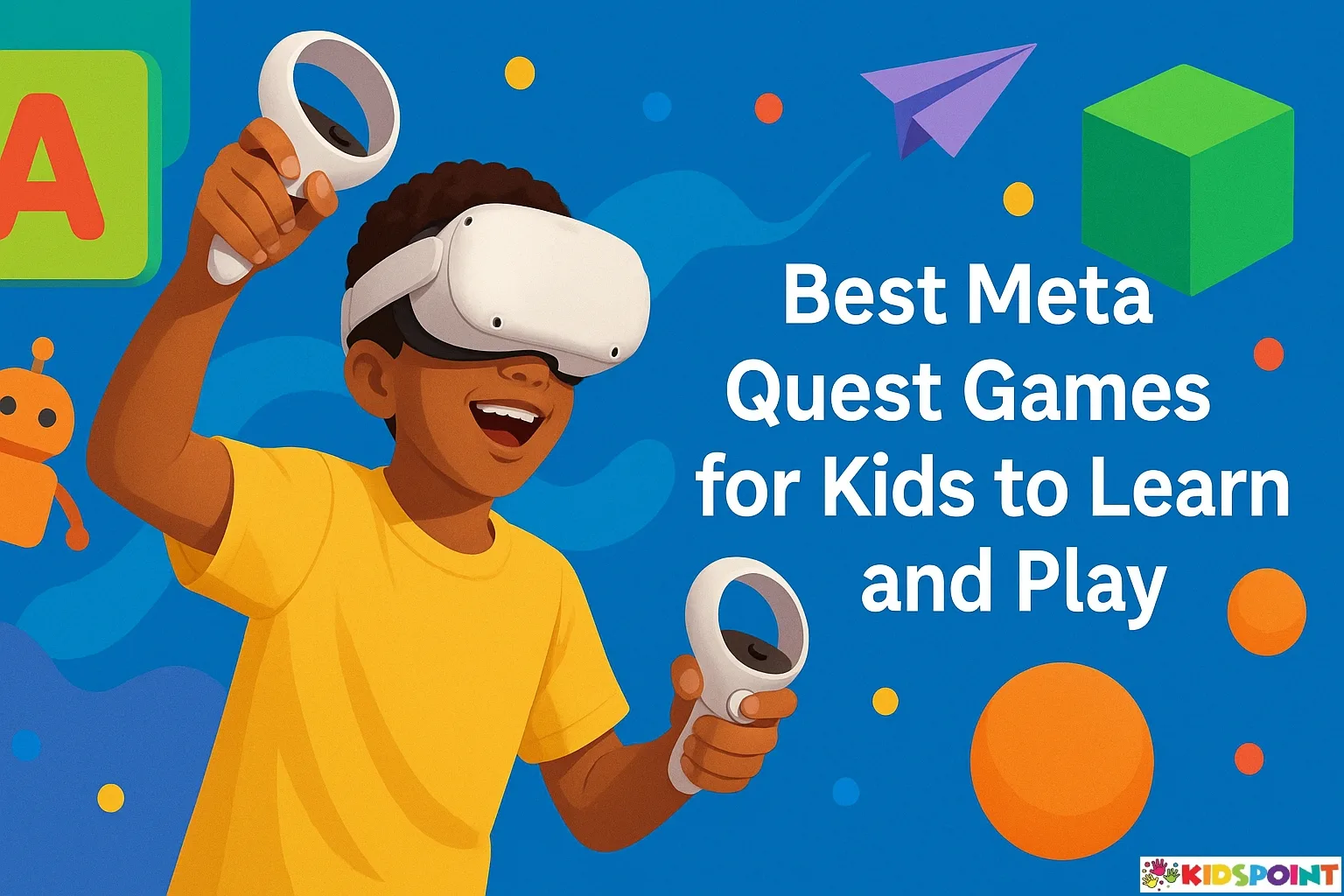
Virtual reality has opened a brand-new world for children—one where learning feels like play, and healthy play builds real-life skills. The Meta Quest headset is becoming a favorite among families because of its fun, interactive, and educational experiences. Kids can explore the solar system, solve puzzles, create art, practice movement, and even learn teamwork—all from the safety of home.
If you are a parent or educator looking for the best Meta Quest games for kids that are safe, creative, and development-focused, The Kids Point brings you a complete guide. This article explores top VR games suitable for young players, with a focus on learning, fun, physical activity, friendliness, and age-appropriate design.
Why Choose Meta Quest Games for Kids?
The Meta Quest headset stands out because it strikes a balance between entertainment and learning. Here are a few reasons families love it:
Immersive Learning
Kids often learn best through hands-on experiences. VR makes subjects like science, art, or math feel realistic and exciting.
Safe, Controlled Environment
Parents can monitor what their children play and set boundaries using Meta’s built-in parental controls.
Improved Motor Skills
Many VR games encourage movement—jumping, balancing, or using hands—which boosts coordination.
Creativity and Critical Thinking
Puzzle-solving, designing, and storytelling games push kids to think outside the box.
Encourages Exercise
Active games help keep children moving, especially useful for indoor days.
Now, let’s explore the best Meta Quest games for kids to learn and play.
Wander – Explore the World Without Leaving Home
If your child loves geography, maps, or simply exploring, Wander is one of the most magical apps available. It uses Google Street View, transforming real-world places into immersive VR scenes.
Why Kids Love It:
- They can “visit” countries, landmarks, oceans, and forests.
- They learn about cultures, geography, and famous sites.
- Perfect for school projects or curious minds.
Learning Benefits:
- Geography knowledge
- Global awareness
- Cultural appreciation
How It Helps Kids:
Children become more curious about the world and develop a sense of exploration—a skill that encourages lifelong learning.
Mission: ISS – Learn Space Science the Fun Way
NASA helped create Mission: ISS, making it one of the most authentic educational VR experiences. Kids can float around the International Space Station and complete missions astronauts actually perform.
Why Kids Love It:
- Zero-gravity movement feels exciting.
- Realistic space environment.
- Interactive missions and tools.
Learning Benefits:
- Space science
- Engineering basics
- Problem-solving
Tip: Use this as a supplement if your child loves astronomy—it pairs beautifully with school lessons.
Ocean Rift – A Safe Dive into the Underwater World
Kids can swim with dolphins, turtles, and even dinosaurs in Ocean Rift, an underwater safari experience.
Why Kids Love It:
- Friendly visuals and calming music.
- They can “walk” underwater and explore at their own pace.
- Fun encounters with gentle sea creatures.
Learning Benefits:
- Marine biology
- Environmental awareness
- Observational skills
This is ideal for kids who enjoy nature documentaries and want to see sea life up close.
National Geographic Explore VR – Adventure + Education
This game takes kids on incredible adventures—kayaking in Antarctica, climbing mountains, or exploring ancient worlds.
Why Kids Love It:
- Realistic graphics.
- Thrilling challenges without real danger.
- Feels like being inside a documentary.
Learning Benefits:
- Nature science
- History
- Exploration
Kids learn while feeling like true explorers.
Fruit Ninja VR – Active, Fast, and Great for Reflexes
While Fruit Ninja isn’t purely “educational,” it’s fantastic for physical development and coordination.
Why Kids Love It
- Fast-paced slicing action.
- Bright fruits and fun sounds.
- Easy to learn.
Learning Benefits
- Hand-eye coordination
- Fast decision-making
- Focus and attention
It’s also a great way to burn energy indoors.
Beat Saber – Rhythm, Music, and Movement
Beat Saber is one of the most popular VR games ever, and kids absolutely love it. It mixes music, movement, and rhythm in an exciting way.
Why Kids Love It:
- They get to “slice” blocks in time with music.
- Lots of energetic movement.
- Levels range from easy to expert.
Learning Benefits:
- Rhythm and musical awareness
- Physical activity
- Concentration
Parents love that this is both exercise and entertainment.
Painting VR – A Digital Art Studio for Young Creators
For kids who love drawing or painting, Painting VR gives them a studio full of colors, brushes, and canvases.
Why Kids Love It:
- No mess—just pure creativity.
- Realistic paint textures and tools.
- Ability to experiment without limits.
Learning Benefits:
- Art skills
- Creativity
- Emotional expression
This is a wonderful tool to support self-expression.
Puzzling Places – Relaxing 3D Puzzle Solving
This game turns real places and objects into beautiful 3D puzzles. Kids assemble 3D models piece by piece.
Why Kids Love It:
- Satisfying puzzle-solving experience.
- Beautiful visuals.
- Calm and relaxing challenges.
Learning Benefits:
- Spatial awareness
- Logical reasoning
- Patience and focus
A perfect choice for children who enjoy calm, thoughtful activities.
Nature Treks VR – A Relaxing Escape Into Nature
This is more of a therapeutic game than an educational one, but it’s great for kids who need calming environments.
Why Kids Love It:
- Peaceful worlds filled with animals.
- They can walk, explore, and relax.
- Helps reduce stress.
Learning Benefits:
- Emotional regulation
- Mindfulness
- Observation skills
Teachers and parents often use it for helping kids unwind.
Job Simulator – Hilarious Learning Through Pretend Play
Job Simulator allows kids to try pretend jobs like chef, office worker, mechanic, or shopkeeper. It’s silly, humorous, and imaginative.
Why Kids Love It:
- Everything is interactive.
- Funny exaggerations of real jobs.
- Great for pretend play lovers.
Learning Benefits:
- Role-play understanding
- Task sequencing
- Creativity
Children learn how everyday tasks work in a fun way.
Vacation Simulator – Fun Activities and Exploration
A kid-friendly follow-up to Job Simulator, this game lets players “vacation” on virtual beaches, forests, and snowy mountains.
Why Kids Love It:
- Activities like cooking, building, swimming, and exploring.
- Vibrant colors and friendly characters.
- Lots of mini-games.
Learning Benefits:
- Creativity
- Basic motor skills
- Exploration
A wholesome and humorous VR world for kids.
Math World VR – Learning Math Through Play
This newer VR title has become popular among parents who want fun learning experiences.
Why Kids Love It:
- They solve challenges to unlock levels.
- Offers math concepts through games.
- Friendly characters guide them.
Learning Benefits:
- Counting and number sense
- Basic operations
- Problem solving
It’s a powerful blend of learning and playtime.
How to Choose Safe Meta Quest Games for Kids
Parents should keep a few guidelines in mind:
Check Age Ratings: Most VR games have ESRB ratings—stick to E for Everyone or E10+.
Start With Short Play Sessions: Kids should begin with 10–15 minutes to avoid motion discomfort.
Enable Guardian and Parental Controls: This prevents unsafe apps from being downloaded.
Watch for Physical Space: Ensure enough room to move safely.
Choose Games With Educational Value: Look for titles that build real-world or cognitive skills.
We recommend balancing action games with creativity, learning, and exploration titles.
Benefits of VR Games for Children
Meta Quest games can help your child grow in surprising ways:
Educational Growth: VR makes it easier to remember and understand school subjects.
Physical Development: Games require balance, arm movement, and reaction time.
Social Skills: Games with teamwork or co-play features help kids practice communication.
Emotional Wellness: Calming VR environments can help children relax and build emotional self-control.
Creativity Boost: Art, building, and exploration games open up imagination.
VR is a tool—not a babysitter. But when used properly, it becomes a powerful partner in learning.
Frequently Asked Questions
What age is appropriate for Meta Quest games?
Most manufacturers recommend ages 10–12 and above, depending on maturity and comfort.
Are Meta Quest games safe for kids?
Yes—when used with parental controls, short sessions, and age-appropriate content.
Can VR help with school subjects?
Absolutely. Many Meta Quest games improve science, geography, math, and creativity.
Is VR too intense for young children?
Some kids may need short sessions initially, but many adapt quickly with gentle guidance.
Do Meta Quest games require a lot of space?
A small open room is enough for most experiences.
Final Thoughts
Meta Quest games can transform how kids learn, explore, and create. The key is choosing games that are safe, joyful, and educational. From exploring oceans to solving puzzles, traveling the world, building art, or learning math, VR offers endless opportunities for growth.
The Kids Point encourages parents and teachers to use VR as a smart supplement—not a replacement—for real-world learning. With the right balance, Meta Quest becomes a gateway to curiosity, creativity, and confidence for kids everywhere.
If you want more learning-game guides or kid-friendly tech recommendations, feel free to ask!