

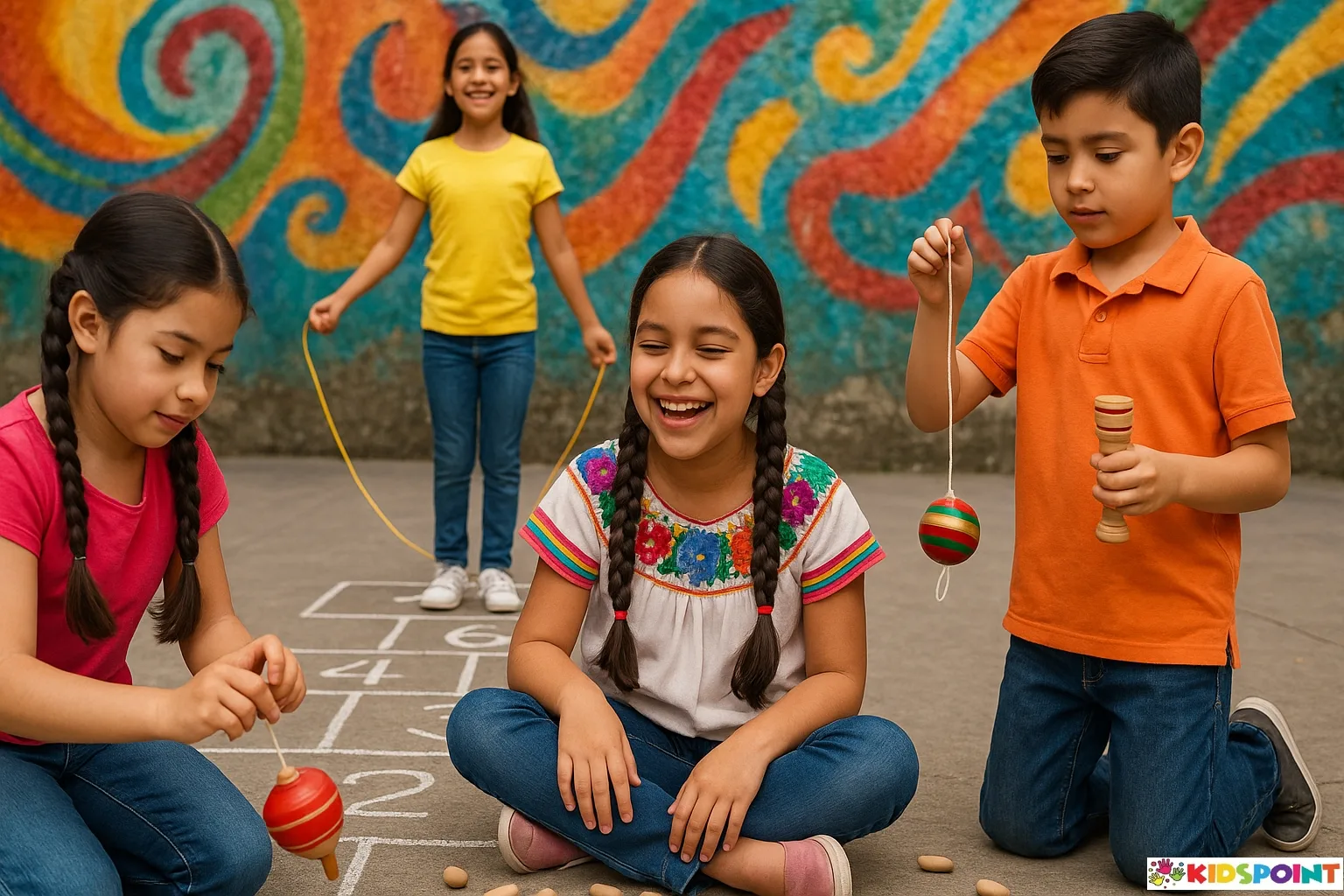
Mexico is a country celebrated for its delicious food, lively festivals, colorful art, and rich history. But beyond mariachi music, papel picado decorations, and Día de los Muertos altars, there is another cultural treasure that continues to bring people together—traditional Mexican games.
These games have been enjoyed for generations, passed down through families, schools, and communities. Many existed long before modern toys, video games, or digital entertainment. They were born from creativity, community spirit, and simple materials. Today, they remain an important part of childhood memories, family gatherings, and cultural identity.
At The Kids Point, we believe learning about global traditions helps children strengthen cultural awareness, curiosity, and respect. So, let’s take a joyful journey into Mexico and explore its most beloved traditional games—how they are played, where they come from, and why they remain important today.
Why Traditional Games Still Matter in Mexico
Traditional games are more than just fun—they are living history.
They help children:
- Develop motor, social, and problem-solving skills
- Connect with family members and share memories
- Appreciate Mexican culture, geography, music, and traditions
- Build friendships through laughter and teamwork
- Practice patience, strategy, and creativity
Most Mexican games require little or no equipment, making them accessible to everyone regardless of age or income. Many are played in schoolyards, homes, parks, rural villages, and city plazas—keeping communities connected.
A Journey Through Mexico’s Top Traditional Games
Below are some of the most iconic, meaningful, and widely loved traditional games in Mexico.
La Lotería — Mexico’s Cultural Bingo
La Lotería is one of the most recognized and cherished Mexican games. Similar to Bingo, players receive illustrated game cards instead of number grids. A caller draws cards from a deck and announces them, sometimes poetically or humorously.
Each card represents unique Mexican symbols—such as La Luna (the moon), El Gallo (the rooster), La Dama (the lady), or El Catrín (the gentleman).
Why Families Love It
- Simple rules for all ages
- Helps children with memory, listening, vocabulary, and cultural learning
- Encourages storytelling and imagination
La Lotería is more than a game—it’s art, culture, and identity preserved through friendly competition.
La Pirinola — “Take One, Put One, Take All!”
La Pirinola is a spinning top with six sides, often made of wood. Each side displays a Spanish instruction—such as:
- Toma Uno (Take one)
- Pon Dos (Put two)
- Todos Ponen (Everyone puts in)
- Toma Todo (Take everything)
Players contribute beans, candies, coins, or tokens, then spin to see what happens.
What Kids Learn
- Taking turns and sharing
- Counting and basic math
- Accepting luck and unpredictability
- Sportsmanship
This game brings excitement, suspense, and giggles—especially when someone lands on Toma Todo.
El Trompo — The Spinning Top Challenge
The trompo, a wooden spinning top with a pointed metal tip, has entertained Mexican children for hundreds of years. Players wind a string around the top, throw it skillfully, and watch it spin.
Some children compete to:
- spin the longest
- spin inside a circle
- knock over another top
- perform tricks
Why It’s Culturally Important
The trompo teaches patience, hand-eye coordination, discipline, and perseverance. It is often handcrafted, connecting children to artisans and local craftsmanship.
El Balero — A Game of Timing and Focus
The balero is a wooden cup attached to a string with a ball. The goal? Swing the ball and land it inside the cup—or vice-versa depending on the version.
It may sound simple, but mastering it takes practice and determination.
Benefits for Kids
- Improves concentration
- Builds persistence
- Encourages fine motor skill development
Balero competitions are common during Mexican school events and community festivals.
Canicas — The Classic Marble Game
Canicas, or marbles, is a playground favorite found across Mexico. Players draw a circle on the ground and try to knock opponents’ marbles out while keeping their own inside.
Some children play casually, while others collect marbles like treasures—glass, patterned, shiny, or colorful.
What Makes It Special
Canicas teaches strategy, geometry, and gentle competition. It also encourages kids to protect, trade, and admire small possessions.
Rayuela — Mexico’s Hopscotch
Rayuela resembles the hopscotch children play in many countries. Players draw numbered squares with chalk or stones, toss a marker, and hop through without losing balance.
Why It Endures
- Encourages outdoor play
- Strengthens muscles and balance
- Requires almost no equipment
- Can be played anywhere—streets, schools, sidewalks, parks
Rayuela encourages creativity, movement, and laughter—the essentials of childhood.
La Víbora de la Mar — The Snake of the Sea
Often played at weddings, birthdays, or school gatherings, this energetic group game involves two children forming an arch while others hold hands and run underneath to the rhythm of a traditional song.
As the song ends, someone gets “caught” under the arch—leading to surprises, excitement, and giggling chaos.
Why Kids Love It
- Encourages teamwork
- Includes everyone
- Builds community and coordination
This game symbolizes unity, resilience, and celebration.
Escondidas — Mexico’s Hide and Seek
Escondidas is a familiar global game—Hide and Seek—but in Mexico, it often includes playful songs, counting rhymes, and dramatic reveals.
Skills It Builds
- Problem-solving
- Spatial awareness
- Imagination
- Social bonding
It reminds children that the best games often require no toys—only curiosity and creativity.
Toma Todo — A Festive Spinning Game
Toma Todo is played similarly to La Pirinola, but often with a larger group and higher stakes. It is popular during holidays like Christmas, Las Posadas, or family reunions.
Players may use beans, coins, candies, or tokens, creating excitement, suspense, and joyful celebration.
Mexican Jump Rope — Rhythm, Agility, and Teamwork
Children hold a rope while another jumps to a rhythm—often accompanied by traditional songs or clapping. As the jumper advances, movements become more challenging.
Why It’s Beneficial
- Improves cardio fitness
- Strengthens coordination
- Encourages peer support
- Boosts memory when paired with songs
This game is simple, energetic, and endlessly entertaining.
Cultural Lessons Hidden Within Traditional Mexican Games
Traditional games teach children:
History
Many originated during Indigenous civilizations such as the Maya, Aztec, and Purépecha.
Language
Spanish vocabulary, rhymes, counting, and verbal expression are practiced naturally.
Community Values
Mexicans treasure togetherness, sharing, humor, and inclusion.
Creativity
Games often use recycled, handmade, or natural materials—sticks, rocks, string, wood, or beans.
Respect for Tradition
Children understand that culture is experienced—not just studied.
We encourage parents, teachers, and caregivers to introduce kids to global traditions like these. Such games help children appreciate cultural diversity while staying active, imaginative, and socially connected.
How Parents and Educators Can Use These Games Today
Traditional Mexican games can enrich:
- Family game nights
- Cultural education programs
- Classroom activities
- Summer camps and playgrounds
- Language-learning lessons
- Heritage celebrations
Teachers may include them in geography, music, history, art, or physical education classes. Parents may use them to limit screen time while strengthening family bonds.
These games are also inclusive—children of different ages, backgrounds, and abilities can enjoy them together.
Why Traditional Mexican Games Should Be Preserved
In today’s fast-paced world of smartphones and digital entertainment, traditional games risk fading away. But they deserve protection because they:
- Carry generations of memories
- Strengthen cultural identity
- Encourage healthy play
- Promote human connection
- Celebrate imagination over technology
- Honor ancestors, storytelling, and artistry
Preserving them ensures that future generations continue to learn, laugh, and play proudly.
FAQs about traditional games in Mexico
What are traditional Mexican games?
They are cultural childhood games passed down through generations, often played in homes, schools, and communities.
Why are games like La Lotería so popular?
Because they combine fun, art, family bonding, and Mexican cultural symbols.
Do traditional Mexican games require special equipment?
Most don’t—many use simple items like marbles, chalk, beans, or wooden toys.
Are these games still played today?
Yes, families, schools, and festivals across Mexico continue to enjoy them.
Why does The Kids Point promote traditional games?
Because they support learning, cultural awareness, creativity, and healthy social play.
Final Thoughts
Traditional Mexican games are joyful, meaningful, and deeply woven into Mexico’s cultural fabric. They teach important lessons—about friendship, resilience, skill, cooperation, and heritage—while offering simple, timeless fun.
Whether you’re a teacher, student, parent, traveler, or curious learner, exploring these games is a refreshing reminder that culture grows through play.At The Kids Point, we celebrate learning through discovery, cultural appreciation, and engaging childhood experiences. And traditional Mexican games are a perfect example of how play helps children explore the world with wonder, connection, and joy.