

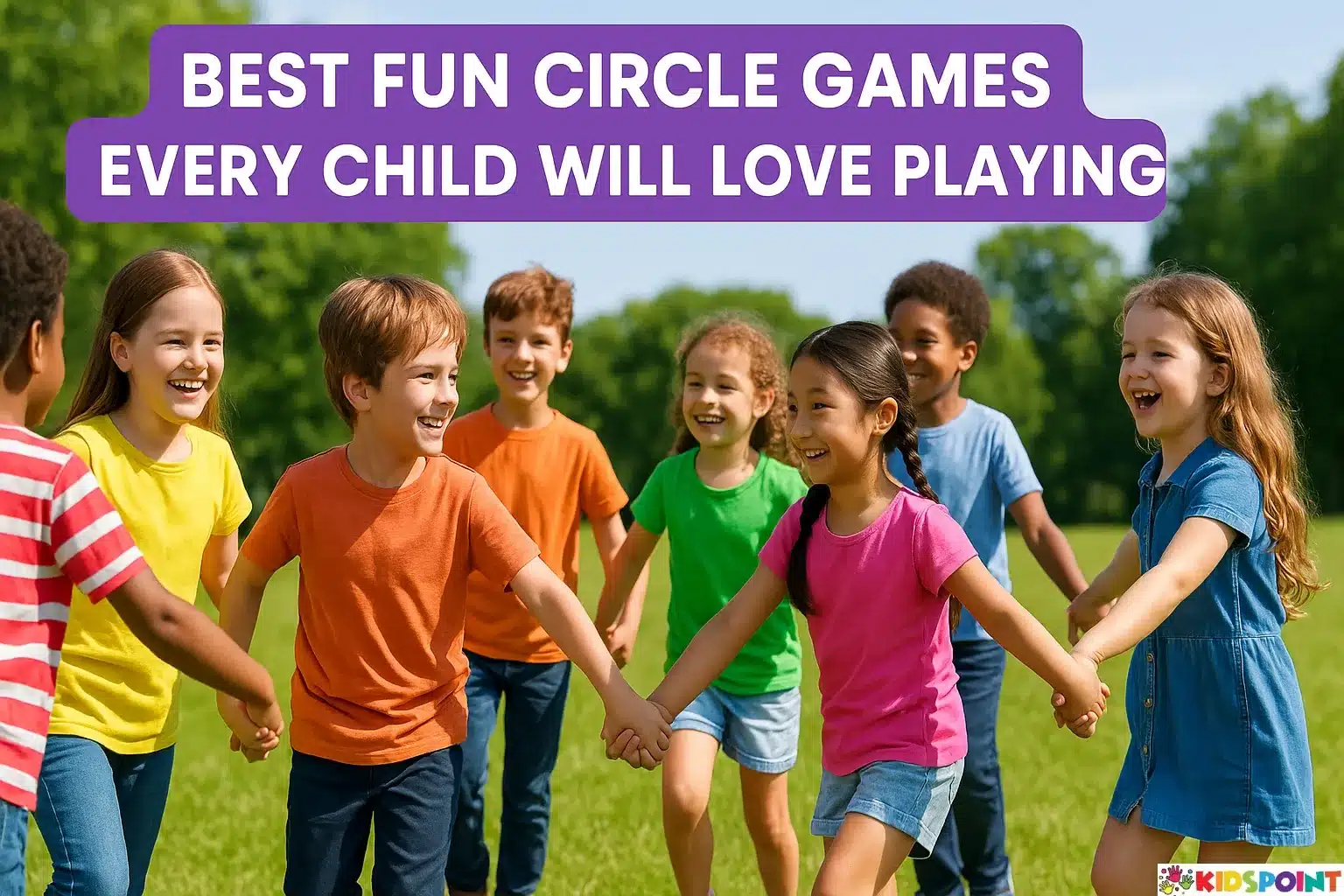
Circle games are one of the most timeless and joyful ways to bring children together, encourage teamwork, and create unforgettable moments of laughter. Whether in classrooms, playgrounds, birthday parties, summer camps, or family gatherings, these games help kids learn cooperation, communication, and social skills—while having tons of fun.
At The Kids Point, we value creative play that supports children’s growth. That’s why we’ve put together this comprehensive guide to the best fun circle games every child will love playing, along with tips to make them engaging, safe, and suitable for different age groups.
Why Circle Games Are Important for Kids
Circle games aren’t just for entertainment—they play a key role in child development.
Here’s why they matter:
They Encourage Positive Social Interaction
Because kids face each other in a circle, it allows direct communication, eye contact, and cooperative participation. No one is left out, making the games inclusive.
Circle Games Support Physical Development
Most circle activities involve mild movement—jumping, clapping, tapping, or running—helping children develop motor skills, coordination, and balance.
They Teach Cooperation and Fair Play
Working as a group helps children learn patience, waiting for their turn, and following rules—important life skills.
They Boost Mental Skills
Circle games often include memory tasks, listening exercises, pattern recognition, and quick decision-making.
They Create Fun, Shared Experiences
Children remember fun group games for years. Circle games foster belonging and joy, helping kids feel connected.
Best Fun Circle Games Every Child Will Love Playing
Below are some of the most enjoyable and kid-approved circle games. You can use them in classrooms, camps, or family events.
Duck, Duck, Goose
Age Group: 3–10 years
Skills Learned: Coordination, quick thinking, teamwork
This classic game never gets old. Children sit in a circle while one child walks around tapping heads, saying “duck, duck…” until they finally choose a “goose.” The chosen child must chase the picker around the circle and try to tag them before they take the open seat.
Why Kids Love It: It’s fast, funny, and full of energy. Kids love the anticipation of being picked as the “goose.”
Tip: Play on a soft surface so kids can sit comfortably and run safely.
Pass the Clap
Age Group: 4–12 years
Skills Learned: Rhythm, listening, focus
Children stand or sit in a circle. One person starts by clapping once, and the clap is passed around the circle as each child repeats it. You can speed it up as kids get better.
Why Kids Love It: It becomes challenging and hilarious as the clap gets faster.
Variation: Use different sounds like snaps, stomps, or silly noises.
Telephone (Whisper Game)
Age Group: 5–12 years
Skills Learned: Listening, memory, communication
Kids sit in a circle. One child whispers a sentence to the next, who repeats it, and so on. The last child says the final message aloud—usually a funny, mixed-up version of the original.
Why Kids Love It: The end result is always surprising and silly.
Tip: Start with kid-friendly silly sentences like “Purple penguins like pizza parties.”
Hot Potato
Age Group: 4–12 years
Skills Learned: Reaction time, coordination
Kids pass a soft ball or beanbag around the circle as music plays. When the music stops, the child holding the “potato” is out or performs a funny challenge.
Why Kids Love It: The suspense of the music stopping keeps everyone excited.
Variation: Instead of removing kids, give a funny dare (hop like a frog, tell a joke, spin around).
The Wind Blows For…
Age Group: 6–12 years
Skills Learned: Social awareness, observation
A child stands in the middle and says, “The wind blows for anyone who… loves ice cream!” Anyone who matches must switch places quickly. One child will not find a seat and becomes the new caller.
Why Kids Love It: It’s fast and helps kids learn about each other.
Circle Tag
Age Group: 5–12 years
Skills Learned: Speed, agility, teamwork
Two players—one “tagger” and one “runner”—walk outside the circle, while the rest of the children sit or stand holding hands to form a boundary. The runner tries to avoid being tagged by ducking into empty spaces in the circle.
Why Kids Love It: It’s thrilling and full of action.
Rhythm Detective
Age Group: 6–12 years
Skills Learned: Observation, rhythm, problem-solving
One child leaves the circle while another becomes the “rhythm leader.” The leader starts a pattern—clapping, snapping, tapping—and everyone follows. The detective returns to guess who the leader is.
Why Kids Love It: Kids enjoy the mystery and sneakiness.
Button, Button, Who’s Got the Button?
Age Group: 4–8 years
Skills Learned: Guessing, attention to detail
Children hold their hands in fists, forming a circle. One child secretly drops a “button” into someone’s hand. Everyone pretends to receive it, and the guesser must figure out who has the real button.
Why Kids Love It: Kids love bluffing and trying to trick their friends.
Musical Circles
Age Group: 4–12 years
Skills Learned: Coordination, listening
Similar to musical chairs—but instead of chairs, kids walk around floor markers (like paper plates). When the music stops, each child stands on a marker. Remove one marker each round.
Why Kids Love It: Safer than chairs and more movement-friendly.
Action Syllables
Age Group: 6–12 years
Skills Learned: Listening, speech awareness, memory
Each child says their name with an action—for example, “Lily” with a clap and a jump. The next child copies Lily’s action and adds their own. By the end, the group performs a full chain of actions.
Why Kids Love It: It gets silly quickly and kids feel proud when others repeat their actions.
Giants, Wizards, Elves
Age Group: 6–12 years
Skills Learned: Strategy, teamwork, quick thinking
This is a circle version of Rock, Paper, Scissors. Kids choose to be either a Giant, Wizard, or Elf. Each character beats another:
- Giants beat Elves
- Elves beat Wizards
- Wizards beat Giants
Teams act out their chosen character, and the winners chase the others to tag them.
Why Kids Love It: It mixes imagination, movement, and friendly competition.
Fruit Salad Mix-Up
Age Group: 5–10 years
Skills Learned: Quick movement, listening
Each child is assigned a fruit name. When the leader calls a fruit, kids with that fruit switch places. When the leader says “Fruit Salad,” everyone switches at once!
Why Kids Love It: Kids love the chaos and fun of running and switching together.
The Name Game
Age Group: 4–10 years
Skills Learned: Memory, social bonding
Children say their name along with something that starts with the same letter (“Mia Monkey”). The next child repeats all previous names and adds their own.
Why Kids Love It: The longer the game goes, the funnier it becomes.
Mirror Movement
Age Group: 3–8 years
Skills Learned: Focus, creativity
Two children face each other in the middle of the circle. One does slow actions while the other mirrors them, like a reflection.
Why Kids Love It: It feels magical and helps kids practice mindfulness.
Freeze Dance Circle
Age Group: 3–10 years
Skills Learned: Balance, rhythm
Children dance around the circle to music. When the music stops, they must freeze. Anyone who moves is out or does a funny challenge.
Why Kids Love It: Kids enjoy silly dance moves and dramatic freeze moments.
How to Make Any Circle Game More Fun
Keep Rules Age-Appropriate: Younger kids need simple rules; older kids enjoy more complex variations.
Add Music or Props: Kids respond well to colorful balls, rhythm sticks, scarves, or music.
Keep Everyone Engaged: Avoid eliminating too many kids early on. Instead, add fun tasks.
Celebrate Teamwork: Encourage cheering, clapping, or positive comments.
Create a Safe Space: Ensure enough room, watch for slippery surfaces, and avoid pushing.
Tip: Use circle games as brain breaks during school lessons or as energizers during events—they help kids reset and refocus.
Choosing the Right Circle Game for Different Age Groups
Ages 3–5
- Duck, Duck, Goose
- Freeze Dance
- Pass the Clap
- Mirror Movement
Focus on simple actions and slow-paced games.
Ages 6–8
- Hot Potato
- Button, Button
- Fruit Salad
- Action Syllables
Kids in this age group enjoy imagination and light competition.
Ages 9–12
- Giants, Wizards, Elves
- Rhythm Detective
- Circle Tag
- Telephone
Older kids love strategy and interactive challenges.
Benefits of Playing Circle Games at School and Home
Better Classroom Behavior: Circle games help kids practice rules and cooperation, making transitions smoother.
Emotional Development: Kids learn confidence, patience, and empathy.
Strengthened Group Bonds: Children feel more connected after playing interactive games.
Fun for Parties: Birthday celebrations become more lively and inclusive.
Encourages Outdoor Play: Most circle games involve movement, helping reduce screen time.
Tips for Teachers and Parents from The Kids Point
- Schedule short circle games between lessons to boost focus
- Let children suggest their own variations
- Keep the atmosphere positive—no teasing or pressure
- Use circle games to welcome new students or group members
- End with a calming game like Mirror Movement to wind down
FAQs About Fun Circle Games
What are circle games?
Circle games are group activities where children sit or stand in a circle and participate together in fun, interactive play.
Why are circle games good for kids?
They help children develop social skills, coordination, listening skills, and teamwork while having fun.
Can circle games be played indoors?
Yes! Most circle games can be played indoors as long as there is enough space and a safe, open area.
What age group enjoys circle games most?
Circle games are great for ages 3 to 12, with different games suited for different ages.
Do circle games require special equipment?
Most circle games need little to no equipment—often just music, a ball, or simple props.
Final Thoughts
Circle games are more than just fun—they are powerful tools for learning, bonding, and creativity. Kids of all ages enjoy the excitement of sitting or standing together in a circle and engaging in activities that make them laugh, think, move, and work cooperatively.
At The Kids Point, we believe that play is one of the best teachers. These circle games offer opportunities to build skills while creating joyful childhood memories. Whether you’re a parent, teacher, or group leader, you’ll find that circle games bring children together in ways that are meaningful and fun.