

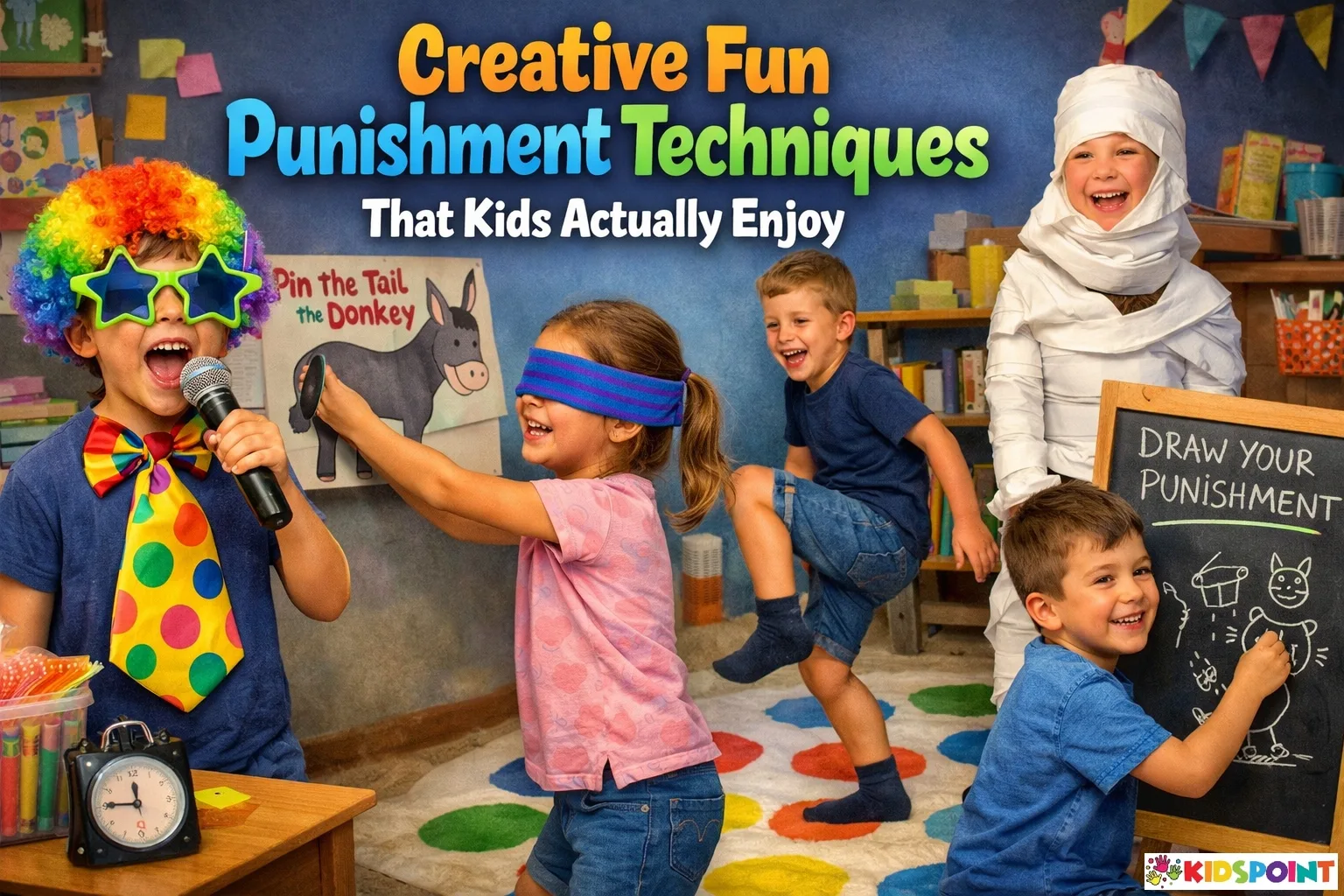
Discipline doesn’t have to be about fear, yelling, or long faces. At The Kids Point, we believe that effective behavior management can be positive, playful, and even enjoyable for children. “Fun punishment” may sound like an odd phrase, but it simply means consequences that correct behavior while helping kids learn responsibility, empathy, and self-control—without damaging their confidence or happiness.
In this detailed guide, you’ll discover how to turn discipline into a learning adventure with creative, age-appropriate, and child-friendly techniques that kids actually enjoy.
Why Traditional Punishments Often Fail
Many parents and teachers still rely on old-school discipline methods like shouting, spanking, long time-outs, or taking away everything a child loves. These tactics might stop the behavior temporarily, but they often:
- Create fear rather than understanding
- Damage trust between adults and children
- Encourage lying or sneaky behavior
- Fail to teach what to do instead
Children learn best when discipline is constructive, not destructive.
What Is Fun Punishment?
Fun punishment is not about humiliating kids or making them the center of a joke. It’s about creating natural, logical, and playful consequences that:
- Correct the behavior
- Teach life skills
- Keep the child emotionally safe
- Strengthen the adult-child relationship
In short, it’s discipline with dignity.
Core Principles of Fun Punishment
Before jumping into techniques, understand these guiding rules:
Stay Calm and Kind
Never discipline in anger. Your calm tone sets the emotional temperature.
Make It Educational
Every consequence should teach a skill—patience, responsibility, or empathy.
Keep It Short
Long punishments feel overwhelming and lose their purpose.
Be Age-Appropriate
What works for a 5-year-old won’t work for a 12-year-old.
Be Consistent
Consistency builds trust and predictable boundaries.
Creative Fun Punishment Techniques by Age Group
For Toddlers (Ages 2–4)
At this stage, children don’t misbehave on purpose—they explore the world.
The Clean-Up Parade
If toys are thrown, it becomes a mini parade where the child sings while picking them up.
Skill learned: Responsibility
Why kids enjoy it: Music and movement make it feel like playtime.
Silly Sitting Spot
Instead of “time-out,” have a “silly seat” where they make funny faces or count their toes.
Skill learned: Self-regulation
Why kids enjoy it: It’s funny, not scary.
For Preschoolers (Ages 4–6)
This age group loves imagination and stories.
Fix-It Mission
If they draw on walls, their punishment is becoming the “Fix-It Hero” who cleans with a parent.
Skill learned: Accountability
Why kids enjoy it: They feel like superheroes.
Story Rewrite
If they interrupt or lie, ask them to draw or tell a better version of the story.
Skill learned: Honesty and communication
For Elementary Kids (Ages 7–10)
Children now understand fairness and logic.
Chore Dice
Roll a dice with fun mini-chores written on each side—watering plants, wiping a table, sorting socks.
Skill learned: Helping at home
Why kids enjoy it: Surprise and choice.
Extra Kindness Card
If they are rude, they must perform three kind acts—compliments, helping siblings, or writing thank-you notes.
Skill learned: Empathy
For Pre-Teens (Ages 10–12)
They crave independence and respect.
Responsibility Contract
Create a short written agreement after misbehavior outlining better choices next time.
Skill learned: Ownership of actions
Creative Reflection Journal
Instead of grounding, they write or draw about what happened and how they’d fix it.
Skill learned: Self-awareness
Theme-Based Fun Punishments
We love turning discipline into themed adventures.
The Detective Challenge
If kids fight or lie, they become “behavior detectives” who investigate what went wrong.
The Time Traveler Task
Ask them to imagine going back in time and choosing the right behavior.
The Good Deed Jar
Each mistake earns a slip with a kind task. Completing it removes the slip.
Classroom-Friendly Fun Punishments
Teachers can use fun discipline without disrupting learning.
Quiet Ninja Mission
Talkative students become “Quiet Ninjas” who must demonstrate perfect silence for one minute.
Desk Doctor
Messy desks earn the role of “Desk Doctor” to fix and organize.
Turning Consequences into Games
Behavior Bingo
Kids mark good behavior on a chart; misbehavior means one square is cleared and must be earned again.
Wheel of Choices
Spin a wheel with positive correction activities like organizing books or helping a friend.
What to Avoid
Even fun punishment has boundaries.
- No humiliation in front of others
- No sarcasm or mockery
- No threats you can’t enforce
- No emotional manipulation
Discipline should never hurt a child’s dignity.
Benefits of Fun Punishment
Parents using these techniques often notice:
- Fewer power struggles
- Happier children
- Better listening
- Improved emotional intelligence
- Stronger relationships
Kids correct their behavior not because they’re scared—but because they understand.
How To Support Positive Discipline
We create resources, activities, and parenting guides that turn everyday challenges into growth opportunities. Our approach blends fun, learning, and compassion to help children develop the social and emotional skills they need for life.
Helpful Parent FAQs
Is fun punishment the same as rewarding bad behavior?
No. It still corrects the behavior, but in a positive and educational way.
How long should a fun punishment last?
Usually 5–10 minutes is enough to make the lesson stick.
Can these techniques work in classrooms too?
Yes, many fun punishments are perfect for teachers and group settings.
What if my child refuses the activity?
Stay calm, offer limited choices, and explain why the consequence matters.
Will kids take discipline seriously if it’s fun?
Absolutely. When learning is enjoyable, children understand and remember better.
Re-Think Discipline, Re-Shape Behavior
Discipline isn’t about control—it’s about connection. When kids feel safe, respected, and understood, they’re far more likely to cooperate. Fun punishment techniques transform mistakes into meaningful moments.
With patience, creativity, and a little imagination, you can raise confident, responsible children who enjoy learning from their mistakes—one playful consequence at a time.