

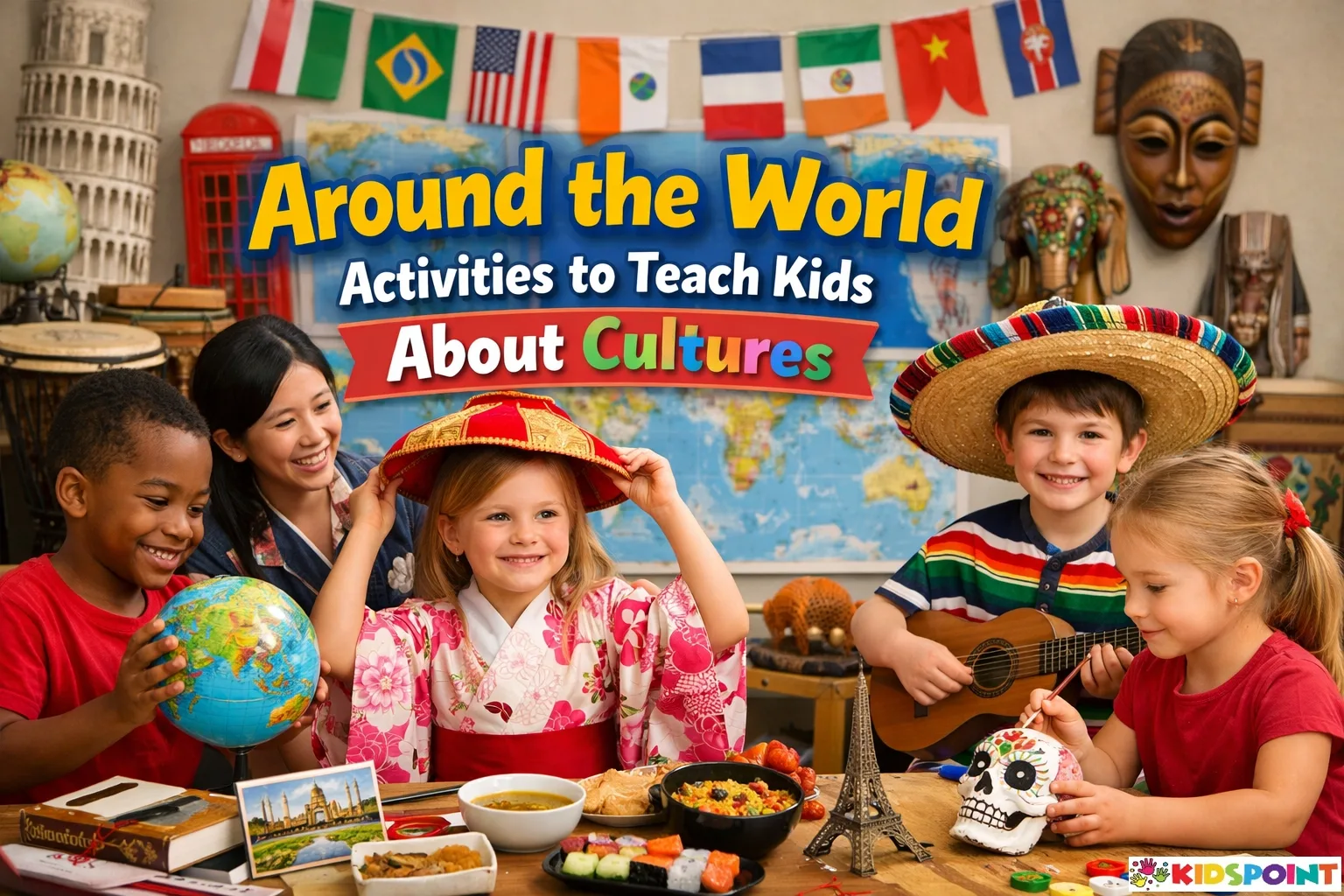
Imagine a child who thinks all families eat the same meals or celebrate holidays in the same way. In our connected time, kids face people from every corner of the globe. Yet, many grow up without a real sense of those differences. This gap can lead to misunderstandings later in life. Studies show that children who learn about other cultures early on build better empathy and social skills.
At The Kids Point, we focus on fun ways to make this learning stick. Our goal is to turn kids into global explorers right at home. Through hands-on activities, they grasp cultural education for kids in a way that feels like play. These world culture activities spark curiosity and joy.
Why Cultural Learning Matters for Kids
Cultural activities do more than teach geography. They:
- Build empathy and respect for differences
- Encourage curiosity and global awareness
- Strengthen communication and social skills
- Boost creativity through art, music, and storytelling
- Support critical thinking and comparison skills
When kids explore cultures early, they learn that the world is bigger than their neighborhood—and that differences should be celebrated.
Why Early Exposure to Diverse Cultures Builds Essential Skills
Kids who explore different cultures boost their brains in key ways. They sharpen problem-solving by seeing issues from new angles. Research from child experts points to ages 3 to 8 as prime time for this. During these years, young minds soak up attitudes toward others like sponges. Exposure helps form open views that last a lifetime. It also aids cognitive development and culture ties, as kids link ideas across borders.
Think of it as planting seeds for teamwork. In group play, a child who knows basic customs shares better with peers from afar. Schools report that diverse learning cuts bullying by up to 30 percent. Parents see kids handle change with ease too. We stress these benefits of cultural learning every day.
Moving Beyond Stereotypes: Fostering True Empathy and Respect
Surface-level facts, like just noting food or clothes, miss the mark. They can lock in wrong ideas if not done right. True growth comes from activities that let kids step into others’ shoes. Hands-on tasks build bridges of respect. Kids learn why a tradition matters, not just what it looks like.
For example, role-playing a market day in India shows bargaining as a sign of trust, not greed. This shifts views from flat to full. Empathy grows when children feel the warmth of shared stories. Respect follows as they value differences. We guide families to this depth.
Experiential Learning Over Rote Memorization
We ditch boring lists for action. Kids remember more when they do, not just read. Our methods mix play with purpose. This builds teaching global awareness that lasts. Parents join in, creating family bonds over new discoveries.
Activities draw from real life, not textbooks. We adapt them for home or class use. This philosophy sets kids up for a wide world. Get ready for ideas that fit any schedule.
Culinary Journeys: Tasting the World, One Country at a Time
Food opens doors to cultures like nothing else. It engages senses and tells stories. Kids love the mix of smells and tastes. These easy international recipes for kids make learning tasty. Start small to keep it fun.
Simple Recipes for International Kitchen Adventures
Pick recipes that need few tools. Japanese onigiri works great—rice balls wrapped in seaweed. Kids shape them with wet hands. Add a filling like tuna or veggies. It takes 20 minutes and teaches simple folding skills.
Next, try Italian pizza dough. Mix flour, yeast, and water. Let kids knead it like playdough. Top with sauce and cheese, then bake. This sparks chats about Italy’s sunny farms. For Mexico, make tortillas from corn flour. Press flat and cook on a pan. Involve little ones in rolling to build fine motor skills.
These cooking activities for cultural learning fit busy days. Use what’s in your pantry. Safety first—adults handle hot parts. We share tweaks for allergies too.
Creating a Global Tasting Menu Challenge
Set up a tasting station on the table. Gather snacks that travel well. Try dried apricots from Turkey for sweet tang. Add UK digestives—crisp biscuits with tea vibes. From India, spice up chickpeas.
Blindfold kids for taste tests. Ask what they guess by flavor alone. This hones senses and guesses origins. Follow with reveals and fun facts. Like how dates fuel desert travelers.
Make it a game with points for right calls. Rotate countries weekly. This builds excitement around the world. We suggest printable labels for each item.
Discussing Food Etiquette and Tradition
Eating customs vary widely. In Japan, use chopsticks to show care. Practice with noodles to avoid slurp mishaps—wait, slurping ramen is okay there! In Ethiopia, share from one plate to bond.
Talk about why these rules exist. Communal meals in Mexico build family ties. Kids mimic with their snacks. This layer adds meaning to bites. Ask, “How would you feel eating alone versus with friends?”
We tie etiquette to respect. It helps kids in real meetups later.
Artistic Exploration: Creating Global Masterpieces
Art lets kids express what words can’t. It crosses language barriers fast. Through colors and shapes, they touch distant places. This section dives into cultural education for kids via creativity.
Passport to Art: Exploring Famous Global Art Movements
Start with Australia’s Aboriginal dot painting. Use markers on paper to make patterns. Dots tell dreamtime stories of land and animals. Kids create their own tales this way.
For Africa, craft masks from cardboard and yarn. Add bold colors for tribal vibes. Discuss how masks aid ceremonies. In Islamic art, draw geometric tiles. No faces, just repeats that calm the eye.
These projects use scraps, keeping costs low. Display them as a gallery wall. Music and Movement: Global Rhythms for Active Learning
Sound brings cultures alive. Make shakers from beans in bottles for Latin beats. Shake to samba from Brazil—fast and joyful.
Learn African drum patterns with pots and spoons. Clap along to simple calls. For India, twirl to Bollywood tunes. No pro skills needed; just move free.
This gets wiggles out while teaching. Play videos for real dancers. Kids copy steps in a circle. The Kids Point playlists match activities.
Storytelling Traditions: From Fables to Folktales
Stories pass wisdom down. Read Anansi tales from Ghana—spider tricks teach smarts. Kids act them out with string puppets.
Nordic myths feature trolls and heroes. Draw scenes after listening. From China, share the monkey king’s adventures. Retell in drawings or plays.
Encourage twists on tales. This boosts imagination. Gather books from libraries. Geography and Play: Making Maps Come Alive
Maps turn flat facts into adventures. Kids plot journeys like explorers. This builds interactive geography for children naturally.
Designing Custom World Maps and Collaborative Projects
Roll out big paper for a mural map. Outline continents with crayons. As activities happen, add details. Color France green after a Eiffel build. Stick flags for visited spots.
Group kids to divide tasks—one draws rivers, another cities. This teaches teamwork. Update the map over months. It grows with knowledge.
Architecture Adventures: Building Iconic Structures
Use blocks to stack the Taj Mahal. White marble inspired by love—talk about that. Clay forms a Japanese pagoda with curved roofs for rain.
Cardboard makes Egyptian pyramids. Note sand influences the shape. Discuss how weather shapes homes everywhere.
Measure heights and compare. This links to teaching world landmarks. Fun challenges keep hands busy.
Virtual Field Trips and Digital Resources
Tech aids when travel can’t. Tour the Louvre online for French art. Or wander Machu Picchu via apps.
Pick safe sites like National Geographic Kids. YouTube channels from museums show real digs. Guide viewing to focus on culture.
Limit screen time to 20 minutes. Follow with talks or draws. We curates lists by age.
Language Sparks: Introducing Foundational Phrases
Words connect hearts. Start with basics to ease fears. This fosters teaching global awareness gently.
The Power of “Hello” and “Thank You” in Five Languages
Make flashcards for greetings. Spanish “hola” with Mexico’s flag. French “bonjour” and a Eiffel pic.
Phonetics help: Japanese “konnichiwa” sounds like “cone-ee-chee-wah.” Practice “thank you” too—Arabic “shukran.”
Play a game: Greet in random tongues. Repeat daily for stickiness.
Understanding Non-Verbal Communication Cues
Gestures differ. A bow in Korea shows respect. Thumbs up means good in the US, but not Brazil.
Practice cheek kisses for France. Or namaste hands for India. Role-play scenarios.
This builds awareness. Kids notice cues in videos or parks. Subtle lessons prevent mix-ups.
FAQs – Around the World Activities to Teach Kids About Cultures
Why are cultural activities important for kids?
They help children understand diversity, develop empathy, and become respectful global citizens.
What age group are these activities suitable for?
Most activities work well for kids aged 4–12 with simple adjustments.
Can these activities be done at home?
Yes, they are perfect for both classrooms and home learning environments.
How often should kids explore a new culture?
One new country or culture each week keeps learning fun and manageable.
Do I need special materials to start?
No, basic craft supplies, a world map, and curiosity are enough to begin.
Helping Kids Become Curious, Kind Global Explorers
Cultural learning shapes kind, curious kids. From kitchen fun to art bursts, these around the world activities to teach kids about cultures create lasting bonds. We’ve covered why it matters, from brain boosts to empathy gains. Culinary trips taste differences. Art and stories paint pictures. Maps and builds explore places. Language sparks chats.
Start with one activity this week. Build your family’s culture passport over time. At The Kids Point, we provide tools and ideas for the journey. Visit our site for more resources. Turn play into passports for a brighter world. Your child will thank you with open arms to all.