

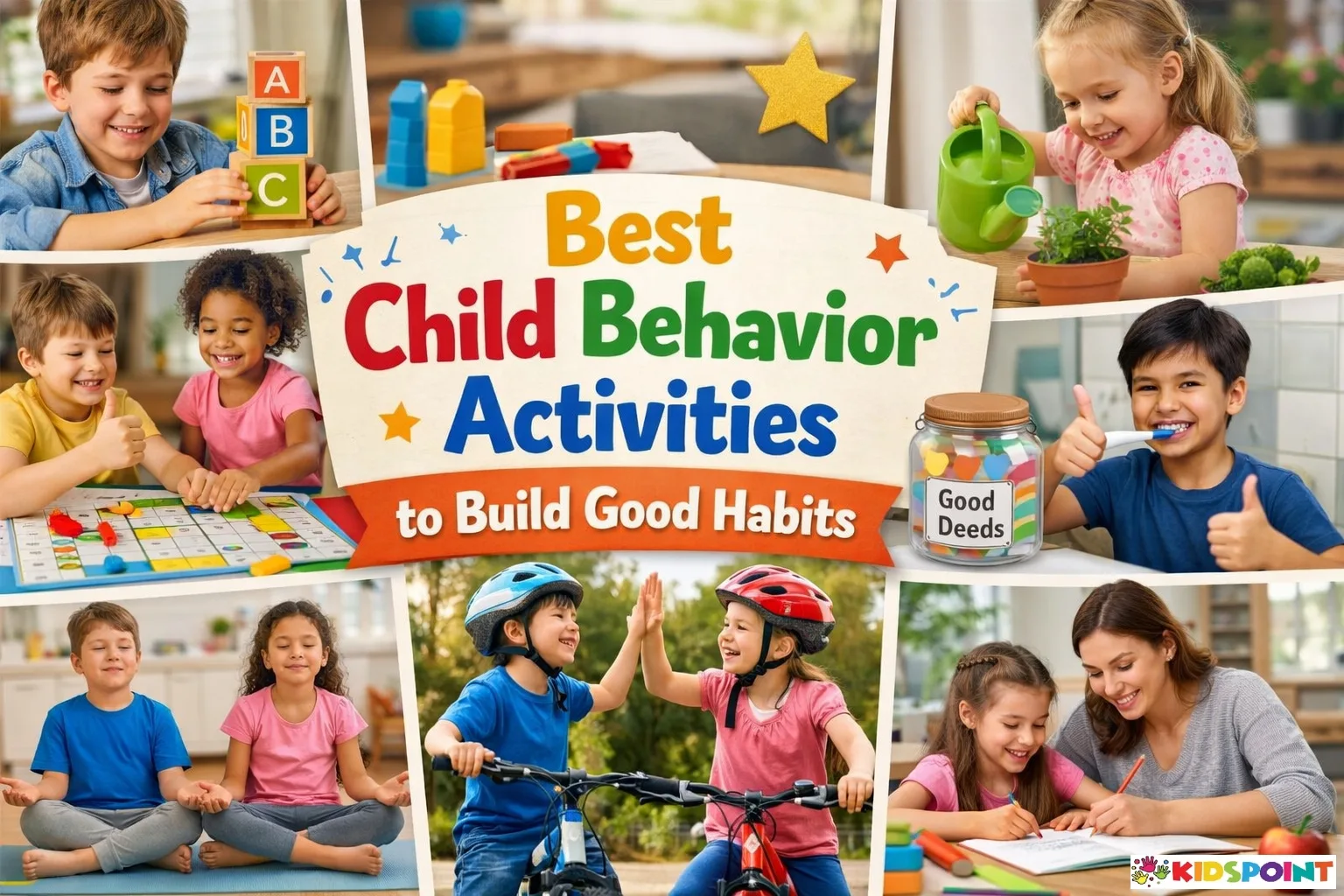
Good habits don’t appear overnight — they are shaped daily through guidance, consistency, and meaningful experiences. Children learn behavior patterns from what they see, hear, and practice at home and school. At The Kids Point, we believe the best way to develop strong character in children is through fun, engaging, and practical behavior-building activities that fit naturally into everyday life.
This guide shares proven child behavior activities that help build honesty, responsibility, kindness, self-control, and confidence in young learners.
Why Behavior Activities Matter for Children
Behavior activities go beyond discipline. They teach children:
- How to understand their emotions
- How to respect others
- How to take responsibility
- How to make good choices
- How to develop self-discipline
Children who practice positive behaviors early grow into emotionally intelligent, confident, and socially skilled adults.
Morning Routine Chart – Building Responsibility
A predictable morning routine helps children start the day with structure.
How to Do It:
Create a chart with simple tasks such as:
- Brush teeth
- Make bed
- Pack school bag
- Eat breakfast
- Wear shoes
Let your child tick off each task daily.
Habit Developed:
Responsibility, time management, independence.
Kindness Jar – Encouraging Compassion
This is a powerful activity to teach empathy.
How to Do It:
Every time your child performs a kind act, write it on a paper and place it in a jar. At the end of the week, read them together.
Habit Developed:
Kindness, empathy, appreciation.
Behavior Role-Play – Teaching Real-Life Skills
Children learn best by acting out situations.
How to Do It:
Create small scenarios like:
- Sharing toys
- Saying sorry
- Asking politely
- Handling disappointment
Act them out together and discuss the right behavior.
Habit Developed:
Problem-solving, emotional control, social skills.
Thank-You Notes Activity – Building Gratitude
Teaching gratitude changes children’s mindset.
How to Do It:
Ask your child to write or draw a thank-you note for:
- Teachers
- Friends
- Family members
Habit Developed:
Gratitude, positive thinking, respect.
Emotion Cards – Understanding Feelings
Children struggle when they don’t understand emotions.
How to Do It:
Create emotion cards like happy, sad, angry, excited, nervous. Ask your child to pick a card and explain a time they felt that way.
Habit Developed:
Emotional intelligence, communication, self-awareness.
Clean-Up Challenge – Developing Discipline
Make cleaning fun, not a chore.
How to Do It:
Set a timer for 5 minutes and challenge your child to clean their toys before time runs out.
Habit Developed:
Discipline, teamwork, organization.
Good Choice Board – Encouraging Decision-Making
Teach children that every choice has a result.
How to Do It:
Draw two columns:
- Good Choices
- Poor Choices
Discuss daily actions and place them in the correct column.
Habit Developed:
Critical thinking, accountability.
Sharing Games – Teaching Cooperation
How to Do It:
Use games where children must share turns, such as puzzles, board games, or storytelling.
Habit Developed:
Patience, cooperation, fairness.
Calm-Down Corner – Managing Anger
Create a safe emotional space at home.
How to Do It:
Set up a quiet corner with cushions, books, and soft toys. When emotions run high, encourage your child to relax there.
Habit Developed:
Self-regulation, emotional control.
Star Reward System – Positive Reinforcement
How to Do It:
Give a star for good behavior. After earning a certain number of stars, offer a small reward like family movie night.
Habit Developed:
Motivation, consistency, goal setting.
Storytelling with Values – Teaching Morals
How to Do It:
Tell or read stories that teach lessons like honesty, kindness, and bravery.
Habit Developed:
Moral values, listening skills.
Chore Chart – Teaching Responsibility
How to Do It:
Assign age-appropriate chores such as watering plants or organizing books.
Habit Developed:
Work ethic, reliability, self-confidence.
Apology Practice – Learning Accountability
How to Do It:
Teach children to say sorry properly:
“I’m sorry for…” not just “sorry.”
Habit Developed:
Respect, accountability, emotional growth.
Family Discussion Time – Strengthening Communication
How to Do It:
Set weekly family talks where children share feelings or concerns.
Habit Developed:
Trust, openness, communication skills.
Positive Affirmation Mirror – Building Confidence
How to Do It:
Let your child say affirmations in front of a mirror:
“I am kind.”
“I make good choices.”
Habit Developed:
Self-esteem, confidence.
Benefits of Behavior-Building Activities
Children who engage in daily behavior activities:
- Show better emotional control
- Build strong friendships
- Respect rules
- Develop leadership skills
- Make better decisions independently
Creating a Consistent Habit-Building Environment
Consistency is the key. Activities must be repeated daily for habits to stick. Praise effort more than perfection and always lead by example.
We believe good behavior is not taught through fear but through love, guidance, and positive experiences.
Common Questions About Child Behavior and Habit Building
Why are behavior activities important for children?
They help children learn responsibility, emotional control, and positive social skills from an early age.
At what age should behavior-building activities start?
You can begin simple habit-building activities as early as 2–3 years old.
How long does it take to build a good habit?
With daily practice, children usually develop strong habits within a few weeks.
What if my child resists these activities?
Keep the activities fun, flexible, and praise effort instead of focusing on mistakes.
How often should we practice behavior activities?
Short daily activities work best for building long-lasting habits.
Creating Lifelong Good Habits Through Daily Practice
Helping children develop good habits today creates responsible adults tomorrow. With these fun behavior-building activities, parents can guide children to become respectful, confident, emotionally strong individuals.
Remember, your everyday actions shape your child’s future. Start small, stay patient, and celebrate progress — because every good habit begins with a single positive step.