

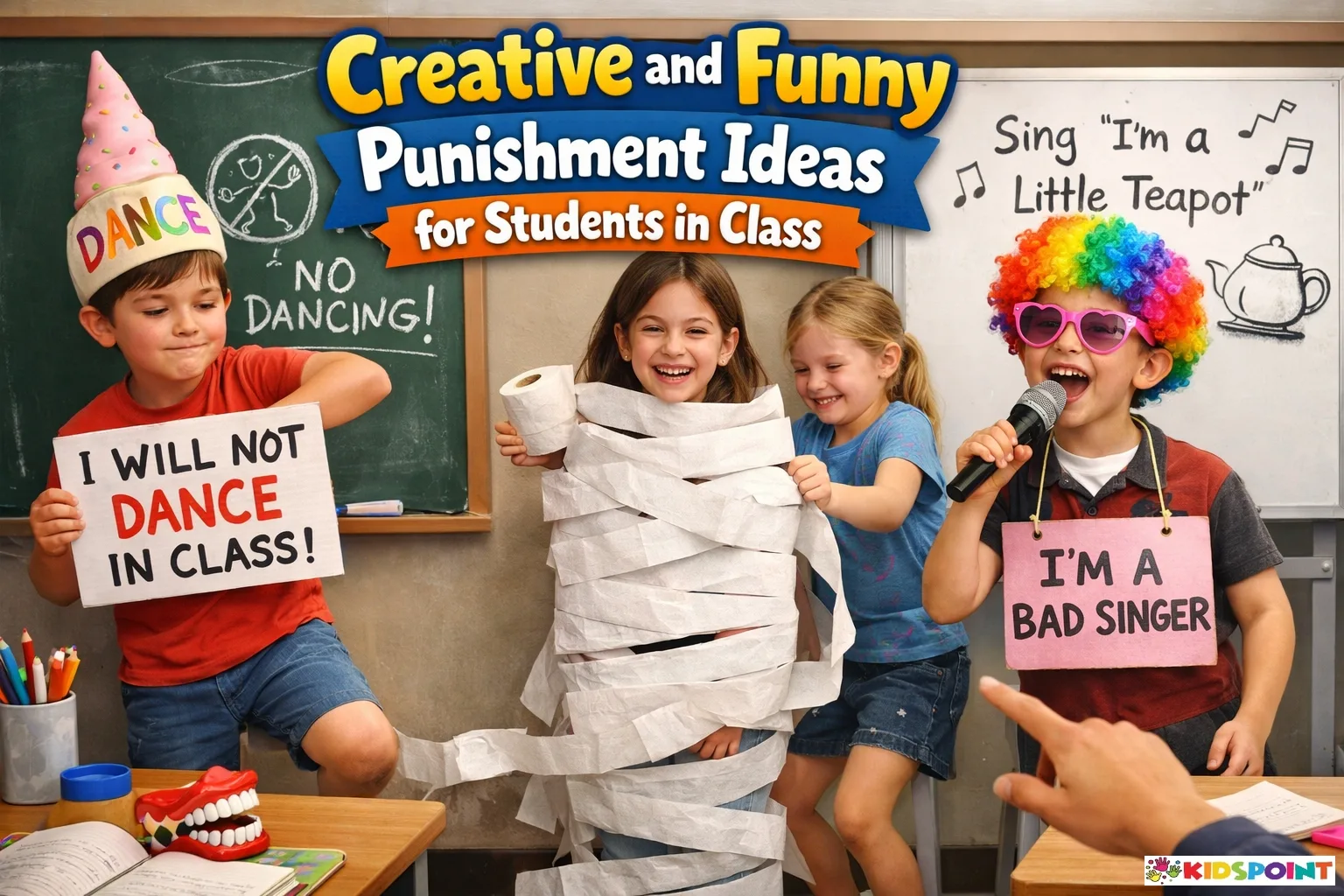
Managing classroom behavior is one of the biggest challenges teachers face today. While discipline is necessary to maintain a productive learning environment, traditional punishments like detention or scolding often fail to create long-term behavioral change. Instead, creative and funny punishment ideas for students in class can turn discipline into a learning opportunity while keeping the atmosphere positive and respectful.
At The Kids Point, we believe discipline should guide children toward better choices without harming their confidence. This article explores safe, age-appropriate, and lighthearted punishment ideas that promote responsibility, accountability, and fun—without crossing ethical or emotional boundaries.
Why Funny Punishments Work Better Than Traditional Discipline
Punishment doesn’t have to be harsh to be effective. When done correctly, humorous consequences can correct behavior while strengthening teacher-student relationships.
Key Benefits of Funny Punishment Ideas
- Reduces classroom tension and stress
- Encourages self-correction without fear
- Builds mutual respect between teachers and students
- Makes lessons memorable and engaging
- Supports emotional well-being
When students laugh at a harmless consequence, they’re more likely to remember the lesson behind it.
Important Rules Before Using Funny Punishments
Not every joke is appropriate in a classroom setting. To ensure fairness and effectiveness, teachers should follow a few essential guidelines.
Classroom Discipline Do’s and Don’ts
Do:
- Keep punishments respectful and inclusive
- Ensure the student understands the reason
- Match the consequence to the behavior
- Use humor gently, never sarcastically
Don’t:
- Embarrass or single out a student
- Use punishments that affect self-esteem
- Target physical appearance or abilities
- Apply discipline inconsistently
We always stress that discipline should correct behavior, not harm confidence.
Creative and Funny Punishment Ideas for Students in Class
Below are practical and teacher-approved punishment ideas suitable for elementary, middle, and even high school classrooms.
The Silly Writing Task
Instead of copying lines, ask students to write a funny sentence related to the rule they broke.
Example:
“I will not interrupt the teacher like a talking parrot again.”
This method reinforces rules while making the task enjoyable.
Classroom DJ Duty
Students who talk out of turn can be assigned to select a soft instrumental tune or educational song during activity time.
This teaches responsibility while allowing them to contribute positively.
Chair Swap Challenge
Let the student sit in a different seat for the next lesson and observe quietly. Present it as a “new perspective challenge.”
It’s simple, effective, and non-punitive.
Board Cleaner Extraordinaire
Assign the student the honorable task of cleaning the board or organizing supplies.
By turning chores into “special duties,” students feel valued rather than punished.
Funny Apology Card
Have the student write a short apology note using polite and creative language.
This improves emotional intelligence and accountability.
Classroom Rule Presenter
Ask the student to explain a classroom rule to the class in a fun way.
Teaching others reinforces understanding and ownership of behavior.
Quiet Time with a Twist
Instead of silent sitting, allow students to draw or write quietly about what they learned from their mistake.
Reflection combined with creativity helps internalize lessons.
The Compliment Assignment
Students who show negative behavior must give three genuine compliments to classmates.
This encourages kindness, empathy, and positive interaction.
Desk Decoration Timeout
Have the student tidy and decorate their desk neatly within a set time.
This improves organization while redirecting energy constructively.
Funny Poster Creation
Ask the student to create a small poster reminding everyone of a classroom rule—with humor.
These posters often become valuable visual aids.
Funny Punishment Ideas for Younger Students
Younger children respond especially well to imaginative discipline.
Age-Appropriate Ideas
- Reading rules aloud in a funny voice
- Acting as the “line leader assistant”
- Drawing a smiley chart for good behavior
- Helping the teacher for five minutes
We recommend playful discipline that feels more like a game than a consequence.
Funny Punishment Ideas for Middle School Students
Middle school students crave independence and respect.
Effective Options
- Writing a short “behavior improvement plan”
- Being the class timekeeper
- Creating a mini skit about classroom rules
- Organizing group materials
These punishments encourage leadership rather than rebellion.
Funny Punishment Ideas for High School Students
Older students need dignity preserved.
Respectful Yet Creative Ideas
- Writing a reflection email to the teacher
- Assisting with classroom setup
- Creating a classroom etiquette checklist
- Helping manage digital tools or presentations
Humor should be subtle and respectful at this stage.
Using Rewards Alongside Funny Punishments
Discipline works best when paired with positive reinforcement.
Balance is Key
- Reward consistent good behavior
- Praise effort and improvement
- Use humor equally for correction and encouragement
We promote a balanced classroom environment where discipline and motivation go hand in hand.
Common Mistakes Teachers Should Avoid
Even funny punishments can backfire if misused.
Avoid These Pitfalls
- Repeating the same punishment too often
- Using humor that students don’t understand
- Ignoring cultural or emotional sensitivities
- Applying discipline publicly in sensitive situations
Always adapt your approach based on individual student needs.
How Funny Punishments Improve Classroom Culture
When discipline feels fair and lighthearted, students feel safer and more engaged.
Long-Term Benefits
- Better student-teacher relationships
- Reduced classroom disruptions
- Increased student accountability
- Improved peer interactions
Positive discipline builds a supportive learning environment where mistakes become lessons.
Teacher and Parent Collaboration
Discipline is most effective when teachers and parents work together.
Tips for Alignment
- Share classroom behavior strategies with parents
- Encourage similar discipline styles at home
- Celebrate behavior improvements together
We encourage open communication to support consistent behavior guidance.
Common Questions About Funny Classroom Punishments
Are funny punishments effective for classroom discipline?
Yes, when used respectfully, funny punishments encourage behavior correction without fear or embarrassment.
Can funny punishments hurt a student’s confidence?
No, as long as they are age-appropriate, private when needed, and focused on learning—not humiliation.
Are these punishment ideas suitable for all age groups?
Yes, but they should be adjusted based on the student’s age and emotional maturity.
How often should teachers use funny punishments?
They should be used occasionally and balanced with positive reinforcement for best results.
Do parents usually support funny classroom punishments?
Most parents appreciate positive discipline methods that teach responsibility in a healthy way.
Final Thoughts: Discipline with Kindness and Creativity
Discipline doesn’t have to be strict or negative to be effective. Creative and funny punishment ideas for students in class help maintain order while preserving joy, respect, and emotional well-being.
By choosing thoughtful, age-appropriate consequences, teachers can turn mistakes into teachable moments that students remember for the right reasons.
At The Kids Point, we believe every child deserves guidance that builds confidence, responsibility, and a love for learning—one positive lesson at a time.