

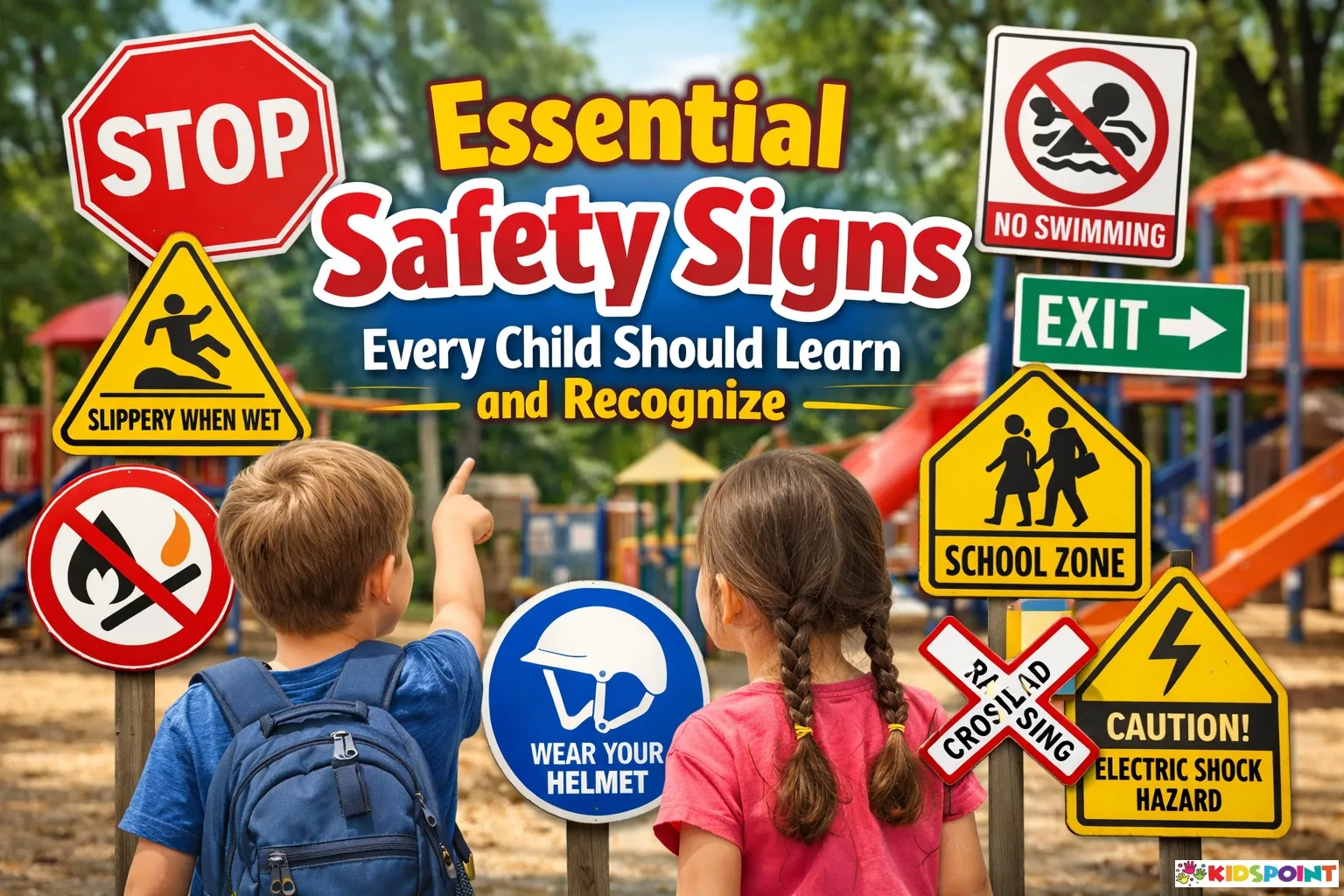
Keeping children safe is one of the top priorities for parents, teachers, and caregivers. While adults often rely on experience and judgment to avoid danger, children depend on clear visual cues to understand what is safe and what is not. This is where safety signs play a crucial role.
Safety signs are designed to communicate important warnings, instructions, and guidance quickly and clearly—often without the need for words. Teaching children to recognize and understand these signs from an early age can significantly reduce accidents and help them become more confident and independent in their surroundings.
At The Kids Point, we believe that learning safety signs should be engaging, age-appropriate, and practical. In this comprehensive guide, we’ll explore the essential safety signs every child should learn and recognize, why they matter, and how parents and educators can teach them effectively.
Why Learning Safety Signs Is Important for Children
Children are naturally curious. They explore new places, touch unfamiliar objects, and often act before thinking about consequences. Safety signs act as silent protectors, guiding children away from danger and toward safer behavior.
Key Benefits of Teaching Safety Signs Early
- Accident prevention: Reduces risks at home, school, roads, and public places
- Faster decision-making: Children can react quickly when they recognize a sign
- Independence: Helps kids navigate environments without constant adult supervision
- Confidence building: Children feel more secure when they understand their surroundings
- Lifelong skills: Safety awareness learned early lasts into adulthood
Understanding the Types of Safety Signs
Before diving into specific signs, it’s helpful to understand the main categories of safety signs. Teaching children these categories helps them quickly interpret new signs they encounter.
Warning Signs
- Usually yellow or orange
- Alert children to potential dangers
Prohibition Signs
- Often red with a diagonal line
- Indicate actions that are not allowed
Mandatory Signs
- Commonly blue
- Tell children what they must do
Information and Emergency Signs
- Usually green
- Provide guidance or show safe exits
Essential Road and Traffic Safety Signs for Children
Road safety is one of the most critical areas where children need strong awareness. Whether walking to school, riding a bicycle, or traveling with family, recognizing traffic signs can save lives.
Stop Sign
The stop sign teaches children to pause, look, and listen before crossing roads.
What children should learn:
- Stop completely
- Look both ways
- Cross only when safe
Pedestrian Crossing Sign
This sign shows a safe place to cross the road.
Key lesson: Always cross at designated areas.
Traffic Light Signals
Children should understand:
- Red: Stop
- Yellow: Get ready
- Green: Go safely
School Zone Sign
Indicates areas where children are present.
Important message: Slow down and stay alert.
Home Safety Signs Every Child Should Recognize
Home may feel safe, but it contains many hidden dangers. Teaching children home safety signs helps prevent common household accidents.
Electrical Hazard Sign
Warns children to stay away from electrical equipment.
Lesson: Never touch exposed wires or sockets.
No Entry / Authorized Only
Common near storage rooms or tool areas.
Lesson: Some places are off-limits for safety reasons.
Fire Exit Sign
Shows safe escape routes in case of fire.
Lesson: Know how to exit calmly during emergencies.
Hot Surface Warning
Often seen near ovens, stoves, or heaters.
Lesson: Hot objects can cause burns.
School Safety Signs Children Must Know
Schools are structured environments with many safety rules. Signs help reinforce these rules visually.
Emergency Exit
Indicates the quickest way out during emergencies.
First Aid Sign
Shows where help and medical supplies are available.
No Running Sign
Placed in hallways and staircases.
Lesson: Prevent slipping and falling injuries.
Quiet Zone
Seen near libraries or exam halls.
Lesson: Respect others and maintain discipline.
Playground Safety Signs for Kids
Playgrounds are fun but can be risky without proper guidance. Safety signs help children enjoy playtime responsibly.
Use Equipment Properly
Often shows correct usage of slides or swings.
Age Restriction Signs
Indicate which equipment is suitable for certain ages.
No Pushing or Rough Play
Teaches kindness and accident prevention.
Adult Supervision Required
Reminds children that some activities need grown-up presence.
Water and Swimming Safety Signs
Water safety signs are extremely important, especially in pools, beaches, and rivers.
No Diving
Prevents serious head and neck injuries.
Deep Water
Alerts children about depth changes.
Lifeguard on Duty / No Lifeguard
Teaches children when extra caution is needed.
Wear Life Jacket
Encourages safe behavior during boating or swimming.
Fire Safety Signs Every Child Should Understand
Fire safety education can save lives. Children should recognize signs related to fire prevention and response.
Fire Extinguisher Sign
Shows where firefighting tools are located.
Fire Alarm
Teaches children how to alert adults in emergencies.
No Smoking
Helps prevent fire hazards.
Assembly Point
Indicates where to gather after evacuation.
Public Place Safety Signs Children Encounter Daily
Children often visit malls, parks, hospitals, and transportation hubs. Knowing these signs keeps them safe in crowded environments.
Slippery Floor
Warns of wet or uneven surfaces.
CCTV in Operation
Teaches awareness of monitored areas.
Escalator Safety Signs
Shows how to stand safely and hold handrails.
No Strangers Allowed Areas
Helps children understand boundaries.
Teaching Safety Signs to Children: Effective Methods
We encourage learning through fun, repetition, and real-life application.
Use Visual Learning
- Posters with bright colors
- Flashcards with symbols and meanings
Turn Learning into Games
- Matching games
- Safety sign scavenger hunts
Practice in Real Life
- Point out signs during walks
- Discuss their meaning on the spot
Storytelling and Role Play
- Create stories involving safety decisions
- Act out scenarios like crossing roads or fire drills
Reinforce Regularly
- Short daily reminders
- Quizzes and rewards
Age-Wise Approach to Teaching Safety Signs
Ages 3–5
- Focus on basic signs like Stop, No Entry, Fire
- Use pictures and simple explanations
Ages 6–8
- Introduce road signs and school safety
- Encourage questions
Ages 9–12
- Teach emergency response signs
- Practice independent decision-making
Common Mistakes Parents Should Avoid
- Overloading children with too many signs at once
- Using fear instead of explanation
- Assuming children understand without practice
- Ignoring sign education at home
How Safety Signs Build Lifelong Awareness
Children who grow up recognizing safety signs develop:
- Better judgment
- Faster reaction time
- Respect for rules
- Responsibility for themselves and others
These skills extend beyond childhood into adulthood, making safety sign education a lifelong gift.
FAQs: Essential Safety Signs for Children
At what age should children start learning safety signs?
Children can start recognizing basic safety signs as early as 3 years old using pictures and simple explanations.
Why are safety signs important for kids?
Safety signs help children identify dangers, follow rules, and make quick safe decisions in homes, schools, and public places.
What are the most important safety signs for children?
Key signs include Stop, Pedestrian Crossing, Fire Exit, No Entry, No Diving, and First Aid signs.
How can parents teach safety signs effectively?
Parents can use visual charts, real-life examples, games, storytelling, and daily repetition to make learning fun and effective.
Are safety signs the same worldwide?
Most safety signs use universal symbols, so children can recognize them even when traveling to different countries.
Final Thoughts
Teaching children to recognize and understand safety signs is not just about memorization—it’s about empowering them with awareness and confidence. From roads and schools to homes and playgrounds, safety signs guide children through the world, helping them avoid danger and make smart decisions.
At The Kids Point, we believe that safety education should be simple, engaging, and consistent. By introducing essential safety signs early and reinforcing them through everyday experiences, parents and educators can create a safer, smarter generation of children.