

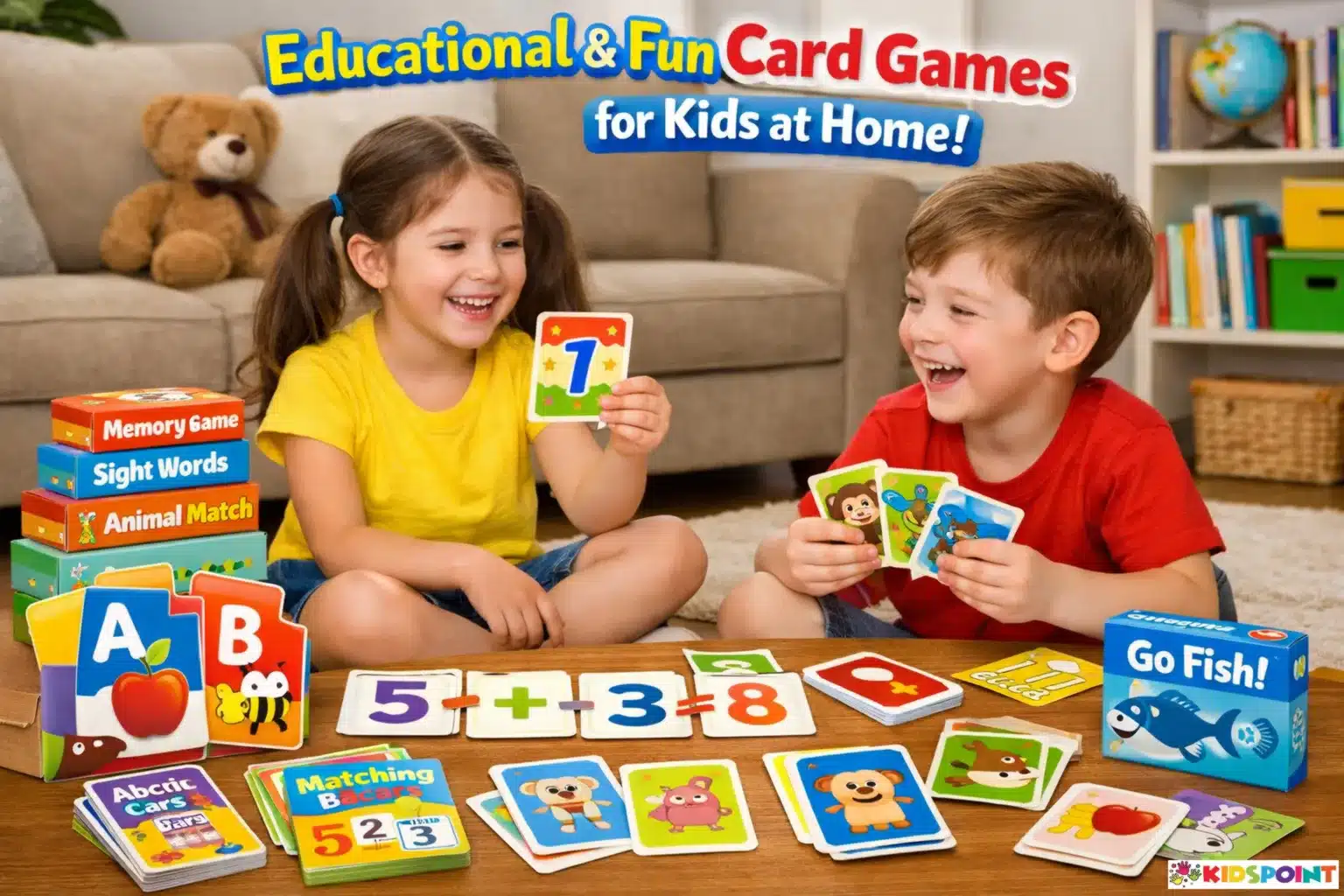
In a world filled with screens and fast-paced digital entertainment, parents are increasingly looking for meaningful ways to engage their children at home. One timeless, affordable, and highly effective option is card games. Far beyond simple fun, educational card games help children build essential cognitive, social, and emotional skills while enjoying quality family time.
At The Kids Point, we believe learning should feel like play. Card games perfectly blend education and entertainment, making them ideal for kids of all ages. Whether you’re teaching a preschooler basic numbers or helping an older child develop strategic thinking, the right card game can turn an ordinary afternoon into a powerful learning experience.
This comprehensive guide explores the best educational and fun card games for kids at home, their benefits, age-appropriate options, and tips for choosing and playing them effectively.
Why Card Games Are Great for Kids
Card games offer much more than amusement. They support well-rounded child development in simple yet impactful ways.
Boost Cognitive Skills
Many card games improve memory, attention span, pattern recognition, and logical reasoning. Games that involve matching, sequencing, or strategy stimulate the brain and enhance problem-solving abilities.
Strengthen Math and Language Skills
From counting and addition to vocabulary building and reading comprehension, card games naturally reinforce academic concepts without feeling like formal lessons.
Improve Social and Emotional Development
Playing card games teaches children patience, turn-taking, rule-following, and emotional regulation. Winning gracefully and losing calmly are important life skills learned through play.
Encourage Family Bonding
Card games bring families together. Sitting around a table, laughing, and learning strengthens relationships and creates positive childhood memories.
Screen-Free Entertainment
With concerns about excessive screen time, card games provide a healthy alternative that keeps kids engaged and mentally active.
Educational Card Games for Preschoolers (Ages 3–5)
Preschoolers learn best through repetition, visuals, and hands-on activities. Simple card games with bright images and easy rules are ideal.
Matching and Memory Card Games
These games help improve visual memory, focus, and recognition skills. Kids flip cards to find matching pairs, learning patience and recall along the way.
Skills Developed:
- Memory retention
- Visual recognition
- Concentration
Alphabet and Phonics Cards
Alphabet card games introduce letters, sounds, and early word-building skills. Parents can ask children to identify letters, sounds, or simple words.
Skills Developed:
- Letter recognition
- Phonemic awareness
- Early reading skills
Number and Counting Card Games
Basic number cards help children learn counting, number order, and simple comparisons like more or less.
Skills Developed:
- Counting
- Number recognition
- Early math confidence
We recommend keeping game sessions short and playful for preschoolers to match their attention spans.
Educational Card Games for Early Elementary Kids (Ages 6–8)
As children grow, they’re ready for more structured rules and slightly complex challenges.
Go Fish
A classic favorite that teaches number matching and social interaction. Kids learn to ask politely, remember card positions, and take turns.
Skills Developed:
- Memory
- Communication
- Basic strategy
Old Maid
This game builds focus and emotional control while reinforcing matching skills.
Skills Developed:
- Pattern recognition
- Emotional regulation
- Social awareness
Math Card Games
Games using numbered cards can teach addition, subtraction, and even multiplication in a fun way. Parents can modify rules to suit their child’s learning level.
Skills Developed:
- Mental math
- Logical thinking
- Confidence in numbers
Educational Card Games for Older Kids (Ages 9–12)
Older children enjoy games that challenge their thinking and decision-making abilities.
Uno
Uno is both fun and educational, requiring players to match colors and numbers while planning their moves strategically.
Skills Developed:
- Strategic thinking
- Color and number recognition
- Rule comprehension
Rummy
Rummy encourages players to form sets and sequences, sharpening pattern recognition and logical reasoning.
Skills Developed:
- Sequencing
- Strategic planning
- Patience
Solitaire (Kid-Friendly Versions)
While often played alone, solitaire helps kids develop focus, organization, and problem-solving skills.
Skills Developed:
- Independent thinking
- Planning
- Concentration
We encourage parents to gradually introduce these games as children mature, ensuring the challenge remains enjoyable rather than frustrating.
Learning-Focused Themed Card Games
Modern educational card games often focus on specific learning goals, making them excellent supplements to school learning.
Vocabulary and Word-Building Card Games
These games help children expand their vocabulary, improve spelling, and enhance reading comprehension.
Skills Developed:
- Language development
- Word recognition
- Creative thinking
Science and Nature Card Games
Card games featuring animals, planets, or ecosystems spark curiosity and introduce basic scientific concepts.
Skills Developed:
- General knowledge
- Curiosity
- Critical thinking
Emotional Intelligence Card Games
Some card games are designed to help kids recognize emotions, express feelings, and develop empathy.
Skills Developed:
- Emotional awareness
- Communication
- Empathy
DIY Card Games for Learning at Home
Creating your own card games can be just as educational as playing store-bought ones.
Homemade Flashcard Games
Parents can create flashcards for math problems, sight words, or trivia questions and turn them into competitive or cooperative games.
Story-Building Card Games
Write characters, settings, and actions on cards. Kids draw cards and create stories, boosting creativity and language skills.
Chore and Responsibility Card Games
Turn daily responsibilities into a game by creating reward-based cards. This encourages responsibility in a fun way.
We believe DIY card games also teach children creativity and ownership over their learning process.
Benefits of Playing Card Games Regularly
Consistent play offers long-term developmental benefits.
Builds Routine and Structure
Scheduled game time helps children understand routines and time management.
Enhances Academic Performance
Children who regularly play educational games often show improved focus, memory, and problem-solving skills in school.
Encourages Positive Behavior
Games teach cooperation, fairness, and respect for rules.
Supports Emotional Well-Being
Play reduces stress and boosts confidence, especially when children feel successful in learning environments.
Tips for Choosing the Right Card Games for Kids
Choosing the right game ensures both fun and learning.
- Match the age level: Avoid games that are too easy or too difficult.
- Focus on learning goals: Choose games that align with your child’s needs, such as math or language.
- Look for clear instructions: Simple rules keep kids engaged.
- Encourage interaction: Multiplayer games help develop social skills.
- Rotate games regularly: This keeps interest fresh and learning dynamic.
How Parents Can Make Card Games More Educational
Parents play a key role in maximizing learning.
- Ask open-ended questions during play
- Encourage kids to explain their thinking
- Praise effort, not just winning
- Adapt rules to increase or reduce difficulty
- Play together to model good behavior
We emphasize active parental involvement to turn every game into a meaningful learning experience.
Creating a Positive Game Environment at Home
The environment matters as much as the game itself.
- Choose a quiet, comfortable space
- Limit distractions like TV or phones
- Set a positive tone focused on fun, not competition
- Keep sessions age-appropriate in length
A supportive environment ensures children associate learning with enjoyment.
Why Card Games Are a Smart Choice for Home Learning
Card games are affordable, portable, and endlessly versatile. Unlike many toys, they grow with your child and can be adapted for different ages and learning goals. They promote balanced development while strengthening family bonds.
We view card games as powerful educational tools that support learning through play. They encourage curiosity, confidence, and connection—three essentials for raising happy, capable kids.
Quick Answers for Parents
Are card games really educational for kids?
Yes, card games help improve memory, math skills, language development, and social abilities while keeping learning fun.
What age is suitable for kids to start card games?
Simple card games can be introduced as early as age 3, with more complex games added as children grow.
How often should kids play educational card games?
Playing 2–3 times a week is enough to support learning without overwhelming children.
Can card games reduce screen time for kids?
Absolutely. Card games offer engaging, screen-free entertainment that encourages active thinking.
Should parents play card games with their kids?
Yes, parental involvement boosts learning, strengthens bonding, and helps kids understand rules better.
Final Thoughts
Educational and fun card games for kids at home are more than just a pastime—they are a gateway to learning, creativity, and meaningful family interaction. From boosting academic skills to nurturing emotional intelligence, card games offer benefits that extend far beyond the table.
By choosing age-appropriate games, playing regularly, and staying involved, parents can transform simple cards into lifelong learning tools. At The Kids Point, we encourage families to rediscover the joy of card games and make learning an exciting adventure at home.