

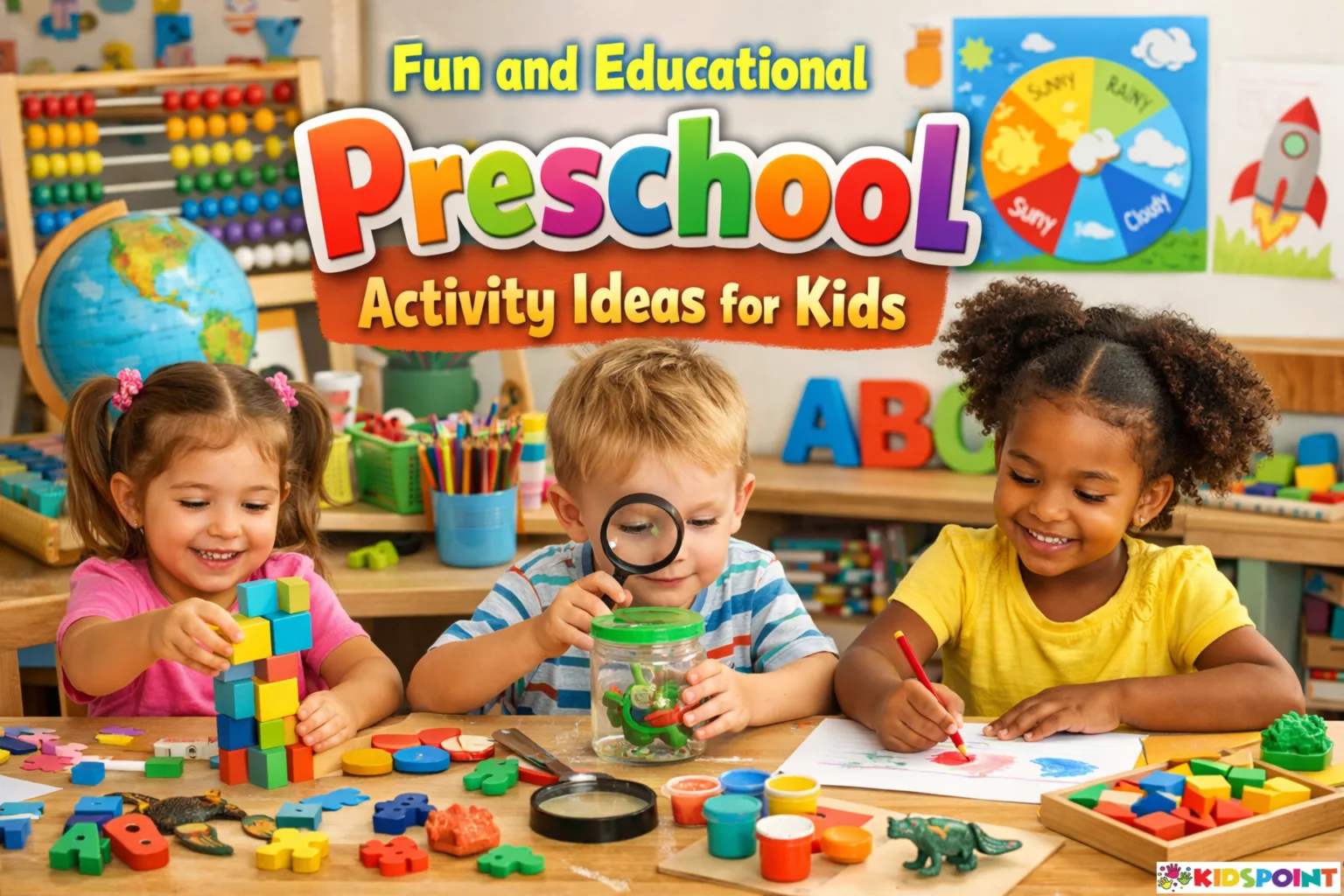
Preschool years are some of the most important stages in a child’s development. Between the ages of three and five, children build the foundation for language, math, social skills, creativity, and emotional growth. During this time, learning should never feel forced or boring. Instead, it should be playful, engaging, and meaningful.
At The Kids Point, we believe that preschool activities should combine fun and education in a balanced way. When children enjoy what they are doing, they naturally become curious, confident learners. In this guide, you’ll discover a wide range of fun and educational preschool activity ideas that support early development while keeping kids excited and engaged.
Why Fun and Educational Activities Matter in Preschool
Preschoolers learn best through play. Play-based learning helps children:
- Improve language and communication skills
- Develop fine and gross motor skills
- Strengthen memory and concentration
- Practice problem-solving and critical thinking
- Build social and emotional intelligence
Structured worksheets alone cannot provide these benefits. Hands-on activities, creative play, and interactive games make learning meaningful and memorable.
Alphabet and Early Literacy Activities
Letter Hunt Game
Hide foam or paper letters around the room. Ask children to find a specific letter and say its name and sound.
Skills Developed:
- Letter recognition
- Phonics awareness
- Listening skills
- Movement coordination
Alphabet Sensory Bin
Fill a container with rice or sand and mix in plastic letters. Let children dig and identify letters as they find them.
Why It Works:
Sensory play enhances memory and makes abstract concepts like letters more concrete.
Storytelling Circle
Sit in a circle and begin a story. Each child adds one sentence to continue it.
Benefits:
- Expands vocabulary
- Encourages imagination
- Builds confidence in speaking
Early Math Activities
Counting with Everyday Objects
Use buttons, blocks, or toy animals for counting practice. Ask children to group them into sets of five or ten.
Skills Developed:
- Number recognition
- One-to-one correspondence
- Basic addition concepts
Shape Sorting Game
Provide different shape cutouts and ask children to sort them by shape, size, or color.
Learning Outcome:
Improves categorization and pattern recognition skills.
Number Hopscotch
Draw numbers on the floor using chalk or tape. Call out a number and ask the child to jump to it.
This combines physical movement with number recognition, making math active and exciting.
Creative Arts and Crafts
Finger Painting
Allow children to explore colors using their hands. Ask them to mix colors and observe what happens.
Educational Value:
- Teaches color blending
- Encourages self-expression
- Strengthens fine motor skills
Paper Plate Animals
Provide paper plates, crayons, glue, and craft paper to create animals.
Encourage children to talk about the animal they made. Where does it live? What does it eat?
This builds creativity and language skills at the same time.
Collage Making
Give children magazines, safe scissors, and glue. Let them create themed collages such as “My Favorite Things” or “Nature.”
Collages improve hand coordination and storytelling ability.
Sensory Play Activities
Sensory play is essential for preschool development because it stimulates multiple senses at once.
Playdough Creations
Homemade or store-bought playdough can be used to form letters, numbers, and shapes.
Benefits:
- Strengthens hand muscles
- Improves creativity
- Supports early writing skills
Water Play Station
Fill tubs with water, cups, funnels, and floating toys. Children learn about volume and cause-and-effect relationships.
Sand Exploration
Add measuring cups and small toys for digging and pouring practice.
Sensory activities are calming and help children regulate emotions.
Science Exploration Activities
Preschool science doesn’t require complicated experiments. Simple observation-based activities are powerful.
Planting Seeds
Let children plant beans in clear cups so they can watch the roots grow.
What They Learn:
- Plant life cycles
- Responsibility
- Patience
Sink or Float Experiment
Place various objects in water and ask children to predict whether they will sink or float.
This builds critical thinking and observation skills.
Weather Chart
Create a daily weather chart. Each morning, children record whether it is sunny, cloudy, or rainy.
They begin to understand patterns and natural changes.
Music and Movement Activities
Music enhances memory and coordination.
Action Songs
Songs like “Head, Shoulders, Knees, and Toes” teach body awareness and listening skills.
Freeze Dance
Play music and have children dance. When the music stops, they freeze.
This improves self-control and attention.
Rhythm Practice
Use homemade instruments like shakers or drums to practice rhythm patterns.
Outdoor Learning Activities
Outdoor activities allow preschoolers to explore the world around them.
Nature Walk
Take children on a short walk and collect leaves or small stones. Discuss textures and colors.
Obstacle Course
Set up simple obstacles using cones, tunnels, or pillows.
This strengthens balance, coordination, and problem-solving skills.
Chalk Drawing
Sidewalk chalk allows children to practice writing letters and drawing shapes while enjoying fresh air.
Social and Emotional Learning Activities
Preschoolers are still learning how to express feelings and interact with others.
Role-Playing
Set up pretend play areas such as a grocery store, doctor’s office, or kitchen.
Role-playing encourages empathy and communication.
Emotion Cards
Show pictures of different facial expressions and ask children to name the emotion.
This helps them recognize and manage feelings.
Sharing Circle
Encourage children to share one thing they are happy about each day.
This builds gratitude and social bonding.
Fine Motor Skill Activities
Fine motor development is essential for writing readiness.
Bead Threading
Children string beads onto yarn to make bracelets or necklaces.
Cutting Practice
Provide safety scissors and simple shapes to cut.
Sticker Sorting
Give children stickers to place inside matching shapes or letters.
These activities strengthen hand muscles and coordination.
Dramatic and Imaginative Play
Imaginative play supports language, creativity, and social understanding.
Puppet Shows
Use simple hand puppets to act out stories.
Dress-Up Corner
Provide costumes and accessories for pretend play.
Building Blocks
Encourage children to build towers or houses and describe their creations.
Quiet Time Learning Activities
Preschoolers also need calm activities to balance high-energy play.
Puzzle Time
Simple puzzles improve problem-solving skills and patience.
Matching Games
Memory matching cards strengthen concentration.
Picture Books
Reading daily builds vocabulary and listening skills.
We always encourage daily reading routines as one of the most powerful preschool learning tools.
Creating a Balanced Preschool Activity Schedule
A good preschool routine includes:
- Active play
- Creative arts
- Literacy and math time
- Outdoor exploration
- Quiet reading or rest
Variety keeps children interested and prevents boredom. Short activities (10–20 minutes) work best for preschool attention spans.
Tips for Parents and Teachers
- Keep activities simple and age-appropriate.
- Focus on encouragement rather than perfection.
- Allow room for creativity and imagination.
- Use everyday materials when possible.
- Observe children’s interests and adjust activities accordingly.
The goal is not to rush learning but to nurture curiosity.
How Play Builds Lifelong Skills
When preschoolers engage in fun and educational activities, they are not “just playing.” They are:
- Learning how to think independently
- Developing emotional resilience
- Practicing teamwork
- Building communication skills
- Gaining confidence
These foundational skills prepare children for kindergarten and beyond.
We understand that the best learning happens when children feel safe, curious, and excited. By incorporating creative activities into daily routines, parents and teachers can turn ordinary moments into meaningful learning experiences.
Helpful Answers Parents Often Ask
How long should preschool activities last?
Most preschoolers can focus for 10–20 minutes on structured activities.
Are worksheets necessary for preschoolers?
Worksheets can be helpful occasionally, but hands-on learning is more effective at this age.
How many activities should I plan each day?
Three to five varied activities are usually enough, along with free play.
What if my child loses interest quickly?
Switch to a different activity or include movement to re-engage them.
Can educational activities happen at home?
Absolutely. Everyday household items can become powerful learning tools.
Final Thoughts on Preschool Learning
Fun and educational preschool activity ideas do not need to be expensive or complicated. The key is creativity, consistency, and a supportive environment. Whether it’s counting buttons, planting seeds, or dancing to music, every playful moment can become a learning opportunity.
By blending imagination with structured guidance, parents and teachers can create meaningful experiences that shape a child’s early development. At The Kids Point, we believe that learning through play builds confident, happy, and curious children ready to explore the world around them.
Preschool is not just preparation for school — it is preparation for life.