

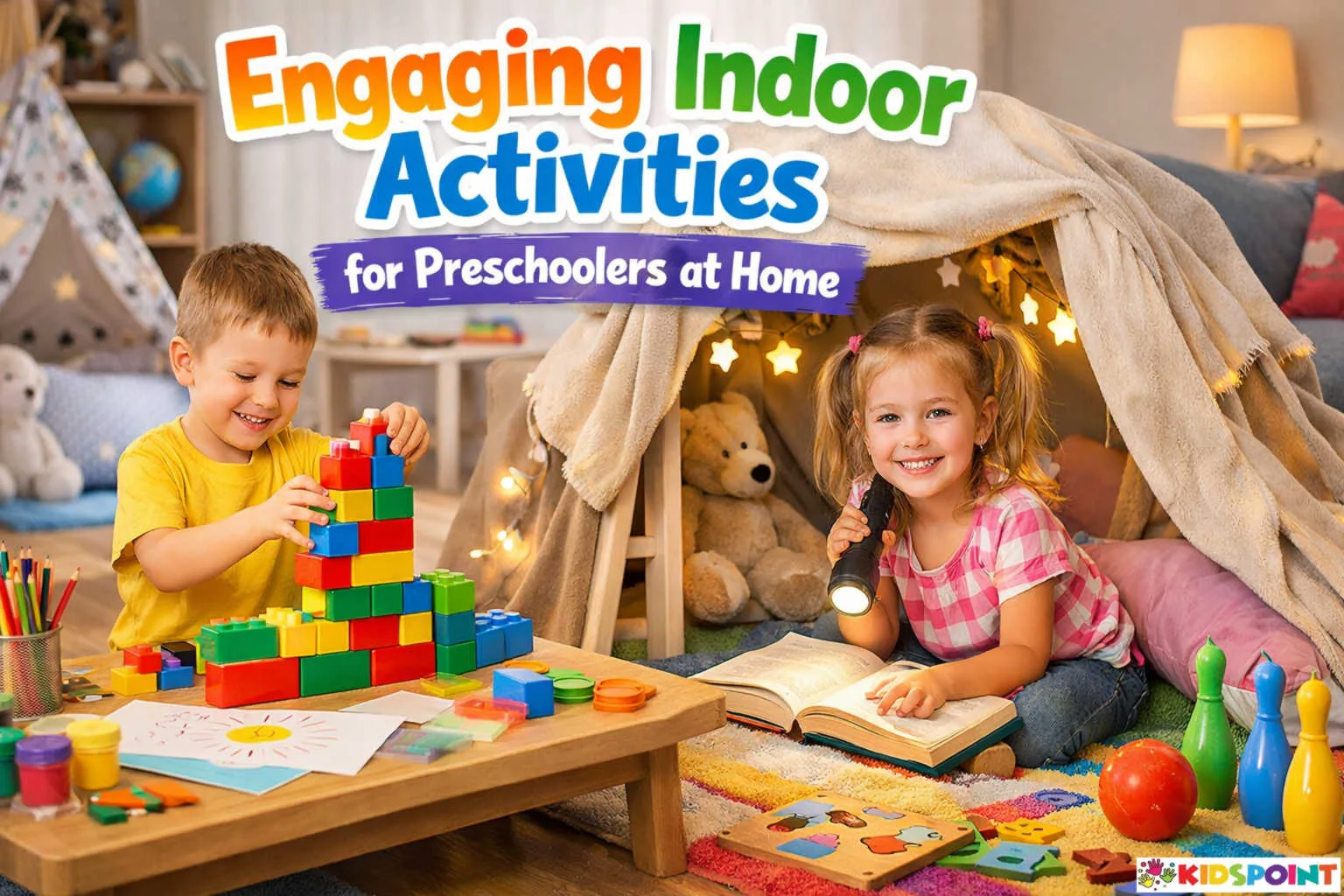
Preschoolers are naturally curious, energetic, and eager to explore the world around them. Between the ages of three and five, children develop critical skills in language, motor coordination, creativity, and emotional awareness. However, keeping them engaged indoors—especially during rainy days, hot summers, or busy weeks—can be challenging for parents.
At The Kids Point, we believe that indoor time can be just as enriching and exciting as outdoor play. With the right mix of creativity, structure, and fun, your home can become a vibrant learning playground for your preschooler.
In this comprehensive guide, we’ll explore a variety of engaging indoor activities that promote learning, creativity, and development—while keeping your little one happily entertained.
Why Indoor Activities Matter for Preschoolers
Indoor activities are not just about passing time. They play a crucial role in:
- Developing fine and gross motor skills
- Strengthening cognitive abilities
- Encouraging imagination and creativity
- Building social and emotional intelligence
- Improving focus and problem-solving skills
Preschoolers learn best through play. Every hands-on activity helps form important neural connections in their growing brains.
Creative Arts and Crafts Activities
Finger Painting Fun
Finger painting allows children to explore colors and textures while expressing themselves freely.
Benefits:
- Enhances sensory development
- Improves fine motor skills
- Encourages creativity
You only need washable paints, paper, and a protective sheet. Let your child mix colors and create their own masterpieces.
DIY Paper Plate Crafts
Turn simple paper plates into animals, faces, or imaginative characters.
Ideas:
- Lion face with yarn mane
- Paper plate fish
- Smiley emotion masks
This activity helps improve hand-eye coordination and encourages storytelling when children describe their creations.
Playdough Creations
Homemade or store-bought playdough is a preschool favorite.
What they can create:
- Shapes
- Letters
- Mini food items
- Animals
Playdough strengthens small hand muscles, which prepares children for writing skills later on.
Educational Indoor Activities
Alphabet Treasure Hunt
Hide alphabet letters around the house and ask your preschooler to find them in order.
Variations:
- Match uppercase and lowercase letters
- Associate letters with objects (A for Apple)
This activity boosts letter recognition and memory skills.
Counting Games with Household Items
Use beans, spoons, buttons, or toys for counting exercises.
Fun Ideas:
- Count steps from bedroom to kitchen
- Sort objects by size or color
- Simple addition using toys
Early math exposure builds confidence and logical thinking.
Story Time with Role Play
Reading is powerful—but acting out stories makes it even better.
You can explore classic preschool books like:
- The Very Hungry Caterpillar
- Brown Bear, Brown Bear, What Do You See?
- Goodnight Moon
Encourage your child to:
- Pretend to be characters
- Change story endings
- Create their own mini book
We encourage interactive storytelling to enhance vocabulary and imagination.
Physical Movement Activities Indoors
Preschoolers need movement—even indoors.
Indoor Obstacle Course
Create a simple obstacle course using pillows, chairs, and tape lines.
Include:
- Crawling under tables
- Jumping over cushions
- Balancing on tape lines
This improves coordination and balance.
Dance Party Time
Play upbeat music and let your child move freely.
You can even follow kid-friendly songs like:
- Baby Shark
- If You’re Happy and You Know It
Dancing enhances rhythm, coordination, and mood.
Balloon Volleyball
Blow up a balloon and create a “net” using a ribbon or couch divider. It’s safe, active, and great for indoor exercise.
Sensory Play Activities
Sensory play is crucial for preschool development.
Rice or Bean Sensory Bin
Fill a container with rice or beans and hide small toys inside.
Add:
- Scoops
- Cups
- Funnels
This strengthens fine motor skills and encourages exploration.
Water Play Station
Fill a shallow tub with water and plastic cups.
Let children:
- Pour
- Measure
- Transfer water
Always supervise closely for safety.
Texture Exploration Box
Create a mystery box filled with different textures:
- Cotton
- Sandpaper
- Soft fabric
- Sponge
Ask your child to guess what they’re touching. This sharpens sensory awareness.
Pretend Play and Imagination Boosters
Pretend play develops creativity and emotional understanding.
Home Grocery Store
Set up a mini grocery store using food items and play money.
Children learn:
- Social skills
- Basic math
- Communication
Dress-Up Corner
Use old clothes, hats, and scarves for role-playing.
Your preschooler can become:
- A chef
- A doctor
- A teacher
- A superhero
Role play builds empathy and storytelling ability.
Puppet Theater
Make simple paper bag puppets and create a mini show.
You can even re-enact stories inspired by:
- Winnie the Pooh
- Peppa Pig
Encourage your child to invent dialogues.
Science Experiments for Little Explorers
Baking Soda Volcano
Mix baking soda and vinegar for a fun eruption experiment.
Children learn:
- Cause and effect
- Basic chemistry concepts
Floating and Sinking Test
Use a bowl of water and different objects to test which float and sink.
This introduces scientific thinking in a simple way.
Quiet Time Activities
Sometimes children need calming indoor options.
Puzzle Time
Choose age-appropriate puzzles to improve:
- Problem-solving
- Concentration
- Spatial awareness
Coloring and Sticker Books
Coloring improves grip strength and creativity.
You can try themed coloring books inspired by characters like:
- Mickey Mouse
Simple Yoga for Kids
Teach basic poses like:
- Tree pose
- Butterfly pose
Yoga improves flexibility and emotional regulation.
Kitchen Activities for Preschoolers
No-Bake Cooking Fun
Let children:
- Mix ingredients
- Spread peanut butter
- Decorate cupcakes
Cooking builds life skills and confidence.
Shape Sandwiches
Use cookie cutters to make star or heart-shaped sandwiches.
It makes snack time creative and enjoyable.
Technology-Based Indoor Learning (Limited and Supervised)
While screen time should be limited, educational programs can be beneficial when used wisely.
You may explore preschool-friendly shows such as:
- Sesame Street
- Bluey
Always co-view and discuss lessons afterward to reinforce learning.
We recommend balancing screen activities with hands-on play.
Building Emotional Skills Through Play
Indoor time is perfect for emotional learning.
Feelings Chart Activity
Create a chart with different facial expressions. Ask your child to point to how they feel.
This encourages emotional awareness and communication.
Gratitude Jar
Each day, write one happy moment on paper and place it in a jar.
This builds positivity and reflection habits.
Tips for Making Indoor Activities More Effective
- Rotate toys weekly to keep excitement fresh
- Keep activities short (10–20 minutes)
- Follow your child’s interests
- Create a daily mini routine
- Offer praise and encouragement
Preschoolers thrive on structure combined with freedom.
Creating a Weekly Indoor Activity Plan
Here’s a simple structure:
Monday: Art & Craft
Tuesday: Educational Games
Wednesday: Physical Activity
Thursday: Sensory Play
Friday: Science Experiment
Weekend: Family Pretend Play
Consistency helps children feel secure and excited.
Safety Considerations
Always ensure:
- Small objects are not choking hazards
- Water activities are supervised
- Craft materials are non-toxic
- Furniture used in obstacle courses is stable
Safety allows children to explore confidently.
Helpful Parent Questions Answered
How long should indoor activities last for preschoolers?
Most preschoolers stay engaged for 10–20 minutes per activity. Short, varied sessions work best.
Are indoor activities as beneficial as outdoor play?
Yes, indoor activities can support cognitive, emotional, and motor development when thoughtfully planned.
How can I keep my preschooler interested in the same toys?
Rotate toys weekly and introduce them in new ways to maintain excitement and curiosity.
Is screen time okay for preschoolers?
Limited, supervised screen time with educational content is fine, but it should not replace hands-on play.
What are the safest indoor activities for preschoolers?
Simple crafts, puzzles, pretend play, and supervised sensory activities are generally safe and developmentally appropriate.
Final Thoughts
Indoor activities for preschoolers are not just about keeping them busy—they are about nurturing growth, creativity, and joy. From sensory bins to storytelling, dance parties to mini science experiments, every moment indoors can become a valuable learning opportunity.
At The Kids Point, we believe that childhood should be filled with discovery and happiness. With simple materials, imagination, and intentional play, your home can become the most exciting classroom your preschooler ever experiences.
Remember, you don’t need expensive toys or elaborate setups. What your preschooler values most is your time, attention, and encouragement.