

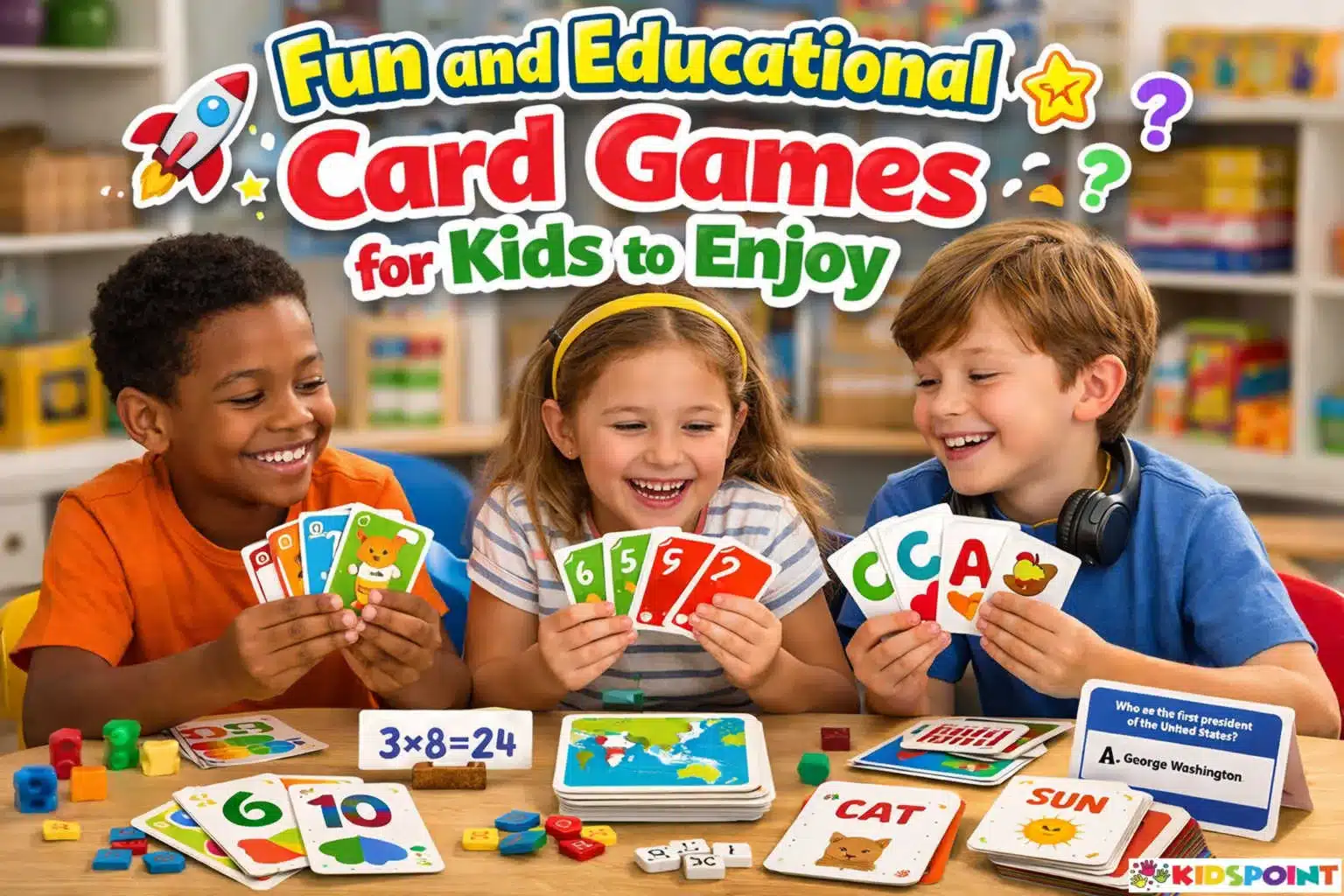
Card games have been a beloved form of entertainment for generations, offering endless opportunities for fun, bonding, and learning. For children, card games are more than just a pastime—they are powerful tools that can enhance cognitive skills, improve social interaction, and encourage strategic thinking. Whether played at home, in classrooms, or during travel, card games provide a simple yet effective way to combine education with enjoyment.
At The Kids Point, we believe that learning should always be engaging and interactive. Card games are a perfect example of how children can develop essential life skills while having fun. In this comprehensive guide, we’ll explore the benefits of card games, popular options for different age groups, and how parents and educators can use them to support children’s development.
Why Card Games Are Great for Kids
Card games may seem simple, but they offer a wide range of developmental benefits for children of all ages.
Enhancing Cognitive Skills
Card games require children to think, remember rules, and make decisions. These activities strengthen memory, concentration, and problem-solving abilities. Games that involve matching, sequencing, or strategy help sharpen the brain.
Building Math Skills
Many card games involve counting, adding, or comparing numbers. These activities help children practice math skills in a fun and stress-free environment.
Encouraging Social Interaction
Playing card games with others teaches children how to take turns, follow rules, and communicate effectively. It also promotes teamwork and sportsmanship.
Improving Focus and Patience
Card games often require players to wait for their turn and think carefully before making a move. This helps children develop patience and attention to detail.
Boosting Confidence
Winning a game or mastering a new skill gives children a sense of accomplishment. Even losing can teach resilience and the importance of trying again.
Types of Card Games for Kids
There are many different types of card games, each offering unique benefits and levels of challenge.
Matching Games
These games are perfect for younger children. Players match identical cards, improving memory and recognition skills.
Number-Based Games
Games that involve numbers help children practice counting and basic arithmetic.
Strategy Games
Older children can enjoy games that require planning and decision-making. These games develop critical thinking and problem-solving skills.
Cooperative Games
In these games, players work together to achieve a common goal, promoting teamwork and collaboration.
Storytelling Card Games
Some card games encourage creativity by asking players to create stories based on the cards they draw.
Popular Card Games for Kids
Here are some fun and educational card games that children can enjoy:
Go Fish
A classic game that is easy to learn and perfect for younger kids. Players ask each other for cards to make matching pairs.
Benefits:
- Improves memory
- Teaches communication skills
- Encourages turn-taking
Uno
A colorful and exciting game that involves matching numbers and colors.
Benefits:
- Enhances strategic thinking
- Develops quick decision-making skills
- Teaches rule-following
Old Maid
A simple matching game where players try to avoid being left with the “Old Maid” card.
Benefits:
- Builds memory and observation skills
- Encourages social interaction
Crazy Eights
A fast-paced game where players match cards by number or suit.
Benefits:
- Improves concentration
- Encourages flexible thinking
Memory Card Game
Players flip cards to find matching pairs.
Benefits:
- Strengthens memory
- Enhances focus
Snap
A fun and energetic game where players shout “Snap!” when matching cards appear.
Benefits:
- Improves reaction time
- Keeps kids engaged and active
War
A simple game where players compare card values to win rounds.
Benefits:
- Teaches number comparison
- Easy for beginners
Rummy (Simplified for Kids)
A game that involves forming sets or runs of cards.
Benefits:
- Develops strategic thinking
- Enhances pattern recognition
Educational Benefits of Card Games
Card games can be powerful educational tools when used intentionally.
Language Development
Games that involve storytelling or communication help improve vocabulary and language skills.
Critical Thinking
Strategy-based games encourage children to think ahead and make informed decisions.
Emotional Intelligence
Playing with others teaches empathy, patience, and how to handle winning and losing gracefully.
Creativity
Some card games allow children to create stories or imagine scenarios, boosting creativity.
Choosing the Right Card Game for Your Child
Selecting the right game depends on your child’s age, interests, and skill level.
Age-Appropriate Games
- Ages 3–5: Simple matching and memory games
- Ages 6–8: Basic number and action games
- Ages 9 and up: Strategy and complex games
Interest-Based Selection
Choose games that align with your child’s interests, such as animals, adventure, or fantasy themes.
Skill Level
Start with easy games and gradually introduce more challenging ones as your child gains confidence.
Tips for Making Card Games More Educational
We encourage parents and educators to maximize the learning potential of card games.
Explain the Rules Clearly
Make sure children understand how to play before starting. Use simple language and demonstrations.
Encourage Thinking Aloud
Ask children to explain their decisions. This helps develop reasoning and communication skills.
Keep It Fun
Avoid turning games into strict lessons. The goal is to learn through play.
Adapt the Rules
Modify games to suit your child’s age and abilities. For example, simplify rules for younger children.
Play Regularly
Consistent play helps reinforce skills and keeps children engaged.
Card Games for Classroom Learning
Teachers can use card games as effective teaching tools in the classroom.
Math Practice
Use number-based card games to teach addition, subtraction, and counting.
Group Activities
Card games encourage collaboration and teamwork among students.
Break Time Learning
Short card games can be used as brain breaks to refresh students’ minds.
Benefits of Family Card Game Time
Playing card games as a family creates meaningful bonding experiences.
Strengthening Relationships
Spending time together helps build trust and connection.
Creating Memories
Fun game nights become cherished family traditions.
Encouraging Communication
Games provide opportunities for conversation and laughter.
Digital vs. Traditional Card Games
While digital games are becoming popular, traditional card games still hold unique advantages.
Benefits of Traditional Card Games
- No screen time
- Hands-on interaction
- Better social engagement
When to Use Digital Games
Digital card games can be useful for solo play or when physical cards are not available. However, they should be used in moderation.
Safety and Fair Play
Teaching children about fair play and safety is an important part of gaming.
Follow the Rules
Encourage children to respect the rules and play honestly.
Be a Good Sport
Teach kids to handle winning and losing gracefully.
Supervise Young Children
Ensure younger kids understand the game and play safely.
Creating Your Own Card Games
One of the most exciting ways to engage kids is by creating custom card games.
How to Start
- Use blank cards or paper
- Add numbers, pictures, or words
- Create simple rules
Benefits
- Encourages creativity
- Enhances problem-solving skills
- Makes learning more personalized
The Long-Term Impact of Card Games
The skills children develop through card games extend far beyond childhood.
Academic Success
Improved focus, memory, and problem-solving skills contribute to better academic performance.
Social Skills
Children learn how to interact, cooperate, and communicate effectively.
Lifelong Learning
Card games foster a love for learning and curiosity.
Frequently Asked Questions
What age is مناسب for card games?
Most card games are suitable for kids aged 3 and above, with simpler games for younger children and strategy games for older ones.
Are card games educational for kids?
Yes, they help improve memory, math skills, concentration, and critical thinking while keeping kids entertained.
How long should kids play card games?
Sessions of 20–40 minutes are ideal to keep children engaged without losing focus.
Can card games be played alone?
Some card games, like memory or digital versions, can be played solo, but most are more fun with others.
What is the easiest card game for beginners?
Games like Go Fish and Snap are simple, easy to learn, and perfect for beginners.
Final Thoughts
Card games are a timeless and versatile way to combine fun with education. They provide children with valuable skills while creating opportunities for bonding and creativity.
At The Kids Point, we believe that simple activities like card games can have a profound impact on a child’s development. By incorporating these games into daily routines, parents and educators can create enriching experiences that children will enjoy and benefit from for years to come.
So, gather a deck of cards, invite your kids, and start playing—because learning is always better when it’s fun.