

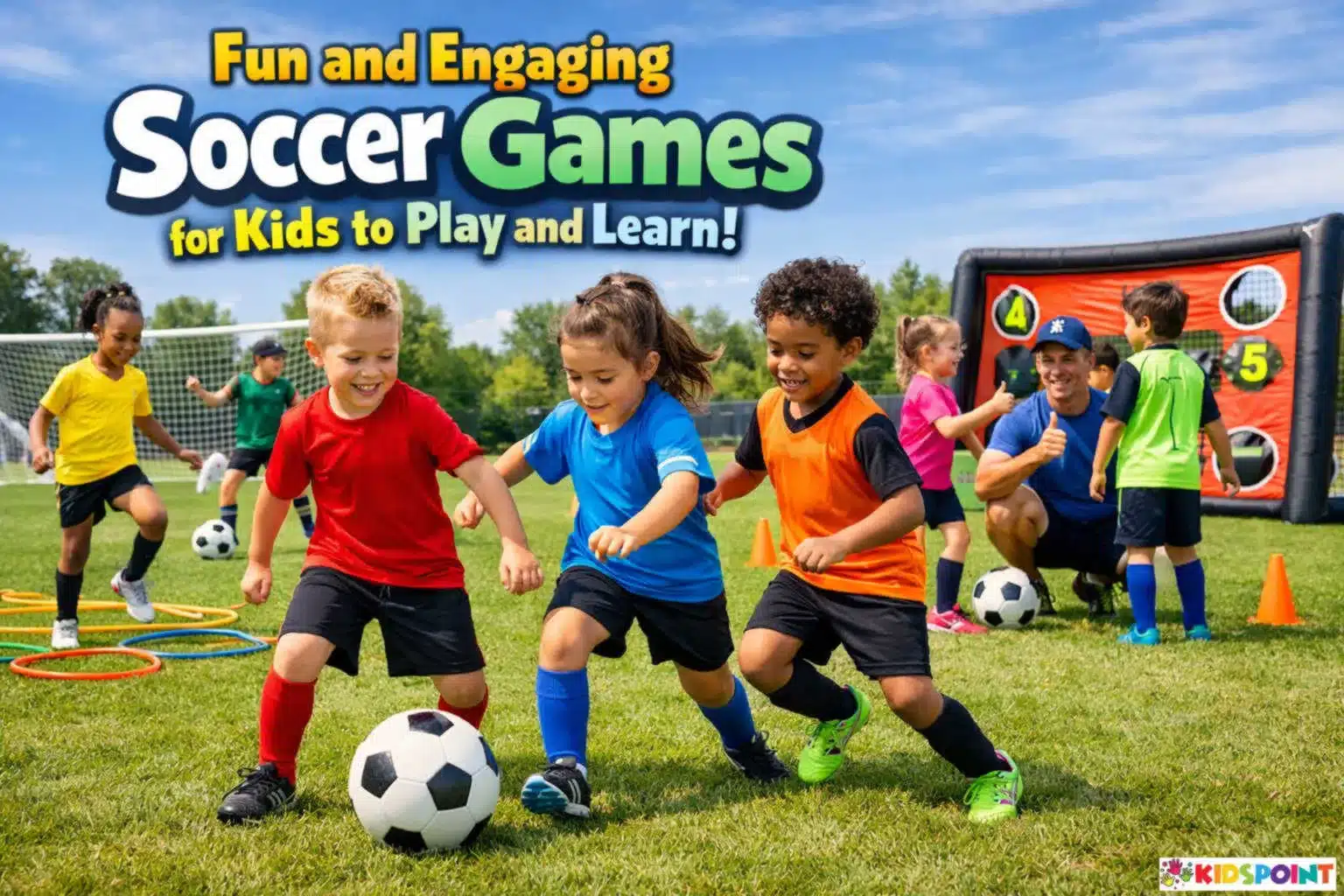
Soccer is one of the most popular sports in the world, and for good reason. It’s simple, exciting, and incredibly beneficial for children’s physical and mental development. But when it comes to kids, structured drills alone can sometimes feel repetitive. That’s where fun and engaging soccer games come in.
At The Kids Point, we believe that the best way for children to learn is through play. Soccer games that combine fun with skill-building help kids stay active, improve their abilities, and develop a lifelong love for the sport.
In this comprehensive guide, we’ll explore a variety of soccer games that are perfect for kids of all ages—whether at home, school, or on the playground.
Why Soccer Games Are Important for Kids
Before diving into the games, it’s important to understand why soccer activities are so valuable for children.
Physical Benefits
- Improves coordination and balance
- Builds strength and endurance
- Enhances agility and speed
Mental Benefits
- Boosts concentration and focus
- Encourages quick decision-making
- Develops problem-solving skills
Social Benefits
- Promotes teamwork and cooperation
- Builds communication skills
- Teaches sportsmanship
When kids play soccer through games, they don’t even realize how much they’re learning.
Choosing the Right Soccer Games for Kids
Not all games are suitable for every age group. Selecting the right activities ensures kids stay engaged and safe.
For Younger Kids (Ages 4–7)
- Simple rules
- Short game duration
- Focus on fun rather than competition
For Older Kids (Ages 8–12)
- More structured gameplay
- Skill-based challenges
- Team-oriented activities
The key is to keep things exciting and age-appropriate.
Red Light, Green Light Soccer
This classic game is a favorite among young children.
How to Play
- One player acts as the “traffic light”
- Kids dribble the ball when “green light” is called
- They must stop immediately at “red light”
Skills Developed
- Ball control
- Listening skills
- Quick reactions
This game is perfect for beginners learning how to control the ball.
Sharks and Minnows
A high-energy game that kids absolutely love.
How to Play
- One or two players are “sharks”
- The rest are “minnows” dribbling their soccer balls
- Sharks try to steal or kick the ball away
Skills Developed
- Dribbling under pressure
- Speed and agility
- Awareness
This game keeps kids moving and laughing while learning important skills.
Dribble Relay Races
Perfect for team play and friendly competition.
How to Play
- Divide kids into teams
- Each player dribbles to a cone and back
- Tag the next teammate
Skills Developed
- Dribbling speed
- Coordination
- Teamwork
Relay races add excitement and encourage cooperation.
Soccer Bowling
A creative twist that combines soccer with bowling.
How to Play
- Set up cones or plastic bottles as pins
- Kids kick the ball to knock them down
Skills Developed
- Kicking accuracy
- Focus
- Control
This is a great game for improving shooting skills in a fun way.
Capture the Ball
Inspired by capture-the-flag, this game is full of action.
How to Play
- Divide players into two teams
- Each team protects their soccer balls
- Players try to steal the opponent’s balls
Skills Developed
- Strategy
- Teamwork
- Ball control
Kids enjoy the competitive and strategic elements of this game.
Knockout Soccer
A fun elimination-style game.
How to Play
- Each player has a ball
- Players try to knock others’ balls out of the area
- Last player remaining wins
Skills Developed
- Defensive skills
- Awareness
- Ball protection
This game teaches kids how to shield the ball effectively.
Goal Shooting Challenge
Perfect for improving scoring skills.
How to Play
- Set up a goal
- Kids take turns shooting
- Award points for accuracy
Skills Developed
- Shooting technique
- Precision
- Confidence
You can make it more fun by adding targets inside the goal.
Follow the Leader (Soccer Style)
A great game for younger children.
How to Play
- One player leads while dribbling
- Others follow and copy movements
Skills Developed
- Coordination
- Creativity
- Dribbling control
This game encourages imagination and skill imitation.
Obstacle Course Dribbling
Turn practice into an adventure.
How to Play
- Set up cones, hurdles, or markers
- Kids dribble through the course
Skills Developed
- Agility
- Control
- Balance
Obstacle courses keep kids engaged and challenged.
Soccer Tag
A twist on the classic tag game.
How to Play
- One player is “it”
- Others dribble while avoiding being tagged
Skills Developed
- Speed
- Ball control
- Awareness
This game is simple yet highly effective.
Pass and Move Game
Ideal for teaching teamwork.
How to Play
- Kids pass the ball and move to a new position
- Encourage constant movement
Skills Developed
- Passing accuracy
- Communication
- Team coordination
This game helps kids understand real match situations.
Mini Soccer Matches
Sometimes, the best game is the real thing—just simplified.
How to Play
- Create small teams
- Use a smaller field
- Keep rules simple
Skills Developed
- Game understanding
- Teamwork
- Decision-making
Mini matches allow kids to apply everything they’ve learned.
Tips to Make Soccer Games More Fun
At The Kids Point, we recommend a few simple strategies to maximize enjoyment.
Keep It Positive
Encourage effort rather than focusing only on winning.
Rotate Games
Avoid boredom by changing activities regularly.
Use Rewards
Small rewards or praise can motivate kids.
Include Everyone
Make sure all children get equal opportunities to participate.
Safety Tips for Soccer Games
Safety should always come first.
- Use appropriate equipment
- Ensure the playing area is safe
- Provide water breaks
- Supervise younger children
A safe environment allows kids to play confidently.
How Soccer Games Support Learning
Soccer games are not just physical activities—they’re educational tools.
Life Skills Kids Learn
- Discipline
- Patience
- Leadership
- Cooperation
These lessons go beyond the field and help in everyday life.
Creating a Soccer Routine for Kids
Consistency helps children improve over time.
Sample Weekly Plan
- Day 1: Dribbling games
- Day 2: Passing and teamwork
- Day 3: Shooting practice
- Day 4: Fun mixed games
A balanced routine keeps kids excited and progressing.
Encouraging Kids to Love Soccer
Not every child starts as a sports enthusiast, but the right approach can make a big difference.
What Parents and Teachers Can Do
- Be supportive and encouraging
- Focus on fun, not pressure
- Celebrate small achievements
- Play along with kids
When children associate soccer with fun, they’re more likely to stay interested.
Common Questions About Soccer Games for Kids
What age can kids start playing soccer games?
Kids can start simple soccer games as early as 3–4 years old with basic rules and supervision.
Are soccer games safe for young children?
Yes, as long as proper supervision, safe equipment, and age-appropriate games are used.
How do soccer games help child development?
They improve physical fitness, coordination, teamwork, and problem-solving skills.
How long should kids play soccer each day?
Around 30–60 minutes of active play is ideal, depending on the child’s age and energy level.
Can soccer games be played indoors?
Yes, many soccer games can be adapted for indoor play using soft balls and limited space.
Final Thoughts
Soccer games are a fantastic way to combine fun, fitness, and learning for kids. From simple dribbling challenges to exciting team competitions, these activities help children develop essential skills while enjoying every moment.
At The Kids Point, we believe that play is the foundation of learning. By introducing fun and engaging soccer games into your child’s routine, you’re helping them grow physically, mentally, and socially.
So grab a ball, gather some kids, and start playing—because the best learning happens when kids are having fun.