

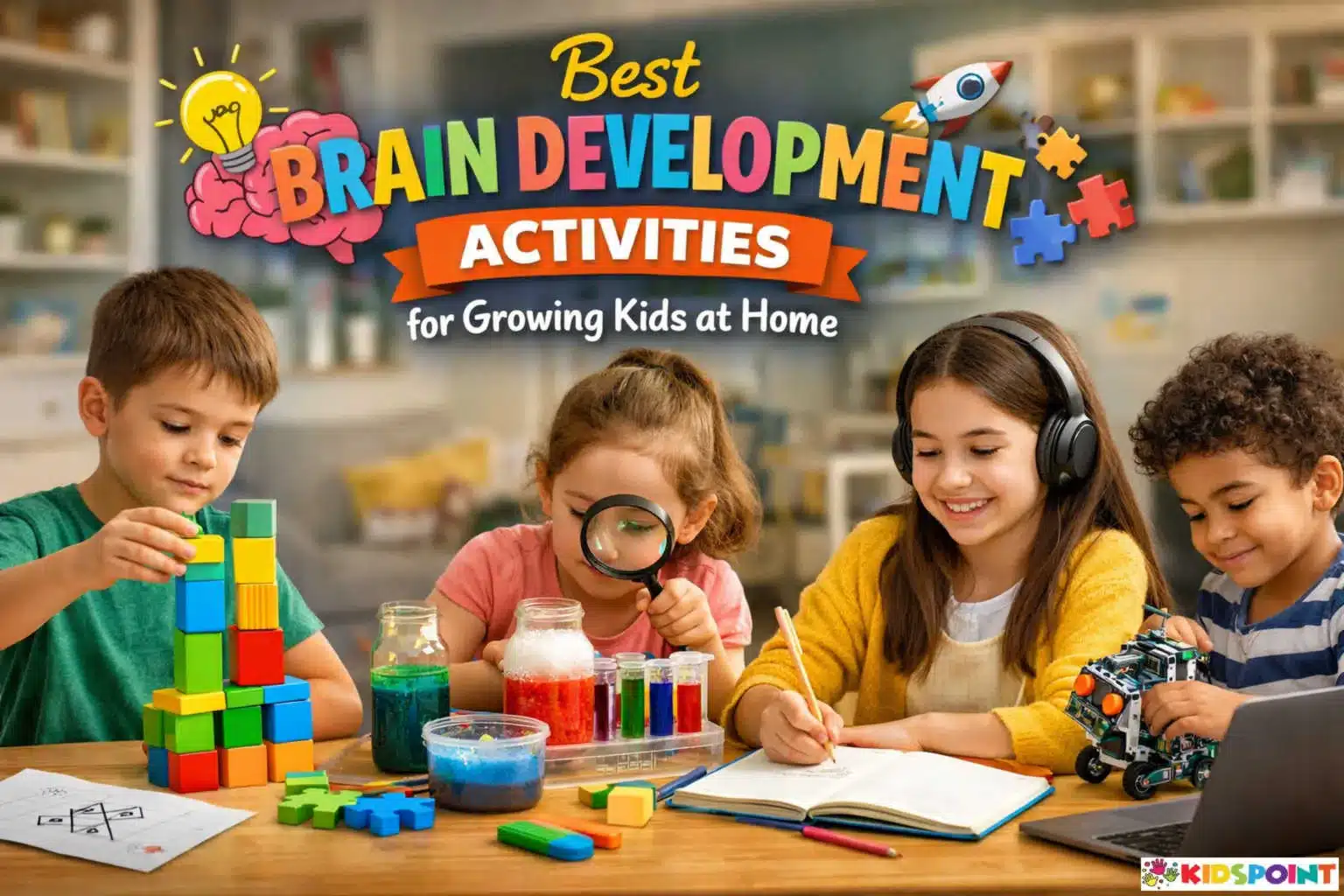
Children’s early years are one of the most important stages for brain development. During this time, kids absorb information quickly, develop thinking abilities, and build essential cognitive skills that influence their learning and behavior throughout life. Parents often look for simple and effective ways to support their child’s mental growth, especially through activities that can be done at home.
Brain development activities help children improve memory, concentration, creativity, and problem-solving skills. These activities also strengthen emotional intelligence and social understanding, which are essential for overall development. The good news is that parents do not need expensive tools or complicated programs to help their children grow mentally. Many effective brain development activities can be done using simple materials and everyday experiences.
At The Kids Point, we believe that learning should always be fun, engaging, and interactive. With the right activities, parents can turn everyday moments into valuable learning opportunities that support children’s brain development while keeping them entertained.
Understanding Brain Development in Children
Before exploring activities, it is helpful to understand how children’s brains develop.
During childhood, the brain forms billions of neural connections. These connections are strengthened through experiences, play, and learning activities. The more children explore, experiment, and interact with their surroundings, the stronger these connections become.
Brain development activities help improve several important skills, including:
- Memory and recall abilities
- Attention and concentration
- Logical thinking and problem solving
- Language and communication skills
- Creativity and imagination
- Emotional intelligence
Providing children with stimulating activities at home helps them develop these skills naturally.
Reading Activities to Strengthen Brain Power
Reading is one of the most powerful activities for brain development. It helps improve vocabulary, comprehension, and imagination.
Daily Story Time
Parents can create a daily reading routine where they read stories with their children. Listening to stories helps kids develop language skills and improves their ability to focus and understand ideas.
Children can also be encouraged to ask questions about the story, predict what might happen next, or describe their favorite characters.
Picture Book Discussions
For younger children, picture books are excellent learning tools. Parents can ask questions like:
- What do you see in the picture?
- What do you think the character is feeling?
- What might happen next?
These conversations encourage observation and critical thinking.
Story Creation
Another fun activity is asking children to create their own stories. They can draw pictures and describe what is happening in each scene. This activity strengthens creativity, imagination, and language development.
We encourage families to make reading a daily habit because it significantly boosts brain development.
Puzzle Games That Improve Problem-Solving Skills
Puzzles are excellent tools for improving cognitive development in children.
Jigsaw Puzzles
Jigsaw puzzles help children improve visual recognition, patience, and logical thinking. Kids learn how different pieces fit together to create a complete picture.
Start with simple puzzles for younger children and gradually increase the difficulty as they grow.
Maze Games
Maze puzzles challenge children to find the correct path from start to finish. This activity encourages logical thinking and improves concentration.
Matching Games
Matching cards or memory games help strengthen memory and attention skills. Children need to remember the location of cards and match pairs correctly.
Puzzle-based activities are simple yet highly effective for building brain power.
Creative Play for Brain Stimulation
Creative play helps children think independently and develop imaginative problem-solving skills.
Building Blocks and Construction Toys
Building blocks encourage kids to design and build structures such as houses, bridges, or towers. This activity improves spatial awareness and engineering thinking.
Children learn to experiment, test ideas, and find solutions when their structures fall or need improvement.
Drawing and Painting
Art activities stimulate the creative side of the brain. Drawing, painting, and coloring allow children to express their emotions and ideas visually.
Parents can encourage creativity by asking kids to draw their favorite animal, a dream house, or an imaginary world.
Craft Activities
Craft projects involving cutting, folding, and assembling materials help improve hand-eye coordination and fine motor skills.
Creative crafts also help children learn patience and focus.
Memory Games to Boost Cognitive Skills
Memory activities strengthen brain connections and improve the ability to retain information.
Object Memory Game
Parents can place several objects on a table and allow children to observe them for a short time. After covering the objects, kids must remember and list as many items as possible.
This simple game improves attention and recall skills.
Sequence Memory Game
In this activity, parents create a sequence of actions such as clapping, jumping, or tapping the table. Children must repeat the sequence correctly.
As children improve, the sequence can become longer and more challenging.
Word Recall Game
Parents can say a list of words and ask the child to repeat them in order. This activity strengthens listening skills and memory retention.
Learning Through Educational Play
Educational games help children learn academic skills while keeping them engaged.
Alphabet and Word Games
Younger children can play games that involve recognizing letters and forming simple words. For example:
- Arranging alphabet cards
- Spelling simple words
- Finding objects that start with a certain letter
These activities support language development.
Number and Counting Games
Counting games help improve early math skills. Parents can ask children to count toys, fruits, or household objects.
Simple math puzzles such as addition and subtraction games also improve logical thinking.
Sorting and Categorizing
Children can sort objects by color, size, or shape. This activity teaches classification skills and logical reasoning.
We encourage educational play because it makes learning both effective and enjoyable.
Physical Activities That Support Brain Development
Physical movement plays an important role in brain growth. When children move their bodies, blood flow increases to the brain, improving focus and mental performance.
Dance and Movement Games
Playing music and encouraging kids to dance improves coordination and creativity. Children also learn rhythm and body awareness.
Outdoor Exploration
Outdoor activities such as nature walks help children observe their surroundings and ask questions about plants, animals, and weather.
These experiences strengthen curiosity and critical thinking.
Obstacle Courses
Simple obstacle courses created with household items challenge children to plan their movements and solve physical challenges.
This activity improves both physical and mental coordination.
Social Activities That Build Emotional Intelligence
Brain development is not only about academic learning. Emotional intelligence is equally important.
Role-Playing Games
Children can pretend to be teachers, doctors, or shopkeepers. Role-playing helps them understand different perspectives and develop communication skills.
Group Board Games
Playing board games with family members teaches children about rules, patience, teamwork, and strategic thinking.
Family Discussions
Talking with children about their thoughts, feelings, and experiences helps improve emotional awareness and communication skills.
These activities strengthen the social and emotional parts of the brain.
Encouraging Curiosity and Exploration
Curiosity is one of the most powerful drivers of brain development.
Parents can support curiosity by:
- Encouraging children to ask questions
- Exploring new hobbies and interests
- Visiting libraries, parks, or museums
- Conducting simple science experiments at home
When children feel comfortable exploring and asking questions, their brain development accelerates naturally.
Creating a Brain-Friendly Environment at Home
Parents can support their child’s development by creating an environment that encourages learning.
Provide Learning Materials
Keep books, puzzles, art supplies, and educational toys easily accessible so children can explore them freely.
Limit Excessive Screen Time
While technology can be educational, too much screen time may reduce opportunities for active learning and creativity.
Encourage Independent Thinking
Allow children to solve problems on their own rather than immediately providing answers.
Celebrate Effort and Progress
Recognizing children’s effort builds confidence and motivates them to continue learning.
We believe that a supportive home environment plays a major role in shaping a child’s intellectual growth.
Inspiring Lifelong Learning in Children
Brain development activities are not just about improving academic performance. They also help children develop a love for learning that lasts a lifetime.
Children who grow up exploring, asking questions, and solving problems become more confident learners. They develop resilience, creativity, and curiosity—skills that help them succeed in school and beyond.
Parents who actively participate in these activities create meaningful bonding moments while supporting their child’s mental growth.
Common Questions Parents Ask About Kids’ Brain Development Activities
Why are brain development activities important for kids?
Brain development activities improve memory, concentration, creativity, and problem-solving skills, helping children learn and grow more effectively.
At what age should children start brain development activities?
Children can start simple brain development activities as early as 2–3 years old with puzzles, storytelling, and basic educational games.
How much time should kids spend on brain development activities daily?
Around 30–60 minutes of engaging learning activities each day is usually enough to support healthy brain development.
Can brain development activities improve school performance?
Yes, activities like reading, puzzles, and memory games strengthen cognitive skills that help children perform better in school.
What are the best brain development activities for kids at home?
Reading, puzzle games, creative play, memory exercises, storytelling, and educational games are some of the best activities for brain growth.
Supporting Healthy Brain Growth Through Everyday Activities
Helping children develop strong thinking skills does not require expensive programs or complicated lessons. Simple daily activities such as reading, puzzles, creative play, and conversations can significantly strengthen a child’s brain.
The key is consistency and encouragement. When learning is enjoyable and engaging, children naturally become curious and motivated to explore new ideas.
We encourage parents to integrate brain development activities into daily routines. By turning everyday moments into learning opportunities, families can support children’s growth while creating joyful memories together.
With patience, creativity, and a supportive environment, every child can develop the cognitive skills needed to thrive in school and life.