

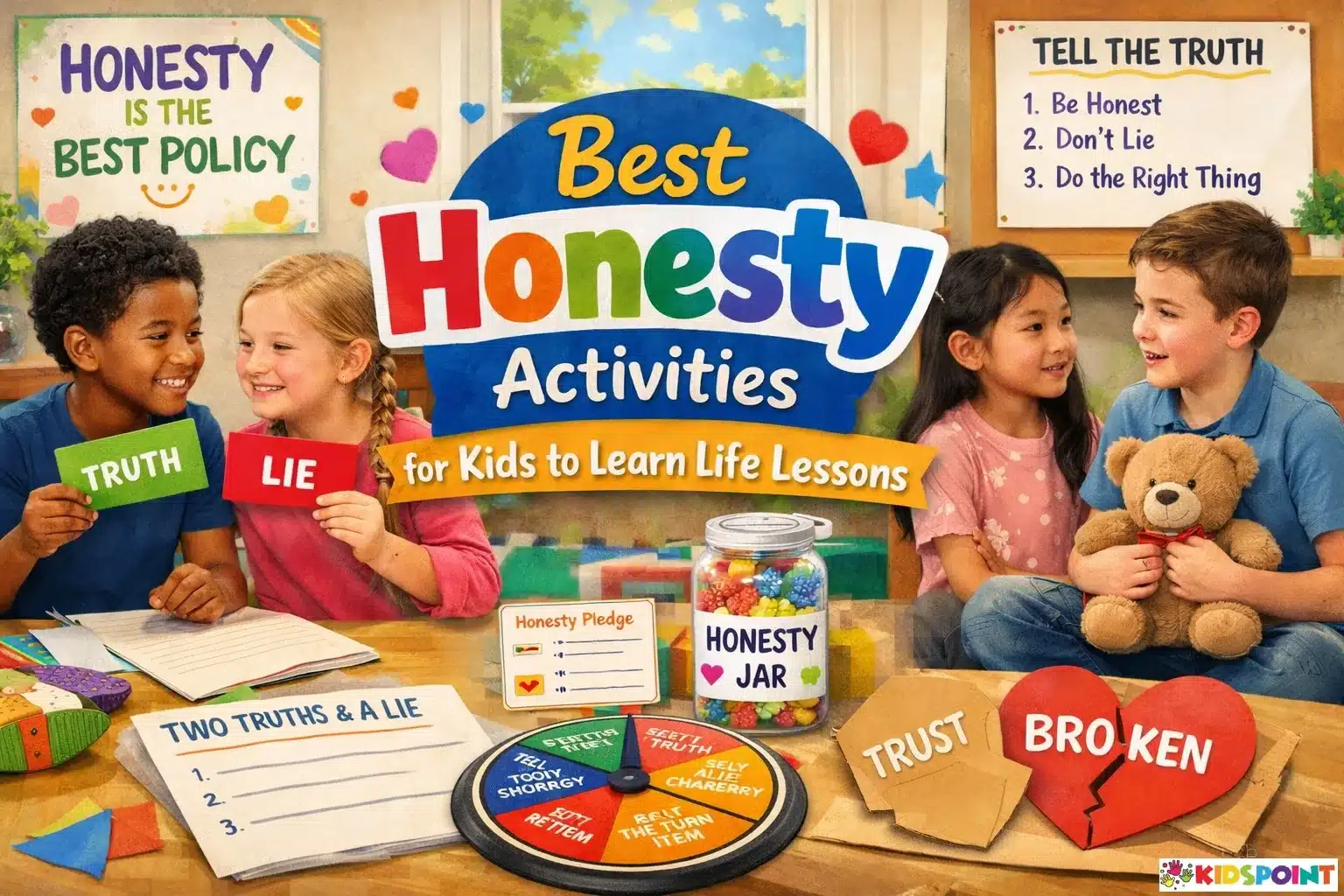
Teaching honesty to children is one of the most important values a parent, guardian, or teacher can instill. Honesty is not just about telling the truth—it also teaches responsibility, trustworthiness, integrity, and respect for others. Developing this trait early in life helps children navigate social situations, build strong relationships, and make ethical decisions.
At The Kids Point, we believe that children learn best through interactive and engaging activities rather than just lectures. This article explores the best honesty activities for kids to help them understand, practice, and embrace honesty as a lifelong habit.
Why Teaching Honesty Matters
Before diving into activities, it’s essential to understand why honesty is a fundamental life skill for children:
- Builds Trust: Children who practice honesty are more likely to form strong, trusting relationships with peers, family members, and teachers.
- Encourages Accountability: Honest children are more willing to admit mistakes and learn from them.
- Promotes Self-Respect: Living truthfully helps children feel confident and proud of their choices.
- Prevents Negative Behaviors: Teaching honesty early reduces the likelihood of lying, cheating, or manipulating others in the future.
Honesty Activities for Younger Kids (Ages 4–7)
For younger children, honesty activities should be simple, visual, and interactive. At this age, children are still developing their understanding of truth and lies, so hands-on experiences work best.
Truth and Lie Sorting Game
Objective: Help children distinguish between truths and lies.
How to Play:
- Prepare a set of cards with simple statements. Some should be true, and some should be false.
- Ask the child to sort the cards into “truth” and “lie” piles.
- Discuss each card and why it belongs in its category.
Why It Works: This activity teaches children to think critically about statements and understand the importance of honesty in communication.
Honesty Storytime
Objective: Teach honesty through storytelling.
How to Play:
- Read stories or fables where honesty is a key theme, like The Boy Who Cried Wolf.
- After reading, discuss the consequences of lying and the benefits of telling the truth.
- Encourage children to share their experiences with honesty.
Why It Works: Stories make abstract concepts concrete and memorable, helping young minds grasp the consequences of dishonesty.
Honest Confession Jar
Objective: Encourage children to share the truth without fear.
How to Play:
- Place a jar in the classroom or at home. Label it “Honest Confession Jar.”
- Encourage children to write down times when they told the truth or admitted a mistake, then place it in the jar.
- Read a few anonymous examples together and praise the honest efforts.
Why It Works: Children learn that honesty is safe, appreciated, and celebrated, reinforcing positive behavior.
Honesty Activities for Middle-Aged Kids (Ages 8–12)
Children in this age group can engage in more complex activities that involve reflection, problem-solving, and social interactions.
Role-Playing Scenarios
Objective: Practice honesty in real-life situations.
How to Play:
- Create scenarios where children might face a temptation to lie (e.g., “You broke a vase; what do you do?”).
- Ask the children to act out both the dishonest and honest reactions.
- Discuss how each choice affects others and themselves.
Why It Works: Role-playing helps children internalize lessons by experiencing consequences in a safe environment.
Honesty Board Game
Objective: Combine learning with fun to reinforce honesty.
How to Play:
- Design a board game with challenges and rewards.
- Include scenarios that require truthful answers or decisions.
- Reward honest choices with points or tokens.
Why It Works: Games make learning active and enjoyable, which helps children remember lessons about honesty longer.
“Truth or Consequence” Activity
Objective: Demonstrate the importance of honesty through cause-and-effect.
How to Play:
- Give children situations that require a choice between telling the truth or lying.
- Discuss the potential consequences of both choices.
- Optionally, children can share personal experiences and how honesty changed outcomes.
Why It Works: Children see that honesty may sometimes be challenging, but it often leads to better results.
Honesty Activities for Teenagers (Ages 13–18)
Teenagers face more complex social situations, peer pressure, and moral dilemmas. Activities for this age group should focus on reflection, ethical reasoning, and discussion.
Honesty Journaling
Objective: Encourage self-reflection and integrity.
How to Play:
- Ask teens to maintain a journal for a week.
- Prompt them to write about times they were honest, tempted to lie, or noticed dishonesty around them.
- At the end of the week, discuss what they learned about themselves.
Why It Works: Journaling fosters introspection, helping teens understand the long-term value of honesty in their personal growth.
Debate on Ethical Dilemmas
Objective: Develop critical thinking and moral reasoning.
How to Play:
- Present real-world scenarios where honesty is tested (e.g., “You find a wallet on the street. What do you do?”).
- Divide teens into groups to discuss and defend their decisions.
- Guide a reflective discussion highlighting ethical outcomes.
Why It Works: Debates teach teens that honesty isn’t just a rule—it’s a conscious choice that affects society and relationships.
Honesty Recognition Program
Objective: Celebrate and reinforce honesty in everyday life.
How to Implement:
- Create a system where teens can nominate peers for honest behavior.
- Recognize and reward honesty in school, clubs, or at home.
- Encourage teens to share their stories of integrity.
Why It Works: Positive reinforcement strengthens the habit of honesty and encourages others to follow suit.
Creative and Fun Honesty Activities for All Ages
Honesty doesn’t have to be boring or strictly educational. Here are some fun ideas that work for multiple age groups:
Honesty Pictionary
- Children draw situations that represent honesty or dishonesty.
- Other participants guess the scenario.
- Discuss why the action is honest or not.
Honesty Bingo
- Create bingo cards with honest behaviors (e.g., “Admitted a mistake,” “Returned lost item,” “Helped someone truthfully”).
- Children mark behaviors they observe or perform during the week.
- Celebrate completed cards to reinforce positive behavior.
Truth Chain
- Children sit in a circle and take turns sharing truths about their day, feelings, or actions.
- Each truth adds a “link” to the chain of honesty.
- At the end, discuss how honesty strengthens relationships and trust.
Tips for Parents and Teachers to Encourage Honesty
Even with activities, children need consistent guidance from adults. Here are some tips:
- Model Honesty: Children learn from observing adults. Be truthful in your words and actions.
- Praise Honest Behavior: Reinforce honesty with positive feedback, not just punishment for dishonesty.
- Create a Safe Space: Ensure children feel safe admitting mistakes without fear of harsh consequences.
- Discuss Consequences: Help children understand both the short-term and long-term effects of lying.
- Be Patient: Developing honesty is a gradual process. Gentle guidance is more effective than harsh punishment.
Benefits of Engaging Children in Honesty Activities
Regularly practicing honesty activities has profound benefits:
- Improved Communication: Honest children are better at expressing their thoughts and feelings.
- Stronger Relationships: Honesty builds trust, a key component of meaningful friendships and family bonds.
- Enhanced Self-Esteem: Children feel proud of their integrity and ethical behavior.
- Better Decision-Making: Learning to be honest helps children make responsible choices in complex situations.
- Long-Term Success: Honesty is foundational for personal, academic, and professional success in the future.
Integrating Honesty Activities into Daily Life
To make honesty a natural habit, incorporate small daily practices:
- Morning Reflection: Ask children to set a daily honesty goal.
- Family Honesty Time: Share honest stories about the day during dinner.
- Classroom Honesty Corner: Create a space where students can reflect and share honest experiences.
- Weekly Honesty Challenges: Set challenges like “Return something you find” or “Admit a small mistake” and celebrate completion.
FAQs on Honesty Activities for Kids
At what age should children start learning honesty?
Children can begin understanding honesty concepts as early as age 3–4 through simple games and stories.
How can I encourage my child to be honest without punishing mistakes?
Praise honesty, model truthful behavior, and provide a safe space for children to admit errors without fear.
Are honesty activities suitable for classroom settings?
Yes! Activities like storytelling, role-playing, and honesty jars can be easily integrated into classroom learning.
Can honesty activities help teenagers?
Absolutely. Journaling, debates, and ethical dilemmas help teens reflect, make responsible choices, and practice integrity.
How often should honesty activities be conducted?
Incorporate small honesty exercises daily and dedicate longer activities weekly to make honesty a consistent habit.
Building Lifelong Integrity in Children
Teaching honesty is more than a lesson—it’s a lifelong investment in a child’s character. Through interactive, age-appropriate activities, children can learn to value truthfulness, accountability, and ethical behavior. At The Kids Point, we encourage parents and educators to combine guidance, positive reinforcement, and creative activities to make honesty an engaging and natural part of children’s lives.
By nurturing honesty from an early age, you help children grow into trustworthy, confident, and responsible individuals ready to face life’s challenges with integrity.