

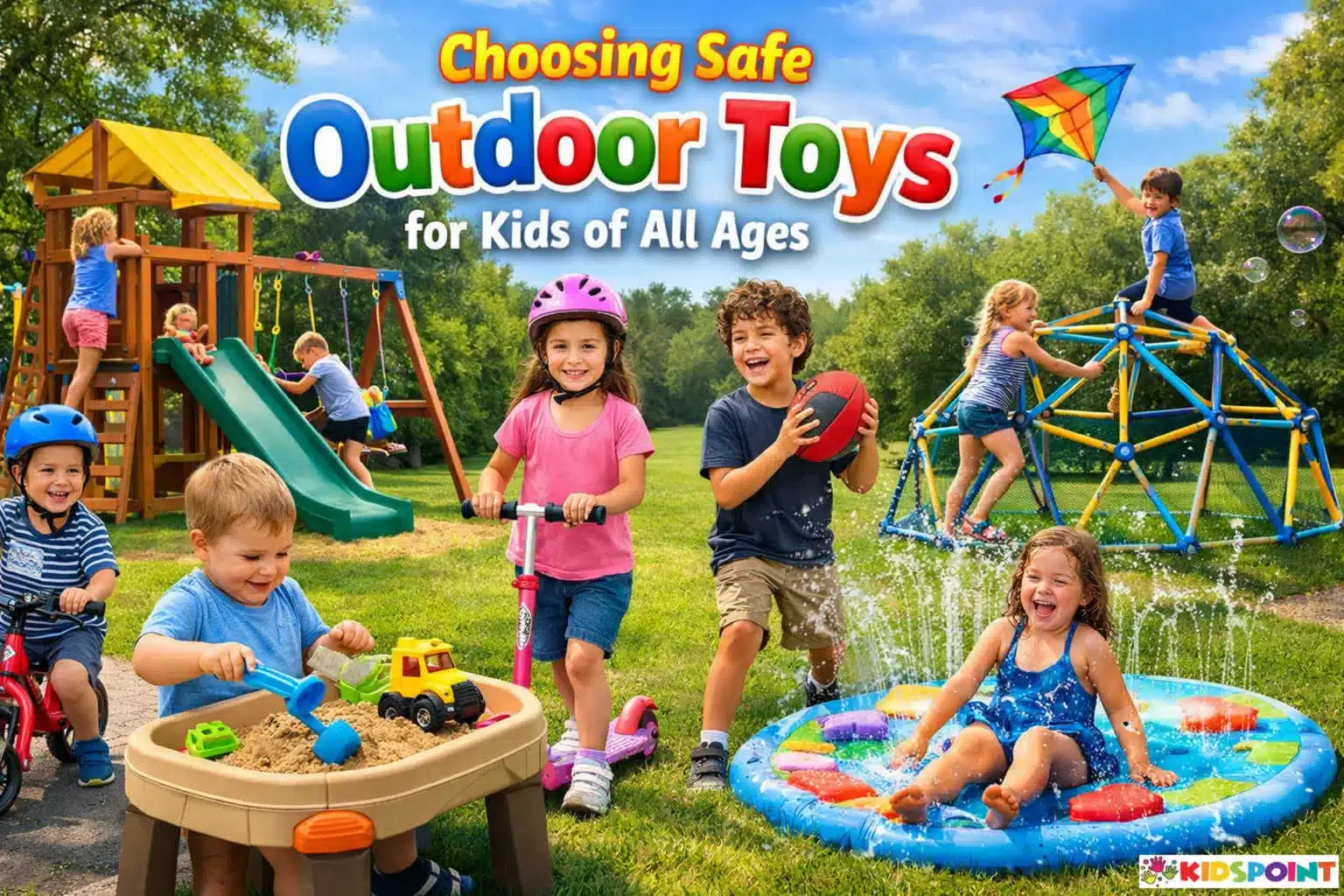
Outdoor play is one of the most important parts of childhood. It builds strength, confidence, creativity, and social skills. Running, climbing, balancing, building, and exploring the outdoors help children grow physically and emotionally in ways that indoor play cannot fully replace. However, choosing the right outdoor toys requires thoughtful consideration. Safety, durability, and age-appropriateness should always come first.
At The Kids Point, we believe outdoor play should be both exciting and secure. This complete guide will help parents and caregivers choose safe outdoor toys for children at every developmental stage—from toddlers to teens.
Why Outdoor Play Is Essential for Child Development
Before selecting toys, it’s important to understand why outdoor play matters so much.
Physical Development
Outdoor activities strengthen muscles and bones, improve coordination, and enhance balance. Activities like running, climbing, pedaling, and throwing help children develop gross motor skills. Regular outdoor movement also reduces the risk of childhood obesity and promotes overall health.
Cognitive Growth
Nature stimulates curiosity. When children experiment with sand, water, or simple sports equipment, they learn about cause and effect, problem-solving, and spatial awareness. Outdoor toys often encourage creativity and independent thinking.
Social and Emotional Skills
Group games and shared play equipment teach cooperation, patience, leadership, and empathy. Outdoor environments also reduce stress and improve mood.
We emphasize that safe outdoor toys are not just entertainment—they are tools for lifelong development.
Core Principles for Choosing Safe Outdoor Toys
No matter the child’s age, certain safety principles always apply.
Choose Age-Appropriate Toys
Every toy should match the child’s developmental level. A toy designed for older children may present choking hazards, sharp edges, or complex features that younger children cannot safely handle.
Always check manufacturer age recommendations and use your judgment based on your child’s abilities.
Check Material Quality
Outdoor toys must withstand weather and active play. Look for:
- Durable, impact-resistant plastic
- Rust-resistant metal
- Smooth, splinter-free wood
- Non-toxic paints and finishes
Avoid brittle plastic, loose stitching, or poorly attached parts.
Inspect for Safety Certifications
Reliable outdoor toys often meet safety standards such as ASTM or CPSC guidelines. These certifications indicate that the product has undergone safety testing.
Ensure Proper Supervision
Even the safest toy can become risky without supervision. Younger children require close monitoring, while older children need guidance and safety reminders.
Maintain Toys Regularly
Weather exposure can cause cracks, rust, fading, and loose parts. Perform routine inspections and replace damaged items immediately.
Safe Outdoor Toys for Toddlers (Ages 1–3)
Toddlers are curious explorers. They are learning to walk, run, and climb but still lack full coordination and judgment.
What to Look For
- No small detachable parts
- Rounded edges
- Lightweight and stable designs
- Non-toxic materials
Recommended Toy Types
Push and Ride-On Toys
These help toddlers practice balance and coordination. Choose models with wide bases and smooth-rolling wheels.
Soft Balls
Foam or fabric balls encourage throwing and kicking without causing injury.
Water and Sand Tables
These promote sensory development. Always supervise water play closely and empty containers after use.
Sturdy Wagons
Useful for imaginative play and motor skill development.
Safety Tips
- Always supervise outdoor play.
- Ensure play surfaces are flat and clear of obstacles.
- Store toys properly to prevent tripping hazards.
We recommend simplicity for this age group. Safe, sturdy toys are more beneficial than complex equipment.
Safe Outdoor Toys for Preschoolers (Ages 3–5)
Preschoolers develop stronger motor skills and begin engaging in cooperative play.
What to Look For
- Stable climbing structures
- Lightweight sports equipment
- Protective features such as rounded corners
Recommended Toy Types
Small Slides and Playhouses
Encourage imaginative role play. Choose units with wide bases and guardrails.
Mini Sports Sets
Basketball hoops or soccer goals designed for preschoolers build coordination and teamwork.
Balance Bikes
These prepare children for pedal bikes while improving balance. Ensure proper helmet use.
Kites
Flying kites helps children understand wind and direction. Use in open spaces away from roads or power lines.
Safety Tips
- Use helmets for wheeled toys.
- Avoid slippery surfaces.
- Teach basic safety rules before play.
Preschoolers love to test limits, so gentle supervision and consistent safety reminders are essential.
Safe Outdoor Toys for Young Children (Ages 6–8)
Children in this age group crave challenge and independence. Their coordination improves significantly.
What to Look For
- Adjustable equipment that grows with the child
- Protective gear compatibility
- Durable construction for active play
Recommended Toy Types
Soccer Goals and Sports Equipment
Choose sturdy frames that anchor securely to the ground.
Badminton and Tennis Sets
Lightweight rackets and soft shuttlecocks reduce injury risk.
Beginner Skateboards or Scooters
Always pair with helmets and protective pads.
Lawn Games
Ring toss, bean bag toss, and other soft-target games encourage friendly competition.
Safety Tips
- Teach proper spacing during group play.
- Require protective gear for wheeled toys.
- Establish safe play zones away from traffic.
We advise balancing freedom with structured rules at this stage.
Safe Outdoor Toys for Older Children (Ages 9–12)
Preteens seek more advanced activities and often enjoy exploring beyond the backyard.
What to Look For
- Equipment suited to their height and strength
- Safety gear compatibility
- Clear usage instructions
Recommended Toy Types
Bicycles
Ensure the bike fits the child properly. Helmets are mandatory.
Advanced Scooters and Skateboards
Encourage skill development in designated safe areas.
Camping and Exploration Kits
Teach responsibility and nature awareness.
Fishing Sets
Provide supervised instruction on handling hooks safely.
Safety Tips
- Establish clear boundaries for outdoor exploration.
- Teach traffic awareness and road safety.
- Encourage communication about play locations.
Preteens benefit from responsibility, but parents should continue monitoring from a distance.
Safe Outdoor Toys for Teens (Ages 13+)
Teenagers often use outdoor equipment for sports, fitness, and social activities.
What to Look For
- High-quality, durable equipment
- Clear safety instructions
- Proper fit and ergonomic design
Recommended Toy Types
Team Sports Equipment
Soccer balls, volleyball sets, and basketball hoops should meet quality standards.
Electric Scooters and Bikes
Emphasize road rules and helmet use.
Archery Sets
Only use in controlled environments with supervision.
Hiking and Adventure Gear
Teach proper preparation, hydration, and first aid basics.
Safety Tips
- Stress accountability and responsible use.
- Encourage hydration during long activities.
- Promote safety gear as a habit, not an option.
We encourage teens to take ownership of their safety decisions while maintaining parental guidance.
Common Outdoor Toy Hazards
Regardless of age, certain risks should always be monitored.
Choking Hazards: Small parts can be dangerous for young children. Inspect toys carefully before purchase.
Sharp Edges: Check for rough surfaces, splinters, or exposed screws.
Heat Exposure: Plastic and metal can become hot in direct sunlight. Test surfaces before use.
Rust and Corrosion: Metal equipment should be rust-resistant and inspected regularly.
Improper Setup: Follow manufacturer assembly instructions carefully to ensure stability.
Tips for Maintaining Outdoor Toy Safety
Regular Cleaning: Wash plastic toys with mild soap and water. Dry thoroughly to prevent mold or mildew.
Frequent Inspections: Check for cracks, loose screws, and worn parts.
Proper Storage: Store toys in a shed or covered area to protect from rain and sun damage.
Replace When Necessary: If a toy shows significant wear, replace it rather than attempting unsafe repairs.
Teach Responsibility: Encourage children to report broken items and return toys to storage after use.
The Role of Parents and Caregivers
No toy is completely risk-free. Active involvement ensures safe play.
- Set clear safety rules.
- Model safe behavior, such as wearing helmets.
- Praise responsible choices.
- Adjust supervision levels as children grow.
We believe safe play is a partnership between quality toys and attentive caregiving.
Common Questions About Outdoor Toy Safety
What age group should I follow for outdoor toy selection?
Always check the manufacturer’s age recommendation and consider your child’s developmental level to ensure safety.
How do I know if an outdoor toy is safe?
Look for durable, non-toxic materials, smooth edges, and safety certifications like ASTM or CPSC.
Should toddlers be supervised while playing outside?
Yes, toddlers require close adult supervision to prevent falls, choking, and other hazards.
How can I maintain outdoor toys safely?
Regularly inspect for cracks, rust, loose parts, and clean toys to keep them in good condition.
Are helmets necessary for all wheeled toys?
Yes, helmets and protective gear are essential for balance bikes, scooters, and skateboards at any age.
Final Thoughts on Safe Outdoor Play
Choosing safe outdoor toys is key to providing children with fun, learning, and growth opportunities. By selecting age-appropriate, durable, and certified toys, and supervising play effectively, parents can ensure their children enjoy outdoor activities safely. Regular maintenance, proper storage, and teaching safety rules further enhance playtime security.
At The Kids Point, we encourage parents to prioritize safety while fostering creativity, physical development, and confidence through outdoor play. With the right approach, every child can have joyful and secure outdoor experiences.