

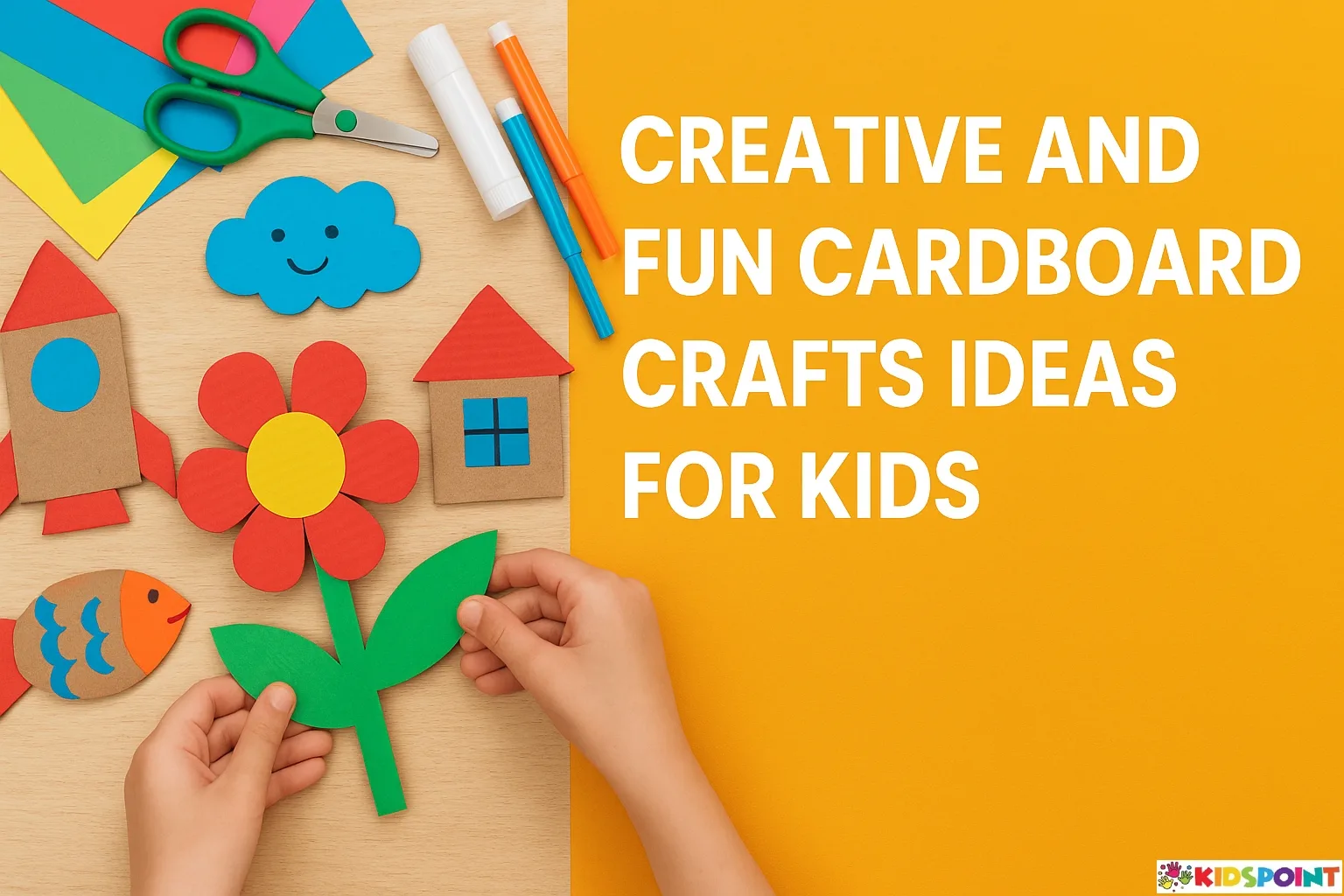
Cardboard is one of the most versatile materials for crafting, and it’s a favorite among kids, parents, and teachers alike. Its lightweight nature, easy availability, and eco-friendly qualities make it perfect for sparking creativity in children. At The Kids Point, we believe that cardboard crafts not only entertain kids but also enhance their imagination, problem-solving skills, and fine motor development.
In this article, we’ll explore a variety of creative and fun cardboard craft ideas for kids that are easy to make at home, cost-effective, and packed with learning opportunities.
Why Cardboard Crafts Are Great for Kids
Cardboard crafts are more than just a fun pastime—they contribute to a child’s overall development in several ways:
- Promotes Creativity: Children can turn a simple cardboard box into anything they imagine—a spaceship, a castle, or even a puppet theater.
- Encourages Problem-Solving: Crafting requires kids to plan, measure, and assemble pieces, which enhances critical thinking.
- Improves Fine Motor Skills: Cutting, gluing, folding, and decorating cardboard pieces strengthen hand-eye coordination and dexterity.
- Eco-Friendly and Budget-Friendly: Using recycled cardboard reduces waste and is a cost-effective alternative to buying new toys.
- Family Bonding: Cardboard crafts are perfect for collaborative projects, allowing kids and parents to create together.
Essential Materials for Cardboard Crafts
Before starting any cardboard craft project, it’s important to gather the right materials. Here’s a basic list:
- Cardboard boxes (cereal boxes, shipping boxes, or craft sheets)
- Scissors (child-safe and adult scissors)
- Glue (white glue, glue sticks, or hot glue for adult supervision)
- Tape (masking tape, duct tape, or washi tape)
- Paints and brushes
- Markers, crayons, or colored pencils
- Decorative materials (stickers, glitter, buttons, ribbons)
- Ruler and pencil (for measuring and drawing designs)
Optional materials include fabric scraps, pipe cleaners, popsicle sticks, and string for added creativity.
Fun Cardboard Craft Ideas for Kids
Here are some exciting cardboard craft ideas that kids of different age groups can enjoy.
Cardboard Castles and Forts
Transform large cardboard boxes into magical castles, forts, or playhouses.
How to do it:
- Use a large cardboard box as the base.
- Cut out windows, doors, and battlements.
- Paint or decorate with markers, stickers, or patterned paper.
- Add cardboard turrets or flags for extra fun.
Benefits: Encourages imaginative play, storytelling, and spatial awareness.
Cardboard Puppets and Puppet Theater
Kids love puppets, and cardboard makes an excellent base for creating unique characters.
How to do it:
- Cut out puppet shapes from cardboard.
- Decorate with markers, paint, or fabric scraps.
- Attach a popsicle stick or straw as a handle.
- Make a simple puppet theater using a larger box by cutting out a stage window.
Benefits: Enhances communication skills, creativity, and role-playing abilities.
Cardboard Vehicles and Spaceships
Cardboard vehicles like cars, trucks, trains, or spaceships are always a hit among kids.
How to do it:
- Use boxes of different sizes for the vehicle body.
- Add wheels using bottle caps or cardboard circles.
- Paint and decorate with stickers, tape, or markers.
- Combine multiple boxes to make bigger vehicles or rocket ships.
Benefits: Promotes STEM thinking, imaginative play, and hand-eye coordination.
Cardboard Masks and Costumes
Children love dressing up, and cardboard is perfect for creating custom masks and costumes.
How to do it:
- Cut out a mask shape to fit your child’s face.
- Decorate with paint, feathers, glitter, or stickers.
- Attach a string or elastic band to wear it comfortably.
- Make larger costume pieces like shields, crowns, or wings from bigger cardboard pieces.
Benefits: Fosters creativity, storytelling, and dramatic play.
Cardboard Animals and Creatures
Turn cardboard into a zoo of fun creatures: lions, dinosaurs, birds, and more.
How to do it:
- Cut out animal shapes from cardboard.
- Layer pieces to make 3D effects.
- Paint and add details like eyes, tails, or wings.
- Combine multiple animals to create a mini cardboard zoo.
Benefits: Enhances fine motor skills, knowledge of animals, and imaginative play.
Cardboard Jewelry and Accessories
Even older kids enjoy making wearable crafts from cardboard.
How to do it:
- Cut shapes for rings, bracelets, or necklaces.
- Paint, decorate, and let them dry.
- Use string, ribbon, or elastic to make wearable pieces.
Benefits: Encourages creativity, design thinking, and personal expression.
Cardboard Mini Furniture
Kids can create miniature chairs, tables, or shelves for dolls, action figures, or as room décor.
How to do it:
- Use sturdy cardboard and cut precise shapes for furniture parts.
- Assemble with glue or tape.
- Paint and decorate to match their style.
Benefits: Teaches measurement, spatial awareness, and basic engineering skills.
Cardboard Puzzles and Games
DIY cardboard puzzles and games are both fun and educational.
How to do it:
- Draw a design on a flat piece of cardboard.
- Cut it into puzzle pieces.
- For games, create a tic-tac-toe board or a matching game using cardboard.
Benefits: Develops problem-solving, logic skills, and patience.
Cardboard Musical Instruments
Let kids explore music with homemade cardboard instruments.
How to do it:
- Make guitars using a cardboard base and rubber bands for strings.
- Create drums using cardboard tubes and small boxes.
- Decorate with paints, markers, or stickers.
Benefits: Encourages musical creativity, rhythm learning, and sensory play.
Cardboard Gardens and Plant Holders
Teach kids about nature and recycling with cardboard planters.
How to do it:
- Cut small boxes for pots or plant holders.
- Decorate with paint or stickers.
- Add soil and small plants or succulents.
Benefits: Promotes environmental awareness, responsibility, and creativity.
Tips for Safe and Fun Cardboard Crafting
- Always supervise children when using scissors or hot glue.
- Use child-safe materials like non-toxic paint and glue.
- Recycle old cardboard boxes instead of buying new ones.
- Encourage kids to plan their designs before cutting.
- Combine crafts with learning by incorporating letters, numbers, or shapes.
- Display their creations to boost confidence and pride in their work.
Educational Benefits of Cardboard Crafts
Cardboard crafts are more than just a fun activity. We emphasize their educational value:
- Cognitive Development: Following instructions and designing projects enhance problem-solving skills.
- Creativity and Imagination: Children learn to think outside the box (literally!) and explore limitless possibilities.
- Fine Motor Skills: Cutting, folding, and gluing help develop hand-eye coordination.
- STEM Learning: Constructing 3D models introduces children to basic principles of engineering and geometry.
- Emotional Expression: Crafting provides a safe outlet for expressing feelings through art.
Creative Crafting Challenges for Kids
To make cardboard crafting even more exciting, try these challenges:
- Build the Tallest Tower: See who can construct the tallest cardboard tower without it falling.
- Mini Cardboard City: Create a city with buildings, vehicles, and parks using small cardboard boxes.
- Recycled Robots: Combine cardboard scraps to design unique robot characters.
- Storybook Crafts: Craft characters and settings from their favorite stories.
- Seasonal Themes: Make holiday decorations, Halloween masks, or festive ornaments.
These challenges encourage teamwork, creativity, and problem-solving while keeping kids entertained for hours.
Common Questions About Cardboard Crafts
What age is suitable for cardboard crafts?
Cardboard crafts are suitable for children aged 3 and above, with supervision for younger kids.
Can I use recycled cardboard for these crafts?
Yes! Recycled cardboard is perfect, eco-friendly, and often more fun to work with.
What materials are safe for kids to use?
Use non-toxic paints, glue sticks, and child-safe scissors for safety.
How can cardboard crafts help in learning?
They enhance creativity, problem-solving, motor skills, and STEM understanding.
How long do these projects usually take?
Simple projects may take 15–30 minutes, while larger creations like castles may take a few hours or multiple sessions.
Final Thoughts on Cardboard Crafts for Kids
Cardboard crafts are an incredible way to combine fun, creativity, and learning for kids of all ages. From castles and puppets to vehicles and musical instruments, the possibilities are endless. At The Kids Point, we believe that these hands-on projects help children explore their imagination, develop essential skills, and foster a sense of accomplishment.
So, gather your cardboard, scissors, and glue, and let your kids dive into the exciting world of creative and fun cardboard crafts. The results will not only be enjoyable but also educational and rewarding!