

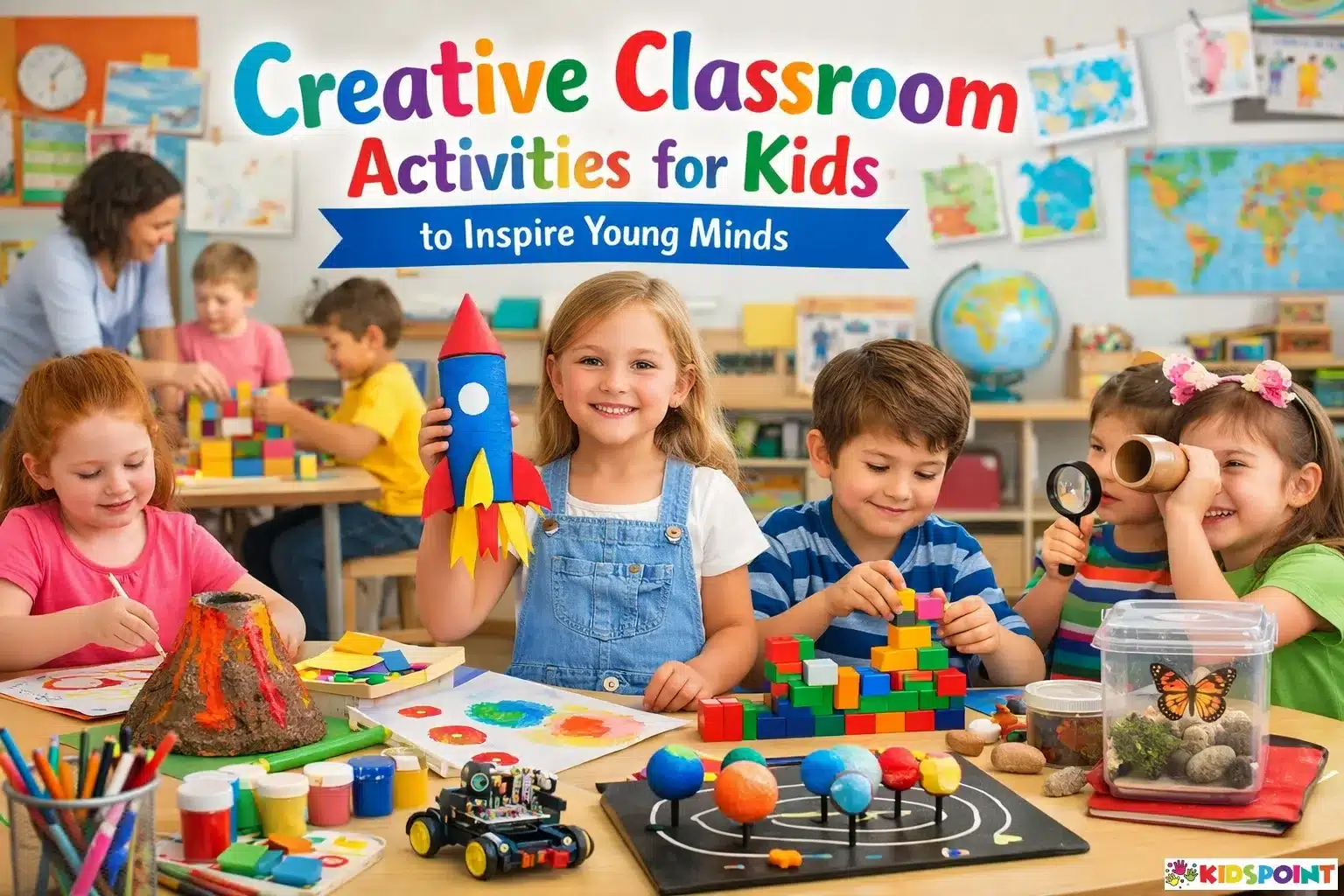
Creating an engaging classroom is more than decorating walls and arranging desks—it’s about inspiring curiosity, creativity, and confidence in every child. At The Kids Point, we believe that children learn best when they are actively involved, having fun, and feeling safe to express their ideas. That’s why we’ve put together this comprehensive guide filled with creative classroom activities that spark imagination and turn everyday lessons into unforgettable learning moments.
Whether you are a teacher, parent, or homeschooler, these ideas will help you build a classroom environment where young minds truly shine.
Why Creative Classroom Activities Matter
Traditional teaching methods often rely heavily on textbooks and lectures. While these are important, they don’t always connect with every child. Creative classroom activities:
- Encourage hands-on learning
- Improve problem-solving and critical thinking skills
- Boost confidence and communication
- Help children remember lessons more effectively
- Support different learning styles—visual, auditory, and kinesthetic
When kids are excited to learn, their motivation naturally increases, and classroom behavior improves as well.
Setting the Stage for Creativity
Before diving into activities, it’s important to create a classroom atmosphere that invites creativity.
Create a Flexible Learning Space
Allow areas for group work, quiet reading, art projects, and movement. Even small changes—like movable chairs or floor cushions—can make a big difference.
Celebrate Mistakes
Teach children that mistakes are part of learning. Encourage them to try new ideas without fear of being wrong.
Use Bright and Inspiring Displays
Showcase students’ work, motivational quotes, and colorful charts. When kids see their achievements on the wall, they feel proud and valued.
Art-Based Classroom Activities
Art is a powerful tool to help kids express emotions, understand concepts, and develop fine motor skills.
Story Illustration Boards
After reading a story, ask students to draw their favorite scene. Then let them explain why they chose that moment. This builds comprehension and speaking skills.
Emotion Masks
Children create masks showing different emotions—happy, sad, angry, surprised. Later, use the masks to act out classroom scenarios and discuss feelings.
Recycled Art Projects
Collect old newspapers, cardboard boxes, bottle caps, and fabric scraps. Challenge students to create animals, buildings, or imaginary creatures using only recycled items.
Language and Literacy Activities
Helping kids love reading and writing starts with making it enjoyable.
Classroom Story Chain
Begin a story with one sentence. Each student adds a new sentence until the story is complete. The results are often hilarious and imaginative.
Vocabulary Treasure Hunt
Hide word cards around the classroom. Kids search for them and then use each word in a sentence or draw a picture of its meaning.
Puppet Storytelling
Let kids create simple paper puppets and act out short stories or book scenes. This boosts confidence and improves storytelling skills.
Math Made Fun
Math doesn’t have to be boring. With a little creativity, it can become one of the most exciting subjects.
Math Hopscotch
Create a hopscotch board with numbers. Ask children to hop to the correct answer of simple math problems.
Shape Scavenger Hunt
Give students a list of shapes—circle, square, triangle—and let them find matching objects around the classroom.
Build It with Blocks
Use building blocks to teach addition, subtraction, and patterns. Kids physically see how numbers work together.
Science Through Exploration
Kids are naturally curious about the world. Turn that curiosity into learning with simple experiments.
Mini Plant Garden
Each child plants a seed in a small pot and tracks its growth. This teaches responsibility and basic biology.
Sink or Float Challenge
Give kids various objects and ask them to predict whether they will sink or float. Then test them in water and discuss the results.
Weather Station
Set up a simple chart to record daily weather. Kids learn about seasons, temperature, and observation skills.
Movement and Brain Breaks
Children need to move to stay focused. Short movement activities refresh their minds.
Action Word Game
Call out verbs like jump, crawl, stretch, or spin. Kids act them out, improving listening skills and physical coordination.
Freeze Dance
Play music and let kids dance. When the music stops, they freeze. This helps release energy and sharpen attention.
Social and Emotional Learning Activities
Helping kids understand themselves and others is just as important as academics.
Compliment Circle
Students sit in a circle and give each other kind compliments. This builds self-esteem and classroom unity.
Emotion Journals
Once a week, ask kids to draw or write about how they feel. Teachers can use this to understand students’ emotional needs.
Creative Technology Activities
Even young learners can use technology in meaningful ways.
Digital Storybooks
Let kids create simple digital books using classroom tablets. They can add drawings, voice recordings, and text.
Photo Challenges
Give kids a theme like “things that make me happy” and let them take pictures around school.
Seasonal and Themed Activities
Themes make learning exciting and help kids connect lessons with real life.
Cultural Days
Pick a country each month. Learn about its food, music, and traditions through crafts and stories.
Holiday Craft Stations
Create different stations for making greeting cards, decorations, or themed art based on upcoming holidays.
Encouraging Independent Creativity
Let kids explore their interests with minimal rules.
Free Choice Art Time
Once a week, allow children to create anything they like using classroom materials.
Classroom Makerspace
Set up a corner with craft supplies, building toys, and puzzles for creative problem-solving.
Tips for Teachers and Parents
We always remind educators that creativity doesn’t require expensive tools.
- Use everyday items
- Keep instructions simple
- Allow time for sharing ideas
- Praise effort, not just results
- Rotate activities to keep things fresh
Helpful FAQs – Creative Classroom Activities for Kids
Why are creative classroom activities important for kids?
They improve imagination, problem-solving skills, and make learning more enjoyable.
How often should teachers include creative activities?
At least a few times each week to keep kids engaged and motivated.
Do creative activities really improve academic performance?
Yes, they help children understand concepts better and remember lessons longer.
Are these activities suitable for all age groups?
Most can be easily adapted for preschool to elementary-level students.
What materials are needed for creative classroom activities?
Mostly simple items like paper, crayons, recycled materials, and basic classroom supplies.
Final Thoughts
Creative classroom activities are not just about fun—they are about shaping confident learners who love exploring the world. By adding art, movement, storytelling, and hands-on learning into daily lessons, you give children the tools they need to think independently and believe in their abilities.
At The Kids Point, we are dedicated to helping teachers and parents turn ordinary classrooms into extraordinary learning spaces. With these creative ideas, you can inspire young minds today and help build a brighter future for tomorrow.