

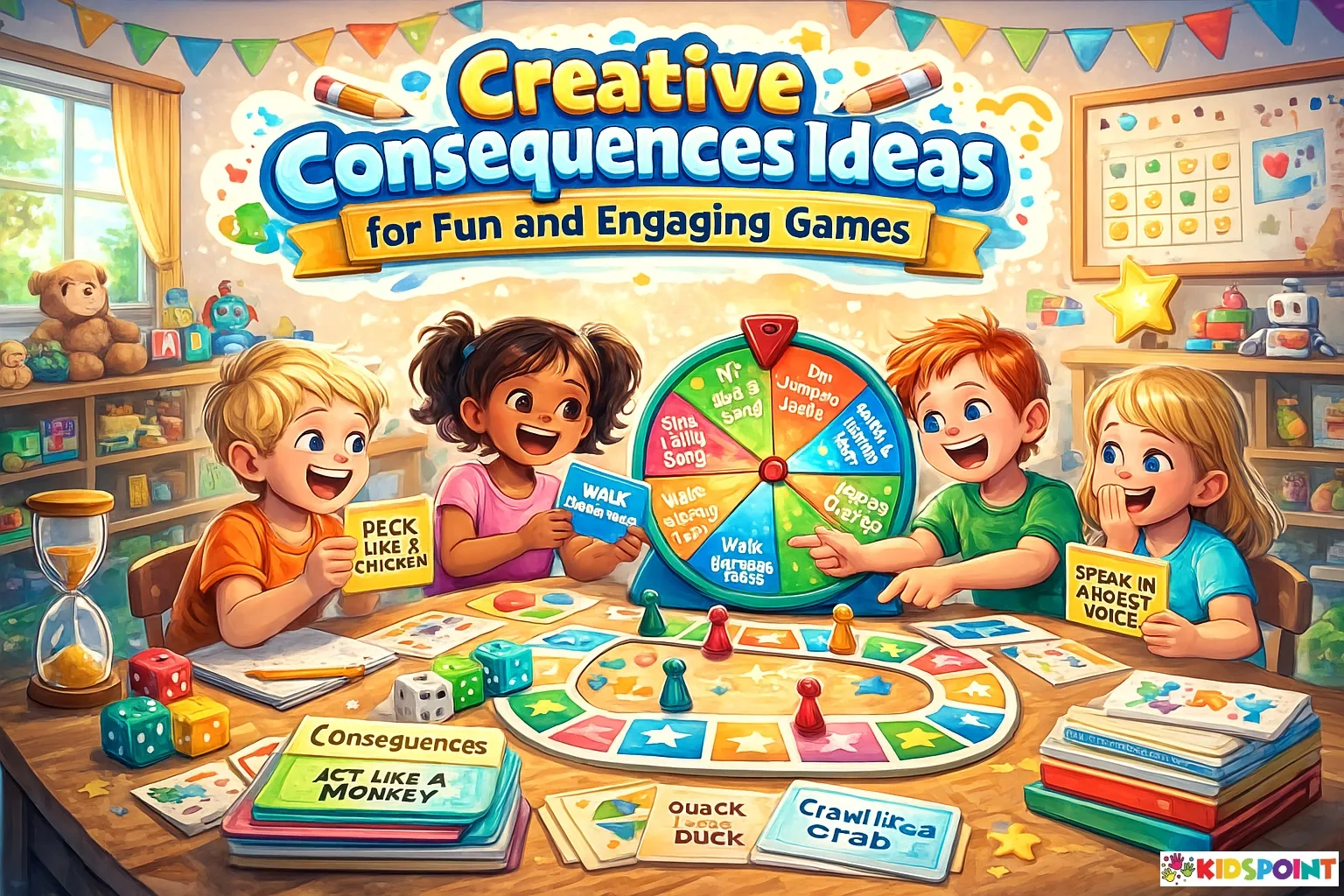
Games are more than simple развлечения—they play an important role in helping children learn, cooperate, and develop social-emotional skills. One effective way to make traditional games even more exciting is by introducing creative consequences that are fun, imaginative, and appropriate for each age group. When designed thoughtfully, these consequences feel playful rather than punitive, inspiring laughter, critical thinking, and active participation.
This in-depth guide from The Kids Point explores creative consequence ideas for fun and engaging games, featuring practical examples, age-based suggestions, and helpful tips for parents, teachers, and caregivers. Whether you’re planning classroom activities, birthday celebrations, or family game nights, these ideas will help transform any game into a memorable and meaningful learning experience.
What Are Creative Consequences in Games?
Creative consequences are lighthearted outcomes that follow a specific action during a game—such as losing a round, breaking a rule, or landing on a certain space. Unlike traditional penalties, creative consequences are designed to be:
- Fun and humorous
- Non-shaming and inclusive
- Encouraging participation rather than fear of failure
For example, instead of sitting out a round, a child might be asked to hop like a frog, tell a silly joke, or solve a quick riddle. These consequences keep energy high and ensure everyone remains involved.
Why Use Creative Consequences in Kids’ Games?
Creative consequences provide several developmental and social benefits:
Encourage Positive Behavior
By framing consequences as playful tasks, children learn accountability without feeling discouraged.
Build Social Skills
Group consequences often involve teamwork, communication, and empathy.
Boost Creativity and Confidence
Performing silly or imaginative actions helps children overcome shyness and express themselves freely.
Maintain Engagement
No one is “out” or bored—every player stays active throughout the game.
We encourage these approaches to ensure games remain joyful and meaningful for all ages.
Key Principles for Designing Fun Game Consequences
Before introducing consequences, keep these principles in mind:
- Age-appropriate: Tailor actions to physical and emotional abilities
- Fair and equal: Everyone should face similar consequences
- Safe and respectful: Avoid embarrassment or discomfort
- Optional flexibility: Allow kids to choose between two consequences when possible
Physical Movement Consequences
These consequences help children release energy while improving coordination.
Fun Ideas:
- Do 10 jumping jacks
- Walk like a crab across the room
- Balance on one foot for 10 seconds
- Spin in a circle and strike a superhero pose
Best for: Active games, outdoor play, PE classes
Silly and Laughter-Based Consequences
Laughter is a powerful bonding tool, and these consequences guarantee smiles.
Fun Ideas:
- Make a funny face for 5 seconds
- Tell a clean joke or riddle
- Speak in a robot voice for the next turn
- Pretend to be an animal chosen by the group
Best for: Party games, icebreakers, family game nights
Creative and Artistic Consequences
Perfect for encouraging imagination and self-expression.
Fun Ideas:
- Draw a quick doodle on a shared board
- Create a 10-second dance move
- Invent a short story using three random words
- Build something using blocks or paper in one minute
Best for: Classroom activities, rainy-day games, art-focused play
Educational Consequences That Feel Like Play
Learning-based consequences can be fun when presented creatively.
Fun Ideas:
- Answer a fun trivia question
- Spell a silly word backwards
- Name three animals that start with a chosen letter
- Solve a quick math puzzle or brain teaser
Best for: Classroom games, homeschooling, educational clubs
Team-Based Consequences
These consequences promote cooperation instead of competition.
Fun Ideas:
- Entire team does a silly cheer
- Group creates a handshake
- Team must move together like a train for 10 seconds
- Everyone shares one compliment with another player
Best for: Team games, camps, group learning environments
Consequences That Encourage Kindness
Adding kindness-based tasks builds emotional intelligence.
Fun Ideas:
- Say something kind about another player
- Help reset game pieces
- Give a high-five or thumbs-up to everyone
- Share one thing you appreciate about the group
Best for: Social-emotional learning, younger children, mixed-age groups
Storytelling Consequences
Story-based consequences are excellent for language development.
Fun Ideas:
- Add one sentence to a group story
- Describe a funny ending to a fairy tale
- Act out a character emotion
- Create a character name and power
Best for: Language classes, drama clubs, creative play sessions
Consequences for Board Games
Instead of skipping turns, try these engaging alternatives:
- Move backward while performing a silly task
- Swap seats with another player
- Play the next turn with one hand
- Speak only in rhymes until your next turn
These ideas keep traditional board games fresh and exciting.
Outdoor Game Consequence Ideas
Outdoor play allows for bigger, movement-based actions.
Fun Ideas:
- Do an animal relay for 10 seconds
- Hop to a tree and back
- Throw and catch a ball three times
- Freeze like a statue until the next round
Best for: Playgrounds, sports days, backyard games
Age-Based Consequence Suggestions
Preschoolers (Ages 3–5)
- Clap hands five times
- Sing one line of a song
- Make an animal sound
Early Elementary (Ages 6–8)
- Do a silly walk
- Answer a simple question
- Draw a smiley face
Older Kids (Ages 9–12)
- Create a mini challenge for others
- Solve a riddle
- Perform a short skit
Teens
- Design a creative rule twist
- Lead the next round
- Create a team challenge
How to Introduce Consequences Without Pressure
- Explain rules clearly before starting
- Emphasize fun over winning
- Model participation as an adult
- Praise effort and creativity
Children are more willing to engage when they feel safe and supported.
Common Mistakes to Avoid
- Using consequences as punishment
- Singling out one child repeatedly
- Making consequences physically exhausting
- Allowing teasing or embarrassment
We always promote inclusive and respectful play environments.
Making Consequences Part of Game Design
You can turn consequences into a feature, not an afterthought:
- Write consequences on cards
- Create a consequence spinner or dice
- Let kids invent their own consequences
- Rotate consequence leaders
This empowers children and increases engagement.
Benefits Beyond the Game
Creative consequences help children develop:
- Emotional resilience
- Flexibility and adaptability
- Communication skills
- Confidence in group settings
These skills extend far beyond playtime and into real-life situations.
FAQs: Creative Consequences in Kids’ Games
Are creative consequences suitable for classrooms?
Yes, when age-appropriate and inclusive, they enhance learning and participation.
Do consequences distract from the game?
When designed well, they add excitement without interrupting flow.
Can children choose their own consequences?
Absolutely—this increases ownership and creativity.
What if a child refuses a consequence?
Offer alternatives or let them help choose the next consequence.
Are creative consequences safe for all ages?
Yes, with supervision and thoughtful planning.
Final Thoughts
Creative consequences transform ordinary games into unforgettable experiences filled with laughter, learning, and connection. By replacing traditional penalties with playful, imaginative actions, you create an environment where children feel safe to participate, make mistakes, and express themselves.
At The Kids Point, we encourage parents, educators, and caregivers to embrace creative consequences as a powerful tool for engaging play. With the right balance of fun and fairness, every game becomes an opportunity for growth, joy, and meaningful interaction.