

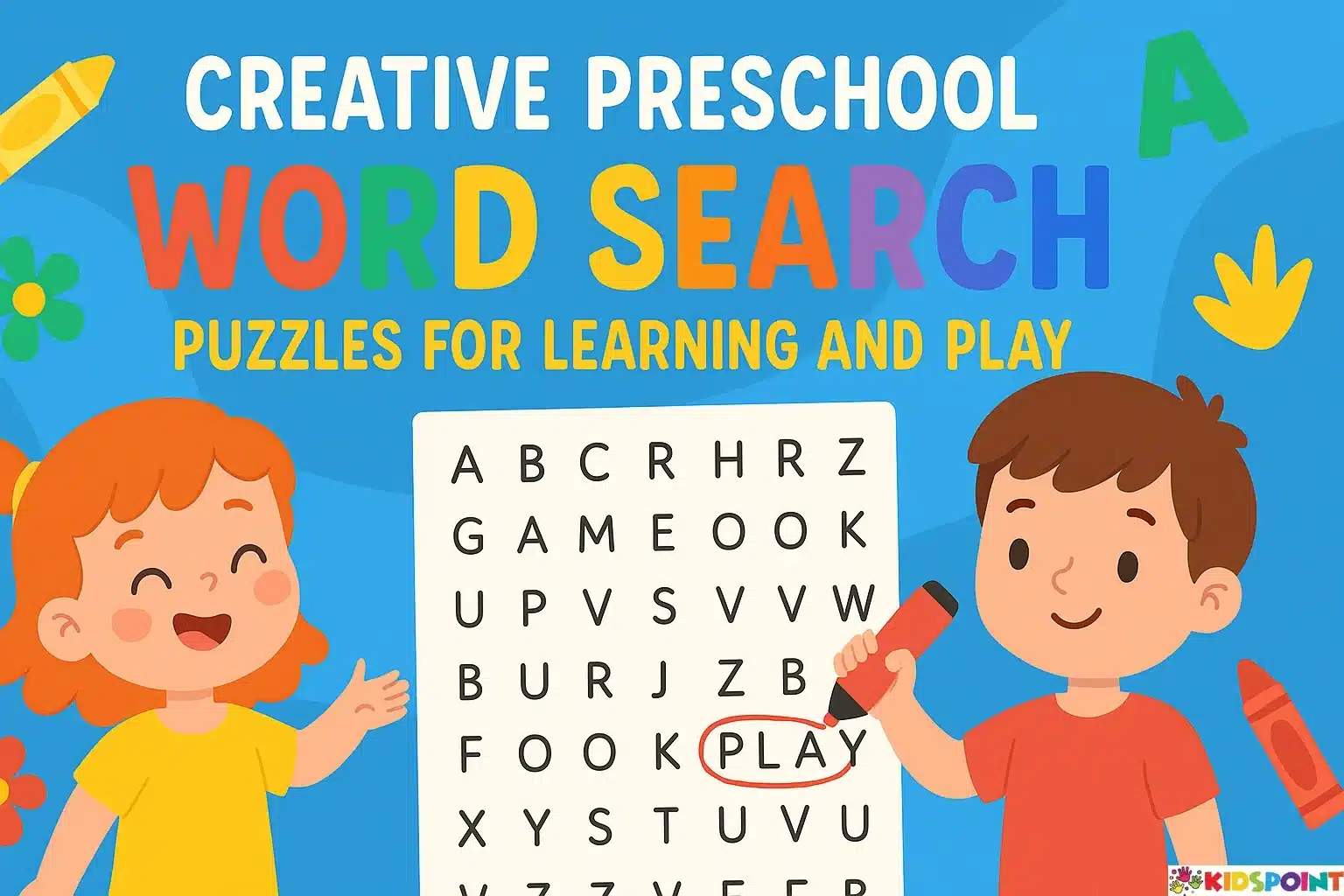
Preschoolers are naturally curious. They love exploring letters, sounds, shapes, and patterns—often without even realizing they are learning. One of the easiest and most enjoyable ways to help young children begin recognizing words and letters is through preschool word search puzzles. These puzzles blend fun with learning, helping kids strengthen essential early literacy skills while enjoying a playful activity.
At The Kids Point, we believe educational tools should be enjoyable, developmentally appropriate, and easy for parents and teachers to use. Preschool word search puzzles check all those boxes. With creative themes, colorful designs, simple word lists, and playful illustrations, these puzzles help make learning fun for little minds.
In this complete guide, we explore what preschool word search puzzles are, their many learning benefits, how to use them at home or in the classroom, and dozens of creative theme ideas to keep kids engaged all year long.
What Are Preschool Word Search Puzzles?
A preschool word search puzzle is a simplified version of the classic word search activity designed specifically for young learners ages 3 to 5. Instead of long or complex vocabulary, these puzzles use:
- Short, familiar words
- Large, readable letters
- Very small grids (typically 4×4 or 5×5)
- Picture cues or icons
- Themes kids understand (animals, colors, foods, weather, holidays)
The goal is not for children to find complicated vocabulary. Instead, preschool puzzles help kids:
- Recognize letters
- Match letters to sounds
- Identify simple words
- Develop visual tracking and focus
- Boost confidence in early reading skills
These puzzles make great literacy warm-ups, independent learning tasks, quiet-time activities, and classroom centers.
Why Word Search Puzzles Are Great for Preschoolers
We often recommend preschool word search puzzles to parents and teachers because they support multiple early childhood skills at once. Here’s how:
Builds Letter Recognition
Preschoolers begin learning the alphabet by identifying letters visually and associating them with sounds. Word searches expose children to uppercase and lowercase letters repeatedly, reinforcing recognition.
Improves Visual Scanning Skills
Word searches require children to look left, right, up, and down to find patterns. This strengthens visual tracking—a crucial skill for reading fluency later on.
Encourages Early Reading
Even if the words are simple (cat, sun, red, dog), kids begin to understand that groups of letters form meaningful words. This helps with decoding, phonics, and sight-word development.
Teaches Patience & Problem-Solving
Completing a puzzle gives preschoolers a sense of accomplishment—and teaches them persistence, focus, and logical reasoning.
Strengthens Vocabulary
Because puzzles are theme-based, children learn new words naturally. A “Weather” puzzle might include sun, rain, wind, and cloud—words many preschoolers may not yet use regularly.
Supports Hand-Eye Coordination
Circling, coloring, or marking a word builds pre-writing skills by strengthening hand and finger control.
Fun Independent Play
These puzzles give kids something productive and educational to do quietly, whether at home, in the car, or in the classroom.
Word search puzzles are simple, accessible, and extremely effective—one reason includes them in many of our learning activities and printable worksheets.
How to Introduce Word Search Puzzles to Preschoolers
Preschoolers are still new learners, so introducing word searches requires patience and a step-by-step approach. Here are some tips for success:
Start with Very Simple Grids
For beginners, use 3×3 or 4×4 grids with just two or three words. Once they’re comfortable, slowly increase difficulty.
Use Visual Picture Cues
Most preschoolers rely on visual memory. Including small pictures next to each word helps them understand the meaning.
Read the Words Together First
Before starting, say each word aloud and show the matching picture. This helps kids connect letters with sounds and meaning.
Help Them Find the First Word
Finger-pointing guidance builds confidence. Once they find one word alone, their motivation increases.
Let Them Highlight or Circle Words
Give kids tools they enjoy: crayons, markers, colored pencils, or stickers.
Celebrate Every Success
Positive feedback encourages preschoolers to continue engaging with early literacy activities.
By making each puzzle feel like a fun game rather than a test, children stay enthusiastic and eager to learn.
Creative Theme Ideas for Preschool Word Search Puzzles
One of the best things about preschool word searches is that you can tailor them to any theme. We encourage incorporating puzzles into seasonal lessons, storybooks, holidays, and everyday topics.
Here are 50 creative and fun themes you can use:
Animals & Nature Themes
- Farm Animals (cow, pig, hen)
- Jungle Animals (lion, monkey, tiger)
- Ocean Life (fish, crab, whale)
- Insects (ant, bee, bug)
- Pets (dog, cat, bird)
- Forest Animals (fox, bear, owl)
- Birds (owl, hen, crow)
- Reptiles (snake, lizard, turtle)
Seasonal & Weather Themes
- Spring (sun, bud, bee)
- Summer (sun, hot, fun)
- Fall (leaf, red, wind)
- Winter (snow, ice, hat)
- Rainy Day (rain, wet, sky)
- Hot & Cold (hot, cold, sun)
Colors & Shapes
- Colors (red, blue, green)
- Shapes (circle, star, square)
- Patterns (dot, line, zig)
- Rainbow Words (red, sun, sky)
Food & Healthy Eating
- Fruits (apple, pear, plum)
- Vegetables (corn, bean, peas)
- Snacks (milk, egg, bun)
- Breakfast (jam, tea, egg)
Everyday Items
- Classroom Objects (pen, bag, mat)
- Toys (ball, car, doll)
- Clothing (hat, cap, bag)
- Kitchen Items (cup, pan, pot)
Community & Daily Life
- Jobs (cop, vet, doc)
- Places (park, zoo, shop)
- Transportation (car, bus, van)
- Family Words (mom, dad, sis)
Holiday Themes
- Christmas (tree, hat, toy)
- Halloween (bat, cat, hat)
- New Year (fun, joy, sun)
- Valentine’s (love, red, hug)
Learning Concepts
- Numbers (one, two, ten)
- Opposites (big, small, up)
- Action Words (run, hop, sit)
- Sight Words (see, the, and)
Emotions & Social Skills
- Feelings (happy, sad, mad)
- Kindness Words (help, hug, share)
Adventure & Imagination
- Space (sun, star, moon)
- Superheroes (cap, fly, run)
- Fairy Tales (elf, hat, cat)
- Pirates (map, sea, hat)
STEM Themes
- Simple Machines (wheel, gear, lever)
- Nature Science (rock, sun, bug)
- Weather Science (sky, wind, sun)
Special Preschool Themes
- Back to School
- Field Trip Day
- Birthday Celebration Words
These themes help ensure kids stay excited and engaged throughout the year.
How to Make Your Own Preschool Word Search Puzzles
Creating word search puzzles is easy and fun, especially if you’re designing them for personalized learning. We often develop custom puzzles for different skill levels.
Here’s how you can create your own:
Choose a Theme
Select a simple topic your preschooler understands, like “Pets” or “Colors.”
Pick 3 to 5 Simple Words
Use short, easy words:
- 3 letters (cat, sun, dog)
- 4 letters (bird, blue)
Create a Grid
Start with a 4×4 or 5×5 grid. Write the words horizontally or vertically.
Fill Remaining Spaces
Use random letters—but avoid making it too confusing.
Add Pictures
Little icons help with recognition and comprehension.
Print or Draw the Puzzle
Kids can complete it using crayons or markers.
Tip for Teachers:
Laminate the puzzle so preschoolers can use dry-erase markers and practice repeatedly.
Fun Ways to Use Preschool Word Search Puzzles
Word searches are flexible and can be used in many early learning situations. Here are creative ways to integrate them into home or classroom routines:
Morning Warm-Up Activity
A short puzzle helps kids transition into learning mode and boosts morning focus.
Learning Centers
Add laminated puzzles to reading or literacy centers.
Storybook Extensions
After reading a book, introduce a themed word search (e.g., animals from “Brown Bear, Brown Bear”).
Art Connections
Let kids color the pictures after completing the puzzle.
Pair Work
Children can solve puzzles with a friend—great for communication and teamwork.
Homework or Take-Home Fun Sheets
Parents can reinforce learning at home easily.
Seasonal Classroom Celebrations
Use themed puzzles during Halloween, Valentine’s Day, Christmas, or birthdays.
Travel Activities
Word searches are excellent for car rides, waiting rooms, or flights.
Reward Activities
Use puzzles as a quiet-time reward for good behavior.
Learning Assessment
Teachers can observe letter recognition and problem-solving skills based on how kids complete the puzzles.
Tips for Making Word Search Puzzles More Engaging
To keep preschoolers excited about puzzles, try these creative ideas from The Kids Point:
Use Bright Colors
Colorful grids and pictures attract young learners.
Include Stickers
Let kids mark words with stickers instead of circles.
Turn It into a Race
A fun 30-second challenge can boost focus and excitement.
Add Sensory Elements
Use laminated sheets paired with sandpaper letters or textured markers.
Incorporate Movement
After circling a word like “jump,” encourage the kids to actually jump!
Match Words to Objects
Place matching toys or flashcards next to the puzzle.
Connect to Real Life
A “Foods” puzzle could be followed by a snack-tasting activity.
Printable Word Search Ideas
As part of our commitment to early childhood learning, offers a variety of printable preschool word searches featuring:
- Simple vocabulary
- Clear fonts
- Bright illustrations
- Child-friendly themes
- Free and premium puzzle bundles
These printables are perfect for parents, homeschoolers, teachers, and daycare centers.
FAQs About Preschool Word Search Puzzles
Are word search puzzles good for preschoolers?
Yes, simple word searches help preschoolers build letter recognition, vocabulary, and early reading skills in a fun way.
What age is best for preschool word search puzzles?
Children ages 3 to 5 can start using beginner-friendly puzzles with short words and small grids.
How many words should a preschool word search include?
Most preschool puzzles work best with 3 to 5 simple, familiar words.
Can word searches help with phonics?
Yes, word searches reinforce letter-sound connections because children see and say each word as they find it.
How can I make word search puzzles easier for beginners?
Use picture clues, large letters, short words, and help them locate the first word for confidence.
Final Thoughts on Creative Preschool Word Search Puzzles
Preschool word search puzzles are more than just a fun activity—they are powerful early learning tools that build literacy, vocabulary, problem-solving skills, and confidence. Whether used at home or in the classroom, these simple puzzles inspire curiosity, encourage letter recognition, and help children enjoy reading from the earliest years.
At The Kids Point, we believe learning should always be playful, engaging, and meaningful. By incorporating creative word search puzzles into your child’s routine, you can support their development in a joyful and interactive way.
With countless themes, simple grids, and endless customization options, these puzzles will continue to be a favorite among preschoolers—and a valuable resource for parents and teachers alike.