

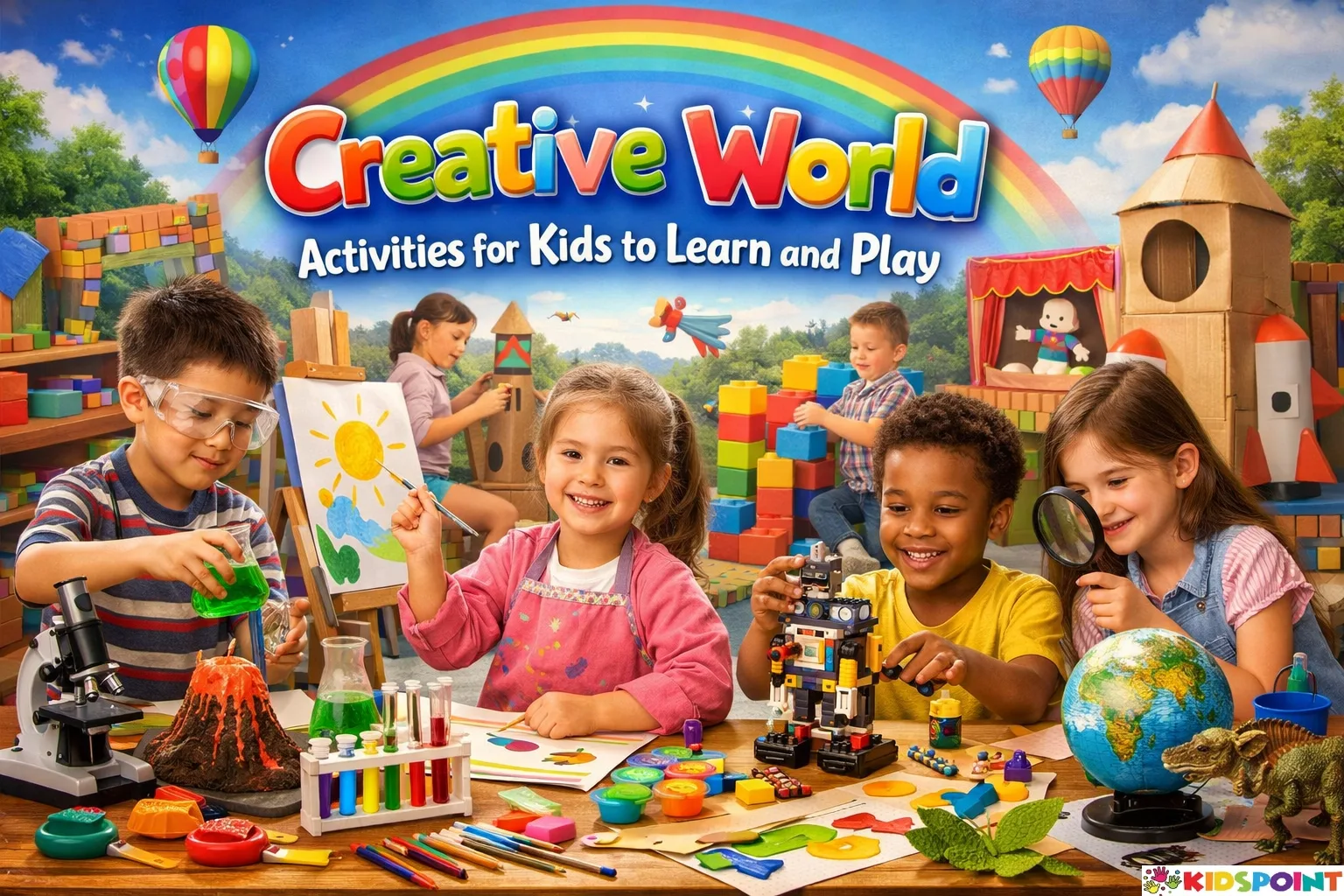
Children learn best when they are actively engaged, curious, and having fun. In today’s fast-paced digital world, hands-on activities that encourage creativity, exploration, and imagination are more important than ever. “Creative world activities” help kids understand the world around them while developing essential skills through play.
At The Kids Point, we believe that learning should feel like an adventure. That’s why we’ve gathered a wide range of creative world activities for kids that promote learning, cultural awareness, problem-solving, and joyful play. These activities are perfect for home, classrooms, and group settings—and they turn everyday moments into meaningful learning experiences.
What Are Creative World Activities?
Creative world activities are hands-on, imaginative experiences that introduce children to different aspects of the world—such as geography, culture, nature, science, and everyday life—through play and creativity.
These activities often involve:
- Art and craft projects
- Role-playing and storytelling
- Cultural games and traditions
- Exploration of nature and environments
- Problem-solving and building challenges
By combining creativity with real-world concepts, kids gain knowledge in a way that feels exciting and natural.
Why Creative World Activities Are Important for Kids
Creative world activities support a child’s overall development in many powerful ways.
Encourages Curiosity and Exploration
Kids naturally want to know how things work. Creative activities give them the freedom to ask questions and discover answers.
Builds Cognitive and Motor Skills
Hands-on play improves memory, focus, coordination, and problem-solving abilities.
Promotes Cultural Awareness
Learning about different cultures helps kids develop empathy, respect, and global understanding.
Supports Emotional Growth
Creative play allows children to express feelings and build confidence.
Makes Learning Fun
When learning feels like play, kids stay engaged longer and retain more information.
We focus on activities that nurture both the mind and heart.
Creative World Art Activities for Kids
Art is a powerful way for kids to explore the world creatively.
World Map Art Collage
Kids can create a colorful world map using paper, paint, stickers, or recycled materials. This activity introduces continents, oceans, and countries.
Flag Painting from Around the World
Choose a few countries and let kids paint or color their flags while learning what the symbols represent.
Cultural Mask Making
Explore traditional masks from different cultures using cardboard, crayons, and craft supplies.
Landmark Drawing Challenge
Ask kids to draw famous landmarks like the Eiffel Tower, pyramids, or the Statue of Liberty.
These activities boost creativity while teaching geography and cultural awareness.
Creative Geography Activities Through Play
Geography doesn’t have to be memorization—it can be playful and interactive.
DIY Globe Craft
Create a globe using a balloon and paper mâché. Label continents and oceans together.
Country Treasure Hunt
Hide clues around the house or classroom related to different countries and their features.
Travel Role-Play Game
Kids pretend to travel to different countries, pack suitcases, and learn greetings in other languages.
Continent Puzzle Games
Use puzzles or homemade cut-outs to explore the shape and location of continents.
We believe play-based geography builds lifelong curiosity.
Creative Cultural Activities for Kids
Introducing kids to cultures around the world helps them appreciate diversity.
Traditional Music and Dance Time
Play music from different cultures and let kids dance freely or learn simple traditional steps.
International Food Crafting
Create pretend food from clay or paper inspired by different countries.
Cultural Dress-Up Play
Use costumes or scarves to explore traditional clothing from around the world.
Language Fun Games
Teach kids basic greetings in different languages through songs or flashcards.
These activities encourage respect, empathy, and global awareness.
Nature-Inspired Creative World Activities
Nature is a wonderful teacher, and kids learn best when exploring the outdoors.
Nature Scavenger Hunt
Search for leaves, rocks, flowers, or insects and discuss where they’re found around the world.
Build a Mini Ecosystem
Create a small terrarium or garden to learn about plants and habitats.
Weather Exploration Activities
Track weather patterns and learn how climates differ around the globe.
Animal Habitat Dioramas
Kids can build habitats for animals using boxes and craft materials.
We encourage children to connect with nature and care for the planet.
STEM-Based Creative World Activities
STEM activities help kids understand how the world works through experimentation and problem-solving.
Build a Bridge Challenge
Kids design bridges using blocks, paper, or straws and test their strength.
Simple Volcano Science Experiment
Create a baking soda and vinegar volcano while discussing real-world geography.
Water Flow Experiments
Explore how water moves using cups, funnels, and tubes.
Recycling and Sustainability Projects
Teach kids about reducing waste by creating art from recycled materials.
These activities blend creativity with scientific thinking.
Storytelling and Imaginative World Play
Imaginative play helps kids make sense of the world in their own way.
Create a World Storybook
Kids invent their own world with maps, characters, and adventures.
Puppet Shows from Around the World
Use puppets to tell cultural stories or create new ones.
Time Travel Role-Play
Pretend to visit different historical periods or future worlds.
Build a Mini City
Use blocks or recycled boxes to design a city with roads, parks, and homes.
We storytelling is a key part of creative learning.
Group Creative World Activities for Classrooms
Group activities help kids build teamwork and communication skills.
World Fair Day
Each group represents a country and shares art, food, or traditions.
Collaborative Mural Painting
Create a large mural showing different parts of the world.
Problem-Solving Team Games
Challenge groups to solve puzzles related to geography or culture.
Cultural Show-and-Tell
Kids bring objects or stories connected to different places.
These activities foster cooperation and mutual respect.
Tips for Parents and Teachers
To get the most out of creative world activities:
- Encourage open-ended play
- Ask curious questions
- Celebrate effort, not perfection
- Adapt activities to different ages
- Let kids lead their learning
We believe adults are guides—not directors—in a child’s learning journey.
Why Creative World Activities Matter at The Kids Point
Our mission is to inspire learning through creativity, play, and discovery. Creative world activities help children understand themselves, others, and the planet they live on. By blending imagination with real-world knowledge, kids grow into curious, confident learners.
We believe every child deserves joyful learning experiences that spark wonder and build essential life skills.
Common Questions About Creative World Activities for Kids
What are creative world activities for kids?
They are fun, hands-on activities that help kids learn about the world through play and creativity.
Why are creative world activities important?
They support learning, imagination, problem-solving, and cultural awareness.
Are these activities suitable for classroom use?
Yes, they work well in classrooms, homeschooling, and group learning settings.
What age group benefits most from these activities?
Creative world activities can be adapted for preschoolers through elementary-age children.
Where can I find more learning activities like these?
You can discover more fun and educational ideas
Final Thoughts
Creative world activities give kids the chance to explore, imagine, and learn in ways that feel exciting and meaningful. From art and geography to culture, nature, and storytelling, these activities open children’s minds to the beauty and diversity of the world.
At The Kids Point, we encourage parents, teachers, and caregivers to embrace creative play as a powerful learning tool. When kids learn through play, they don’t just gain knowledge—they build confidence, empathy, and a lifelong love for discovery.