

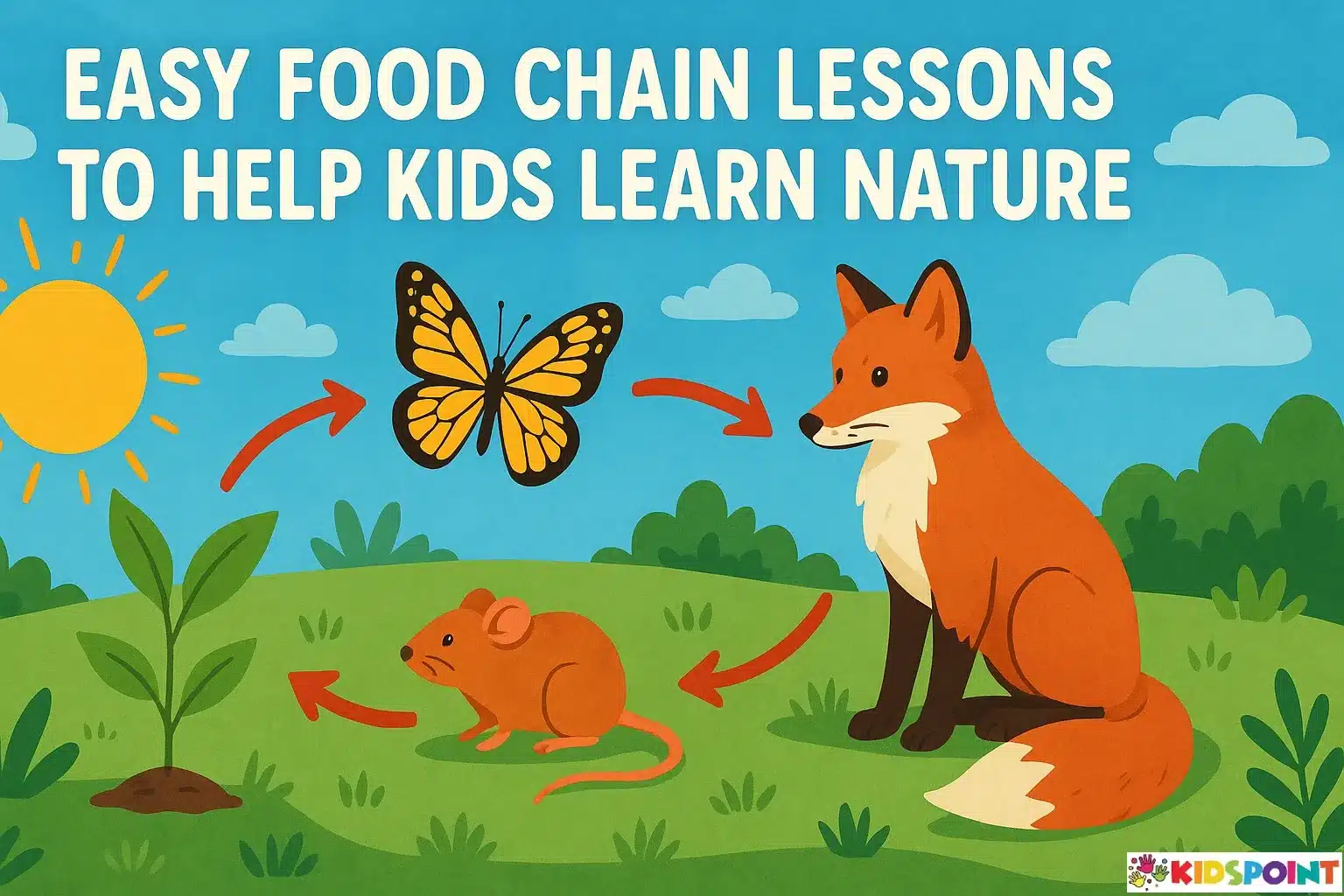
Understanding the food chain is one of the most exciting ways for children to learn how nature works. It shows them how animals, plants, and even tiny insects rely on one another for survival. When kids grasp how energy flows from the sun to plants to animals, they begin to see nature as a carefully balanced system.
At The Kids Point, we believe hands-on learning helps children absorb science concepts easily. That’s why food chain lessons are perfect for building curiosity, environmental awareness, and respect for all living things. This guide explores simple, engaging, and age-friendly food chain activities that make learning fun and meaningful.
What Is a Food Chain?
Before teaching kids the fun parts, it’s helpful to explain the basics in simple terms:
A food chain is the step-by-step pathway that shows who eats whom in nature. Every living thing needs energy to grow, and the food chain explains how that energy moves through an ecosystem.
The Three Basic Parts of a Food Chain
- Producers – Plants that make their own food using sunlight.
- Consumers – Animals that eat plants or other animals to get energy.
- Decomposers – Fungi, bacteria, and some insects that break down dead plants and animals, returning nutrients to the soil.
These roles help keep nature balanced and healthy.
Why Teaching Food Chains Matters for Kids
Understanding food chains offers more than just academic learning. It helps kids:
Understand Nature’s Relationships
Kids learn how plants, animals, and the environment are connected.
Build Critical Thinking
Food chains help children understand cause and effect, such as what happens if a species disappears.
Appreciate Wildlife
Children become more interested in animals and how they survive.
Learn Environmental Responsibility
Kids start to understand how pollution, climate change, or habitat loss affects entire ecosystems.
Strengthen Observation Skills
Food chain activities make children naturally curious about insects, animals, and plants.
Easy Food Chain Lessons Kids Can Understand Quickly
These simple lessons and explanations are perfect for children ages 4–12 and can be used at school, at home, or in nature-based learning programs and educators everywhere.
Start With the Sun: The Source of All Energy
Explain that every food chain begins with the sun. Without sunlight:
- plants can’t grow
- animals can’t eat
- ecosystems can’t function
A great visual activity: Ask children to draw a big sun at the top of their paper and arrows showing light going down to plants.
Introduce Producers: Plants Make Their Own Food
Teach kids that plants are called producers because they produce their own food through photosynthesis.
Fun examples:
- Grass
- Algae
- Tree leaves
- Flowers
Activity idea: Have kids choose a plant they love and draw what animals might rely on it.
Introduce Consumers: Animals That Eat to Get Energy
Consumers come in three main groups:
Herbivores (plant-eaters)
Examples: cows, rabbits, elephants, deer, caterpillars
Carnivores (meat-eaters)
Examples: lions, wolves, snakes, hawks, frogs
Omnivores (eat plants and animals)
Examples: humans, bears, raccoons, chickens
Kids love sorting animals into these groups—it’s a simple yet interactive learning experience.
Teach Decomposers: Nature’s Clean-Up Crew
Kids often find decomposers fascinating! Explain that decomposers break down:
- fallen leaves
- dead plants
- animal remains
- food waste
Examples include:
- Mushrooms
- Earthworms
- Bacteria
- Beetles
Activity idea: Have children observe soil to find tiny decomposers.
Hands-On Food Chain Activities for Kids
We strongly encourage hands-on learning because it boosts understanding and long-term retention. Here are some easy and exciting activities.
Make a Simple Food Chain With Pictures
Give children pictures of plants and animals:
- Sun
- Grass
- Grasshopper
- Frog
- Snake
- Eagle
Let them arrange the pictures in the correct food chain order using arrows. This activity introduces the concept of energy flow in a fun visual way.
Paper Plate Food Chain Craft
Kids can create their own food chain using:
- Paper plates
- Markers
- Yarn or arrows
- Printed animal pictures
Each plate represents a step in the chain. Connecting the plates helps kids visualize how energy moves.
Classroom Food Chain Role-Play
Assign kids different roles:
- The sun
- A plant
- A herbivore
- A carnivore
- A decomposer
Let them act out how energy is passed. Children love playing pretend, and it helps them remember each role easily.
Build a Food Pyramid
A food pyramid shows:
- A wide base of plants
- A smaller layer of herbivores
- An even smaller layer of carnivores
This helps kids understand why predators are fewer in number.
Fun activity: Have kids group toy animals into levels of a food pyramid.
Create a “Who Eats Whom?” Chart
Make a chart with animals and let kids draw arrows:
- Cow → Grass
- Snake → Mouse
- Bird → Worm
- Lion → Zebra
Kids enjoy discovering food relationships.
Nature Walk Food Chain Hunt
Take kids outside and ask them to observe:
- Plants
- Bugs
- Birds
- Tracks
- Holes in leaves
- Soil decomposers
Then help them create mini food chains from their findings.
Use Videos and Animations
Educational videos help children see real food chain examples:
- Forest food chain
- Ocean food chain
- Desert food chain
- Arctic food chain
Visual storytelling strengthens memory and builds interest in ecosystems.
Teaching Food Chains Through Real Ecosystems
Introduce kids to different ecosystems and their unique food chains. This expands their understanding beyond the backyard.
Forest Food Chain Example
Sun → Tree leaves → Caterpillar → Bird → Fox
Teach kids how forests host many interconnected food chains, forming food webs.
Ocean Food Chain Example
Sun → Phytoplankton → Small fish → Squid → Shark
Kids love ocean animals, making this chain easy to remember.
Desert Food Chain Example
Sun → Cactus → Grasshopper → Lizard → Snake
Desert chains show how animals survive in extreme conditions.
Grassland Food Chain Example
Sun → Grass → Zebra → Lion → Vultures (scavengers)
Grasslands help kids understand large herbivores and powerful predators.
Pond Food Chain Example
Sun → Algae → Tadpole → Frog → Heron
This is perfect for younger kids because ponds are easy to imagine or visit.
Food Webs: More Complex but Fun for Kids
After kids understand food chains, introduce food webs—interconnected chains that show how animals share food sources.
Example: A rabbit might be eaten by:
- A fox
- A wolf
- An eagle
This shows kids that nature is complex and balanced.
Common Misconceptions Kids Have About Food Chains
When teaching food chains, kids may have misunderstandings like:
“All animals eat plants.”
Explain carnivores and omnivores clearly.
“The food chain is a straight line.”
Introduce food webs gently.
“Decomposers are scary.”
Show kids that decomposers are helpful and essential.
“Humans aren’t part of food chains.”
Explain that humans are omnivores and play a role too.
How to Make Food Chain Learning Fun and Memorable
We recommend these strategies:
Use storytelling
Kids remember lessons better when they involve characters and situations.
Encourage drawing and coloring
Visual learning works well for children.
Include hands-on activities
Crafts, role-play, and nature walks bring science to life.
Keep explanations simple
Use examples kids already know—cats, birds, grass, worms.
Connect lessons to daily life
Discuss where food comes from and how nature supports people too.
How Learning About Food Chains Builds Environmental Awareness
Teaching food chains helps kids understand:
- Why protecting nature is important
- How pollution affects animals
- Why species extinction is dangerous
- How climate change impacts ecosystems
When children understand that every living thing depends on another, they become mindful and responsible toward the earth.
Common Questions About Food Chains for Kids
What is a food chain?
A food chain shows the step-by-step flow of energy from the sun to plants, animals, and decomposers in an ecosystem.
Why is learning about food chains important for kids?
It teaches kids about nature, relationships between organisms, environmental responsibility, and critical thinking.
How can kids learn food chains easily?
Through fun activities like crafts, role-playing, nature walks, drawing charts, and watching educational videos.
What are producers, consumers, and decomposers?
Producers make their own food (plants), consumers eat plants or animals (herbivores, carnivores, omnivores), and decomposers break down dead matter (worms, fungi, bacteria).
How do food chains connect to environmental awareness?
Understanding food chains helps kids see how pollution, habitat loss, and climate change affect animals, plants, and ecosystems.
Wrapping Up
Food chains are an exciting way to teach children how the natural world works. Through simple lessons, crafts, outdoor exploration, and hands-on activities, kids learn that every plant, animal, and tiny organism plays an important role. Teaching food chains also helps kids become curious, compassionate, and environmentally responsible.
At The Kids Point, our goal is to make science easy, engaging, and meaningful for every child. With these easy food chain lessons, kids can explore nature’s beauty, understand how life connects, and grow into future protectors of the earth.