

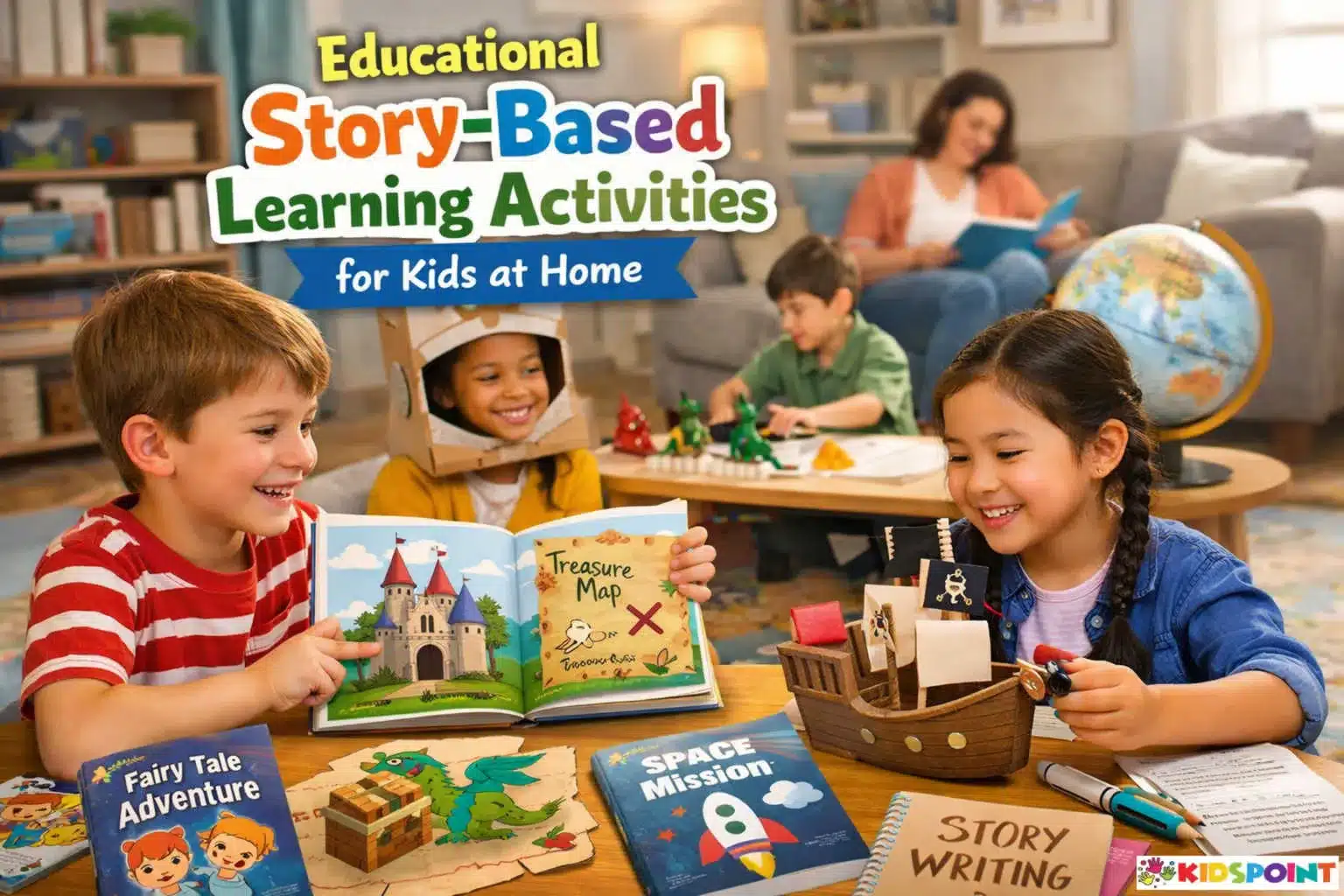
Children learn best when education feels exciting and meaningful. One of the most effective ways to inspire learning at home is through storytelling. Stories capture a child’s imagination, introduce new ideas, and help them understand the world around them. When stories are combined with interactive learning activities, they become powerful tools for building important skills.
Story-based learning encourages children to explore creativity, language, problem-solving, and emotional understanding in a fun and natural way. Instead of simply memorizing information, kids engage with characters, situations, and challenges that help them learn valuable lessons.
At The Kids Point, we believe that storytelling can transform everyday learning into an enjoyable adventure. In this guide, we will explore educational story-based learning activities that parents can easily use at home to support their child’s development.
Why Story-Based Learning Is Important for Kids
Story-based learning goes beyond reading a book. It helps children actively participate in the learning process and connect ideas with real-life experiences.
Improves Language and Communication Skills
Stories introduce children to new vocabulary, sentence structures, and expressions. Listening to and telling stories helps kids improve speaking, reading, and writing abilities.
Boosts Creativity and Imagination
Stories allow children to imagine different worlds, characters, and possibilities. This imaginative thinking strengthens creativity and innovation.
Develops Emotional Intelligence
Through stories, children learn about emotions, empathy, and relationships. They begin to understand how characters feel and how actions affect others.
Encourages Critical Thinking
When children analyze story events or predict what might happen next, they develop important thinking and reasoning skills.
Makes Learning Memorable
Children often remember lessons better when they are presented in a story format rather than as plain facts.
How Story-Based Learning Works at Home
Story-based learning is simple to implement and does not require complicated materials. Parents can use books, everyday experiences, or even create their own stories.
Here are a few easy steps:
- Choose an engaging story appropriate for the child’s age.
- Ask questions during or after the story.
- Connect the story to a fun activity or lesson.
- Encourage children to share their thoughts or create their own stories.
These small steps turn storytelling into an interactive educational experience.
Creative Storytelling Activities for Kids
Interactive storytelling activities help children become active participants rather than passive listeners.
Story Completion Game
Start telling a story and stop at an exciting moment. Ask your child to finish the story.
Example:
“Once upon a time, a little rabbit found a mysterious door in the forest…”
Ask your child questions like:
- What is behind the door?
- Who lives there?
- What adventure happens next?
This activity improves imagination and storytelling skills.
Create Your Own Storybook
Children love creating their own stories and illustrations.
Steps:
- Fold several sheets of paper to make a small book.
- Let kids draw pictures of characters and scenes.
- Help them write simple sentences for each page.
This activity improves creativity, writing, and sequencing skills.
Storytelling with Toys
Toys such as dolls, action figures, or stuffed animals can become story characters.
Parents can encourage kids to create stories using their toys.
Example:
- A toy dinosaur searching for food
- A doll solving a mystery
- A superhero helping friends
This activity promotes imaginative play and language development.
Reading-Based Learning Activities
Reading stories together can be transformed into powerful learning experiences.
Predict the Ending
Before finishing the story, ask your child what they think will happen next.
Questions to ask:
- What will the character do now?
- How will the problem be solved?
- Who might help the main character?
This encourages critical thinking and logical reasoning.
Character Exploration Activity
After reading a story, discuss the characters.
Ask questions such as:
- Who was your favorite character?
- Why did the character make certain choices?
- What would you do differently?
This activity helps children understand emotions and decision-making.
Draw Your Favorite Scene
Ask kids to draw the scene they liked most from the story.
Drawing helps children:
- Remember details
- Express emotions
- Develop artistic skills
Parents can also ask kids to explain their drawing, improving communication skills.
Educational Story Activities for Language Development
Story-based learning is excellent for building language skills.
Vocabulary Treasure Hunt
Choose a story and identify new words. Ask children to find objects or pictures that represent those words.
Example:
If the story mentions “castle,” kids can draw or build one with blocks.
This helps kids connect words with real-life meaning.
Story Retelling Activity
After hearing a story, ask your child to retell it in their own words.
This activity improves:
- Memory
- Listening skills
- Speaking confidence
You can also encourage children to act out the story.
Word Building with Story Characters
Use story characters to create simple word games.
Example:
If a character is named “Tom,” children can make new words like:
- top
- toy
- tap
This playful activity strengthens phonics and reading skills.
Story-Based Learning for Math Skills
Stories can also make math more interesting.
Counting Stories
Create a story that includes counting.
Example:
“A squirrel collected 5 acorns, then found 3 more.”
Ask your child:
How many acorns does the squirrel have now?
This connects storytelling with basic math skills.
Story Problem Challenges
Turn math problems into short stories.
Example:
“A pirate found 10 gold coins but gave 4 to his friend.”
Ask:
How many coins are left?
Kids often find math easier when it is part of a story.
Science Learning Through Stories
Stories can help children understand science concepts in simple ways.
Nature Adventure Story
Tell a story about animals, plants, or weather.
Example:
“A tiny seed traveled through the wind and landed in a garden.”
Ask questions like:
- What happens to the seed next?
- How does it grow into a plant?
This activity introduces basic science concepts.
Weather Story Activity
Create stories about different weather conditions.
Example:
“A cloud traveled across the sky and became heavy with rain.”
Children can draw the weather scene or act it out.
This helps them understand natural processes.
Role-Playing Story Activities
Role-playing encourages kids to step into a character’s shoes.
Acting Out a Story
Choose a simple story and let kids act it out.
Children can play roles such as:
- The hero
- The helper
- The problem-solver
Role-playing improves confidence and social skills.
Problem-Solving Stories
Create stories where characters face challenges.
Example:
“A kitten is stuck in a tree. How can we help?”
Kids can think of solutions and explain their ideas.
This encourages creative problem-solving.
Family Storytime Activities
Story-based learning can also strengthen family bonds.
Family Story Circle
Each family member adds one sentence to a story.
Example:
Parent: “A dragon flew over a magical forest.”
Child: “The dragon met a friendly unicorn.”
The story continues until everyone has contributed.
Bedtime Story Questions
After reading a bedtime story, ask simple questions:
- What was the best part of the story?
- What lesson did we learn?
- Which character was the bravest?
This helps children reflect on the story’s message.
Digital Storytelling Activities
Technology can also support story-based learning.
Create a Digital Story
Children can use simple apps to create stories with pictures, voice recordings, or animations.
Record Your Own Story
Kids can record themselves telling a story and listen to it later.
This activity improves speaking and presentation skills.
Parents should ensure that digital activities are balanced with offline learning and creativity.
Tips for Successful Story-Based Learning at Home
Parents can make story-based learning more effective by following a few simple strategies.
Choose Age-Appropriate Stories
Select stories that match the child’s age and understanding level.
Encourage Questions
Allow children to ask questions about characters, events, and ideas.
Be Creative
Use voices, expressions, and gestures to make stories more exciting.
Keep Activities Fun
Avoid turning storytelling into a strict lesson. The goal is to inspire curiosity and enjoyment.
Allow Kids to Lead
Sometimes let children choose the story or create their own.
We encourage parents to make storytelling a daily habit that supports learning and creativity.
Benefits of Story-Based Learning for Child Development
Story-based activities provide many long-term benefits.
Children develop:
- Stronger language skills
- Better imagination and creativity
- Improved problem-solving abilities
- Emotional understanding and empathy
- Greater confidence in communication
These skills support success in school and everyday life.
Common Questions About Story-Based Learning at Home
What is story-based learning for kids?
Story-based learning uses stories and storytelling activities to teach children important skills like reading, thinking, and problem-solving.
Why are storytelling activities good for children?
Storytelling improves imagination, language skills, creativity, and emotional understanding in a fun and engaging way.
What age is best for story-based learning?
Story-based learning can benefit children of all ages, but it is especially effective for kids between ages 3 and 10.
How can parents use storytelling at home for learning?
Parents can read books, create stories together, ask questions, and use drawing or role-playing activities related to the story.
Can story-based learning improve school performance?
Yes, story-based learning helps children develop better reading, comprehension, and critical thinking skills, which support academic success.
Inspiring a Lifelong Love for Learning
Storytelling is one of the oldest and most powerful teaching tools. When children connect learning with stories, they become curious, engaged, and eager to explore new ideas.
Educational story-based learning activities allow kids to learn naturally through imagination and creativity. Whether through reading, acting, drawing, or inventing new stories, children develop important skills while having fun.
At The Kids Point, we believe that simple storytelling moments at home can make a lasting impact on a child’s education. By encouraging creative stories and interactive activities, parents can help children grow into confident learners who love discovering new knowledge every day.