

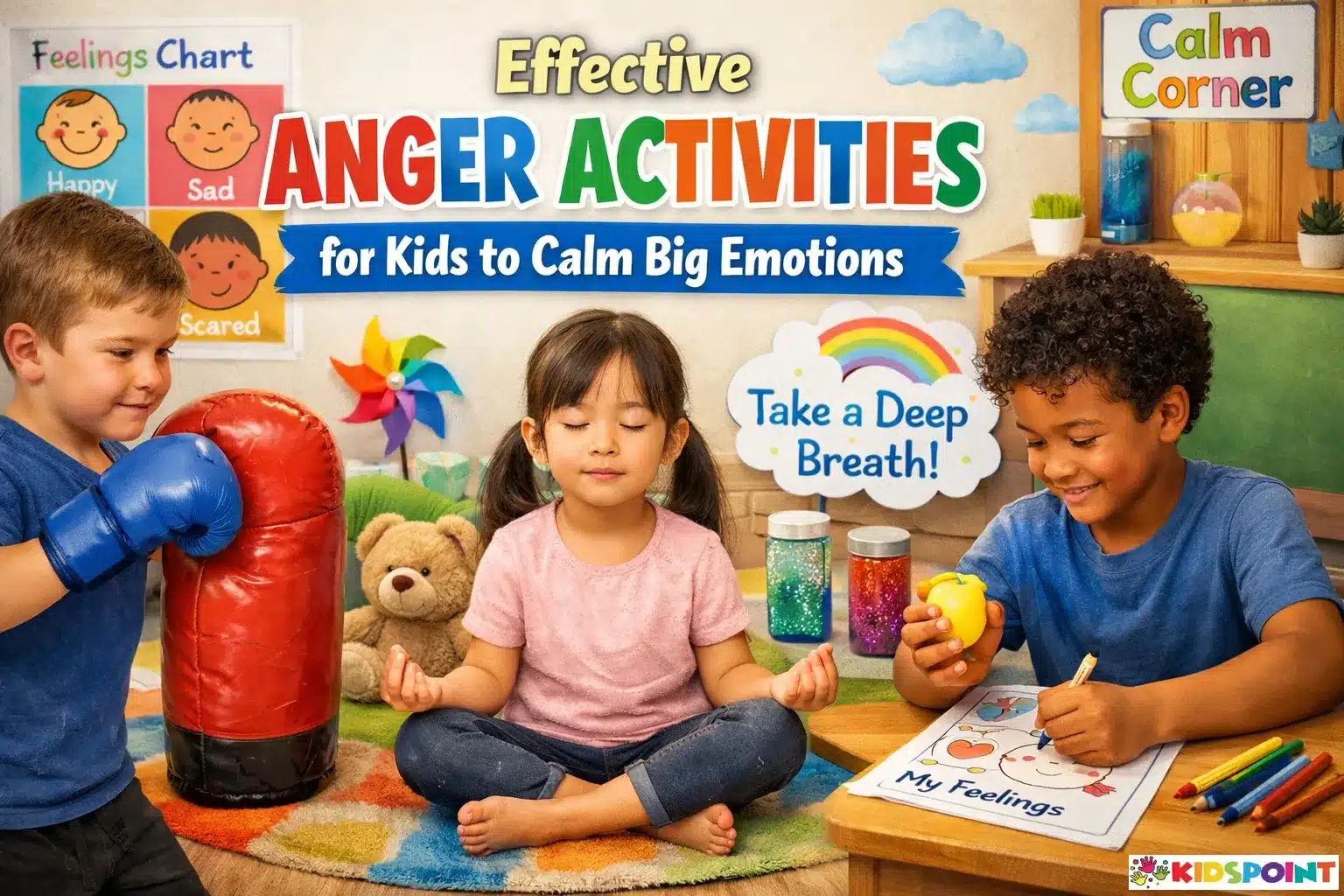
Anger is a normal and healthy emotion for children—but knowing how to handle it is a skill that must be learned. From toddlers throwing tantrums to school-age children feeling overwhelmed by rules, friendships, or academic pressure, anger can show up in many ways. Without proper guidance, children may struggle to express these big emotions safely and respectfully.
At The Kids Point, we believe that helping children understand and manage anger early builds emotional intelligence, self-control, and confidence that last a lifetime. This guide explores effective anger activities for kids that help them calm down, process feelings, and respond positively—at home, in the classroom, or during play.
Understanding Anger in Children
Anger is often misunderstood as “bad behavior,” but in reality, it is a signal emotion. Children may feel angry when they are tired, frustrated, scared, hungry, confused, or feeling unheard.
Common reasons kids experience anger include:
- Difficulty communicating feelings
- Changes in routine
- Social conflicts with peers
- Academic pressure
- Sensory overload
- Feeling a lack of control
Rather than suppressing anger, children need tools to recognize, express, and manage it safely.
Why Teaching Anger Management Early Matters
Learning anger management at a young age helps children:
- Develop emotional awareness
- Improve communication skills
- Strengthen problem-solving abilities
- Build empathy and self-regulation
- Reduce aggressive or disruptive behaviors
- Improve relationships with peers and adults
When children are taught that emotions are acceptable—but not all behaviors are—they gain lifelong emotional resilience.
Signs a Child May Need Help Managing Anger
Some children express anger openly, while others internalize it. Look for signs such as:
- Frequent meltdowns or tantrums
- Physical aggression (hitting, kicking, throwing)
- Verbal outbursts or yelling
- Withdrawal or sulking
- Difficulty calming down
- Complaints of headaches or stomachaches
- Trouble following instructions
These signs indicate a child may benefit from structured anger-calming activities.
Principles for Teaching Anger Skills to Kids
Before introducing activities, keep these principles in mind:
- Stay calm and model healthy behavior
- Validate feelings without approving negative actions
- Use simple language children understand
- Practice skills when children are calm
- Be consistent and patient
Children learn best when they feel safe, understood, and supported.
Physical Activities to Release Anger Safely
Movement Breaks
Physical movement helps release built-up tension and stress hormones.
- Jumping jacks
- Running in place
- Stretching
- Dancing to music
- Yoga poses for kids
These activities redirect anger into healthy physical expression.
Punching Pillows or Stress Toys
Allowing children to punch a soft pillow or squeeze stress balls gives them a safe outlet for physical anger without harming others.
Animal Walks
Ask kids to move like animals:
- Stomp like an elephant
- Slither like a snake
- Stretch like a cat
This playful movement helps shift emotional energy.
Creative Activities to Express Anger
Drawing and Coloring Emotions
Art gives children a non-verbal way to express feelings.
- Draw what anger looks like
- Use colors to represent emotions
- Scribble freely on paper
Discuss the artwork afterward to help children label emotions.
Clay or Playdough Play
Molding clay helps release tension and improve focus. Children can:
- Squish
- Roll
- Smash
- Rebuild shapes
This sensory activity is calming and therapeutic.
Music and Rhythm
Let kids:
- Bang drums
- Clap rhythms
- Listen to calming music
- Create their own angry-then-calm playlist
Music helps regulate emotions and mood.
Breathing and Relaxation Techniques for Kids
Balloon Breathing
Ask children to imagine inflating a balloon:
- Inhale slowly through the nose
- Hold for a count of three
- Exhale slowly through the mouth
This helps slow the heart rate and calm the nervous system.
Five-Finger Breathing
Trace one hand with the finger of the other hand:
- Inhale going up a finger
- Exhale going down
This is simple, visual, and effective.
Guided Imagery
Ask kids to imagine:
- A peaceful beach
- A quiet forest
- Floating on a cloud
Visualization helps shift focus away from anger triggers.
Emotional Awareness and Communication Activities
Feelings Chart or Wheel
Using visual emotion charts helps children identify what they feel beyond “mad.”
- Angry
- Frustrated
- Disappointed
- Overwhelmed
- Jealous
Naming emotions reduces emotional intensity.
“I Feel” Statements
Teach children to say:
- “I feel angry when…”
- “I feel upset because…”
This builds communication skills and reduces aggressive reactions.
Emotion Role-Play
Act out scenarios with toys or puppets:
- Sharing conflicts
- Losing a game
- Being told “no”
Practice calm responses together.
Calming Activities for Immediate Anger Moments
Calm-Down Corner
Create a safe space with:
- Soft pillows
- Calm toys
- Books
- Sensory items
This is not punishment—it’s a space to reset emotions.
Counting and Grounding
Teach children to:
- Count to 10 slowly
- Name five things they can see
- Name four things they can touch
Grounding techniques bring focus back to the present moment.
Water Play
Splashing water, washing hands, or pouring water between cups can have an instant calming effect.
Cognitive Activities to Build Emotional Control
Problem-Solving Practice
After calming down, help kids think through:
- What happened?
- What could we do differently next time?
- What choice helps everyone feel safe?
Anger Thermometer
Use a scale from 1 to 10 to help kids rate their anger. Teach strategies for each level.
Storytelling and Books
Reading stories about emotions helps children relate and learn coping strategies through characters.
Anger Activities for Different Age Groups
Toddlers (Ages 2–4)
- Simple breathing
- Naming emotions
- Physical movement
- Short calming routines
Preschoolers (Ages 4–6)
- Role-play
- Drawing emotions
- Calm-down corners
- Emotion charts
School-Age Kids (Ages 7–10)
- Journaling
- Problem-solving games
- Guided relaxation
- Sports and structured movement
Preteens (Ages 11–12)
- Mindfulness exercises
- Emotion journals
- Open discussions
- Personal coping plans
Supporting Anger Management at Home and School
Consistency between home and school is key. Parents and teachers should:
- Use similar language for emotions
- Reinforce calming strategies
- Praise effort, not perfection
- Avoid shaming or punishment for emotions
We emphasize collaboration between caregivers to support children’s emotional development.
Common Mistakes to Avoid When Handling Angry Kids
- Telling children to “calm down” without guidance
- Ignoring emotions
- Punishing emotional expression
- Reacting with anger yourself
- Expecting instant improvement
Anger management is a skill that develops over time.
When to Seek Extra Support
If a child:
- Has frequent aggressive outbursts
- Hurts themselves or others
- Shows prolonged emotional distress
- Struggles socially due to anger
Consider consulting a child psychologist or counselor for additional support.
Building Lifelong Emotional Skills
Teaching kids how to handle anger doesn’t just solve today’s meltdowns—it builds emotional intelligence for adulthood. Children who learn to manage big emotions grow into adults who can:
- Communicate clearly
- Handle stress
- Build healthy relationships
- Solve problems calmly
Common Questions Parents Ask About Kids’ Anger
Is anger normal for children?
Yes, anger is a normal emotion in children and helps them express frustration, needs, or discomfort when handled properly.
At what age should kids learn anger management?
Children can begin learning simple anger-calming skills as early as age two through guided breathing and emotion naming.
How long does it take for anger activities to work?
Anger management skills improve over time with consistent practice rather than immediate results.
Are anger activities better than punishment?
Yes, anger activities teach emotional regulation and problem-solving, while punishment often suppresses emotions without teaching coping skills.
When should parents seek professional help?
If anger leads to frequent aggression, emotional distress, or social difficulties, professional guidance may be helpful.
Final Thoughts
Anger is a powerful emotion, but with the right tools, children can learn to manage it safely and effectively. Through movement, creativity, breathing, communication, and empathy, kids develop confidence in handling their feelings.
At The Kids Point, we believe every child deserves emotional tools that empower them—not silence them. By using these effective anger activities, parents and educators can help children transform big emotions into healthy growth opportunities.