

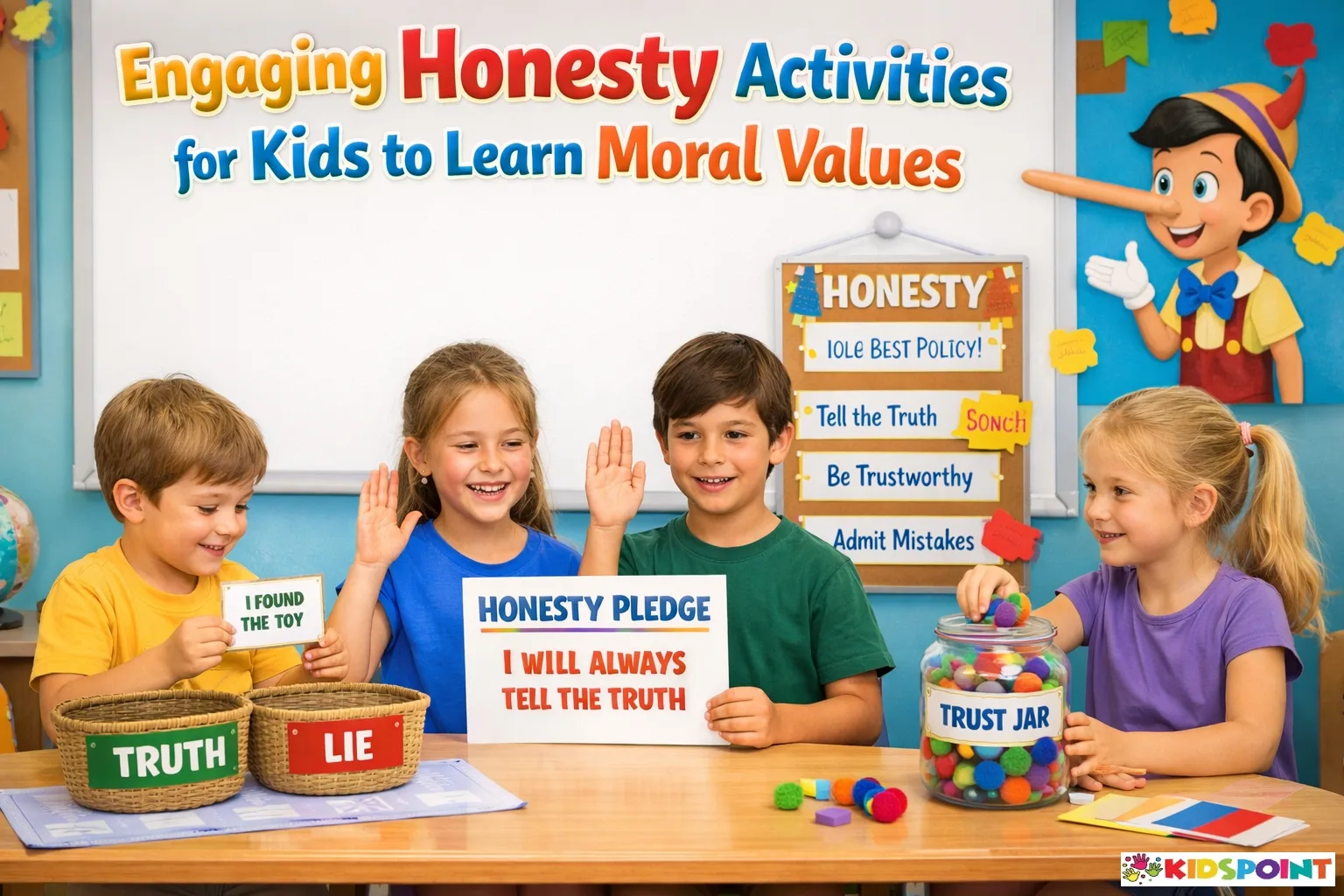
Teaching honesty to children is one of the most important steps in shaping responsible, confident, and emotionally healthy individuals. At The Kids Point, we believe moral values should never feel like boring lectures. Instead, they should come alive through fun, meaningful, and age-appropriate activities that children genuinely enjoy.
In this detailed guide, you will discover why honesty matters, how kids develop moral reasoning, and—most importantly—engaging honesty activities that parents, teachers, and caregivers can use at home or in the classroom.
Why Teaching Honesty to Kids Is So Important
Honesty is the foundation of trust. When children learn to tell the truth, they develop:
- Stronger relationships with family and friends
- Higher self-confidence because they don’t fear being “found out”
- Better emotional intelligence
- A clear sense of right and wrong
Dishonesty in children is not unusual—it is often linked to fear of punishment, desire for attention, or a lack of understanding about consequences. This is why gentle guidance is far more effective than harsh discipline.
How Children Learn Moral Values
Children do not become honest overnight. Their moral development happens in stages:
| Age Group | How Kids View Honesty |
| 3–5 years | May lie to avoid trouble or to create fantasy stories |
| 6–8 years | Begin to understand rules and fairness |
| 9–12 years | Develop empathy and understand trust |
| Teen years | Form strong personal ethics and social responsibility |
The goal is not to punish dishonesty—but to teach the value of truth through experiences.
Creating an Honesty-Friendly Environment
Before introducing activities, it’s important to build the right environment.
- Praise truthfulness, even when the truth is hard
- Avoid overreacting when kids admit mistakes
- Be a role model—children copy adults
- Encourage open communication
When kids feel safe telling the truth, honesty becomes natural.
Fun and Engaging Honesty Activities for Kids
Here are proven activities curated to help children practice honesty in real-life situations.
The Truth Jar Game
What You Need: A jar, slips of paper, pen.
How It Works: Write simple honesty-related questions like:
- “Did you ever break something and not tell anyone?”
- “How did telling the truth make you feel?”
Kids pick a slip and answer honestly.
Why It Works: It teaches reflection and builds trust in a fun, non-threatening way.
Role-Play Real-Life Scenarios
Create small skits about everyday situations:
- Finding lost money
- Breaking a friend’s toy
- Copying homework
Let children act out honest and dishonest choices, then discuss outcomes.
Lesson: Kids understand consequences without feeling judged.
The Honesty Story Circle
Ask children to share a time when telling the truth was difficult.
Rules:
- No teasing
- Everyone listens respectfully
- Applaud bravery
This builds emotional courage.
Red Light, Green Light – Honesty Edition
Call out statements:
- “Telling your teacher you forgot homework.”
- “Blaming your sibling for your mistake.”
Green = Honest choice
Red = Dishonest choice
Kids jump to the right side.
Compliment Circle
Kids sit in a circle and share honest compliments about each other.
Example: “I like how you always help me.”
This teaches kind honesty.
Honesty Comic Strip
Let kids draw comics showing characters choosing honesty over lies.
Creative Tip: Turn these into classroom posters.
The Broken Toy Challenge
Give a scenario:
“You accidentally broke your friend’s toy. What should you do?”
Let kids write or discuss the best honest solution.
Truth vs Lie Sorting Cards
Prepare cards with situations. Kids sort them into:
- Honest
- Dishonest
This improves moral reasoning skills.
Honesty Badge Chart
Create a weekly honesty chart. Kids earn badges for:
- Admitting mistakes
- Returning lost items
- Speaking truthfully
Remember: Reward honesty, not perfection.
“What Would You Do?” Box
Kids write tricky situations and place them in a box. Each day, pick one and discuss solutions together.
Teaching Honesty Through Stories
Stories are powerful tools for moral learning.
Recommended story themes:
- The boy who told the truth even when afraid
- A child who returned lost money
- A friend who chose honesty over popularity
After reading, ask:
- “What would you have done?”
- “How did honesty change the ending?”
How to Handle Lying Gently
We suggest a calm, understanding approach.
Instead of:
“Why did you lie?”
Try:
“I know it’s hard to tell the truth sometimes. Let’s fix this together.”
This builds trust, not fear.
Age-Wise Honesty Activities
| Age | Activity |
| 3–5 | Storybooks & role-play |
| 6–8 | Truth Jar, Sorting Cards |
| 9–12 | Comic creation, group debates |
| Teens | Journaling & ethical discussions |
Classroom Tips for Teachers
- Praise honesty publicly
- Avoid embarrassing kids
- Introduce honesty pledges
- Use reflection journals
Building Lifelong Moral Habits
Honesty is not a one-day lesson—it’s a daily habit. When children feel respected, supported, and understood, honesty becomes their natural choice.
We believe that shaping moral values today builds responsible citizens for tomorrow.
Quick Questions About Teaching Honesty
At what age should I start teaching honesty to my child?
You can start as early as 3 years old with simple stories and role-play activities.
How can I encourage honesty without punishing lies?
Praise truthful behavior, discuss mistakes calmly, and model honesty yourself.
What are some fun honesty activities for kids at home?
Try the Truth Jar, role-playing scenarios, comic strips, or the “What Would You Do?” box.
How do I handle it if my child keeps lying?
Stay calm, discuss consequences, and focus on teaching the value of truth rather than punishing.
Can honesty activities help kids in school too?
Yes! They improve trust, communication skills, and ethical decision-making in classroom settings.
Final Thoughts
Teaching honesty does not require strict rules or punishment—it requires connection, creativity, and compassion. Through games, stories, and open conversations, children learn that telling the truth is not something to fear, but something to feel proud of.
Start with one small activity today, and watch honesty become part of your child’s character for life.