

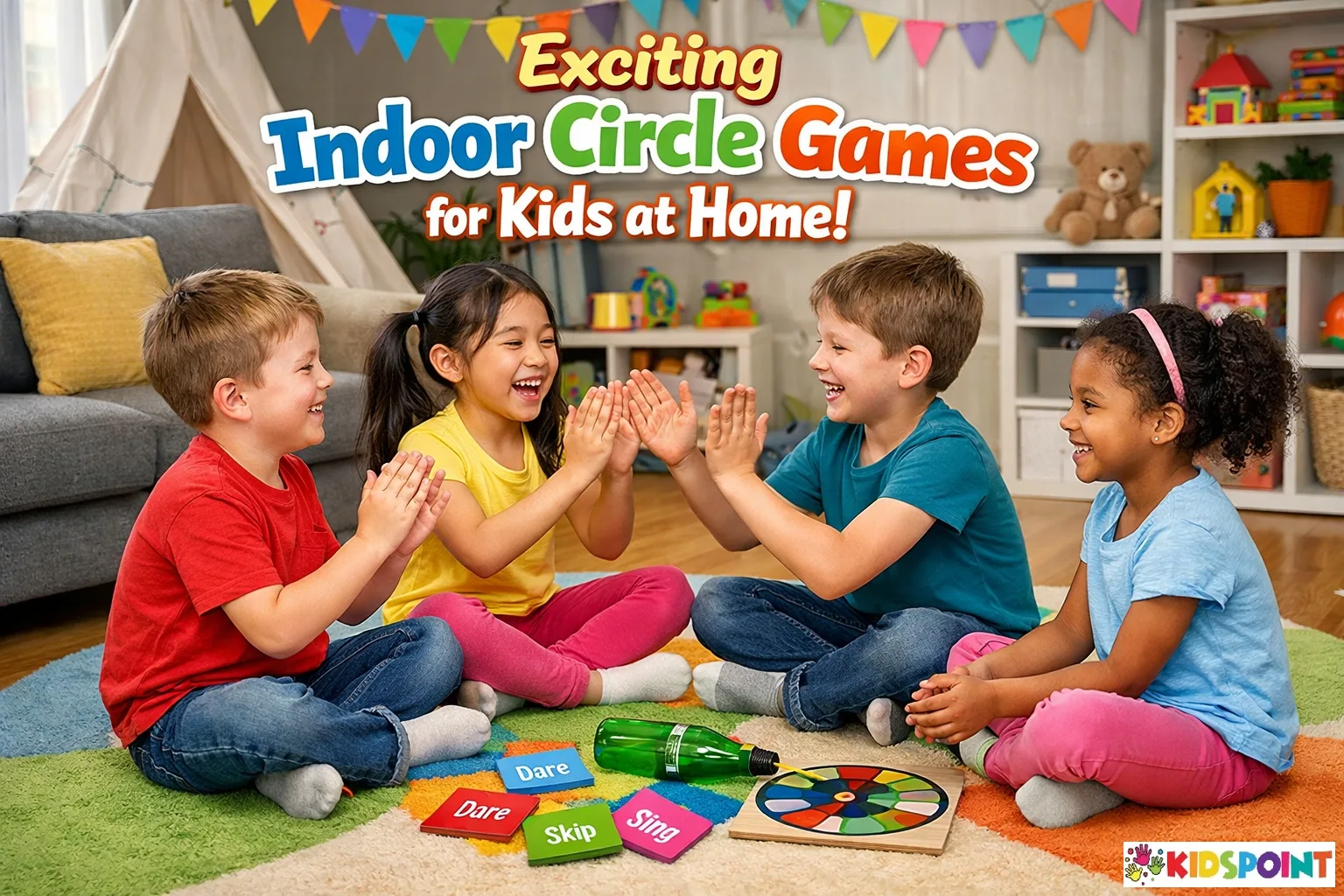
Keeping children entertained at home doesn’t have to involve screens, gadgets, or noisy toys. Sometimes, all it takes is a little imagination, energy, and the right game! At The Kids Point, we believe that playtime is essential—not just for fun, but for developing social skills, cognitive growth, cooperation, and creativity.
Indoor circle games are especially magical because they involve every child equally, build a sense of community, and can be played in small spaces. Whether it’s rainy weather, a quiet afternoon, or family bonding time, circle games bring laughter, movement, and interaction—all without leaving the house.
In this comprehensive guide, we’ll explore exciting indoor circle games for kids at home—from classic favorites to creative new twists. Each game includes how to play, educational benefits, and safety tips so you can enjoy worry-free fun.
Why Choose Indoor Circle Games for Kids?
Before we dive into the games, let’s talk about why circle games are so effective and beneficial:
Promote Social Interaction
Circle games require kids to look at one another, take turns, and communicate—great for language and teamwork skills.
Build Listening and Motor Skills
Many games involve following directions, rhythm, and movement, which support fine and gross motor development.
Encourage Fair Play and Cooperation
Kids practice patience, sharing, and understanding rules—a foundation for emotional intelligence.
Perfect for Small Spaces
No need for a backyard! Circle games adapt easily to living rooms, bedrooms, or playrooms.
Low-Prep, High Fun
Most of these games need zero props or only simple items like a ball, scarf, or flashlight.
Indoor Circle Games to Try at Home
“Hot Potato” – Fast Hands, Laughs, and Listening Game
How to Play:
- Have children sit or stand in a circle.
- Choose a soft object (ball, sock, beanbag) to be the “potato.”
- Play music or have someone count slowly.
- Kids pass the “hot potato” around the circle.
- When the music stops or the count ends, the child holding it is “out” or has a fun challenge.
Variations:
- Instead of elimination, the child holding the potato does a silly dance or tells a joke.
- Use themed music (animals, favorite songs, seasonal tunes, etc.).
Developmental Benefits:
- Listening and waiting your turn
- Quick reactions and motor coordination
- Team spirit and positive competition
Safety Tip: Use a soft object to prevent accidents if kids are moving quickly.
“Follow the Leader” Circle Walk
How to Play:
- Children form a circle, standing shoulder to shoulder.
- One child becomes the Leader.
- The Leader performs movements (clap, stomp, spin, funny walk).
- Everyone follows the same movements around the circle.
- After a round, choose a new Leader.
Why Kids Love It: They get to be the boss and make up goofy actions!
Skills Boosted:
- Gross motor development
- Imitation and memory
- Creativity and leadership
Fun Twist: Use different themes such as animal walks, space moves, or superhero steps!
“Pass the Smile” – No Props Needed
How to Play:
- All kids sit in a circle.
- One child starts with a big smile.
- They “pass” the smile to the next person without speaking.
- The next must mimic the same smile and pass it on.
- Watch how smiles change and evolve around the circle!
Educational Value:
- Facial expression recognition
- Emotional connection
- Nonverbal communication
Outcome: Guaranteed giggles and a positive shift in mood!
“Leapfrog Shuffle” – Energy Burst in a Circle
How to Play:
- Children stand in a circle.
- One child crouches while another leaps over them.
- Continue until everyone has leaped at least once.
Safety First: Do soft crouches and ensure enough space, especially on carpet.
Great For:
- Balance, strength, and coordination
- Cooperative movement
- Taking turns
Creative Circle Storytelling Games
Emotion, imagination, and language come alive with storytelling games. These are perfect for bedtime, long afternoons, or quiet play.
“Round-Robin Story Game”
How to Play:
- Kids sit in a circle.
- One child starts a story with one sentence (e.g., “Once upon a time…”).
- Going around the circle, each child adds one sentence.
- Continue until the story reaches a fun ending—or wraps itself into a silly mess!
Benefits:
- Language and sequencing skills
- Listening and patience
- Creativity and confidence
Tip: Keep prompts ready like “A mysterious box appeared…” or “Suddenly, the dog could talk!”
“Magic Word Circle”
How to Play:
- Choose a “magic word” (happy, rainbow, dragon, sparkle).
- Sit in a circle and take turns saying a sentence using the magic word.
- The aim is to use new ideas and imaginative scenarios.
Encourages:
- Vocabulary expansion
- Creative thinking
- Confidence speaking aloud
Music & Movement Circle Games
Movement and music naturally energize kids. These circle games combine rhythm, dance, and play.
“Freeze Dance Circle”
How to Play:
- Play fun music.
- Children dance inside the circle.
- Blast the music… then suddenly stop!
- Everyone must freeze in place.
- Anyone who moves does a funny task before rejoining.
Why It Works: Kids love dancing and silly challenges!
Skills Developed:
- Rhythm and listening
- Control of body movements
- Confidence
Pro Tip: Use different types of music: fast, slow, cultural songs, funny beats!
“Drum Circle Claps”
No instruments? No problem! Use hands to make rhythm.
How to Play:
- Sit in a circle.
- Start a simple beat: clap-clap-stomp.
- Go around the circle, each child adds a repeatable move.
Boosts:
- Pattern recognition
- Turn taking
- Focus and rhythm
Quiet, Calm Circle Games – Perfect for Wind-Down Time
When kids need a break from high energy, these circle games calm the mind while still providing fun.
“Kindness Round”
How to Play:
- Sit in a circle.
- Each child says one kind thing about the person on the right.
- Continue until everyone received a compliment!
Heart-warming Benefits:
- Empathy and positive self-esteem
- Observation of others’ strengths
- Warm and safe environment
“Shadow Circle” (with Flashlight)
How to Play:
- Dim lights or turn them off safely.
- Kids sit in a circle.
- Use a flashlight to make shadows on the wall.
- Create shapes, animals, letters, or silhouette stories.
Great For:
- Imagination and storytelling
- Sensory play
- Calm, focused group activity
Tips to Make Indoor Circle Games Even Better
Here are some insider ways to expand play, avoid arguments, and keep kids engaged longer:
Rotate Leaders
Let every child take a turn being the leader. This builds confidence and fairness.
Use Themed Days
Turn circle game time into a theme: Pirate Day, Space Adventure, Safari Games, or Under the Sea!
Mix Up Teams
Balance age or skill levels so younger children stay included without pressure.
Add Challenges or Rewards
Create small certificates like “Best Dancer,” “Silliest Storyteller,” “Super Listener.”
Celebrate Accomplishments
Clap for effort, not just winners. Everyone wins when they participate!
How Indoor Circle Games Help Child Development
We always champion play as a powerful teaching tool. Here’s how circle games specifically support growth:
Cognitive Skills
- Following rules
- Memory and sequencing
- Problem-solving
- Quick thinking
Physical Skills
- Balance and coordination
- Body awareness
- Listening with movement
Social & Emotional Learning
- Patience and turn-taking
- Cooperation and empathy
- Confidence speaking in a group
Language & Communication
- Vocabulary building
- Expressive storytelling
- Active listening
Indoor circle games are STEAM-friendly without even trying!
Circle Game Safety at Home
Just a few simple precautions make playtime safe:
- Clear the area of breakable objects
- Use soft props only
- Ensure enough space for movement
- Supervise younger children
- Encourage safe, gentle play
Common Questions Parents Ask About Indoor Circle Games
What age group are indoor circle games best for?
Indoor circle games are ideal for children aged 3 to 12 years, with simple rules adaptable for different ages.
Do indoor circle games require special equipment?
No, most circle games need no equipment or just simple items like a ball, scarf, or music.
How many children are needed to play circle games?
Most circle games work well with 3 to 10 children, but many can be adjusted for larger or smaller groups.
Are indoor circle games safe for home play?
Yes, they are safe when played in a clear space, using soft props and adult supervision for younger kids.
How long should a circle game session last?
A session of 20–30 minutes is perfect to keep kids engaged without making them tired or bored.
Final Thoughts: Make Every Day a Play Day!
Indoor circle games are one of the most joyful, interactive, and growth-oriented ways for kids to play at home. They require minimal setup, keep children engaged, and build lifelong skills in social interaction, cognitive thinking, movement, and emotional intelligence.
Whether it’s a rainy afternoon or a family game night, these circle games from The Kids Point offer creative, meaningful, and fun experiences for children of all ages.