

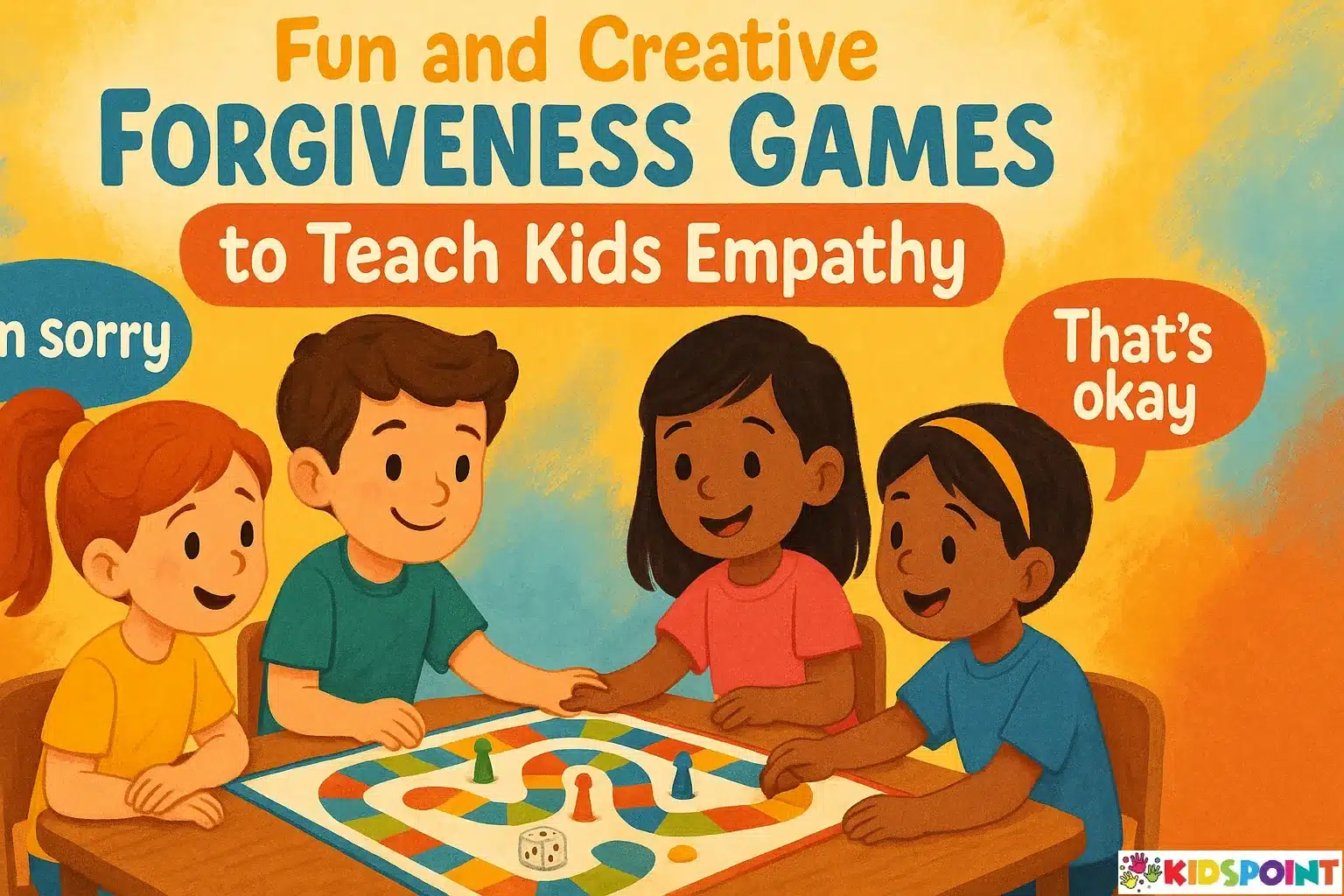
Teaching forgiveness to children is one of the most valuable emotional skills parents and teachers can nurture. Kids often struggle with hurt feelings, disagreements, and misunderstandings. Without proper guidance, these small conflicts can turn into big emotional hurdles. That’s why introducing forgiveness games—fun, interactive activities that blend play with emotional learning—can make a powerful difference.
Forgiveness games help kids recognize emotions, practice empathy, and understand how to resolve conflicts in healthier ways. These activities teach children not only how to forgive others but also how to express themselves clearly, listen with patience, and build deeper, kinder relationships. In this long-form guide, The Kids Point brings you an engaging collection of forgiveness games that are meaningful, enjoyable, and perfect for homes, classrooms, therapy sessions, or group activities.
Why Teaching Forgiveness Matters for Kids
Forgiveness is more than saying “I’m sorry.” It is a lifelong skill that helps children manage emotions, stay confident, and maintain positive relationships. When kids learn forgiveness early, they:
- Develop empathy
- Improve communication skills
- Build emotional resilience
- Learn peaceful conflict resolution
- Strengthen friendships
- Reduce stress and anxiety after disagreements
Forgiveness does not mean ignoring hurt feelings or pretending nothing happened. Instead, it teaches children how to acknowledge feelings, understand others’ perspectives, and choose kindness even during difficult moments. With the right guidance, forgiveness becomes a natural, compassionate behavior.
How Games Make Forgiveness Easier to Learn
Kids learn best through hands-on activities and interactive play. Forgiveness games create a safe environment where children can explore emotions, practice communication, and develop empathy—without pressure or judgment. Games make emotional learning:
- Fun and engaging
- Easier to understand
- Less intimidating
- More memorable
- Highly relatable
When kids play these activities repeatedly, the concepts of empathy and forgiveness become part of their everyday behavior.
Top Fun and Creative Forgiveness Games to Teach Kids Empathy
Below are some of the most effective forgiveness games you can introduce to children. Each game is simple, meaningful, and designed to bring emotional growth naturally through play.
The Heart Fixing Game
Goal: Teach kids how words and actions can hurt—and how forgiveness repairs relationships.
Give each child a paper heart. Ask them to crumple it, fold it, or tear tiny edges whenever someone says or does something unkind (use fictional examples). Then, ask them to smooth and tape the heart back together.
Lesson: Even after apologizing, the heart never looks exactly the same. This helps kids understand the importance of being kind and gentle with others. It also shows forgiveness helps heal, even if the hurt leaves a memory.
Forgiveness Freeze Dance
Goal: Help kids practice pausing and regulating emotions.
Play upbeat music and let kids dance freely. When the music stops, call out a prompt like:
- “Think of someone you forgive today.”
- “Show a face of kindness.”
- “Pose like someone giving a hug.”
Kids freeze in a position that reflects their emotional prompt.
Lesson: The game teaches emotional reflection, impulse control, and the understanding that forgiveness can be a positive, joyful action.
Empathy Charades
Goal: Help kids identify emotions and understand how others feel.
Write emotional situations on slips of paper, such as:
- “Your friend broke your favorite toy.”
- “Someone shared their lunch with you.”
- “You lost a game and felt upset.”
Kids act out the feeling, and others guess the emotion.
Lesson: Through acting and guessing, children learn to recognize feelings in themselves and others—an essential part of forgiveness.
The Apology Puzzle
Goal: Teach kids that every apology has pieces that fit together.
Create a simple jigsaw puzzle with four pieces labeled:
- I’m sorry for…
- It was wrong because…
- Next time I will…
- How can I make it right?
Kids assemble the puzzle before practicing a full, meaningful apology using the four steps.
Lesson: Children understand that apologies are more than words—they are actions, reflections, and commitments.
Kindness Relay Race
Goal: Encourage teamwork, empathy, and forgiveness.
Kids form teams. Each team passes a “kindness baton” and must perform a kind act every time they receive it—such as giving a compliment or helping a teammate.
Add a rule: if someone accidentally drops the baton or gets upset, the whole team practices quick forgiveness to move forward.
Lesson: Kids learn that mistakes happen and forgiveness keeps everyone moving together.
Forgiveness Story Circle
Goal: Help kids relate real-life situations to forgiveness.
Sit in a circle. Begin a story such as:
“Once there were two best friends who had a big disagreement…”
Each child adds a sentence or idea, guiding the story toward understanding, empathy, and forgiveness.
Lesson: Storytelling helps kids explore conflict resolution and understand emotional consequences in a fun, creative way.
The Balloon Release Game
Goal: Teach kids how to let go of frustration.
Give each child a balloon. Ask them to whisper a hurt or frustration into it (real or imaginary). On the count of three, release the balloons into the air.
Lesson: Symbolically letting go teaches kids that forgiveness brings relief and emotional lightness.
Feelings Bingo
Goal: Strengthen emotional vocabulary and empathy.
Make a bingo sheet with emotions like:
- Angry
- Disappointed
- Happy
- Nervous
- Hurt
- Grateful
- Forgiving
Call out real-life scenarios (e.g., “You fell and your friend helped you,” “Someone left you out of a game”), and kids match them with emotions.
Lesson: Understanding feelings helps kids forgive more easily because they can express and interpret emotions better.
Pass the Hug
Goal: Promote connection and empathy.
Children sit in a circle. One child starts by giving a gentle hug or a shoulder tap to the child next to them. It continues around the circle.
For variation, ask each child to say something kind before passing the hug.
Lesson: Kids learn that kindness spreads and helps repair relationships after conflict.
What Would You Do? Scenarios
Goal: Teach decision-making and forgiveness skills.
Create cards with forgiveness-related dilemmas:
- “Your friend ruined your drawing by mistake.”
- “Someone called you a name but apologized.”
- “Your sibling took your toy without asking.”
Kids discuss what they would do and how forgiveness could help.
Lesson: Children practice empathy, communication, and conflict resolution in a safe, thoughtful way.
The Forgiveness Tree
Goal: Turn forgiveness into a visual, daily practice.
Put a paper tree on the wall. When kids forgive someone or receive forgiveness, they write it on a leaf and add it to the tree.
Lesson: A growing forgiveness tree shows children that kindness and understanding can flourish.
Walk in My Shoes Game
Goal: Improve empathy through perspective-taking.
Place shoes in a row (or paper cutouts). Each pair represents a character in a different conflict scenario. Kids step into the shoes and explain how that person feels.
Lesson: Understanding someone else’s point of view makes forgiveness easier and more meaningful.
How to Make Forgiveness Games More Effective
While forgiveness games are fun, they are most powerful when paired with gentle guidance. Here are tips to make each game meaningful and emotionally healthy.
Create a Safe Space
Ensure children feel safe expressing emotions without fear of judgment.
Model Forgiveness Yourself
Kids learn by observing adults. Let them see how you resolve conflicts.
Discuss Feelings Openly
After each game, ask:
- “How did that make you feel?”
- “Why do you think forgiveness is important?”
Praise Positive Behavior
Reinforce empathy, kindness, and thoughtful responses.
Be Patient
Kids grow emotionally at their own pace. Forgiveness is a journey, not a single moment.
Keep Consistency
Repeat games regularly to make forgiveness a natural habit.
Real-Life Benefits of Teaching Forgiveness Through Play
Parents and teachers who use forgiveness games notice powerful transformations:
Stronger Friendships: Kids learn to resolve disagreements quickly and kindly.
Reduced Anger and Anxiety: Letting go of grudges helps children feel emotionally lighter.
Better Communication: Games encourage open discussion and honest expression.
Improved Classroom Behavior: Less conflict means a calmer learning environment.
Long-Term Character Growth: Kids develop empathy, kindness, and emotional intelligence—skills that last a lifetime.
FAQs About Fun And Creative Forgiveness Games
What are forgiveness games for kids?
Forgiveness games are fun activities that help children learn empathy, manage emotions, and resolve conflicts peacefully.
Why should kids learn forgiveness early?
Early learning helps kids build stronger friendships, improve communication, and develop emotional resilience.
Can forgiveness games be used in classrooms?
Yes! These activities work great in classrooms to promote teamwork, kindness, and positive behavior.
Are the games suitable for all age groups?
Most forgiveness games can be adapted for preschoolers to pre-teens with simple adjustments.
How often should kids play forgiveness games?
Regular practice—weekly or daily—helps kids develop forgiveness as a natural life skill.
Final Thoughts
Forgiveness is one of the greatest gifts we can teach children. It builds empathy, strengthens relationships, and nurtures emotional well-being. With these fun and creative forgiveness games, learning to forgive becomes joyful, natural, and easy for kids.
At The Kids Point, we believe that emotional growth is just as important as academic learning. By incorporating these games into everyday routines—whether at home, school, or therapy—adults can help children grow into compassionate, empathetic, and emotionally strong individuals.