

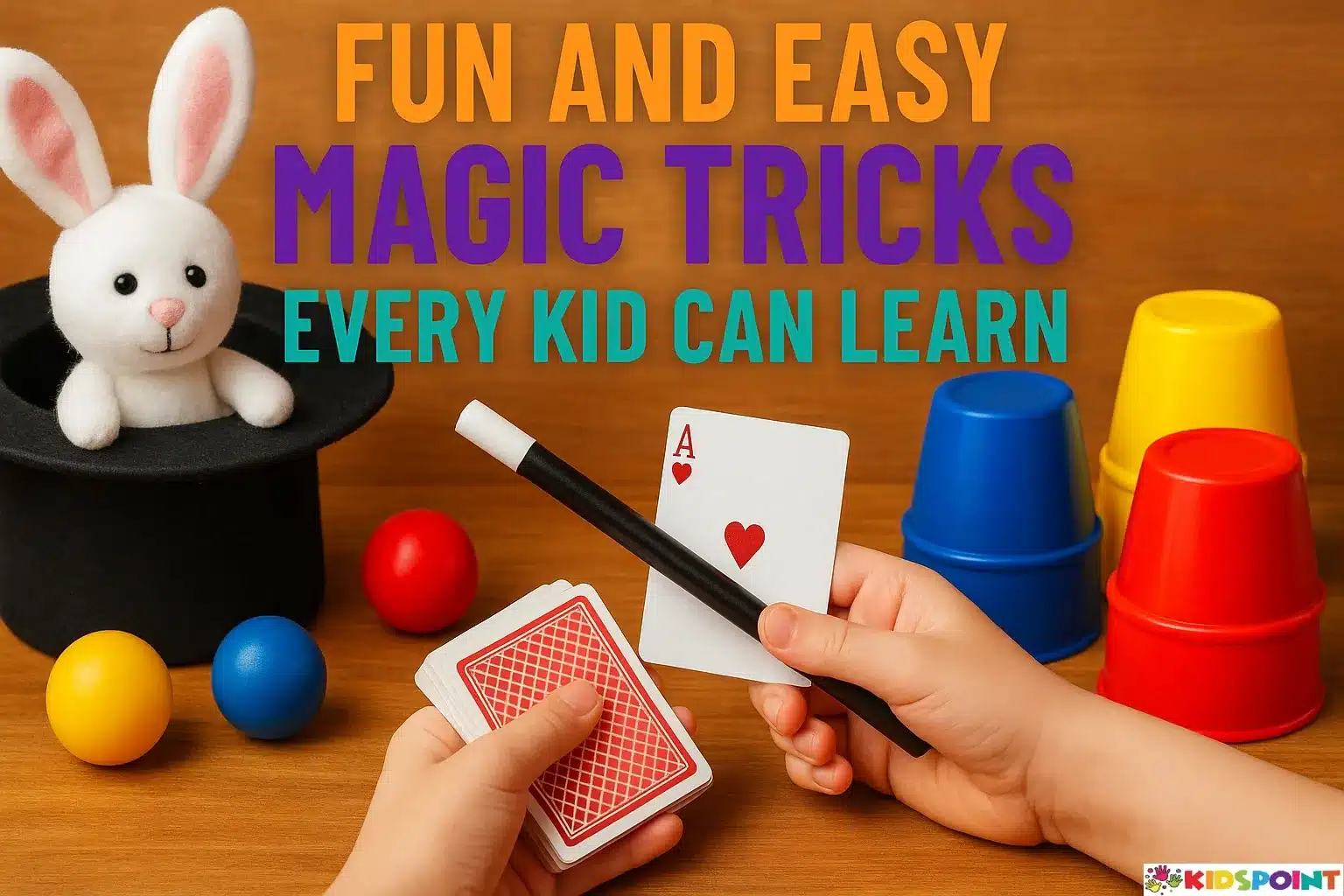
Magic has fascinated children for centuries. The thrill of making something disappear, pulling a coin from behind someone’s ear, or predicting the outcome of a card draw sparks imagination, confidence, and curiosity. Learning magic is not only entertaining but also educational. It enhances creativity, improves hand-eye coordination, builds self-esteem, and encourages kids to think critically.
At The Kids Point, we believe that every child can enjoy the art of magic, regardless of age or experience. This guide covers easy-to-learn magic tricks, step-by-step instructions, tips for performance, and the educational benefits of practicing magic.
Why Kids Should Learn Magic Tricks
Learning magic offers more than just fun. Here are some benefits:
Enhances Creativity
Magic encourages children to think outside the box. Developing tricks or personalizing routines sparks imaginative thinking.
Boosts Confidence
Performing in front of family, friends, or classmates builds self-esteem and public speaking skills.
Improves Fine Motor Skills
Manipulating cards, coins, or small objects helps children develop precision and hand-eye coordination.
Encourages Problem-Solving
Planning, memorizing, and executing magic tricks strengthens logical thinking and problem-solving abilities.
Promotes Patience and Practice
Magic requires focus and repetition, teaching children persistence and patience.
Provides Social Interaction
Performing magic creates opportunities for interaction, laughter, and connection with peers.
We recommend starting with simple tricks before advancing to more complex routines.
Easy Magic Tricks Every Kid Can Learn
Here are the most fun, beginner-friendly tricks kids can master, along with step-by-step instructions.
The Disappearing Coin Trick
What You Need
- A coin
- A table
- A small cloth or handkerchief
Steps
- Place the coin on the table.
- Cover it with a cloth.
- Pretend to pick it up with one hand while secretly sliding it off the table into your lap.
- Show your hands empty to the audience.
Tip: Practice sliding the coin smoothly to make the trick look magical.
The Floating Pencil Trick
What You Need
- Pencil or pen
- Clear thread or invisible string
Steps
- Tie the pencil to the invisible thread.
- Hold the thread between your hands.
- Gently tilt your hands to make the pencil appear to float.
Tip: Practice hand movements to make it look effortless and natural.
The Magic Coloring Book
What You Need
- Magic coloring book (available online or at toy stores)
Steps
- Show the book empty.
- Flip through pages showing blank pages.
- Wave your hand over the book.
- Flip pages to reveal images magically colored in.
Tip: Children love using this trick to wow friends, and it’s simple to perform.
The Levitating Ring Trick
What You Need
- Ring
- Pencil or straw
- Invisible thread
Steps
- Thread the invisible string through the ring.
- Hold the ends of the string tightly and tilt the pencil slightly.
- The ring appears to float along the pencil.
Tip: Keep your hands relaxed for smoother illusion.
The Vanishing Paper Trick
What You Need
- Small piece of paper
- Your hands
Steps
- Crumple the paper in your hand.
- Pretend to transfer it to your other hand.
- Secretly tuck the paper into the original hand.
- Show the receiving hand empty.
Tip: Hand positioning is key; practice in front of a mirror.
The Magic Wand Trick
What You Need
- Magic wand (or pencil)
- Small object like a coin or eraser
Steps
- Cover the object with one hand.
- Tap it with the wand while secretly dropping it into your other hand or pocket.
- Reveal the object has disappeared.
Tip: Timing is essential—synchronize your tap and reveal for maximum effect.
The Jumping Rubber Band Trick
What You Need
- Rubber band
Steps
- Place the rubber band around your first two fingers.
- With a flick of your fingers, make it appear to jump to the next two fingers.
Tip: Slow practice will help the jump look magical and effortless.
The Mind-Reading Card Trick
What You Need
- Standard deck of playing cards
Steps
- Fan out the cards for a friend to pick one.
- Remember the bottom card secretly.
- Shuffle the cards carefully without disturbing the bottom card.
- Reveal the friend’s card by using the bottom card as a marker.
Tip: Practice shuffling smoothly to maintain secrecy.
The Magic Spoon Bending Trick
What You Need
- Spoon
Steps
- Hold the spoon at an angle.
- With slight pressure and hand movement, make it appear to bend.
Tip: This is an optical illusion; the spoon doesn’t actually bend, so angles are critical.
The Predicting Drawing Trick
What You Need
- Paper
- Pencil
- Envelope
Steps
- Ask a friend to draw a simple object while you secretly write it down.
- Place your prediction in an envelope.
- Reveal the drawing and your prediction—they match perfectly.
Tip: Keep your prediction hidden until the reveal for maximum surprise.
Tips for Kids to Perform Magic Successfully
Performing magic is as much about presentation as it is about technique. Here are some tips:
Practice, Practice, Practice
Rehearsing makes tricks look effortless. Encourage children to practice in front of a mirror.
Use Confidence
Magic is about showmanship. Smiling, maintaining eye contact, and speaking clearly enhances performance.
Keep Tricks Simple
Begin with easy tricks to avoid frustration and gradually increase complexity.
Engage the Audience
Ask questions, involve friends or family, and create suspense to make tricks more entertaining.
Master Hand Positioning
Hiding movements and angles is critical for illusions. Hand and finger placement makes or breaks a trick.
Tell a Story
Magic is more enjoyable when part of a story or themed performance.
Don’t Reveal Secrets
Part of the fun is keeping the magic alive. Avoid explaining the trick prematurely.
We encourage children to explore, perform, and innovate with magic to build both skill and confidence.
Fun Magic Kits and Tools for Kids
To make learning magic easier, consider kits and props designed for children:
- Beginner Card Trick Kits – Includes instructions and simple decks.
- Magic Wand Sets – Comes with basic props like rings, coins, and scarves.
- Magician Costume Kits – Adds performance fun and confidence.
- Interactive Magic Books – Step-by-step instructions with pictures.
- DIY Kits – Encourage creativity and customization.
These tools enhance the learning experience and make magic practice more engaging.
Educational Benefits of Magic for Kids
Learning magic isn’t just entertaining; it has several cognitive and social benefits:
Cognitive Skills
- Problem-solving
- Sequencing and memory
- Concentration
Motor Skills
- Hand-eye coordination
- Fine motor control
- Dexterity
Social Skills
- Public speaking
- Confidence in performance
- Collaboration with friends
Creativity
- Designing tricks
- Storytelling
- Improvisation
Magic develops skills that extend beyond performance, making it a valuable educational activity.
Creating a Magic Show at Home
Kids can perform magic at home to entertain family or friends. Here’s a simple plan:
Choose Tricks: Pick 3–5 easy tricks that can be performed confidently.
Rehearse: Practice each trick multiple times to ensure smooth execution.
Prepare Props: Set up wands, coins, cards, or scarves as needed.
Set the Stage: Create a small performance area, dim lighting if possible, and use a table for props.
Perform With Flair: Smile, speak clearly, and involve the audience for maximum effect.
Encourage Applause: Finish with a grand finale or a simple reveal to celebrate success.
Common Questions About Kids and Magic
At what age can kids start learning magic?
Children as young as 4–5 years old can start with simple tricks like disappearing objects or rubber band jumps.
How long does it take to master a trick?
Most simple tricks can be learned in a few practice sessions, while complex tricks may require weeks.
Are magic tricks safe for kids?
Yes, if using child-friendly props. Avoid sharp or heavy objects.
Can magic help with school skills?
Yes, practicing magic improves memory, concentration, sequencing, and problem-solving.
How can parents encourage children to do magic?
Provide props, encourage practice, celebrate achievements, and watch performances together.
Final Thoughts
Magic is a wonderful way for children to explore creativity, confidence, and fun. With simple tricks, everyday props, and practice, any child can become a budding magician. At The Kids Point, we believe that learning magic is more than performing illusions—it’s about imagination, patience, problem-solving, and self-expression.
Encourage your child to explore, perform, and most importantly, have fun while learning magic. With dedication and creativity, every kid can bring joy, wonder, and amazement to their friends and family.