

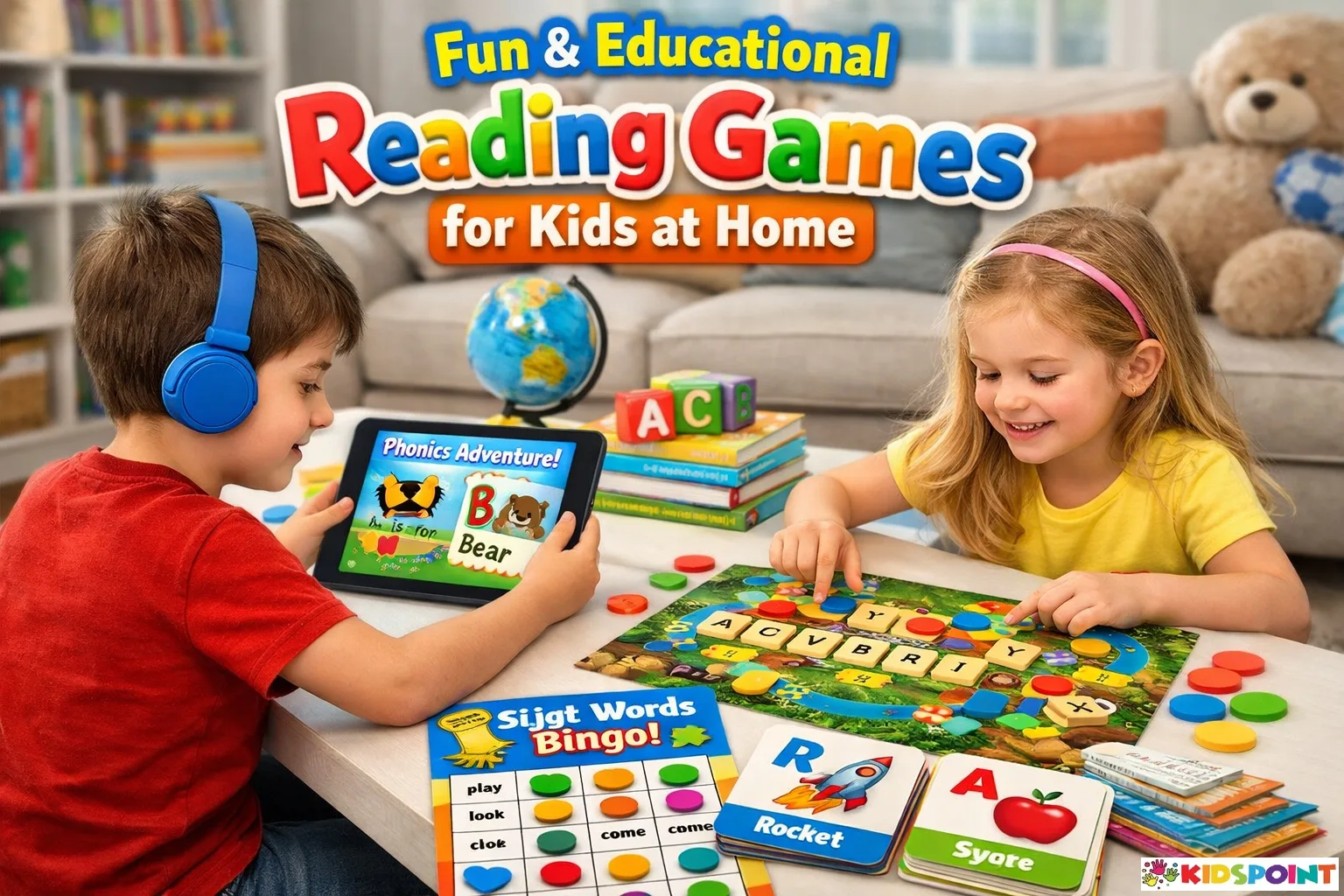
Reading is one of the most important skills a child can develop, yet teaching it doesn’t have to be boring. With the right strategies, children can learn to read while having fun. At The Kids Point, we believe that learning should be playful, interactive, and engaging. One of the best ways to encourage reading at home is through fun and educational reading games. These activities not only improve literacy skills but also strengthen a child’s confidence, vocabulary, and love for books.
In this article, we’ll explore a variety of reading games suitable for kids of different ages, along with tips on making them even more effective at home.
Why Reading Games Are Important for Kids
Before diving into the games, it’s important to understand why reading games matter. Children are naturally curious and learn best through play. When reading is incorporated into fun activities, kids are more likely to:
- Develop phonics skills and letter recognition
- Improve vocabulary and comprehension
- Enhance memory and attention span
- Build confidence and a positive attitude toward reading
- Enjoy learning and make it a lifelong habit
Games make learning interactive. They turn reading into an adventure, allowing children to explore stories, words, and letters while having a great time.
Alphabet Treasure Hunt
Age group: 3–6 years
Skills targeted: Letter recognition, phonics
This game transforms your home into a treasure-filled adventure. Write letters on cards or sticky notes and hide them around the house. Ask your child to find a specific letter or sound. For example, say, “Find the letter B!” When they find it, encourage them to say words that start with that letter.
Tips:
- For older kids, challenge them to find letters that form simple words.
- Reward successful finds with small stickers or points.
Sight Word Bingo
Age group: 4–8 years
Skills targeted: Sight word recognition, reading fluency
Sight words are common words children need to recognize by sight rather than sounding out. Turn this into a bingo game. Create bingo cards with sight words instead of numbers. Call out words, and have your child mark them.
Variation: For added fun, use small toys or coins as markers. Make it a family game to boost motivation.
Story Dice
Age group: 5–10 years
Skills targeted: Vocabulary, creativity, storytelling
Story Dice is a creative way to encourage reading comprehension and imaginative storytelling. Use dice with pictures or words on them. Roll the dice and ask your child to create a story using the prompts. For example, if a die shows a cat, a rainbow, and a tree, the child can make up a story combining all three.
Benefits:
- Encourages narrative thinking
- Expands vocabulary
- Builds confidence in oral storytelling
Word Matching Memory Game
Age group: 4–7 years
Skills targeted: Word recognition, memory, spelling
Create pairs of cards—one with a word and the other with a corresponding picture. Place the cards face down and let your child flip two at a time to find matches. This game reinforces vocabulary and helps children connect words with visuals.
Tips:
- Start with simple words and gradually increase difficulty.
- Include words from your child’s favorite storybooks to increase engagement.
Phonics Hopscotch
Age group: 3–6 years
Skills targeted: Letter sounds, phonics, gross motor skills
Combine physical activity with reading in this fun twist on hopscotch. Draw a hopscotch grid and write letters or simple words in each square. Children say the letter sound or word as they hop on it.
Benefits:
- Combines movement with learning
- Helps kinesthetic learners retain phonics knowledge
- Makes learning active and fun
Reading Relay
Age group: 6–10 years
Skills targeted: Reading fluency, comprehension, teamwork
For this game, create a list of sentences or short paragraphs. Set up a “relay” course where children run to a station, read a sentence aloud, and then run back to tag the next player. This can be done individually or in teams.
Why it works:
- Makes reading interactive
- Encourages expressive reading
- Adds a physical challenge that motivates participation
Word Puzzle Hunt
Age group: 5–9 years
Skills targeted: Spelling, vocabulary, problem-solving
Hide letters around the room to form a secret word. Give your child clues or riddles to find each letter. Once all letters are found, they must arrange them to spell the word correctly.
Pro tip:
- Use themes like animals, foods, or favorite characters.
- Make it a timed challenge for older kids to increase excitement.
Reading and Acting Game
Age group: 6–10 years
Skills targeted: Reading comprehension, creativity, expression
Choose a storybook or a short passage and assign roles to family members. Read the story aloud and act out different characters. Encourage kids to use expressions, gestures, and props.
Benefits:
- Improves comprehension and fluency
- Boosts confidence in reading aloud
- Makes stories memorable and exciting
Rhyme Time Challenge
Age group: 4–8 years
Skills targeted: Phonemic awareness, vocabulary, listening skills
Say a word and ask your child to come up with as many rhyming words as possible within a set time. For example, if you say “cat,” they might say “hat,” “bat,” or “mat.”
Advanced version:
- Ask them to make a short poem or story using the rhyming words.
- This encourages creativity along with phonemic awareness.
Reading Bingo Adventure
Age group: 5–10 years
Skills targeted: Reading comprehension, vocabulary, motivation
Create a bingo card with different reading challenges, such as:
- Read a book about animals
- Find a word with three syllables
- Read a page aloud to a family member
- Read a word you don’t know and look up its meaning
Kids complete the challenges and mark them off. Once they complete a line, they win a small prize.
Benefits:
- Encourages diverse reading experiences
- Motivates kids with a sense of achievement
- Makes reading goal-oriented and interactive
Tips for Making Reading Games More Effective
Follow Your Child’s Interests: Incorporate topics they love, whether it’s animals, superheroes, or fairy tales. Interest-based games increase engagement.
Use Visuals and Props: Flashcards, picture books, puppets, and toys make games interactive and help kids associate words with images.
Keep Sessions Short and Fun: For younger children, 10–15 minutes per game is ideal. Older kids can handle 20–30 minutes, but always stop before boredom sets in.
Encourage Repetition Without Pressure: Children learn through repetition. Turn a favorite game into a daily or weekly activity, but keep it lighthearted.
Praise Effort, Not Just Accuracy: Celebrate attempts, creativity, and participation. This builds confidence and a love for reading.
Blend Reading With Everyday Activities: Reading doesn’t have to be confined to books. Recipes, signs, grocery lists, and instructions can all be turned into reading games.
Benefits of Reading Games at Home
By incorporating reading games into daily routines, children gain multiple benefits:
- Enhanced Literacy Skills: Phonics, vocabulary, sight word recognition, and comprehension improve naturally.
- Boosted Confidence: Fun, low-pressure games allow children to practice reading without fear of mistakes.
- Improved Creativity: Storytelling, acting, and rhyming games encourage imagination.
- Stronger Parent-Child Bond: Playing reading games together creates positive experiences around learning.
- Motivation to Read: Kids see reading as fun, not a chore, fostering lifelong habits.
Recommended Tools and Materials
We encourage parents to use simple, accessible tools for reading games:
- Alphabet flashcards and sight word cards
- Dice with pictures or words
- Storybooks and short passages
- Sticky notes or paper for treasure hunts
- Small toys, coins, or stickers as game markers
- Printable bingo or puzzle templates
Many of these items are already at home, making reading games inexpensive and easy to organize.
Creating a Reading-Friendly Environment
To make reading games successful, your home environment matters:
- Designate a Reading Corner: A cozy, well-lit space with cushions, books, and props encourages engagement.
- Minimize Distractions: Turn off screens and create a focused area for reading activities.
- Display Books Visibly: Having books within reach inspires children to pick them up spontaneously.
- Rotate Materials: Introduce new books, cards, and games periodically to maintain interest.
Involving the Whole Family
Reading games can be more fun when the entire family participates. Parents, siblings, and even grandparents can join in. Family involvement provides:
- Peer motivation and friendly competition
- Opportunities for children to learn social skills and cooperation
- Shared experiences that reinforce reading habits
Common Questions About Reading Games
What age is best to start reading games at home?
Reading games can start as early as 3 years old with simple letter and word recognition activities.
How long should a reading game session last?
For younger kids, 10–15 minutes is ideal. Older children can engage for 20–30 minutes.
Can reading games help struggling readers?
Yes! Games make learning interactive, reduce pressure, and build confidence in struggling readers.
Do I need special materials for reading games?
Not necessarily. Most games use common household items like paper, cards, or toys.
How often should we play reading games?
Daily short sessions or several times a week work best to reinforce skills without causing fatigue.
Encouraging a Lifelong Love for Reading
Reading is a crucial skill for children, but it doesn’t have to feel like a chore. With the variety of fun and educational reading games outlined above, you can transform literacy learning into an exciting adventure. From alphabet treasure hunts to storytelling dice, every game strengthens reading skills while promoting creativity, confidence, and curiosity.
At The Kids Point, we believe that playful learning is the best way to nurture a lifelong love of reading. By incorporating these activities at home, you’ll not only enhance your child’s literacy skills but also create joyful memories that make reading an enjoyable part of everyday life.