

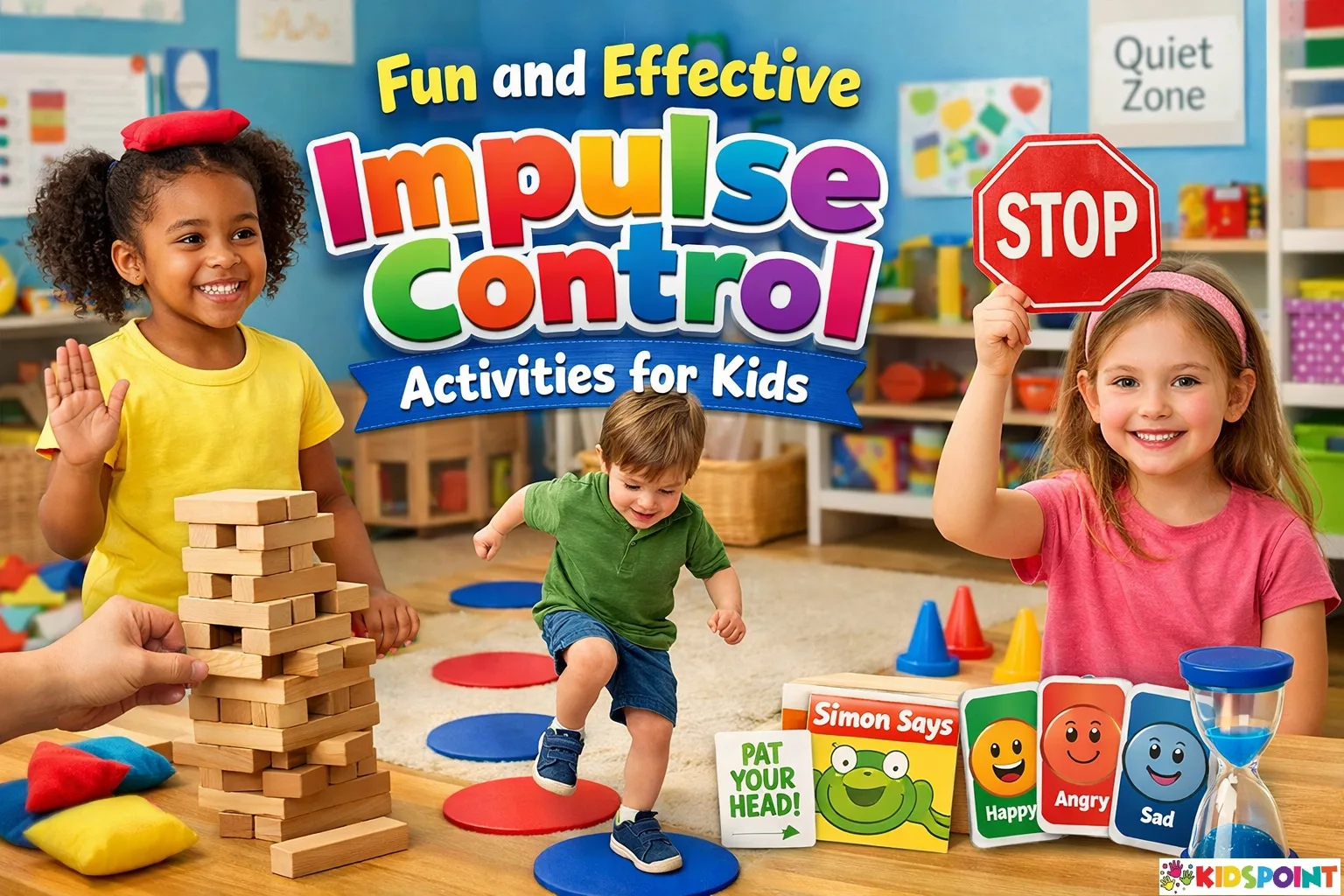
Impulse control is one of the most important life skills children need to develop as they grow. It helps kids pause, think, and make thoughtful choices instead of reacting immediately to their emotions or desires. Strong impulse control supports better behavior, stronger friendships, academic success, and emotional well-being. While this skill takes time to develop, the good news is that it can be taught and strengthened through fun, engaging, and age-appropriate activities.
At The Kids Point, we believe that learning works best when it feels like play. In this guide, we’ll explore fun and effective impulse control activities for kids that parents, teachers, and caregivers can easily incorporate into daily routines, classrooms, or playtime. These activities not only help children manage impulses but also build patience, focus, emotional regulation, and self-confidence.
What Is Impulse Control and Why Is It Important?
Impulse control is the ability to resist immediate urges and think before acting. For children, this might include waiting for their turn, resisting the urge to interrupt, managing frustration, or following rules even when emotions run high.
Children with strong impulse control are better able to:
- Follow instructions and routines
- Build healthy peer relationships
- Manage big emotions like anger or excitement
- Stay focused on tasks and learning
- Make safer and more thoughtful decisions
Impulse control develops gradually, starting in early childhood and continuing into adolescence. Because kids learn best through experience, structured activities and games are one of the most effective ways to strengthen this skill.
Signs a Child May Need Help With Impulse Control
Many children struggle with impulse control at different stages, especially toddlers and preschoolers. However, some common signs may include:
- Interrupting frequently
- Difficulty waiting or taking turns
- Acting without thinking about consequences
- Trouble following rules or instructions
- Emotional outbursts when frustrated
These behaviors don’t mean something is “wrong.” They simply indicate that a child is still developing self-regulation skills and needs guidance, patience, and practice.
How Activities Help Build Impulse Control
Impulse control activities provide children with structured opportunities to practice:
- Waiting and delaying gratification
- Listening and following directions
- Managing emotions in a safe environment
- Thinking before responding
When activities are playful and positive, children are more likely to engage willingly and apply these skills in real-life situations.
Fun Impulse Control Activities for Young Kids (Ages 3–6)
Red Light, Green Light
This classic game is excellent for teaching kids to stop and start on cue.
- Green Light: Move forward
- Red Light: Stop immediately
Children must pay attention and control their bodies, making it a powerful impulse control exercise.
Simon Says
Simon Says encourages kids to listen carefully before acting.
- Only follow instructions when “Simon says”
- Acting too quickly leads to playful mistakes
This game builds listening skills, patience, and self-control.
Freeze Dance
Play music and let kids dance freely.
- When the music stops, everyone freezes
- Any movement means starting again
Freeze Dance helps kids practice stopping their bodies on command while having fun.
Waiting Jar
Place a small reward in a clear jar.
- Explain that the child can have it later
- Increase waiting time gradually
This teaches delayed gratification in a simple, visual way.
Engaging Impulse Control Activities for Elementary Kids (Ages 7–10)
Board Games With Turn-Taking
Games like Candy Land, Connect Four, or Snakes and Ladders teach:
- Waiting for turns
- Following rules
- Managing winning and losing emotions
Board games are excellent tools for practicing patience and self-regulation.
The Quiet Challenge
Challenge kids to stay silent for a short period.
- Start with 30 seconds
- Gradually increase the time
This activity helps children control impulses to talk or make noise.
Emotion Charades
Write emotions on cards and act them out.
- Guess the emotion
- Discuss appropriate reactions
Understanding emotions helps kids pause before reacting impulsively.
Stop-and-Think Cards
Create cards with scenarios like:
- “Someone cuts in line”
- “You lose a game”
Ask children to explain what they should do instead of reacting immediately.
Effective Impulse Control Activities for Older Kids (Ages 11–13)
Journaling for Reflection
Encourage kids to write about:
- Moments when they felt impulsive
- What happened
- What they could do differently next time
Reflection strengthens awareness and decision-making.
Breathing and Mindfulness Exercises
Teach simple techniques like:
- Deep belly breathing
- Counting breaths
- Five-minute mindfulness breaks
Mindfulness helps kids slow down and regain control during emotional moments.
Problem-Solving Role Play
Act out challenging situations such as:
- Peer pressure
- Arguments with friends
- Classroom frustrations
Role-playing allows kids to practice thoughtful responses in a safe space.
Classroom-Friendly Impulse Control Activities
Teachers can easily integrate impulse control activities into daily routines:
Hand Signals Instead of Calling Out
Teach students to raise hands or use signals to speak.
- Reinforces waiting
- Reduces impulsive interruptions
Brain Break Games
Short games like “Statues” or “Follow the Leader” help kids reset and practice self-control during transitions.
Visual Timers
Use timers to show how long students must wait.
- Helps children understand time
- Makes waiting less frustrating
Everyday Activities That Build Impulse Control
Impulse control doesn’t only develop during games—it grows through daily habits.
Cooking Together
Following recipes requires:
- Waiting
- Measuring carefully
- Following steps in order
This is a natural and practical way to teach patience.
Story Time With Predictions
Pause while reading and ask:
- “What do you think will happen next?”
Kids learn to think before reacting.
Chores With Steps
Breaking chores into steps teaches kids to slow down and complete tasks thoughtfully.
Supporting Impulse Control Through Positive Parenting
We encourage adults to support impulse control development with:
- Clear expectations and routines
- Calm responses to mistakes
- Praise for effort, not perfection
- Modeling patience and emotional control
Children learn best by watching the adults around them.
Common Mistakes to Avoid
When helping kids with impulse control, try to avoid:
- Punishing instead of teaching
- Expecting perfection
- Using negative labels
- Comparing children to others
Impulse control takes time and consistent practice.
How Long Does It Take to Improve Impulse Control?
Impulse control improves gradually with age and practice. Some children may progress quickly, while others need more repetition and support. Consistency, patience, and positive reinforcement are key.
When to Seek Additional Support
If a child continues to struggle significantly with impulse control despite consistent practice, it may be helpful to consult:
- A pediatrician
- A child psychologist
- A school counselor
Early support can make a big difference.
FAQs About Impulse Control Activities
Are impulse control activities suitable for all kids?
Yes, activities can be adapted for different ages, abilities, and learning styles.
How often should kids practice impulse control activities?
Short daily practice is more effective than long sessions once a week.
Can impulse control be taught at home?
Absolutely. Many of the most effective activities happen during everyday routines.
Do games really help with self-control?
Yes. Games provide real-time opportunities to practice waiting, listening, and managing emotions.
What if my child gets frustrated during activities?
Frustration is part of learning. Offer encouragement and remind them that mistakes help them grow.
Final Thoughts
Impulse control is a foundational life skill that shapes how children learn, socialize, and manage emotions. By using fun, engaging, and age-appropriate activities, parents and educators can help children develop patience, focus, and thoughtful decision-making skills in a positive way.
At The Kids Point, we believe that children learn best when they feel supported, understood, and encouraged. With consistent practice, playful learning, and loving guidance, kids can strengthen impulse control and grow into confident, emotionally balanced individuals ready to succeed in school and beyond.