

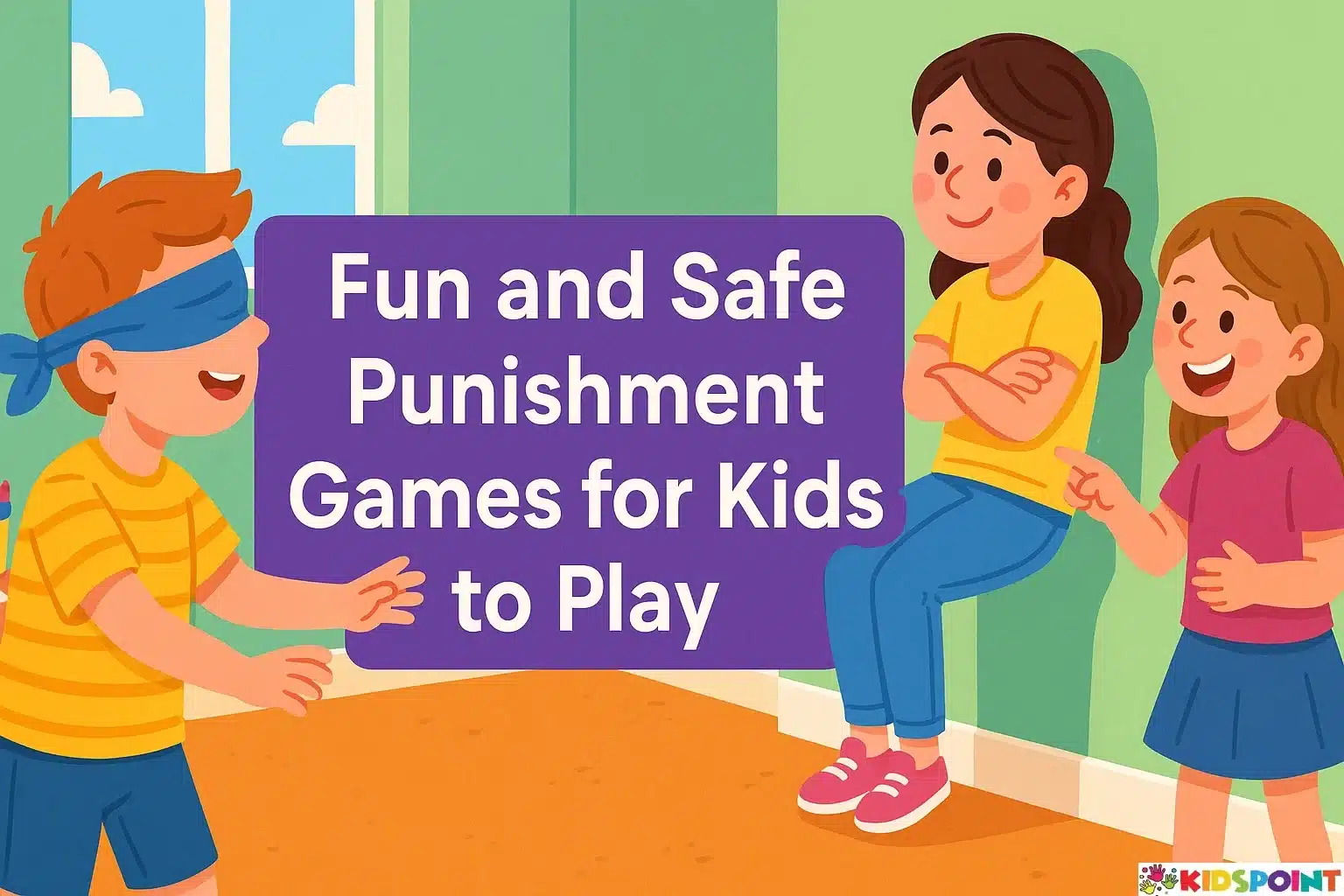
Playtime is not just about fun—it’s also an important way for kids to learn rules, boundaries, and self-discipline. While “punishment” often sounds strict or negative, when designed carefully, punishment games for kids can be a fun, safe, and effective way to teach responsibility, teamwork, and patience. At The Kids Point, we focus on helping parents, teachers, and caregivers introduce games that correct behavior positively without hurting a child’s confidence or enthusiasm for play.
This guide explores the best ideas for fun and safe punishment games for kids, their benefits, safety tips, and step-by-step instructions for organizing them.
Understanding Punishment Games for Kids
Punishment games are designed not to shame or scare children but to teach lessons in a playful and engaging way. They can help children:
- Understand consequences for their actions
- Develop self-control and patience
- Learn problem-solving
- Improve focus and listening skills
- Promote teamwork and cooperation
The key is to ensure the games are age-appropriate, non-harmful, and enjoyable.
Benefits of Fun Punishment Games
Emotional Benefits
- Teaches children to handle mistakes positively
- Encourages accountability
- Boosts confidence when completing challenges
Cognitive Benefits
- Enhances decision-making and critical thinking
- Improves attention and memory
- Develops creative problem-solving
Social Benefits
- Encourages sharing and collaboration
- Promotes healthy competition
- Teaches empathy and fairness
We emphasize that punishment games should focus on learning outcomes rather than fear or embarrassment.
Safety Guidelines Before Starting Punishment Games
Before playing any punishment game, it’s important to ensure safety:
- Age Appropriateness: Choose games suitable for the child’s age and skill level.
- Physical Safety: Avoid activities that involve excessive running, jumping, or heavy objects.
- Emotional Safety: Never use punishment games to shame or embarrass kids.
- Clear Rules: Explain instructions and consequences clearly.
- Supervision: Always have an adult or responsible older child supervise.
By following these precautions, punishment games remain safe, enjoyable, and educational.
Classic Punishment Games for Kids
Musical Chairs with a Twist
How it Works:
- Place chairs in a circle, one less than the number of kids.
- Play music; kids walk around chairs.
- When music stops, the child without a chair completes a fun “challenge” like 5 jumping jacks or a funny dance.
Benefits: Encourages physical activity, teaches rules, and introduces playful consequences.
Freeze Dance Consequence
How it Works:
- Kids dance freely while music plays.
- When the music stops, anyone still moving performs a light-hearted task such as spinning around three times or hopping on one foot.
Benefits: Enhances listening skills, coordination, and self-control.
Simon Says with Challenges
How it Works:
- Use the classic “Simon Says” rules.
- Kids who make mistakes perform simple, safe tasks like touching their toes or clapping hands.
Benefits: Improves attention, following instructions, and quick thinking.
Ball Toss Penalty Game
How it Works:
- Kids pass a ball while music plays.
- If someone drops the ball, they perform a silly, safe task like balancing on one foot or telling a joke.
Benefits: Promotes hand-eye coordination, teamwork, and sportsmanship.
Creative Punishment Games for Learning
Storytime Correction Game
How it Works:
- Children create a story collaboratively.
- If someone forgets a rule (like taking turns or listening), they add a funny twist to the story as a “punishment.”
Benefits: Encourages creativity, patience, and language development.
Color Hunt Challenge
How it Works:
- Assign each child a color to find around the room.
- If a child chooses the wrong item, they perform a playful action like hopping or spinning.
Benefits: Improves observation skills, color recognition, and memory.
Tower Building Task
How it Works:
- Kids build towers with blocks.
- If a block falls or someone breaks a rule, the child completes a fun mini-challenge such as stacking smaller items.
Benefits: Enhances focus, fine motor skills, and problem-solving.
Outdoor Punishment Games for Kids
Relay Race Penalties
How it Works:
- Organize a relay race.
- Kids who drop the baton or break rules perform safe actions like hopping or running backwards for a few steps.
Benefits: Encourages physical fitness, teamwork, and accountability.
Obstacle Course with Fun Consequences
How it Works:
- Set up a safe obstacle course.
- If kids miss an obstacle or commit a minor rule violation, they perform a funny, light task like spinning in place or a silly walk.
Benefits: Builds physical agility, confidence, and adaptability.
Treasure Hunt Challenge
How it Works:
- Organize a scavenger hunt.
- Kids who fail to follow hints or break small rules get fun “punishments” like acting like an animal for a few seconds.
Benefits: Enhances problem-solving, attention, and teamwork.
Indoor Punishment Games for Small Spaces
Balloon Pop Task
How it Works:
- Place small tasks inside balloons.
- Kids who break a rule or lose a turn pop a balloon and complete the fun task inside.
Benefits: Encourages engagement, curiosity, and light-hearted discipline.
Beanbag Toss Consequence
How it Works:
- Set up targets for a beanbag toss.
- If kids miss the target, they perform a simple, safe task like clapping 10 times or doing a silly dance.
Benefits: Improves coordination, focus, and patience.
Chair Balance Challenge
How it Works:
- Kids sit or stand on chairs carefully balancing beanbags.
- If they drop items or break a rule, they perform a fun mini-challenge like hopping or counting aloud.
Benefits: Develops concentration, balance, and self-control.
Educational Punishment Games for Kids
Punishment games can also teach academic skills while keeping kids engaged.
Math Challenge Game
How it Works:
- Kids solve simple math problems during play.
- Mistakes result in fun, safe actions like clapping hands, jumping, or reciting a short rhyme.
Benefits: Improves arithmetic skills while reinforcing the importance of focus.
Spelling Bee with Fun Penalties
How it Works:
- Organize a friendly spelling competition.
- Wrong answers require light-hearted tasks like drawing a silly picture or doing a funny movement.
Benefits: Encourages literacy, healthy competition, and memory skills.
Quiz Show Consequence Game
How it Works:
- Conduct a mini-quiz on general knowledge or classroom topics.
- Mistakes result in fun challenges like acting out an animal or telling a joke.
Benefits: Enhances learning, confidence, and quick thinking.
Tips for Successful Punishment Games
Keep Tasks Short and Fun
Punishments should last no longer than 1–2 minutes. The goal is fun, not frustration.
Always Praise Effort
Even if a child performs a task incorrectly, encourage and praise them.
Rotate Roles
Give each child a chance to lead or judge so everyone feels involved.
Focus on Learning
Make sure each game teaches a lesson—like patience, coordination, or teamwork.
Maintain a Positive Atmosphere
Keep the tone light and cheerful; laughter should always be encouraged.
Common Questions About Punishment Games for Kids
What are punishment games for kids?
Fun activities designed to teach rules and responsibility in a safe, playful way.
Are punishment games safe for children?
Yes, when games are age-appropriate, supervised, and involve light, fun tasks.
Can punishment games improve kids’ behavior?
Yes, they encourage accountability, patience, teamwork, and rule-following in a fun way.
How long should punishment games last?
Short and simple—1 to 2 minutes per task keeps kids engaged without frustration.
Can these games be played indoors and outdoors?
Absolutely! Many games can be adapted for both indoor and outdoor spaces.
Final Thoughts on Fun and Safe Punishment Games
Punishment games, when designed thoughtfully, can be a powerful combination of fun, learning, and gentle discipline. They teach children responsibility, improve skills, and foster social and emotional growth—all while keeping playtime enjoyable. From indoor challenges to outdoor races, storytime twists, and educational games, there is an endless range of possibilities.
At The Kids Point, we believe that games should always be safe, age-appropriate, and positive. By incorporating these fun and safe punishment games, caregivers and educators can transform discipline into an engaging, laughter-filled, and educational experience for children.