

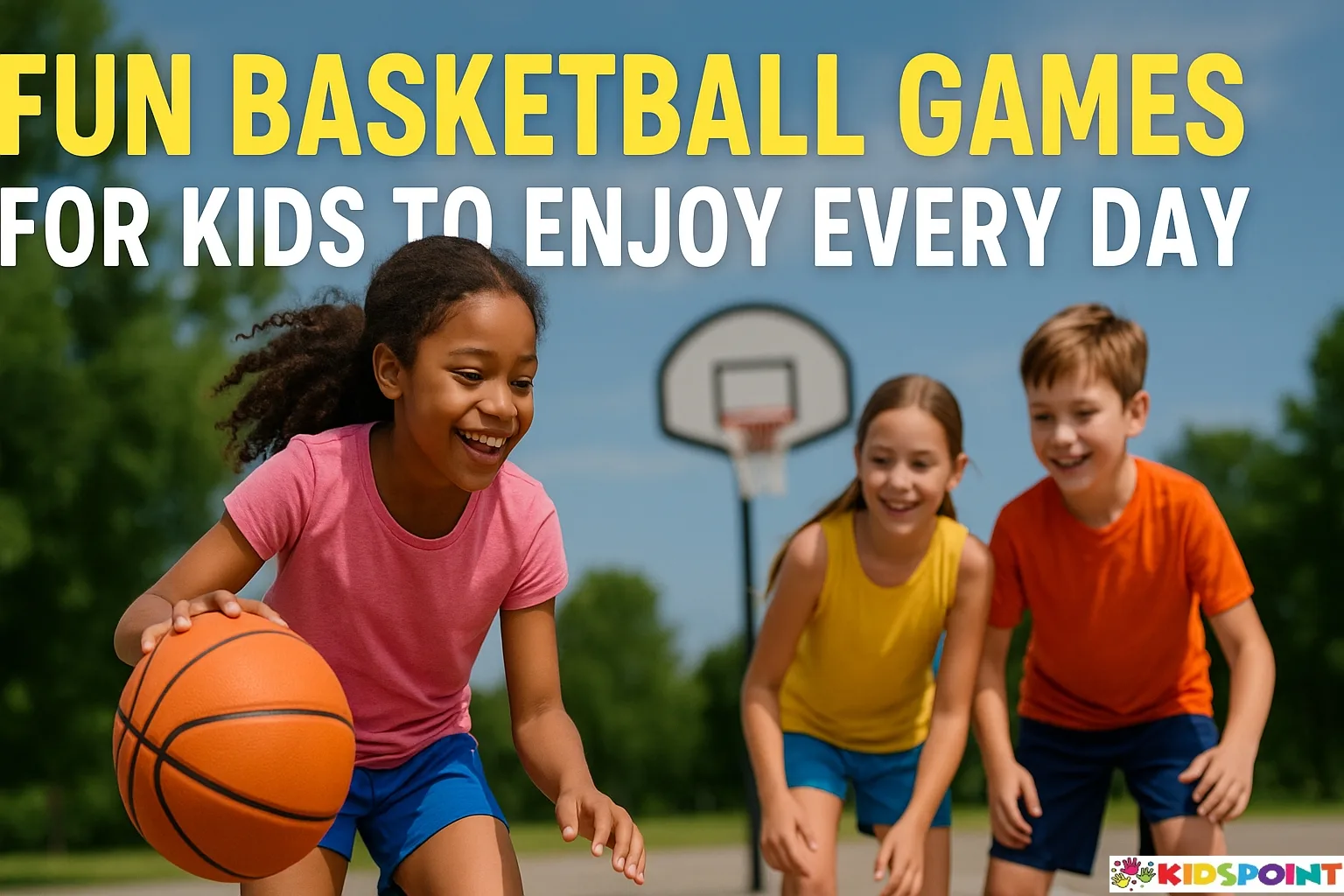
Basketball is one of the most engaging and energetic sports for children. Whether kids are just starting to dribble or already showing off advanced moves, basketball games provide endless opportunities for fun, fitness, and skill development. Most importantly, these games can be played daily—at school, at home, in the driveway, or at community courts—making them a great source of regular physical activity.
At The Kids Point, we believe that learning through play is one of the most powerful ways to help kids grow stronger, more confident, and more coordinated. Fun basketball games give children exactly that: skill-building wrapped in excitement.
This comprehensive guide explores the best kid-friendly basketball games, how they benefit children, and easy ways to incorporate them into daily routines.
Why Basketball Games Are Great for Kids
Before diving into the actual games, it’s important to understand why basketball is so valuable for children.
Boosts Physical Fitness
Basketball games involve running, jumping, sliding, stretching, and quick decision-making movements. These activities strengthen the heart, build muscles, and keep kids active.
Develops Motor Skills
Dribbling, shooting, passing, and defensive footwork improve hand-eye coordination and overall motor development.
Encourages Teamwork
Even simple games teach children how to cooperate, communicate, and support one another.
Enhances Confidence
Every successful shot, pass, or move boosts confidence, especially in younger children.
Can Be Played Anywhere
With just a ball and some space, kids can play dozens of fun basketball games daily.
Fun Basketball Games Kids Can Play Every Day
Below are exciting basketball games suitable for home, school, physical-education classes, community centers, and playgrounds. These games are easy to organize, highly engaging, and designed for all skill levels.
Dribble Freeze Tag
This game combines the fun of tag with basketball dribbling.
How It Works
- Every child has a basketball except one—the tagger.
- Kids dribble while moving around the court.
- The tagger attempts to tag players using their free hand.
- When tagged, a player must “freeze” while still dribbling.
- Another player can unfreeze them by dribbling around them twice.
Benefits
- Improves dribbling control
- Teaches awareness of surroundings
- Encourages teamwork
Where to Play
Driveways, gyms, or open schoolyards.
Knockout Lite
This kid-friendly version of Knockout removes the aggressive competitive pressure and keeps the game fun.
How to Play
- Form a line behind the free-throw or a closer shooting spot depending on age.
- The first two kids in line each have a ball.
- The first child shoots; once they shoot, the second child begins.
- If the second player scores first, the first player does not get knocked out—they simply go to the end of the line (to keep it friendly).
- The goal is to make as many baskets as possible in a set amount of time, like 5 minutes.
Benefits
- Builds shooting accuracy
- Reduces pressure associated with elimination
- Encourages repeated practice
Around the World (Kid Version)
A popular game that helps kids improve shooting from different spots.
Instructions
- Place 5–10 spots around the basket (use cones, chalk, or floor markers).
- Kids must make a shot from each spot to move forward.
- If they miss, they can choose to “stay” or “risk” a redo.
- If they risk and miss again, they return to the beginning or the previous spot depending on rules set.
Benefits
- Teaches shooting form and consistency
- Builds patience and focus
- Allows independent or group play
Dribble Relays
Perfect for larger groups, such as classes, camps, or birthday parties.
How to Set It Up
- Divide kids into teams.
- Set up cones in straight lines.
- Players must dribble down to the end, turn around, and come back.
- Add variations like dribbling with the left hand, low dribble, high dribble, or zigzag patterns.
Benefits
- Strengthens fundamental dribbling
- Builds team energy and friendly competition
- Encourages kids to try multiple techniques
H-O-R-S-E (Simplified for Kids)
A classic shooting game that works for all ages.
Rules
- First player chooses a shot (e.g., bouncing shot, backward shot, one-foot shot).
- If they make it, the next player must attempt the same shot.
- Missing earns a letter.
- Continue until a player spells “HORSE.”
- To shorten it, use words like CAT or FUN.
Benefits
- Sparks creativity
- Teaches kids to learn from others’ techniques
- Introduces friendly competition without intensity
Red Light, Green Light – Basketball Edition
A twist on the childhood favorite.
How to Play
- One player is the “light controller” standing at the opposite end of the court.
- Kids dribble toward them.
- “Green light!” means dribble fast.
- “Yellow light!” means slow dribbling.
- “Red light!” means stop dribbling and freeze.
- The first one to reach the controller wins.
Benefits
- Teaches control and stopping on command
- Helps younger kids learn to change speeds
Dribble Obstacle Course
Kids love challenges, and this one can be set up differently every day.
How to Create the Course
Use cones, chairs, ropes, chalk lines, or even water bottles to create:
- Zigzags
- Stop-and-go points
- Jump zones
- Spin-and-go stations
Kids dribble through the entire course while trying not to lose control of the ball.
Benefits
- Boosts agility
- Sharpens dribbling and footwork
- Offers endless variation
Shooting Squares
This game works even on courts without painted lines.
Set Up
- Divide the playing area into 4 squares (use tape or chalk).
- Assign a point value to each square.
- Kids shoot from any square and earn points.
- After a set time, highest score wins.
Benefits
- Teaches kids how to choose shot difficulty
- Strengthens decision-making skills
Partner Passing Challenge
Passing is one of the most important—but often overlooked—skills in basketball.
How to Play
- Two kids stand 6–10 feet apart.
- Set a timer for 30 seconds or 1 minute.
- Kids complete as many passes as they can without drop-ping the ball.
- Let them try bounce passes, chest passes, and overhead passes.
Benefits
- Boosts hand-eye coordination
- Develops communication skills
- Encourages teamwork and cooperation
Balloon Basketball
Great for toddlers and preschoolers who are too young for full basketball skills.
Setup
- Use a balloon instead of a ball.
- Tape a hoop (plastic, rope, or cardboard) on a wall.
- Kids try to tap or gently throw the balloon into the hoop.
Benefits
- Builds early motor skills
- Safe and fun for young children
- Introduces the idea of scoring and aiming
Daily Basketball Routines Kids Can Follow
To help children enjoy basketball every day, create simple daily routines.
5-Minute Dribble Warm-Up
- Right-hand dribble
- Left-hand dribble
- Low dribble
- High dribble
10-Minute Shooting Practice
Use markers to shoot from a few different distances.
5-Minute Fun Challenge
Rotate between:
- Freeze dribble
- Mini obstacle course
- Quick passes
These short sessions improve skills without overwhelming kids.
Tips for Making Basketball Games Safe for Kids
Use Age-Appropriate Ball Sizes
- Size 3 or 4 for younger kids
- Size 5 for older children
Choose Safe Playing Areas
Avoid uneven or slippery surfaces.
Teach Fundamental Rules First
Basic dribbling, spacing, and two-hand passing help prevent collisions.
Encourage Positive Sportsmanship
Clapping for others, cheering teammates, and celebrating effort matters.
Keep Sessions Short for Younger Kids
Frequent breaks, water, and variety help maintain interest.
How To Supports Learning Through Play
We focus on creating educational content that helps parents, teachers, and caregivers guide children toward healthy physical and mental development. We encourage active play because it promotes creativity, fitness, and well-rounded learning. Basketball games fit perfectly into this mission by giving kids a fun way to build confidence, coordination, and teamwork skills every single day.
Whether kids are beginners or budding athletes, these games ensure they stay excited and active at home, in school, or during outdoor playtime.
Common Questions Parents Often Ask
What basketball games are best for young kids?
Games like Balloon Basketball, Dribble Freeze, and Red Light Green Light are perfect for beginners.
How can kids practice basketball at home?
They can dribble in the driveway, shoot into a mini hoop, or play simple passing challenges.
Are basketball games safe for small children?
Yes—when using age-appropriate balls, soft surfaces, and simple rules.
What skills do kids learn from basketball games?
Dribbling, coordination, teamwork, shooting accuracy, and quick decision-making.
How long should kids play basketball each day?
Even 15–20 minutes of fun games is enough to build skills and keep them active.
Final Thoughts on Making Basketball Fun Every Day
Basketball games for kids don’t have to be complicated or competitive. With simple rules, child-friendly variations, and exciting challenges, children can enjoy these games daily while improving skills and boosting confidence. From dribbling relays and obstacle courses to fun twists like balloon basketball, every game encourages movement and creativity. By incorporating these activities regularly, parents and teachers help kids stay active, learn teamwork, and enjoy playtime to the fullest.
The Kids Point continues to highlight fun, skill-building activities like these to support children’s healthy development in enjoyable and meaningful ways.