

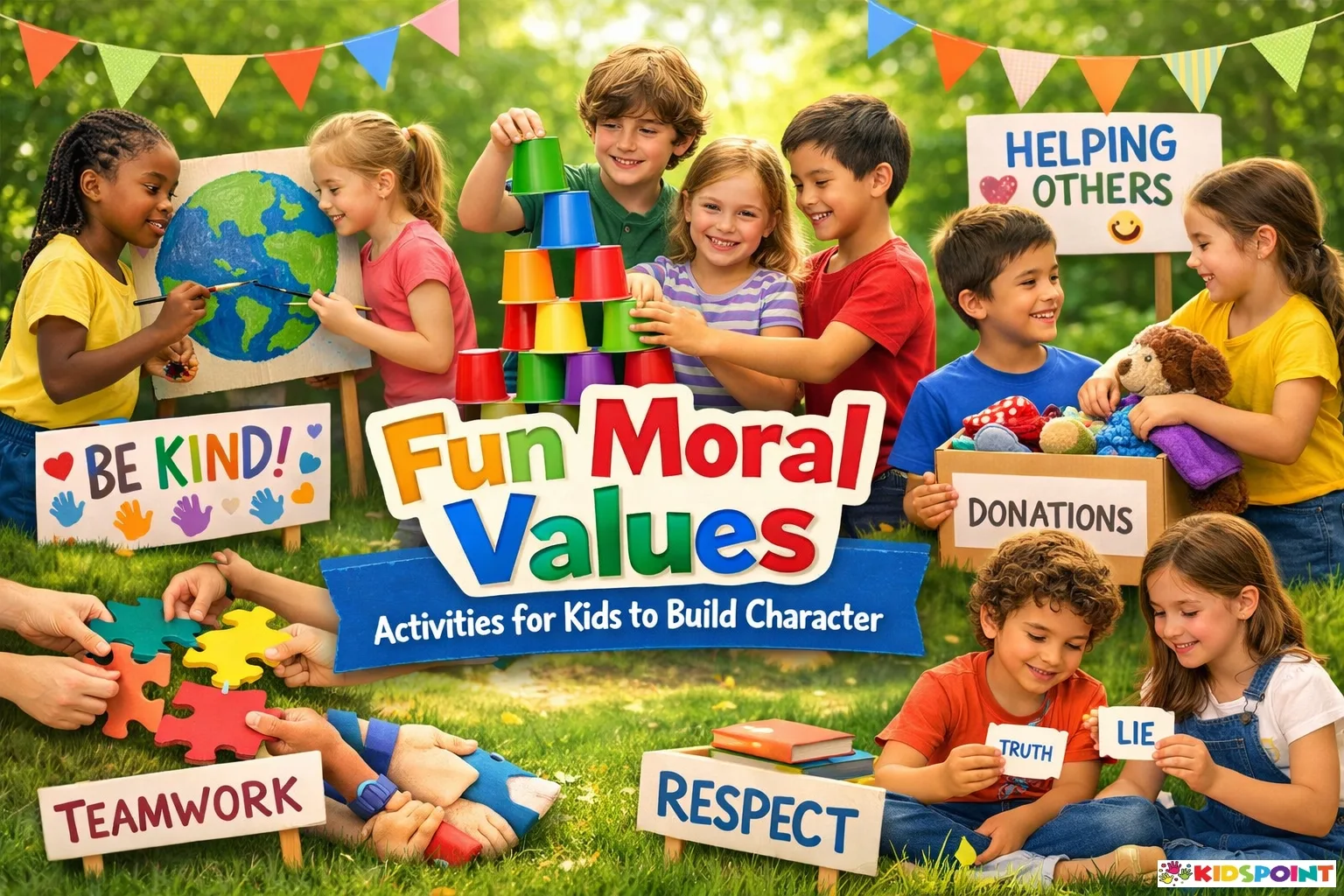
Teaching moral values to children is one of the greatest gifts parents and educators can offer. Values like honesty, kindness, respect, responsibility, empathy, and patience are the building blocks of a strong character. At The Kids Point, we believe children learn morals best through fun, hands-on activities rather than lectures or punishment.
This guide shares creative and engaging moral values activities that naturally fit into everyday life and help children become caring, confident, and responsible individuals.
Why Teaching Moral Values Early Matters
Children who develop moral values early:
- Show empathy toward others
- Make responsible decisions
- Build healthy relationships
- Handle challenges with confidence
- Respect rules and people around them
Moral learning is not a one-time lesson—it’s a daily practice shaped by environment, role modeling, and repetition.
Kindness Tree – Growing Compassion
How It Works
Draw or create a tree on cardboard. Every time your child performs a kind act, add a leaf with a short description of what they did.
Values Learned
Kindness, generosity, empathy.
Honesty Jar – Encouraging Truthfulness
How It Works
Whenever your child tells the truth in a difficult situation, write it on a slip and place it in a jar. Read them at the end of the week.
Values Learned
Honesty, courage, trust.
Moral Story Time – Learning Through Tales
How It Works
Read stories that highlight values like fairness, patience, and bravery. Ask questions such as:
“What would you do in this situation?”
Values Learned
Wisdom, critical thinking, moral judgment.
Thankfulness Circle – Teaching Gratitude
How It Works
Each family member shares one thing they are thankful for every evening.
Values Learned
Gratitude, positivity, appreciation.
Sharing Games – Practicing Cooperation
How It Works
Play games that require taking turns or working together.
Values Learned
Teamwork, patience, fairness.
Apology Practice – Building Accountability
How It Works
Teach children to say:
“I’m sorry for…” instead of just “sorry.”
Values Learned
Responsibility, respect, humility.
Helping Hands Chart – Encouraging Service
How It Works
List small helpful tasks like setting the table or feeding pets.
Values Learned
Responsibility, kindness, independence.
Respect Role Play – Modeling Good Behavior
How It Works
Act out situations such as greeting elders or speaking politely.
Values Learned
Respect, courtesy, social awareness.
Emotion Matching Cards – Understanding Feelings
How It Works
Use emotion cards and discuss moments when your child felt each emotion.
Values Learned
Emotional intelligence, empathy.
Family Value Board – Visual Reminders
How It Works
Write key values on a board:
Honesty, Respect, Kindness, Patience.
Values Learned
Consistency, moral clarity.
Gratitude Letters – Expressing Appreciation
How It Works
Children write letters thanking teachers or friends.
Values Learned
Thankfulness, communication skills.
Responsibility Timer – Managing Tasks
How It Works
Use a timer for homework or clean-up sessions.
Values Learned
Discipline, time management.
Kind Words Jar – Promoting Positivity
How It Works
Write kind phrases daily and read them together.
Values Learned
Encouragement, positivity.
Family Volunteering – Teaching Compassion
How It Works
Participate in charity drives or neighborhood cleanups.
Values Learned
Social responsibility, kindness.
Positive Affirmations – Building Confidence
How It Works
Let your child repeat affirmations in the mirror.
Values Learned
Self-belief, confidence.
How Parents Can Be Role Models
Children copy adults more than they listen. Practice honesty, patience, gratitude, and respect daily.
We remind parents: your actions teach louder than words.
Creating a Moral-Focused Home Environment
- Praise good behavior
- Stay consistent with values
- Encourage open discussion
- Celebrate moral achievements
Shaping Strong Character Through Fun Moral Activities
Why are moral values activities important for kids?
They help children learn kindness, honesty, respect, and responsibility from an early age.
What age is best to start teaching moral values?
You can start simple moral activities as early as 2–3 years old.
How often should moral activities be practiced?
Short daily activities work best to build strong character habits.
What if my child doesn’t respond to these activities?
Keep them fun, flexible, and praise effort rather than perfection.
Can moral values really be taught through games?
Yes, children understand and remember lessons better when learning through play.
Creating Lifelong Character Through Daily Moral Activities
Building strong character doesn’t require perfection—it requires patience, practice, and positivity. By introducing fun moral values activities into daily routines, you create a foundation for honesty, kindness, responsibility, and empathy that will guide your child for life.
We believe every small lesson today shapes a stronger, kinder tomorrow.