

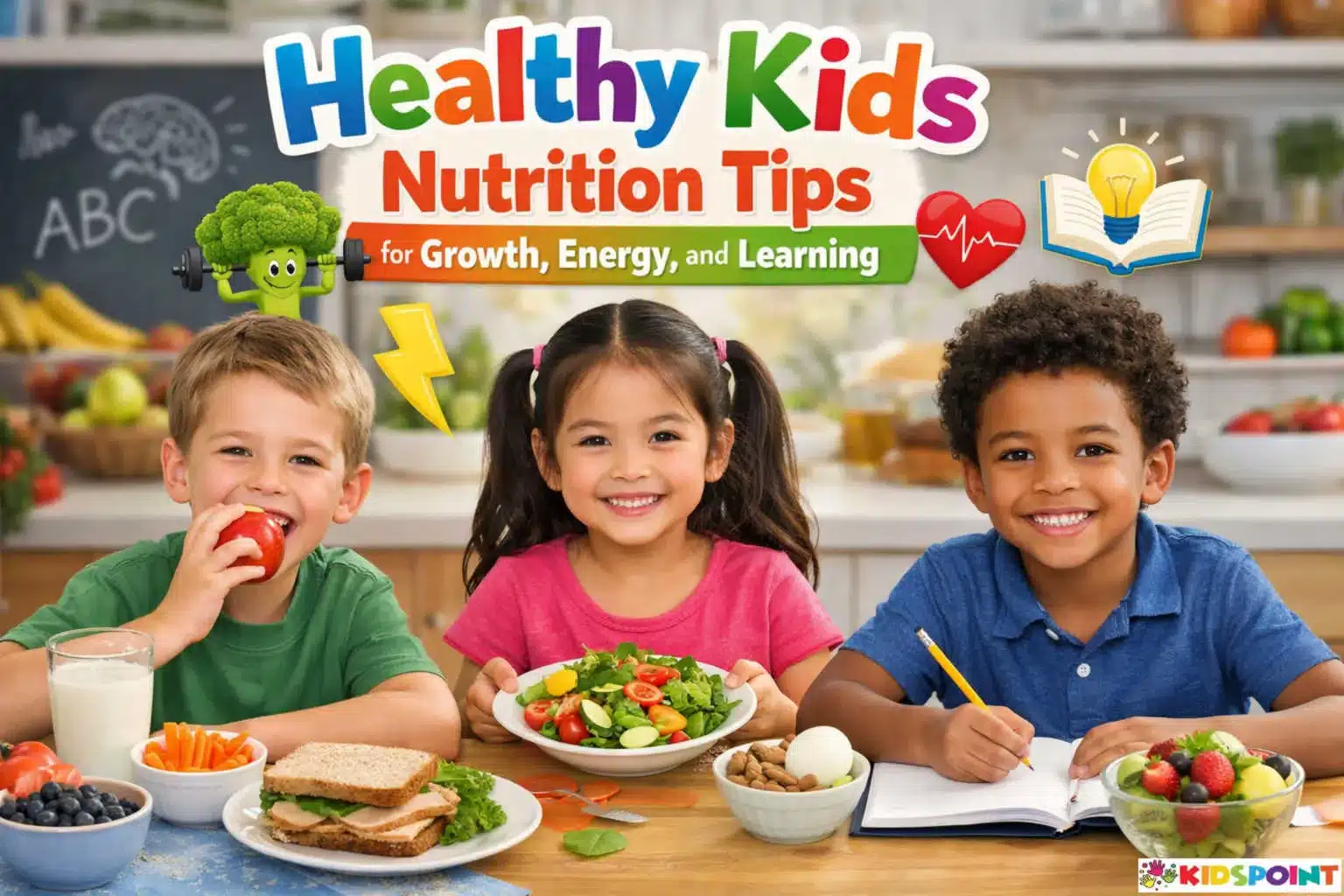
Ensuring children receive the right nutrition is one of the most important responsibilities for parents and caregivers. A well-balanced diet fuels not only physical growth but also supports brain development, emotional well-being, and academic performance. In today’s fast-paced world, where processed foods and sugary snacks are easily accessible, building healthy eating habits for kids has become more essential than ever.
At The Kids Point, we believe that proper nutrition is the foundation of a child’s lifelong health and success. This comprehensive guide will walk you through practical, science-backed nutrition tips to help your child grow strong, stay energetic, and perform better in learning environments.
Why Nutrition Matters for Kids
Children are in a constant state of growth and development. Their bodies require a variety of nutrients to support:
- Physical growth (bones, muscles, organs)
- Brain development (memory, focus, cognitive skills)
- Energy levels (daily activities and play)
- Immune function (fighting illnesses)
Poor nutrition can lead to fatigue, poor concentration, weakened immunity, and even long-term health issues. On the other hand, a balanced diet sets the stage for a healthy and active life.
Essential Nutrients Every Child Needs
Protein for Growth and Repair
Protein is vital for building muscles, repairing tissues, and supporting overall growth.
Best sources:
- Eggs
- Lean meats (chicken, turkey)
- Fish
- Beans and lentils
- Dairy products
- Nuts and seeds
Carbohydrates for Energy
Carbohydrates are the body’s main energy source. Kids need them to stay active and focused throughout the day.
Healthy options:
- Whole grains (brown rice, oats, whole wheat bread)
- Fruits
- Vegetables
Avoid refined carbs like sugary cereals and white bread, which can cause energy crashes.
Healthy Fats for Brain Development
Fats are crucial for brain growth and hormone production.
Good fats include:
- Avocados
- Nuts and seeds
- Olive oil
- Fatty fish (like salmon)
Limit trans fats and fried foods.
Vitamins and Minerals for Overall Health
Vitamins and minerals support everything from bone health to immune function.
- Calcium: Strong bones and teeth (milk, cheese, yogurt)
- Iron: Prevents fatigue and supports brain function (spinach, red meat, beans)
- Vitamin D: Helps absorb calcium (sunlight, fortified foods)
- Vitamin C: Boosts immunity (oranges, strawberries, bell peppers)
Water for Hydration
Hydration is often overlooked but extremely important. Water helps regulate body temperature, aids digestion, and supports concentration.
Encourage kids to drink water regularly instead of sugary drinks.
Building a Balanced Plate
A simple way to ensure your child is getting proper nutrition is by creating a balanced plate:
- Half plate: Fruits and vegetables
- One-quarter: Protein
- One-quarter: Whole grains
- Side: Dairy or a dairy alternative
This method ensures a mix of nutrients in every meal.
Healthy Eating Habits for Kids
Start the Day with a Nutritious Breakfast
Breakfast jumpstarts metabolism and improves concentration at school.
Healthy breakfast ideas:
- Oatmeal with fruits
- Whole-grain toast with peanut butter
- Yogurt with granola
Skipping breakfast can lead to low energy and poor focus.
Encourage Regular Meal Times
Consistent meal and snack times help regulate hunger and prevent overeating.
- 3 main meals
- 2-3 healthy snacks
Routine helps children develop better eating patterns.
Make Fruits and Vegetables Fun
Kids are more likely to eat healthy foods when they are visually appealing and fun.
Tips:
- Cut fruits into shapes
- Create colorful plates
- Offer dips like yogurt or hummus
Limit Sugar and Processed Foods
Too much sugar can lead to obesity, tooth decay, and energy crashes.
Reduce:
- Sugary drinks
- Candy
- Packaged snacks
Replace with natural options like fruits or homemade snacks.
Encourage Mindful Eating
Teach kids to listen to their hunger cues.
- Eat slowly
- Avoid distractions like TV
- Recognize when full
This helps prevent overeating and builds a healthy relationship with food.
Smart Snacking Ideas
Snacks are an important part of a child’s diet, especially for maintaining energy between meals.
Healthy snack ideas:
- Apple slices with peanut butter
- Carrot sticks with hummus
- Cheese and whole-grain crackers
- Yogurt with berries
- Boiled eggs
Avoid snacks high in sugar, salt, and unhealthy fats.
Nutrition for Better Learning
What children eat directly affects their ability to focus, remember, and learn.
Brain-Boosting Foods:
- Fish: Rich in omega-3 fatty acids
- Eggs: Contain choline for memory
- Berries: Improve brain function
- Whole grains: Provide steady energy
- Leafy greens: Packed with nutrients
A balanced diet helps children stay alert and perform better academically.
Encouraging Healthy Eating at Home
1. Be a Role Model
Children learn by watching adults. Eat healthy foods yourself to set a good example.
Involve Kids in Meal Preparation
Let kids:
- Help with grocery shopping
- Wash vegetables
- Choose healthy recipes
This makes them more interested in eating what they helped prepare.
Avoid Forcing or Restricting Food
Pressuring kids to eat or restricting certain foods too strictly can backfire.
Instead:
- Offer a variety of healthy options
- Let them choose what and how much to eat
Create a Positive Mealtime Environment
- Eat together as a family
- Keep conversations pleasant
- Avoid using food as a reward or punishment
Managing Picky Eaters
Picky eating is common among children, but it can be managed with patience.
Strategies:
- Introduce new foods gradually
- Pair new foods with favorites
- Offer choices
- Be patient and consistent
It may take multiple exposures before a child accepts a new food.
Special Considerations by Age
Toddlers (1-3 years)
- Small portions
- Frequent meals
- Focus on soft, easy-to-eat foods
Preschoolers (4-5 years)
- Encourage independence
- Introduce a variety of foods
- Focus on balanced meals
School-Age Kids (6-12 years)
- Increased energy needs
- Emphasize healthy snacks
- Teach nutrition awareness
Common Nutrition Mistakes to Avoid
- Skipping meals
- Over-reliance on fast food
- Excessive juice consumption
- Ignoring portion sizes
- Lack of variety in diet
Avoiding these mistakes can significantly improve a child’s health and development.
Tips for Busy Parents
Balancing work and family life can make healthy eating challenging. Here are some practical tips:
- Plan meals ahead
- Prepare snacks in advance
- Cook in batches
- Keep healthy options readily available
- Choose quick, nutritious recipes
Even small efforts can make a big difference.
Long-Term Benefits of Healthy Nutrition
Teaching kids healthy eating habits early leads to:
- Stronger immune systems
- Better academic performance
- Healthy weight management
- Reduced risk of chronic diseases
- Positive relationship with food
These benefits last well into adulthood.
Common Questions Parents Ask
What are the most important nutrients for growing kids?
Children need protein, healthy fats, carbohydrates, vitamins, and minerals like calcium and iron for proper growth and development.
How can I encourage my child to eat more vegetables?
Make vegetables fun by adding colors, shapes, and dips, and involve kids in meal preparation to increase their interest.
How many meals should kids eat daily?
Kids should have three balanced meals and 2–3 healthy snacks to maintain energy and support growth.
Are snacks necessary for children?
Yes, healthy snacks help maintain energy levels and prevent overeating during main meals.
How does nutrition affect a child’s learning ability?
A balanced diet improves concentration, memory, and overall brain function, helping kids perform better in school.
Healthy nutrition is not about strict diets or eliminating all treats it’s about balance, variety, and consistency. By providing children with nutrient-rich foods and encouraging positive eating habits, parents can set the foundation for a lifetime of health and success.
At The Kids Point, we emphasize that small, consistent changes can lead to big results. Start by making simple improvements to your child’s diet, and over time, these habits will become second nature.
Remember, every healthy bite your child takes is a step toward a brighter, stronger, and smarter future.