

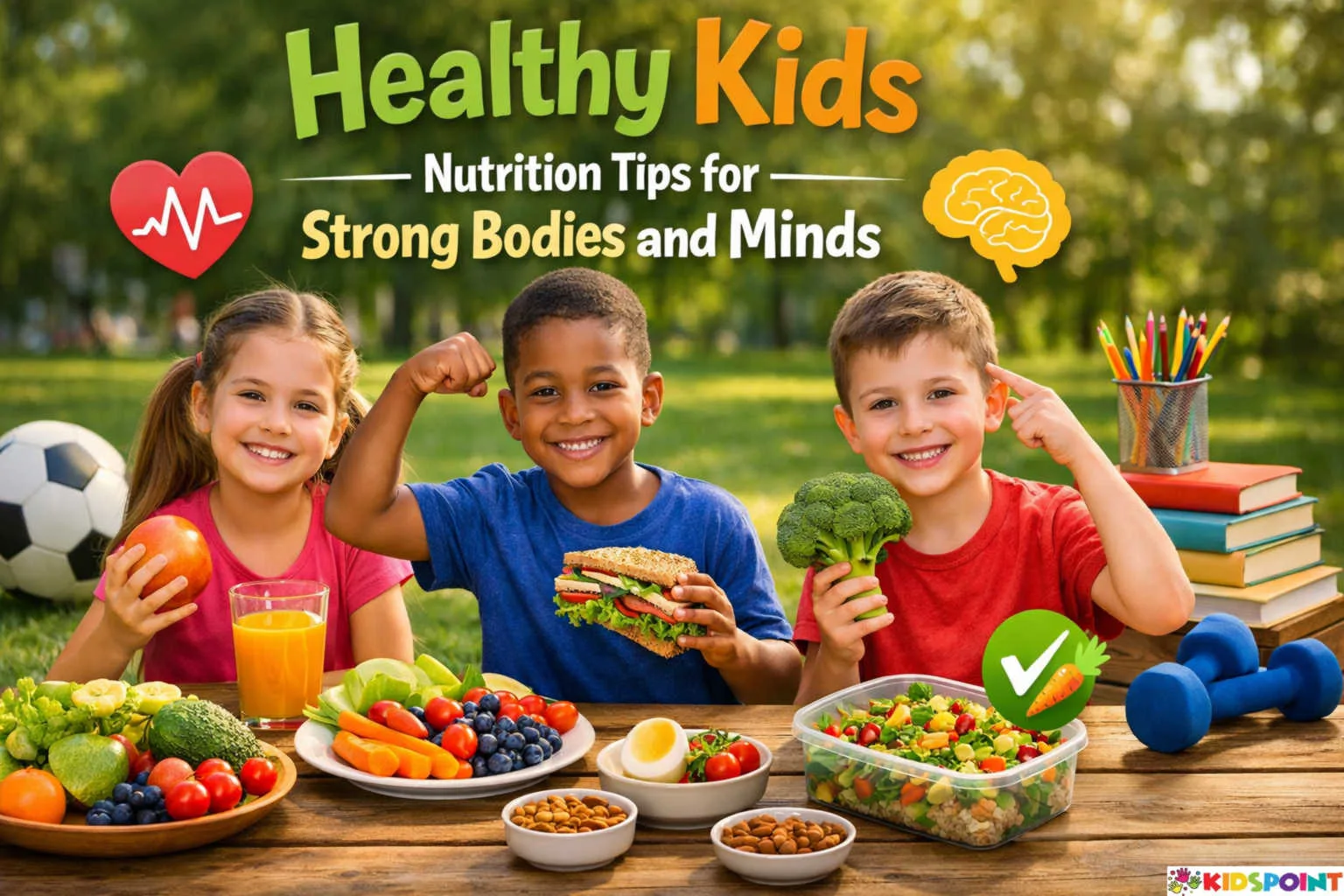
Raising healthy, happy children starts with proper nutrition. The food kids eat plays a vital role in their growth, brain development, energy levels, and overall well-being. In today’s fast-paced world, where processed foods and sugary snacks are easily available, ensuring that children receive balanced nutrition has become more important than ever.
At The Kids Point, we believe that building strong bodies and sharp minds begins with smart food choices. This comprehensive guide will walk you through practical, easy-to-follow nutrition tips that help your kids thrive physically, mentally, and emotionally.
Why Nutrition Matters for Kids
Children go through rapid growth and development, especially in their early years. Proper nutrition supports:
Physical Growth
Healthy foods provide essential nutrients like protein, calcium, and vitamins that help build strong bones and muscles.
Brain Development
Nutrients such as omega-3 fatty acids, iron, and vitamins support memory, focus, and learning ability.
Strong Immunity
A balanced diet helps the body fight infections and illnesses more effectively.
Energy and Mood
Nutritious meals keep kids active, alert, and emotionally balanced throughout the day.
Essential Nutrients Every Child Needs
Understanding key nutrients is the foundation of healthy eating.
Protein
Protein helps build muscles and repair tissues.
Sources: Eggs, মাছ (fish), chicken, lentils, beans, milk, yogurt.
Calcium
Calcium strengthens bones and teeth.
Sources: Milk, cheese, yogurt, leafy greens.
Iron
Iron is crucial for brain development and oxygen transport in the body.
Sources: Red meat, spinach, lentils, fortified cereals.
Healthy Fats
Fats support brain growth and energy.
Sources: Nuts, seeds, fish, avocado.
Vitamins and Minerals
These support overall body functions.
Sources: Fruits, vegetables, whole grains.
Building a Balanced Plate
A balanced diet includes a variety of food groups:
- Fruits and Vegetables: Half of the plate
- Proteins: One-quarter
- Whole Grains: One-quarter
- Dairy or Alternatives: A side portion
Encourage colorful meals—different colors often mean different nutrients.
Healthy Breakfast Ideas for Kids
Breakfast is the most important meal of the day. It fuels kids for school and activities.
- Oatmeal with fruits and honey
- Whole grain toast with peanut butter
- Boiled eggs with bananas
- Yogurt with granola and berries
- Vegetable omelet with roti
A healthy breakfast improves concentration and academic performance.
Smart Snack Choices
Snacks are essential for growing kids, but they should be nutritious.
Healthy Snack Options
- Fresh fruits (apple, banana, orange)
- Carrot and cucumber sticks
- Nuts and seeds
- Homemade popcorn
- Yogurt cups
Snacks to Limit
- Sugary drinks
- Chips and fried foods
- Candy and chocolate (in excess)
Healthy snacks keep energy levels stable and prevent overeating during meals.
Importance of Hydration
Water is often overlooked but is essential for kids’ health.
- Helps digestion
- Keeps the body cool
- Supports brain function
Encourage kids to drink পানি (water) regularly instead of sugary beverages.
Encouraging Healthy Eating Habits
Teaching kids healthy habits early sets the foundation for life.
Be a Role Model
Kids imitate adults. Eat healthy foods yourself.
Make Meals Fun
Use creative shapes, colors, and presentations.
Involve Kids in Cooking
Let them help in the kitchen to build interest in food.
Set Regular Meal Times
Consistency helps regulate appetite and digestion.
Avoid Forcing Food
Encourage, but don’t pressure kids to eat.
Managing Picky Eating
Picky eating is common among children.
Tips to Handle It
- Introduce new foods slowly
- Offer small portions
- Pair new foods with favorites
- Stay patient and consistent
It may take several tries before a child accepts a new food.
Nutrition for Brain Development
Certain foods are especially beneficial for brain health:
- Fish (rich in omega-3)
- Eggs (contain choline)
- Nuts and seeds
- Whole grains
- Berries
These foods improve memory, concentration, and cognitive skills.
Healthy School Lunch Ideas
Packing a nutritious lunch ensures kids stay energized throughout the day.
Balanced Lunchbox Example
- Whole grain sandwich with chicken or vegetables
- Fresh fruit
- Yogurt or दूध (milk)
- A handful of nuts
Avoid processed and overly salty foods.
Limiting Sugar and Junk Food
Too much sugar can lead to:
- Obesity
- Tooth decay
- Low energy levels
Tips to Reduce Sugar
- Replace soda with পানি (water) or fresh juice
- Offer fruits instead of sweets
- Read food labels
Moderation is key—not complete restriction.
Importance of Family Meals
Eating together as a family has many benefits:
- Encourages healthier eating
- Improves communication
- Builds stronger relationships
Make mealtime a positive and enjoyable experience.
Cultural and Local Food Choices
In Bangladesh, many traditional foods are naturally healthy:
- Rice with vegetables and মাছ (fish)
- Lentils (ডাল)
- Homemade সবজি dishes
- Fresh fruits like mango, guava, and papaya
Using local ingredients ensures freshness and affordability.
Physical Activity and Nutrition
Nutrition works best when combined with physical activity.
- Encourage outdoor play
- Limit screen time
- Promote sports and exercise
Active kids need more energy and nutrients to support their growth.
Common Nutrition Mistakes to Avoid
- Skipping meals
- Overfeeding junk food
- Ignoring portion sizes
- Lack of variety in diet
- Using food as a reward
Awareness helps parents make better choices.
Special Considerations for Different Age Groups
Toddlers (1–3 years)
- Soft, easy-to-chew foods
- Frequent small meals
Preschoolers (4–6 years)
- Balanced meals with variety
- Encourage self-feeding
School-Age Kids (7–12 years)
- Focus on nutrients for growth and learning
- Teach healthy choices
Creating a Positive Food Environment
- Avoid distractions like TV during meals
- Encourage mindful eating
- Praise healthy choices
- Keep unhealthy foods out of easy reach
A positive environment shapes long-term habits.
Long-Term Benefits of Healthy Nutrition
When kids eat well, they enjoy:
- Better academic performance
- Stronger immunity
- Healthy weight
- Improved mental health
- Lifelong healthy habits
Quick Nutrition FAQs
How many meals should kids eat daily?
Kids should have 3 main meals and 1–2 healthy snacks.
Is milk necessary for children?
Yes, it provides calcium and supports bone development.
How can I reduce my child’s sugar intake?
Offer fruits instead of sweets and limit sugary drinks.
What is the best snack for kids?
Fruits, nuts, yogurt, and homemade snacks are great choices.
How do I deal with picky eating?
Be patient, introduce foods gradually, and avoid forcing them.
Final Thoughts
Healthy nutrition is one of the greatest gifts you can give your child. It shapes their physical health, mental development, and future lifestyle choices. By making small, consistent improvements in daily meals, parents can create a big impact on their child’s well-being.
At The Kids Point, we are dedicated to helping families raise healthier, happier children through practical and effective guidance. Remember, it’s not about perfection—it’s about progress. Start with simple changes, stay consistent, and watch your child grow into a strong, smart, and energetic individual.