

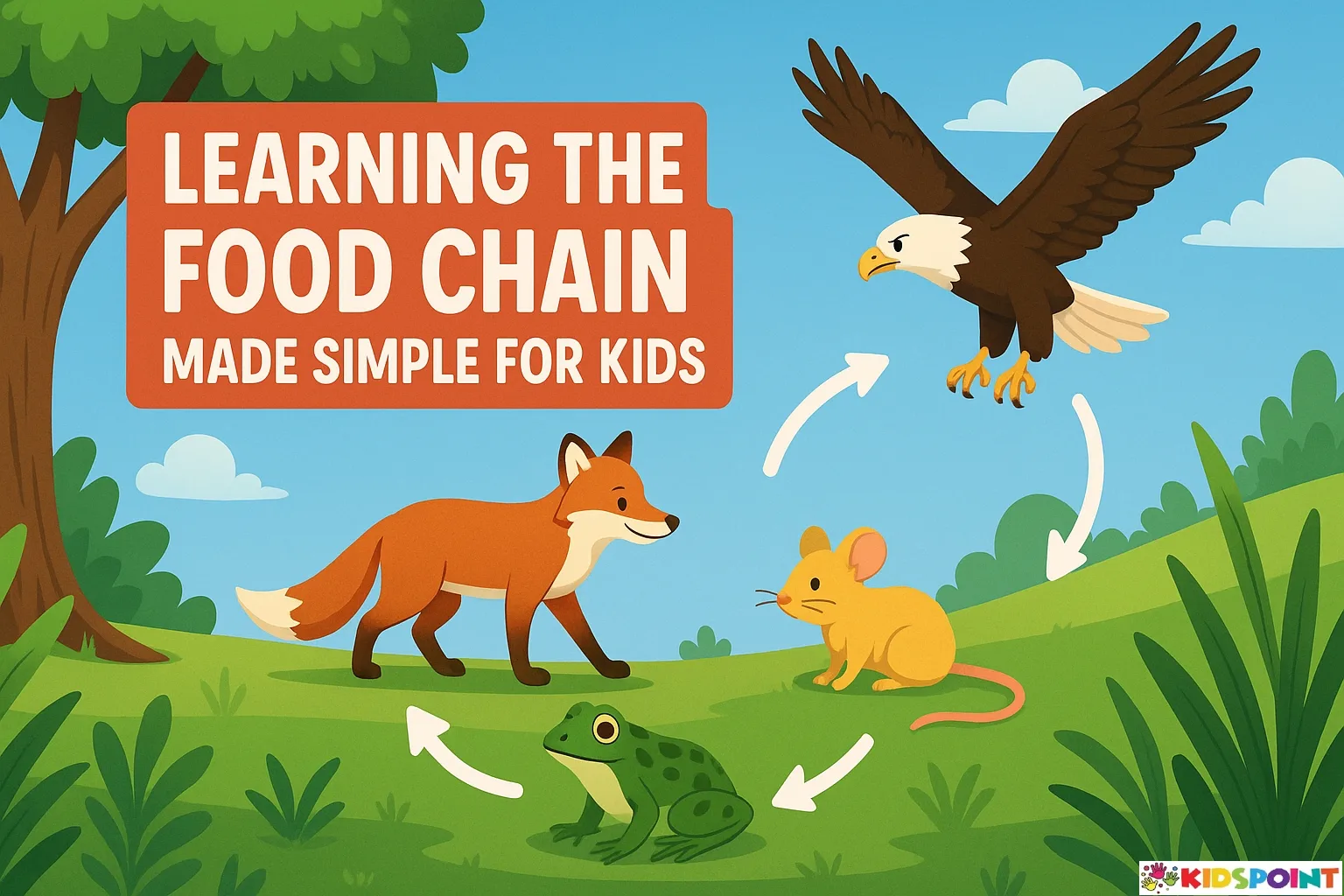
Understanding how animals and plants get energy is one of the most important early science lessons for children. The world of nature may look complicated, but once kids discover the simple idea behind the food chain, everything starts to make sense. From insects eating leaves to lions chasing prey, every living thing depends on something else to survive.
At The Kids Point, we believe learning should be clear, engaging, and full of curiosity. This guide breaks down the food chain in a kid-friendly, fun, and simple way so young learners can understand how nature stays balanced and why every creature—big or small—matters.
What Is the Food Chain?
The food chain explains how energy moves from one living thing to another. Every plant and animal needs energy to grow, move, and stay alive. That energy comes from food—and the food chain shows who eats what in nature.
You can think of the food chain as a pathway:
Sun → Plants → Plant-eating Animals → Meat-eating Animals
This chain doesn’t work without teamwork from nature. Every part is needed, and if even one part is missing, the whole chain changes.
Why Kids Should Learn About the Food Chain
Learning about the food chain helps children:
Understand Nature More Clearly
Kids discover how animals, insects, and plants depend on each other.
Build Early Science Knowledge
Food chains introduce big ideas like energy transfer, ecosystems, and life cycles.
Learn to Respect the Environment
Children begin to see why protecting nature is important—every creature plays a role.
Develop Curiosity and Observation Skills
Kids start asking great questions like: “Who eats this?”
“How do plants make food?”
“What happens if one animal disappears?”
Strengthen Critical Thinking
Understanding how everything connects helps kids think logically about the world.
The Sun: The Starting Point of Every Food Chain
Even though the sun doesn’t eat anything, it plays the most important role in the entire food chain. The sun gives off energy in the form of light.
Plants absorb sunlight through their leaves. This process is called photosynthesis, which means “using light to make food.”
Without sunlight:
- plants couldn’t make food
- animals wouldn’t have anything to eat
- life on Earth couldn’t survive
So the food chain always starts with the sun.
Producers: The Plants That Make Their Own Food
Plants are called producers because they “produce” or make their own food. Kids can understand this easily when you explain that plants are like tiny chefs—they prepare their own meals using:
- sunlight
- water
- air
- soil nutrients
Examples of producers include:
- grass
- trees
- algae
- seaweed
- flowers
- bushes
Every food chain begins with at least one plant.
Consumers: Animals That Eat to Get Energy
Unlike plants, animals cannot make their own food. They must consume or eat other living things for energy. That’s why all animals are called consumers.
But consumers come in different types based on what they eat.
Herbivores: Animals That Eat Plants
Herbivores are plant-eating animals. They get their energy directly from producers.
Examples include:
- rabbits
- cows
- deer
- horses
- caterpillars
- elephants
- pandas
Kids may also recognize insects like grasshoppers or snails as herbivores.
Herbivores usually have:
- flat teeth for chewing leaves and grass
- long digestive systems to break down plant material
Carnivores: Animals That Eat Meat
Carnivores get their energy by eating other animals. They are usually strong hunters or scavengers.
Examples include:
- lions
- tigers
- wolves
- eagles
- sharks
- snakes
Carnivores often have:
- sharp teeth
- strong jaws
- fast movement
- excellent vision or hearing
These animals keep herbivore populations balanced.
Omnivores: Animals That Eat Both Plants and Meat
Omnivores enjoy a mixed diet—fruits, leaves, insects, small animals, and more.
Examples your kids will know:
- humans
- bears
- raccoons
- chickens
- pigs
Omnivores help keep ecosystems flexible because they can survive on different foods.
The Food Chain in Simple Steps Kids Can Understand
Let’s imagine a small meadow. This is how a basic food chain could look:
- Sunlight reaches the meadow.
- Grass (Producer) uses sunlight to make food.
- A grasshopper (Herbivore) eats the grass.
- A frog (Carnivore) eats the grasshopper.
- A snake (Carnivore) eats the frog.
- A hawk (Top Carnivore) eats the snake.
This flow of energy—grass → grasshopper → frog → snake → hawk—is the simplest way for kids to visualize how nature works.
Top Consumers: The Animals at the End of the Chain
Some animals don’t get hunted by other predators. These animals sit at the top of the food chain.
Examples include:
- lions
- sharks
- crocodiles
- eagles
- killer whales
They help keep the balance in nature by controlling the population of animals below them.
Decomposers: The Clean-Up Crew of the Food Chain
The food chain doesn’t end when an animal dies. Instead, decomposers take over. These tiny organisms break down dead animals, plants, and waste so the nutrients return to the soil.
Examples:
- mushrooms
- worms
- bacteria
- fungi
They are nature’s recyclers and make the soil healthy for plants to grow again.
The Food Web: A Bigger, More Realistic Picture
In real life, animals don’t follow just one food chain. A single animal may be part of several chains. When all the food chains connect, they form a food web.
For example:
- A mouse might eat seeds, insects, or fruits.
- A snake might eat mice, frogs, or lizards.
- An eagle might eat snakes, rabbits, or fish.
Food webs show the real complexity of ecosystems.
Why the Food Chain Must Stay Balanced
Every living organism is important. If one species disappears, the entire chain can change dramatically.
For example:
- If bees die out, many plants won’t be pollinated.
- If herbivores overpopulate, plants get eaten too fast.
- If predators disappear, herbivores become too many and starve.
Balance keeps ecosystems healthy.
Fun and Simple Activities to Teach Kids About the Food Chain
We encourage learning through hands-on activities. Here are enjoyable ways to teach the food chain at home or in the classroom.
Paper Plate Food Chain Craft
Kids can create a spinning food chain using:
- paper plates
- markers
- cut-out pictures
- a brad fastener
Each plate represents a different stage: sun → plant → herbivore → carnivore.
Food Chain Role-Play Game
Assign roles:
- Sun
- Plants
- Rabbits
- Foxes
- Eagles
- Decomposers
Kids can act out how energy moves from one to another.
Food Chain Sorting Cards
Make cards with pictures of animals. Kids sort them into:
- producers
- herbivores
- carnivores
- omnivores
- decomposers
Food Web String Activity
Use yarn to connect pictures on a wall. Kids visually see how everything links together.
Nature Walk Food Chain Hunt
Go outside and observe:
- plants
- insects
- birds
- animals
Kids can draw a mini food chain based on what they see.
Easy Examples of Food Chains From Different Habitats
Kids love examples from actual ecosystems.
Forest Food Chain
Sun → Trees → Deer → Wolf → Vultures → Decomposers
Ocean Food Chain
Sun → Plankton → Small Fish → Larger Fish → Sharks → Bacteria
Desert Food Chain
Sun → Cactus → Mouse → Snake → Hawk → Fungi
Pond Food Chain
Sun → Algae → Tadpoles → Frogs → Water Birds → Worms
Grassland Food Chain
Sun → Grass → Zebra → Lion → Decomposers
How To Helps Kids Learn About Nature
We focus on making learning:
- simple
- fun
- clear
- engaging
- science-rich
- perfect for young minds
Our educational content helps kids explore the world through creative explanations, fun activities, and kid-friendly science facts.
By understanding the food chain, children learn that nature is a giant system where every creature has a purpose.
Common Questions Kids Ask About Food Chains
Children often have curious minds. Here are simple explanations to their most common questions.
Why can’t animals make their own food like plants?
Animals don’t have chlorophyll or the ability to turn sunlight into energy.
Why do predators exist?
Predators keep populations in check so nature stays balanced.
What happens if one animal disappears?
The chain changes—and sometimes the entire ecosystem suffers.
Can an animal be both predator and prey?
Yes! A frog eats insects but might be eaten by a snake.
Do humans have a place in the food chain?
Yes. Humans are omnivores and can eat plants and animals, but we also protect ecosystems.
Conclusion: Helping Kids Appreciate the Circle of Life
The food chain teaches kids one powerful lesson: everything in nature is connected. From the smallest plant to the largest predator, every organism plays a part in keeping our world balanced and healthy.
By learning how energy flows through the food chain, kids gain a deeper respect for animals, plants, and the environment. Whether through crafts, games, real-world examples, or simple explanations, children can easily understand how nature works and why it deserves protection.
With guidance from The Kids Point, young learners can explore science in a joyful, curious, and meaningful way—one food chain at a time.