

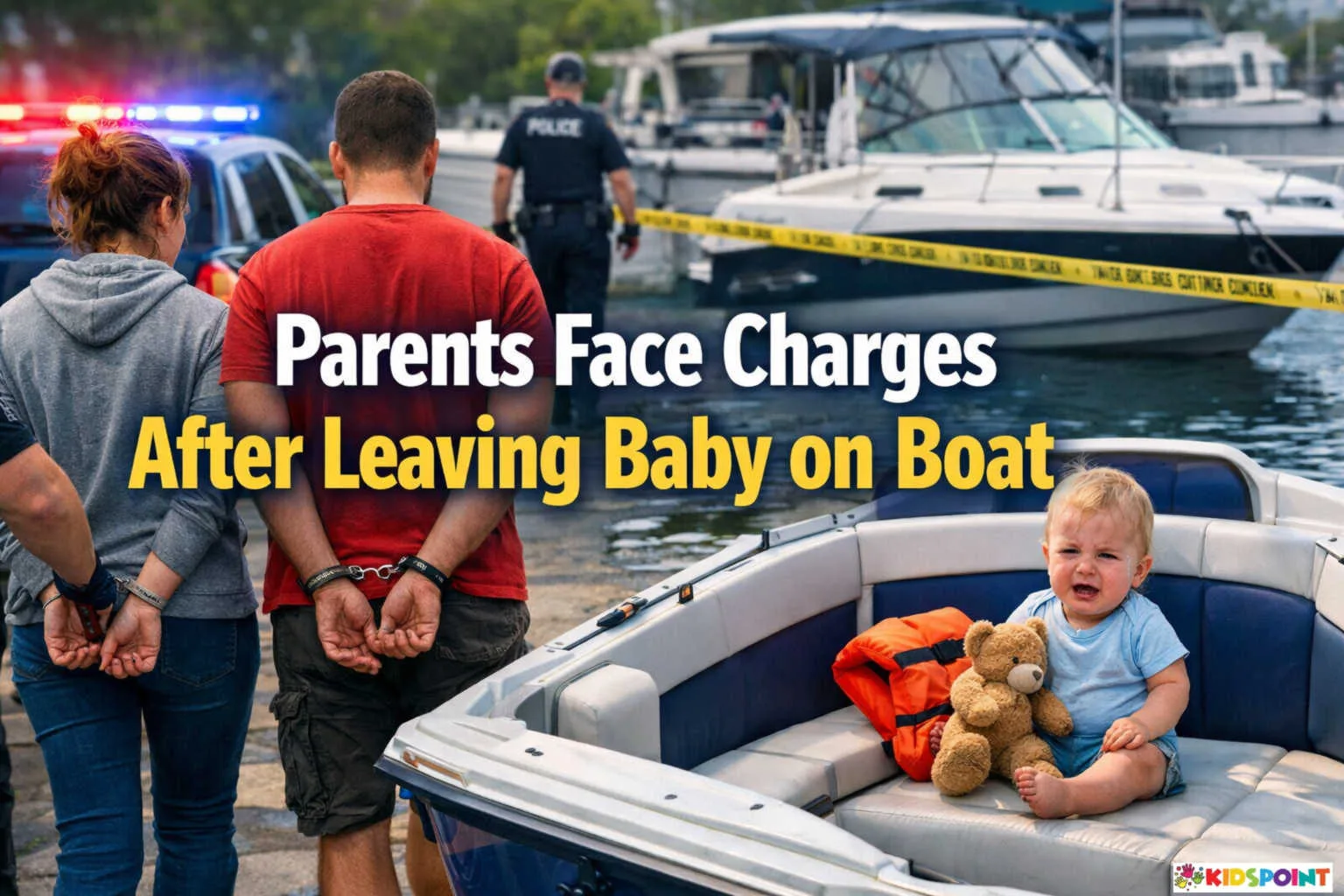
Incidents involving young children left unattended often generate strong public reactions and serious legal consequences. One recent case involving parents who faced criminal charges after leaving their baby unattended during a boating-related outing has reignited discussions about supervision, parental responsibility, and child safety laws.
At The Kids Point, we believe education and awareness are the strongest tools for prevention. This article explores what typically happens in such cases, why legal charges are filed, the risks involved in leaving infants unattended near water, and what parents can learn to avoid similar situations.
Understanding the Incident
In a widely reported situation, parents were charged after authorities determined they left their infant alone during a recreational outing involving water. According to reports, the baby was left unattended for a period of time while the parents moved away from the immediate area.
Although the child was ultimately found safe, law enforcement determined that the situation posed significant risk. As a result, the parents were charged under child neglect or child endangerment statutes.
Even when no physical injury occurs, authorities may pursue charges if they believe a child was placed in a dangerous or potentially harmful situation.
What Is Child Neglect?
Child neglect is legally defined in most jurisdictions as the failure to provide proper supervision, care, or protection necessary for a child’s well-being. While definitions vary by country and state, neglect typically includes:
- Leaving a young child unattended in unsafe conditions
- Failing to provide adequate supervision
- Exposing a child to foreseeable risk of harm
- Ignoring environmental hazards
It is important to understand that neglect does not always require proof of injury. Courts often focus on whether a “reasonable parent” would have recognized the danger and acted differently.
Why Water Environments Increase Risk
Boating and beach settings present unique dangers, especially for infants and toddlers.
Drowning Risk
Drowning is one of the leading causes of accidental death among young children worldwide. Infants cannot lift themselves out of water or call for help. Even shallow water can be deadly.
Heat Exposure
Boats and beaches often involve direct sun exposure. Infants are more vulnerable to dehydration and heatstroke than adults. Even short periods in high temperatures can become dangerous.
Unpredictable Conditions
Water currents, waves, wind shifts, and boat traffic can change quickly. What appears calm one moment may become hazardous the next.
Stranger Risk
In public spaces, unattended children may also be vulnerable to strangers or accidental injury from others nearby.
For these reasons, constant supervision is considered essential near water.
Legal Consequences for Parents
When authorities determine that a child was left in a potentially dangerous situation, several legal outcomes may follow:
Criminal Charges
Parents may face charges such as:
- Child neglect
- Child endangerment
- Reckless conduct
These charges can range from misdemeanors to felonies depending on the severity of risk and whether harm occurred.
Temporary Custody Review
Child protective services may temporarily assess custody arrangements to ensure the child’s safety.
Court-Ordered Parenting Programs
In some cases, courts require parents to attend parenting or safety education programs.
Even when parents did not intend harm, the legal system prioritizes the safety and protection of children.
Why Do Situations Like This Happen?
It is easy to assume negligence is always intentional, but often these incidents result from poor judgment, distraction, or underestimating risk.
Distraction
Managing multiple children, handling boating equipment, or attending to other tasks can divide attention.
Misjudging Time
Parents sometimes believe they will only be away briefly and underestimate how quickly circumstances can change.
Overconfidence
Some caregivers assume a shaded area, anchored boat, or calm shoreline is safe enough for a short absence.
Stress and Fatigue
Parenting is demanding. Fatigue and stress can impair decision-making and awareness.
Understanding these contributing factors is key to prevention.
The Public Reaction
Stories involving unattended infants typically generate intense public debate. Many people view such cases as clear negligence, while others emphasize that parents can make mistakes without malicious intent.
Regardless of opinion, the consistent message from safety experts is clear: infants require uninterrupted supervision, especially around water.
Our focus is not on judgment but on prevention and education.
Safety Guidelines for Parents Near Boats and Water
Whether on a lake, river, or beach, parents should follow strict safety measures:
Never Leave Infants Unattended
Infants should always remain within arm’s reach of a responsible adult.
Assign a “Water Watcher”
Designate one adult whose sole responsibility is supervising children near water. This person should not be distracted by phones or conversations.
Use Approved Life Jackets
Children should wear properly fitted, Coast Guard-approved life jackets when near or on boats.
Stay Within Physical Reach
Even if a baby is asleep, physical presence is essential. A sleeping infant is still vulnerable to environmental hazards.
Prepare for Emergencies
Keep emergency contact devices nearby and ensure adults know basic first aid and CPR.
Understanding Parental Responsibility
Parenthood includes both emotional care and physical protection. The law expects parents to anticipate common dangers and act proactively.
Responsibility includes:
- Assessing environmental risks
- Planning supervision before outings
- Adjusting behavior according to a child’s developmental stage
- Avoiding assumptions about safety
Infants rely entirely on adults to ensure their survival and well-being.
Psychological and Social Impact
Legal charges involving children can have lasting consequences beyond the courtroom.
Emotional Stress
Parents may experience guilt, anxiety, and public scrutiny.
Community Judgment
Social media and news coverage often amplify criticism.
Family Disruption
Investigations can temporarily disrupt custody arrangements and create instability.
While accountability is important, preventing such situations is always preferable to addressing consequences afterward.
Lessons for Families
Incidents like these serve as reminders that:
- Short absences can carry serious risk
- Environmental hazards are unpredictable
- Constant supervision is non-negotiable for infants
- Legal systems prioritize child safety above convenience
By adopting proactive safety habits, families can significantly reduce risk.
Creating a Safe Boating Plan for Families
Before heading out on the water, families should:
Conduct a Safety Check
- Inspect life jackets
- Confirm boat safety equipment
- Review emergency procedures
Establish Supervision Rules
- Decide who is supervising each child
- Rotate supervision if needed
Set Clear Boundaries
- Define areas children can access
- Keep infants in secured, shaded, supervised areas
Monitor Weather Conditions
Check forecasts and avoid extreme heat or unstable conditions.
Planning reduces reliance on assumptions and minimizes risk.
The Role of Education in Prevention
Child safety education is essential. Parenting classes, water safety courses, and CPR certification can significantly improve preparedness.
Organizations and community groups frequently offer training sessions that cover:
- Drowning prevention
- Emergency response
- Safe boating practices
- Infant safety guidelines
We encourage families to view safety education as an investment in their child’s well-being.
Common Questions Parents Ask
Can parents be charged even if the baby was not harmed?
Yes. If authorities believe the child was placed at serious risk, charges such as child neglect may apply even without injury.
Is it illegal to leave a baby unattended for a short time?
In many places, leaving an infant alone in potentially dangerous conditions can be considered neglect, regardless of duration.
Why is boating especially risky for infants?
Water hazards, heat exposure, and unpredictable conditions make constant supervision essential near boats and beaches.
What should parents do before taking a baby on a boat?
Ensure proper life jackets, assign a supervising adult, monitor weather conditions, and never leave the baby unattended.
How can families prevent similar incidents?
Plan ahead, practice active supervision, avoid distractions, and follow water safety guidelines at all times.
Final Thoughts
Cases where parents face charges after leaving a baby unattended are serious and emotionally charged. While legal accountability is part of the system designed to protect children, the deeper goal should always be prevention.
Infants are entirely dependent on adults for safety. Even brief lapses in supervision can lead to dangerous consequences. By understanding environmental risks, practicing constant supervision, and planning ahead, families can ensure outings remain safe and enjoyable.
At The Kids Point, our mission is to promote awareness, education, and responsible parenting practices. Through informed decisions and proactive planning, tragedies can be prevented and children can grow up in secure, protected environments.