

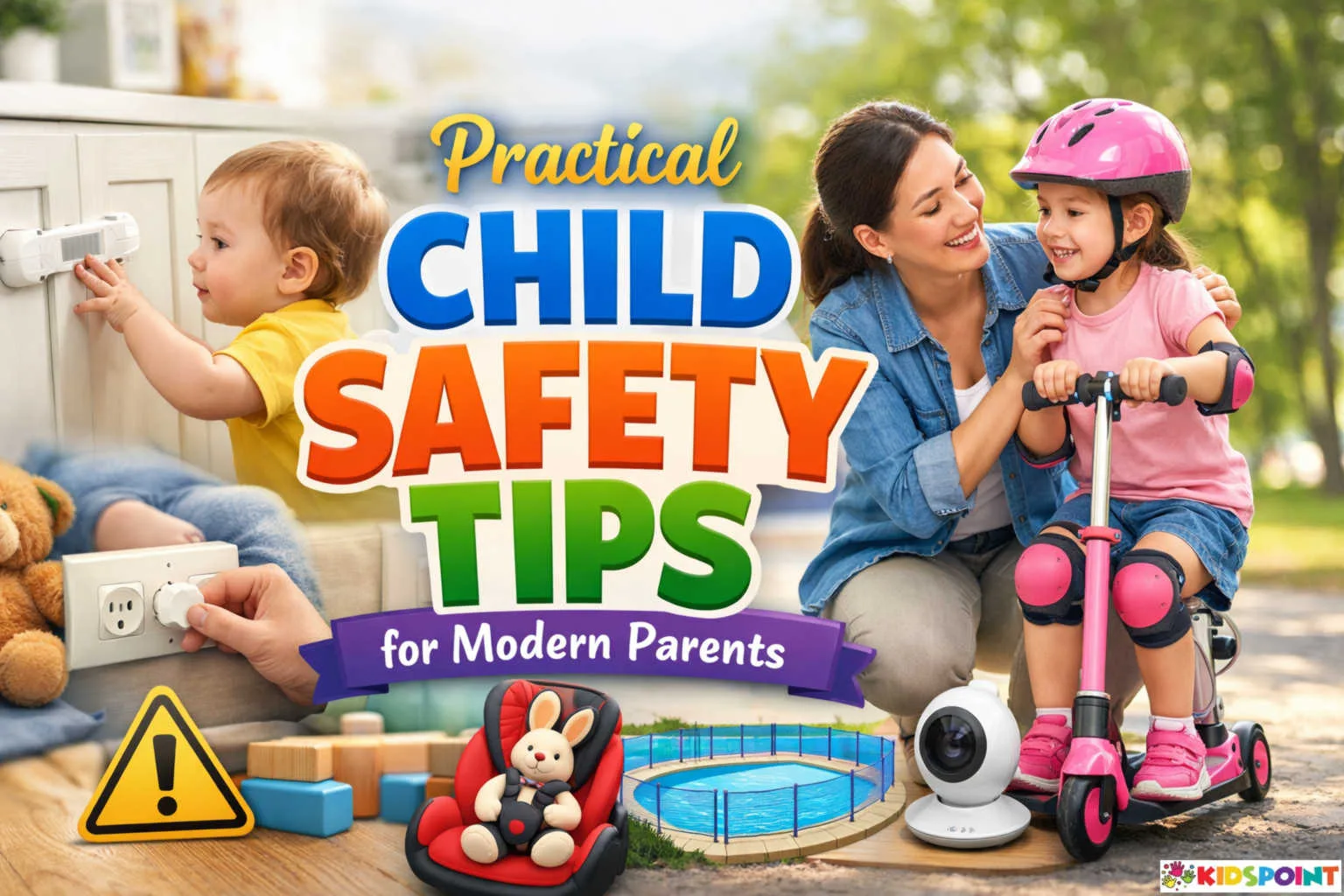
Parenting in today’s fast-paced world comes with its unique challenges. Modern parents face a variety of safety concerns—from online risks and smart devices to busy roads and household hazards. While it’s impossible to protect children from every potential danger, there are practical, effective strategies to significantly reduce risks while promoting independence and confidence.
At The Kids Point, we believe that safety starts with awareness, planning, and proactive habits. This guide provides comprehensive, actionable tips for parents to protect their children at home, outdoors, and in digital spaces—without creating unnecessary fear or overprotection.
Understanding Child Safety in the Modern Age
Child safety today is broader than it was a generation ago. Beyond traditional concerns like falls, burns, or choking, parents must also consider:
- Digital safety: internet, apps, social media, and screen time
- Outdoor hazards: traffic, playgrounds, parks
- Household risks: chemicals, sharp objects, and furniture
- Emotional safety: bullying, peer pressure, and mental well-being
Modern safety requires a balance: children must explore and learn independently, but in ways that minimize preventable injuries or harm.
Home Safety Tips
The home is where children spend most of their time. Many accidents occur in familiar spaces because parents assume they’re inherently safe.
Childproofing Essentials
- Install safety gates at stairs and entrances
- Secure cabinets with locks for cleaning products, medicines, or sharp objects
- Cover electrical outlets
- Anchor heavy furniture and TVs to prevent tipping
Safe Sleep Practices
- Always place babies on their backs to sleep
- Use firm mattresses with fitted sheets
- Keep pillows, toys, and blankets out of cribs
- Ensure sleep spaces meet current safety standards
Kitchen and Mealtime Safety
- Keep hot appliances and liquids out of reach
- Use stove knob covers
- Avoid holding hot drinks while carrying infants
- Teach older children safe use of utensils and appliances
Bathroom Safety
- Keep medicines, cosmetics, and cleaning agents locked
- Install non-slip mats in bathtubs
- Supervise young children during baths
- Ensure water temperature is safe to prevent burns
Fire and Electrical Safety
- Install smoke and carbon monoxide detectors
- Keep matches and lighters out of reach
- Educate children on “stop, drop, and roll”
- Avoid overloading power outlets
Outdoor Safety Tips
Outdoor play is essential for development, but it comes with risks that modern parents must address proactively.
Road Safety
- Teach children to look both ways before crossing
- Use age-appropriate car seats, booster seats, and seat belts
- Avoid distractions like phones while supervising children near traffic
- Use reflective clothing for visibility in low light
Playground Safety
- Inspect playground equipment for hazards
- Ensure surfaces are soft and impact-absorbing
- Teach children to wait their turn and play safely
- Encourage appropriate footwear to prevent slips
Water Safety
- Never leave children unattended near pools, ponds, or bathtubs
- Teach basic swimming and water safety skills
- Install barriers like pool fences and alarms
- Equip life jackets for boating or recreational water activities
Digital Safety Tips
In the digital age, protecting children online is just as important as physical safety.
Supervised Screen Time
- Set limits on daily screen time
- Choose age-appropriate apps and games
- Use parental controls on devices
- Encourage educational content over purely entertainment
Online Privacy
- Teach children not to share personal information online
- Monitor social media accounts and friend lists
- Educate children about the risks of online strangers
- Discuss safe use of photos and videos
Cyberbullying Awareness
- Encourage children to talk about uncomfortable online interactions
- Monitor for changes in behavior or mood
- Teach strategies for handling bullying, like blocking or reporting
- Maintain open communication and trust
Health and Hygiene Safety
Maintaining hygiene and health is a key part of child safety in the modern world.
Handwashing and Germ Prevention
- Encourage frequent handwashing, especially before meals and after outdoor play
- Teach proper handwashing techniques
- Provide tissues or handkerchiefs for coughs and sneezes
Vaccinations and Preventive Care
- Keep immunizations up to date
- Schedule regular pediatric visits
- Follow guidance for seasonal illnesses like flu
Healthy Habits
- Promote proper nutrition and hydration
- Ensure adequate sleep for age-appropriate development
- Encourage physical activity while following safety guidelines
Travel Safety Tips
Traveling with children requires additional planning to keep them safe and comfortable.
Car Travel
- Use appropriate car seats for your child’s age and weight
- Ensure proper installation of seat belts and harnesses
- Avoid leaving children unattended in vehicles
- Keep emergency contact numbers handy
Public Transportation and Crowds
- Teach children to stay close in crowded areas
- Use child identification bracelets if needed
- Have a meeting point in case of separation
- Teach children how to ask for help safely
Travel Preparedness
- Pack a first aid kit
- Bring necessary medications
- Maintain comfort items to reduce stress and anxiety
Safety Education and Communication
One of the most powerful tools for modern parents is teaching children to be aware of risks while maintaining independence.
Age-Appropriate Safety Education
- Toddlers: basic rules like “hot,” “stop,” and “don’t touch”
- Preschoolers: simple explanations of safe and unsafe behavior
- School-age children: emergency procedures, safe stranger interaction
- Teens: internet safety, social media awareness, and peer pressure strategies
Modeling Behavior
Children learn safety by observing adults. Demonstrate safe practices such as wearing helmets, using seat belts, and proper handwashing.
Open Communication
- Encourage children to ask questions
- Discuss fears without creating panic
- Praise safety-conscious decisions
- Reinforce learning through repetition and gentle reminders
First Aid Preparedness
Every modern parent should be equipped to respond to emergencies.
Basic First Aid Skills
- Learn CPR and choking rescue techniques for infants and children
- Treat minor cuts, bruises, and burns safely
- Recognize signs of allergic reactions
Keep a First Aid Kit
Include essentials like:
- Bandages and antiseptic
- Thermometer
- Pain relievers (child-safe)
- Emergency contact information
Emergency Planning
- Teach children how to dial emergency services
- Create evacuation plans for home and vehicles
- Maintain emergency contacts in a visible place
Safety for Modern Gadgets and Smart Homes
Many households now include smart devices that pose new challenges for children’s safety.
- Keep cords and devices out of reach
- Monitor smart toy functionality and privacy settings
- Educate children about device limits and risks
- Use password protections and parental controls
Balancing Safety and Independence
Modern parenting must strike a balance between protecting children and allowing them to explore. Overprotection can lead to fear or delayed problem-solving skills. Practical safety tips empower children to:
- Learn risk assessment
- Develop confidence and self-reliance
- Build problem-solving skills
- Enjoy exploration while minimizing preventable accidents
Practical Safety Checklist for Parents
- Home: Childproofing, safe sleep, kitchen and bathroom safety
- Outdoors: Road, playground, and water safety
- Digital: Screen time limits, online privacy, and cyberbullying awareness
- Health: Hygiene, vaccinations, nutrition, and sleep
- Travel: Car seat safety, public transport awareness, and emergency planning
- Emergency: First aid skills, kit, and household preparedness
- Gadgets: Smart home supervision, parental controls, and device education
Common Questions Parents Ask About Child Safety
What is the most important aspect of child safety?
Creating a safe environment, teaching safe habits, and supervising appropriately are key for reducing risks.
How can I keep my child safe online?
Limit screen time, use parental controls, monitor activity, and teach children not to share personal information.
Are playgrounds safe for children?
Yes, when equipment is age-appropriate, surfaces are soft, and children are supervised while playing.
How do I prepare for emergencies at home?
Keep a first aid kit, learn basic first aid and CPR, and create emergency plans for your family.
Can children be independent while staying safe?
Yes. Teaching risk awareness, safe habits, and responsible behavior allows children to explore confidently and safely.
Helping Your Child Thrive Safely
Child safety is about proactive planning, awareness, and communication. At The Kids Point, we encourage parents to combine supervision with education, allowing children to develop independence safely. By teaching children safe habits, equipping them with knowledge, and modeling responsible behavior, modern parents can reduce risks while helping children grow into confident, capable individuals.
Remember, safety is an ongoing process, not a one-time action. Stay informed, stay vigilant, and support your child as they explore, learn, and enjoy life confidently.