

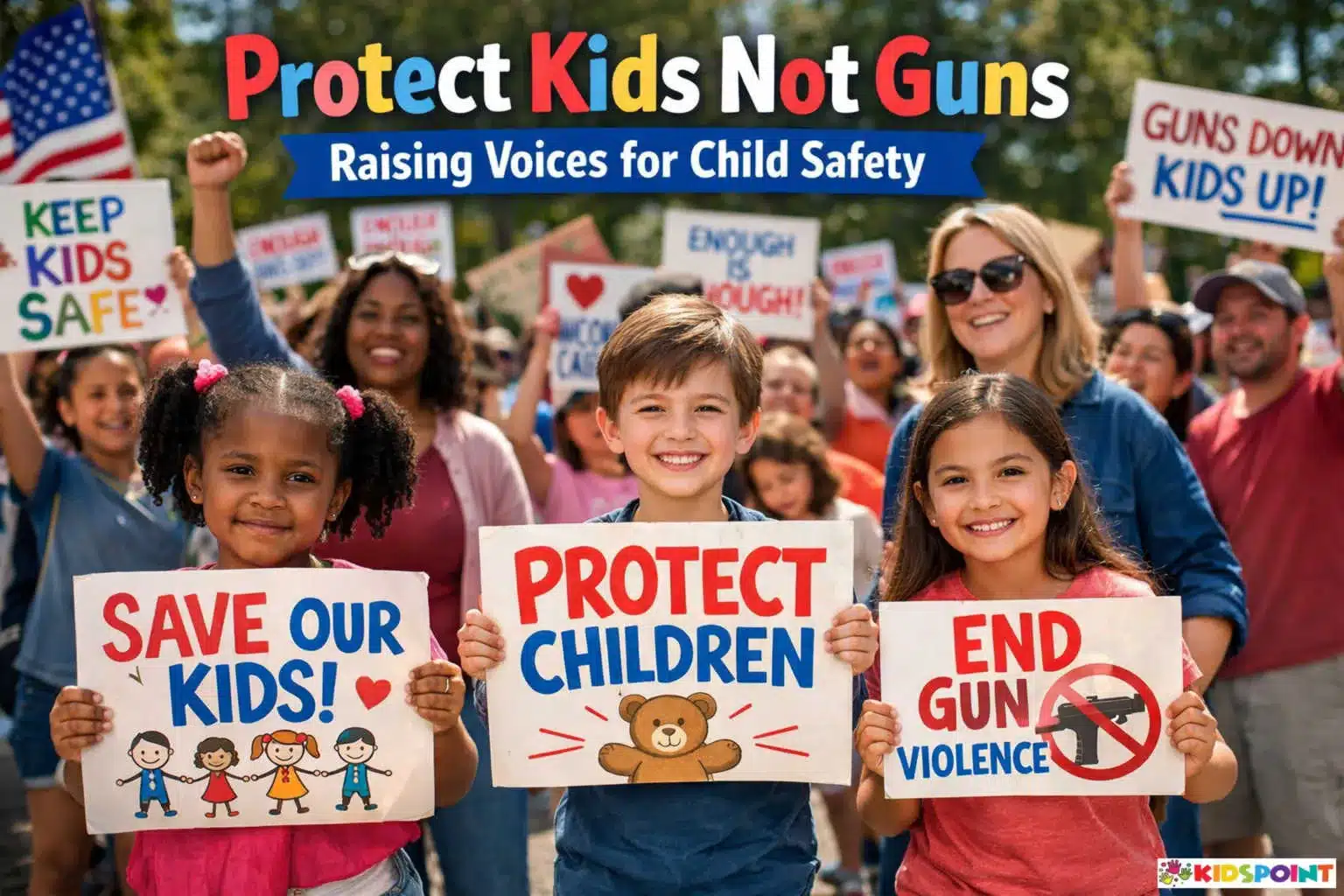
In today’s world, ensuring the safety and well-being of children has become more important than ever. The phrase “Protect Kids Not Guns” has grown into a powerful message that reflects a collective call for safer environments where children can grow, learn, and thrive without fear. At The Kids Point, we believe every child deserves a secure and nurturing space—whether at home, in school, or in the community.
This article explores the meaning behind this movement, why child safety must be a top priority, and how parents, educators, and communities can work together to create lasting change.
Understanding the Message: “Protect Kids Not Guns”
“Protect Kids Not Guns” is more than just a slogan—it is a statement about priorities. It emphasizes the need to focus on children’s safety above all else. The message calls for increased awareness, responsible practices, and proactive steps to reduce risks that threaten children’s lives.
At its core, this movement advocates:
- Safer environments for children
- Responsible behavior and accountability
- Education and awareness around safety
- Community involvement in protecting young lives
It is about shifting the focus toward prevention, care, and responsibility.
Why Child Safety Must Come First
Children depend on adults for protection, guidance, and support. When their safety is compromised, it affects not only their physical health but also their emotional and psychological development.
Key Reasons to Prioritize Child Safety
Children Are Vulnerable
Kids are naturally curious and often unaware of potential dangers. This makes them more susceptible to accidents and unsafe situations.
Long-Term Impact
Exposure to unsafe environments can lead to trauma, anxiety, and long-lasting emotional challenges.
Foundation for Growth
A safe environment allows children to explore, learn, and build confidence without fear.
The Role of Families in Protecting Children
Parents and caregivers are the first line of defense when it comes to child safety. Creating a secure home environment is essential.
Practical Steps for Families
Open Communication
Encourage children to talk about their fears and experiences. Make sure they feel heard and supported.
Set Clear Safety Rules
Teach children basic safety guidelines appropriate for their age.
Supervision and Awareness
Always be aware of your child’s surroundings and activities.
Safe Storage Practices
Ensure that any potentially dangerous items are securely stored and out of children’s reach.
Lead by Example
Children learn from what they see. Demonstrating responsible behavior helps them adopt safe habits.
The Role of Schools in Child Safety
Schools are where children spend a significant portion of their time, making them critical spaces for safety.
How Schools Can Help
Implement Safety Protocols
Clear procedures for emergencies can save lives.
Promote Emotional Well-Being
Safe environments are not just physical—they also support mental health.
Educate Students on Safety
Teaching children how to respond in different situations builds confidence and preparedness.
Encourage Inclusivity and Respect
A positive school culture reduces risks and promotes well-being.
Community Responsibility: It Takes a Village
Protecting children is not just a family or school responsibility—it requires collective effort from the entire community.
Community Actions That Make a Difference
- Supporting local safety initiatives
- Raising awareness about child protection
- Encouraging responsible practices
- Creating safe public spaces for children
When communities come together, they create stronger, safer environments for everyone.
Raising Awareness Through Advocacy
Advocacy plays a crucial role in promoting child safety. By raising voices and spreading awareness, individuals can influence positive change.
Ways to Advocate for Child Safety
Start Conversations
Discuss the importance of child safety with friends, family, and peers.
Use Social Platforms Responsibly
Share messages that promote awareness and positive action.
Support Child-Focused Organizations
Get involved with groups that work toward protecting children.
Participate in Community Events
Attend or organize events that focus on safety and awareness.
Teaching Children About Safety Without Fear
While it’s important to educate children about safety, it should be done in a way that empowers rather than frightens them.
Effective Teaching Strategies
- Use age-appropriate language
- Focus on solutions rather than dangers
- Encourage questions and discussions
- Practice safety drills in a calm manner
The goal is to build confidence and awareness, not anxiety.
The Importance of Emotional Safety
Child safety goes beyond physical protection. Emotional safety is equally important for healthy development.
Supporting Emotional Well-Being
- Create a supportive home environment
- Encourage expression of feelings
- Build trust and strong relationships
- Address bullying or negative behavior early
Children who feel emotionally secure are more likely to speak up when something is wrong.
Building a Culture of Safety
Creating lasting change requires building a culture where safety is a shared value.
Key Elements of a Safety Culture
Awareness
Understanding risks and how to prevent them.
Responsibility
Taking accountability for actions that affect children’s safety.
Consistency
Applying safety practices regularly, not just occasionally.
Collaboration
Working together as families, schools, and communities.
Challenges in Promoting Child Safety
While the goal is clear, there are challenges that must be addressed.
Common Challenges
- Lack of awareness or education
- Resistance to change
- Limited resources in some communities
- Miscommunication or misinformation
Overcoming these challenges requires persistence, education, and cooperation.
How To Support Child Safety
We are dedicated to promoting children’s well-being through education, awareness, and practical guidance. Our mission is to empower parents, teachers, and caregivers with the tools they need to create safer environments for children.
We focus on:
- Providing informative resources
- Encouraging positive parenting practices
- Supporting child development and safety education
- Promoting awareness on important issues affecting children
Small Actions That Create Big Impact
You don’t need to make massive changes to improve child safety. Small, consistent actions can make a significant difference.
Simple Steps You Can Take Today
- Talk to your child about safety
- Check your home for potential hazards
- Stay informed about safety practices
- Support community safety efforts
- Encourage others to prioritize child safety
Every step counts toward building a safer future.
Looking Ahead: A Safer Future for Children
The message “Protect Kids Not Guns” reminds us that children’s safety should always come first. By working together—families, schools, and communities—we can create environments where children feel secure, supported, and free to grow.
Change begins with awareness, but it continues through action. When we prioritize children’s well-being, we invest in a better future for everyone.
Common Questions Answered
What does “Protect Kids Not Guns” mean?
It emphasizes prioritizing children’s safety and well-being over potential risks in their environment.
How can parents improve child safety at home?
By setting rules, supervising activities, and ensuring safe storage of potentially harmful items.
Why is community involvement important?
Communities play a key role in creating safe environments and supporting families.
How can children learn about safety effectively?
Through open communication, education, and age-appropriate guidance.
What role do schools play in child safety?
Schools help by implementing safety measures, educating students, and fostering a supportive environment.
Final Thoughts
Protecting children is a shared responsibility that requires commitment, compassion, and continuous effort. By raising awareness and taking proactive steps, we can ensure that children are given the safe and nurturing environments they deserve.
At The Kids Point, we stand firmly in support of child safety and encourage everyone to join in creating a world where every child can thrive without fear.