

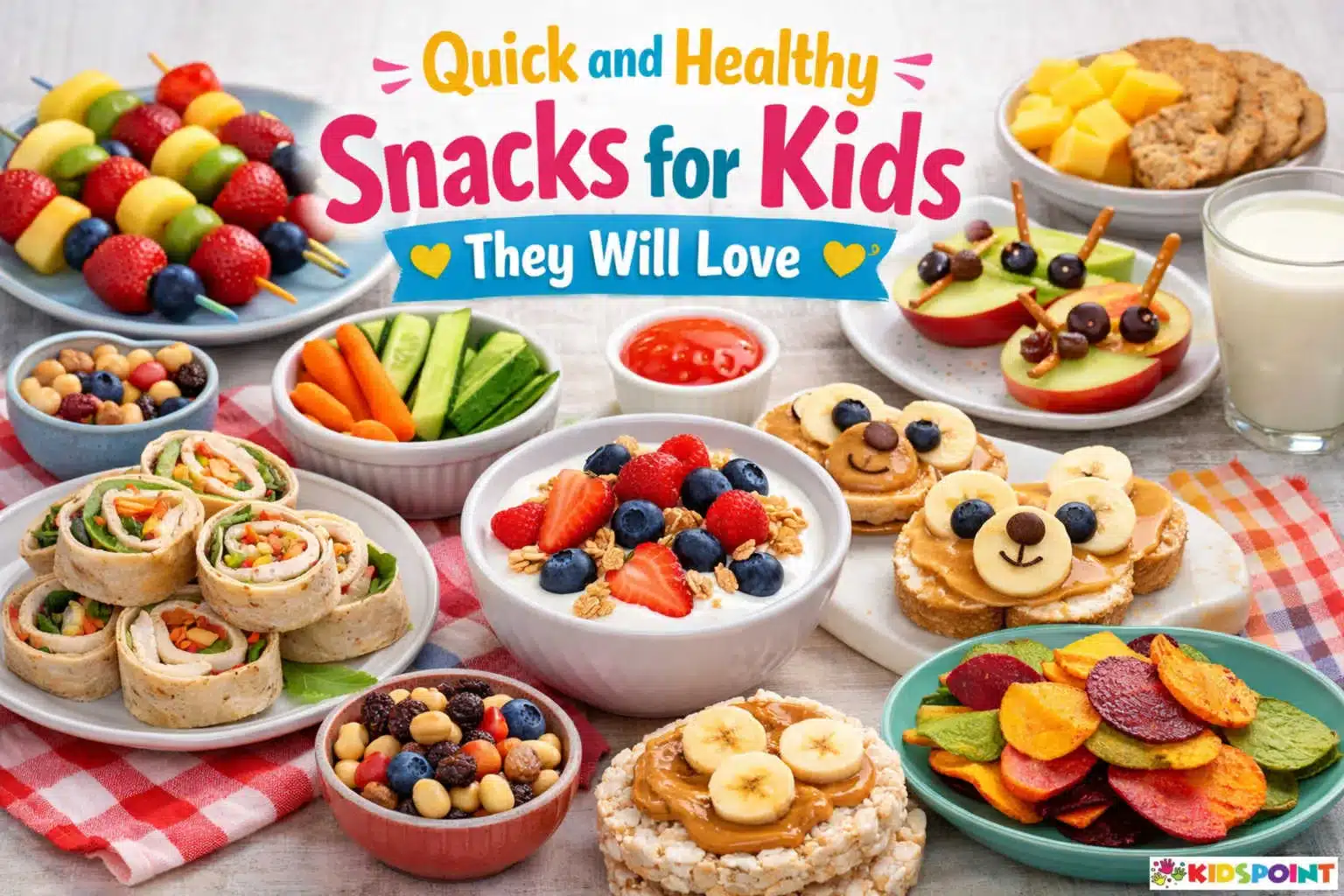
Healthy snacking plays an important role in a child’s daily nutrition. Kids are naturally active and growing, which means their bodies require consistent energy and nourishment throughout the day. While main meals like breakfast, lunch, and dinner provide essential nutrients, snacks help fill the nutritional gaps and keep children energized between meals.
However, many parents struggle to find snacks that are both healthy and appealing to kids. Children often prefer sugary or highly processed foods, which can lead to poor eating habits and reduced energy levels. The good news is that there are many quick, nutritious snacks that children genuinely enjoy.
At The Kids Point, we believe that healthy eating should be simple, fun, and accessible for every family. By preparing balanced snacks with wholesome ingredients, parents can support their children’s growth, learning, and overall well-being.
This guide explores a variety of quick and healthy snack ideas that kids will love, along with practical tips for making nutritious snacking a regular part of your child’s routine.
Why Healthy Snacks Are Important for Kids
Children burn energy quickly due to their constant movement and rapid growth. Healthy snacks help maintain steady energy levels and prevent excessive hunger between meals.
Nutritious snacks also provide essential vitamins, minerals, and nutrients that support physical and mental development.
Some key benefits of healthy snacking include:
- Supporting brain development and concentration
- Maintaining stable energy levels throughout the day
- Helping children meet daily nutritional requirements
- Preventing overeating during main meals
- Encouraging lifelong healthy eating habits
When snacks include a balance of protein, fiber, healthy fats, and carbohydrates, they keep kids satisfied and energized for longer periods.
What Makes a Snack Healthy for Kids
A healthy snack should provide more than just calories. It should offer real nutritional value that supports a child’s development.
Here are the main characteristics of a healthy snack:
Balanced Nutrients
A good snack contains a combination of nutrients such as:
- Protein for growth and muscle development
- Fiber for digestion
- Healthy fats for brain development
- Natural carbohydrates for energy
Low Added Sugar
Too much sugar can lead to energy crashes and unhealthy eating habits. Snacks should focus on natural sweetness from fruits rather than added sugars.
Whole Ingredients
Fresh and minimally processed foods provide better nutrition than highly processed snack products.
Easy to Prepare
Busy families benefit from snacks that can be prepared quickly without complicated recipes.
Quick Fruit-Based Snacks Kids Enjoy
Fruits are one of the easiest and healthiest snack options for children. They are naturally sweet, rich in vitamins, and require minimal preparation.
Fruit and Yogurt Parfait
Layer yogurt with fresh fruits such as berries, bananas, or mango slices. Add a small sprinkle of granola for crunch. This snack is rich in calcium, protein, and antioxidants.
Apple Slices with Peanut Butter
Apple slices paired with peanut butter create a perfect combination of fiber, healthy fats, and protein. This snack helps keep kids full and energized.
Frozen Fruit Pops
Blend fresh fruits like strawberries, bananas, and yogurt. Pour the mixture into molds and freeze. These homemade fruit pops are refreshing and much healthier than store-bought ice pops.
Banana Roll-Ups
Spread peanut butter on a whole wheat tortilla, place a banana on top, roll it up, and slice into small pieces.
We fruit-based snacks are always recommended as a natural way to satisfy children’s sweet cravings while providing essential nutrients.
Protein-Packed Snacks for Growing Kids
Protein helps children grow stronger and keeps them feeling full longer. Including protein in snacks is a great way to maintain steady energy levels.
Cheese and Whole Grain Crackers
This snack offers protein from cheese and fiber from whole grain crackers. It’s simple, balanced, and quick to prepare.
Hard-Boiled Eggs
Hard-boiled eggs are rich in protein and healthy fats. Sprinkle a little salt or serve with sliced vegetables for a balanced snack.
Greek Yogurt with Honey
Greek yogurt contains more protein than regular yogurt. Adding a small drizzle of honey or fresh fruit makes it more appealing for kids.
Hummus with Veggie Sticks
Hummus made from chickpeas is rich in plant-based protein. Serve it with carrot sticks, cucumber slices, or bell peppers.
Protein-rich snacks help support muscle development and provide longer-lasting energy.
Whole Grain Snacks for Lasting Energy
Whole grains are an excellent source of fiber and slow-release energy. They keep kids satisfied and help maintain stable blood sugar levels.
Whole Wheat Toast with Avocado
Spread mashed avocado on whole wheat toast. Add a sprinkle of sesame seeds or a slice of tomato for extra flavor.
Oatmeal Energy Bites
Mix oats, peanut butter, honey, and a few chocolate chips. Roll into small balls and refrigerate. These bite-sized snacks are nutritious and easy to grab.
Mini Whole Grain Sandwiches
Use whole grain bread with fillings like cheese, turkey, or peanut butter to create small sandwich squares.
Homemade Popcorn
Air-popped popcorn is a whole grain snack that kids enjoy. It’s crunchy, fun, and low in calories when prepared without excessive butter.
Whole grain snacks are encouraged because they provide steady energy that helps kids stay active and focused.
Fun Vegetable Snacks Kids Will Actually Eat
Many parents find it challenging to get children to eat vegetables. However, creative presentations can make vegetables more appealing.
Veggie Dippers
Serve colorful vegetables such as carrots, cucumbers, and cherry tomatoes with a yogurt-based dip or hummus.
Cucumber Sandwich Bites
Use cucumber slices as mini sandwich layers with cream cheese or tuna filling.
Sweet Potato Fries
Bake sweet potato slices in the oven with a little olive oil. They become crispy and naturally sweet.
Veggie Muffins
Bake muffins using grated carrots, zucchini, or spinach mixed into the batter.
These snacks help increase vegetable intake without making kids feel forced to eat them.
Homemade Snacks That Are Better Than Packaged Foods
Homemade snacks allow parents to control ingredients and avoid unnecessary additives.
Homemade Granola Bars
Mix oats, nuts, honey, and dried fruits. Press into a pan and refrigerate before cutting into bars.
Yogurt Bark
Spread yogurt on a tray, sprinkle fruits and nuts, then freeze. Break into small pieces for a cool snack.
Banana Oat Cookies
Mash bananas with oats and bake into simple cookies. These contain natural sweetness and fiber.
Smoothies
Blend milk or yogurt with fruits and vegetables for a quick nutrient-packed drink.
Preparing snacks at home can be both healthier and more cost-effective.
Tips for Making Healthy Snacks More Appealing
Children are more likely to eat nutritious foods when they look fun and interesting.
Here are some helpful tips:
Make Snacks Colorful
Bright colors naturally attract children. Combine fruits and vegetables of different colors for a visually appealing snack.
Use Fun Shapes
Cut sandwiches, fruits, and vegetables into fun shapes using cookie cutters.
Involve Kids in Preparation
Children are more excited to eat foods they helped prepare.
Offer Variety
Rotate snack options regularly to prevent boredom and encourage children to try new foods.
We encourage creativity in snack preparation and help children build a positive relationship with healthy food.
Healthy Snack Planning for Busy Families
Busy schedules often lead families to rely on packaged snacks. However, with a little planning, healthy options can be just as convenient.
Prepare Snacks in Advance
Wash and cut fruits and vegetables at the start of the week so they are ready to grab.
Keep Healthy Options Visible
Store healthy snacks at eye level in the refrigerator to encourage better choices.
Pack Snacks for School
Prepare snack boxes for school that include fruit, whole grains, and protein.
Create a Snack Routine
Offer snacks at consistent times to prevent constant grazing throughout the day.
Planning ahead ensures that nutritious snacks are always available.
Snacks That Support Brain Development
Certain nutrients help improve focus, memory, and learning ability in children.
Examples include:
- Omega-3 fatty acids: found in nuts and seeds
- Protein: supports brain growth and neurotransmitter function
- Iron: important for concentration and cognitive development
- Antioxidants: protect brain cells
Snacks such as yogurt with berries, peanut butter toast, and nut-based energy bites can support brain health while satisfying hunger.
Our balanced nutrition is seen as an essential part of supporting both physical growth and academic success.
Common Snack Mistakes Parents Should Avoid
Even well-meaning parents sometimes make snack choices that are less healthy than expected.
Too Many Sugary Snacks
Cookies, candy, and sweet drinks provide quick energy but little nutrition.
Overly Processed Foods
Packaged snacks often contain preservatives, artificial flavors, and excess sodium.
Large Portion Sizes
Snacks should complement meals, not replace them.
Lack of Variety
Offering the same snack every day can reduce excitement and limit nutrient intake.
Avoiding these mistakes can help build better eating habits for children.
Encouraging Lifelong Healthy Eating Habits
Healthy snacking is not just about providing food; it’s also about teaching children how to make good choices.
Parents can encourage healthy habits by:
- Setting a positive example with their own eating habits
- Offering balanced meals and snacks regularly
- Avoiding using sweets as rewards
- Teaching children about nutrition in simple ways
When children learn to enjoy healthy foods at a young age, they are more likely to maintain those habits into adulthood.
Promoting healthy lifestyles for children is a key goal, and nutritious snacks are an important part of that mission.
Common Questions Parents Ask About Healthy Kids’ Snacks
How many snacks should kids eat each day?
Most children benefit from two healthy snacks per day, usually between main meals.
What are the best after-school snacks for kids?
Great options include yogurt with fruit, whole grain sandwiches, smoothies, or peanut butter with apple slices.
Are homemade snacks better than packaged snacks?
Yes, homemade snacks usually contain fewer additives and allow better control over ingredients.
How can I encourage my child to eat healthier snacks?
Offer a variety of nutritious options, involve kids in preparation, and present snacks in fun ways.
Can healthy snacks help improve kids’ concentration?
Yes, snacks rich in protein, whole grains, and healthy fats can support brain function and improve focus.
Smart Snacking Habits for Growing Kids
Healthy snacks are a valuable tool for supporting children’s growth, energy, and learning. By choosing natural ingredients, balancing nutrients, and presenting snacks in fun ways, parents can create snack options that children genuinely enjoy.
Quick and nutritious snacks do not need to be complicated. Simple combinations of fruits, vegetables, whole grains, and protein-rich foods can provide all the nourishment children need between meals.
With a little creativity and planning, healthy snacks can become one of the most enjoyable parts of a child’s daily routine. At The Kids Point, encouraging families to make smart food choices helps children develop strong bodies, active minds, and lifelong healthy habits.