

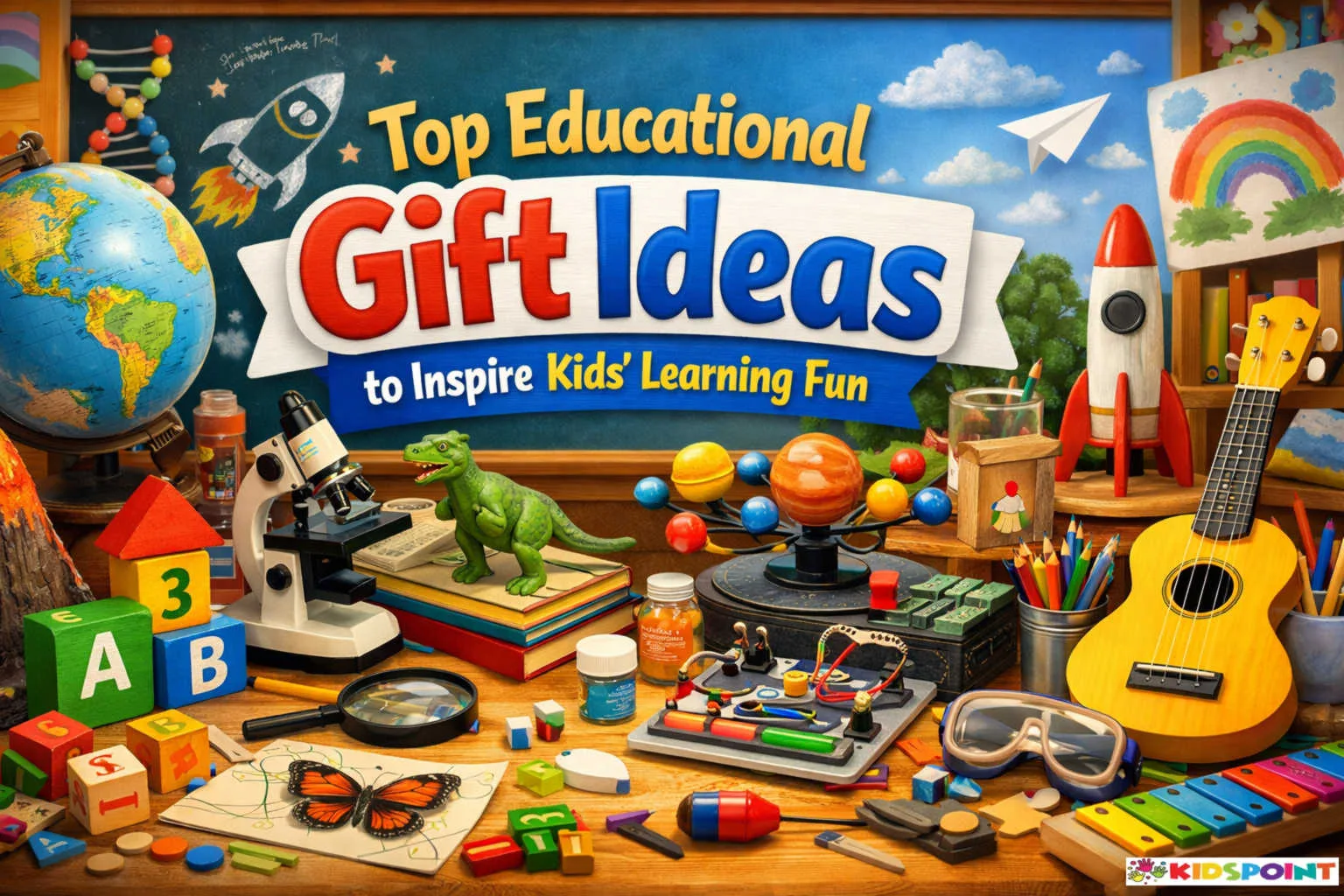
Choosing the perfect gift for a child can be both exciting and overwhelming. With so many options available, it’s easy to get distracted by flashy toys that entertain briefly but offer little long-term value. Educational gifts, however, provide something far more meaningful—they combine joy with learning, creativity with growth, and fun with skill development.
At The Kids Point, we believe that the best gifts are those that spark curiosity, encourage imagination, and nurture a lifelong love of learning. Whether you’re shopping for a birthday, holiday, or special achievement, educational gifts are thoughtful investments in a child’s future.
In this comprehensive guide, we’ll explore top educational gift ideas categorized by age and skill development, helping you choose presents that truly inspire kids’ learning fun.
Why Educational Gifts Matter
Educational gifts go beyond simple entertainment. They provide opportunities for exploration, discovery, and hands-on learning.
They Encourage Curiosity
Children are naturally curious. Educational gifts tap into that curiosity by allowing kids to ask questions, experiment, and explore new ideas.
They Support Skill Development
From literacy and math to creativity and critical thinking, educational toys strengthen foundational skills that benefit children in school and beyond.
They Promote Independent Thinking
Unlike passive entertainment, educational gifts encourage problem-solving and decision-making.
They Build Confidence
Completing a puzzle, building a structure, or finishing a craft project gives children a sense of accomplishment and pride.
We encourage families to view educational gifts as powerful tools that support both fun and meaningful development.
How to Choose the Right Educational Gift
Before selecting a gift, consider these essential factors:
Age and Development Level
Ensure the gift matches the child’s abilities. Too simple may lead to boredom; too complex may cause frustration.
Interests and Personality
Does the child love science? Art? Animals? Numbers? Choose gifts that align with their passions.
Open-Ended Potential
The best educational gifts allow multiple ways to play and grow with the child.
Quality and Safety
Look for durable, non-toxic materials and age-appropriate designs.
Balance of Fun and Learning
A gift should feel exciting first—learning happens naturally through engagement.
Top Educational Gift Ideas by Age Group
Different stages of childhood require different types of stimulation. Below are carefully selected gift ideas to inspire learning at every age.
Educational Gifts for Toddlers (Ages 1–3)
At this stage, children learn through sensory exploration and movement.
Shape Sorters and Stacking Toys
These classic gifts teach problem-solving, color recognition, and fine motor coordination. Toddlers experiment with fitting shapes into matching spaces, building early cognitive skills.
Sensory Play Kits
Sensory bins with textured materials stimulate touch and exploration. They support focus, creativity, and early scientific thinking.
Musical Learning Toys
Simple instruments like xylophones or drums help toddlers explore rhythm and sound while enhancing coordination.
Interactive Board Books
Books with textures, flaps, and sound features build vocabulary and encourage early literacy habits.
We recommend gifts that encourage hands-on exploration and safe discovery during these foundational years.
Educational Gifts for Preschoolers (Ages 3–5)
Preschoolers are eager to explore letters, numbers, and imaginative play.
Alphabet and Phonics Games
Magnetic letters, word puzzles, and phonics kits strengthen reading readiness and vocabulary development.
Number Learning Sets
Counting beads, math cubes, and beginner abacus tools make early math concepts fun and approachable.
Magnetic Building Tiles
These encourage spatial awareness, creativity, and STEM foundations. Children can design towers, houses, and imaginative structures.
Pretend Play Sets
Role-play kits such as doctor sets, kitchen sets, or tool kits foster imagination, empathy, and communication skills.
Gifts at this stage should encourage curiosity while supporting early academic foundations.
Educational Gifts for Early Elementary Kids (Ages 6–8)
Children in this age group enjoy structured challenges and deeper exploration.
Beginner Science Kits
Simple experiment kits introduce concepts like chemical reactions, plant growth, or magnetism. Hands-on learning builds scientific thinking.
Educational Board Games
Word games, math challenges, and logic-based board games strengthen critical thinking and teamwork.
DIY Craft Kits
Craft sets allow children to create artwork, jewelry, or small projects. They develop patience, focus, and creativity.
Geography and World Map Puzzles
Interactive map puzzles teach global awareness while enhancing problem-solving skills.
These gifts bridge classroom learning with interactive play, reinforcing academic concepts in exciting ways.
Educational Gifts for Tweens (Ages 9–12)
Older children thrive with complex challenges that promote independence.
Coding and Robotics Kits
Introductory coding sets teach sequencing, computational thinking, and logic. They prepare kids for future technology-driven environments.
Advanced Construction Sets
Engineering-based building kits encourage design thinking and perseverance.
Strategy Games and Brain Teasers
Logic puzzles and strategy board games enhance analytical thinking and patience.
Creative Writing or Story-Building Kits
Journals with prompts, storytelling cards, or creative writing guides nurture literacy and imagination.
We believe tweens benefit most from gifts that challenge their minds while allowing personal expression.
Educational Gift Categories That Inspire Learning Fun
Beyond age groups, certain categories consistently make impactful gifts.
STEM (Science, Technology, Engineering, Math) Gifts
STEM gifts encourage inquiry, experimentation, and logical reasoning. Examples include:
- Engineering kits
- Crystal-growing experiments
- Solar-powered toy models
These gifts prepare children for future academic and career opportunities.
Arts and Creativity Gifts
Creative expression is essential for emotional development. Art supplies, painting sets, sculpting kits, and design tools nurture imagination and self-confidence.
Literacy and Language Gifts
Books, word-building games, and storytelling kits help children develop strong communication skills and a love of reading.
Math Learning Gifts
Number puzzles, pattern games, and logic challenges make math engaging and less intimidating.
Outdoor Learning Gifts
Nature exploration kits, gardening tools, and observation sets promote physical activity while teaching scientific concepts.
Making Educational Gifts More Meaningful
Even the best gift becomes more powerful when paired with thoughtful engagement.
Play Together
Spend time participating in the activity. Ask questions, offer encouragement, and celebrate discoveries.
Encourage Exploration
Instead of giving instructions immediately, allow children to experiment and problem-solve.
Connect Gifts to Real Life
Use science kits to explore outdoor nature. Use math games while shopping or cooking.
Rotate Gifts
Keep learning exciting by rotating toys and introducing new challenges gradually.
We encourage families to focus on experiences, not just objects. The memories created through shared play often matter more than the gift itself.
Budget-Friendly Educational Gift Ideas
Educational gifts don’t have to be expensive. Consider these affordable yet impactful options:
- Printable learning games
- DIY craft supplies
- Homemade flashcards
- Second-hand educational books
- Simple building blocks
The key is meaningful engagement, not price.
The Long-Term Impact of Educational Gifts
Educational gifts nurture more than knowledge—they build life skills such as:
- Critical thinking
- Creativity
- Collaboration
- Confidence
- Persistence
Children who engage in purposeful play often develop a stronger love of learning and improved academic readiness.
Our mission is to help families choose gifts that inspire curiosity and growth. When children associate learning with fun, they develop a positive mindset that lasts a lifetime.
Common Questions About Educational Gifts
What makes a gift educational?
An educational gift promotes skill development—such as literacy, math, creativity, or problem-solving—while keeping children engaged.
Are electronic learning toys beneficial?
They can be effective when balanced with hands-on play and limited screen time.
How often should kids use educational gifts?
Even 20–30 minutes of focused play daily can provide meaningful developmental benefits.
Should educational gifts replace regular toys?
Not necessarily. Many toys can be both fun and educational. The goal is balance.
Can educational gifts work for different age groups?
Yes. Many open-ended toys grow with the child and can be adapted to different developmental stages.
Final Thoughts
Finding the perfect gift for a child becomes easier when you focus on inspiration rather than entertainment alone. Educational gifts empower children to explore, experiment, and imagine. They transform playtime into meaningful growth opportunities.
From sensory toys for toddlers to coding kits for tweens, the right gift can spark lifelong curiosity. At The Kids Point, we are passionate about helping families choose presents that blend learning with joy.
When you give an educational gift, you’re not just offering a toy—you’re offering opportunity, confidence, and the foundation for a bright future.