

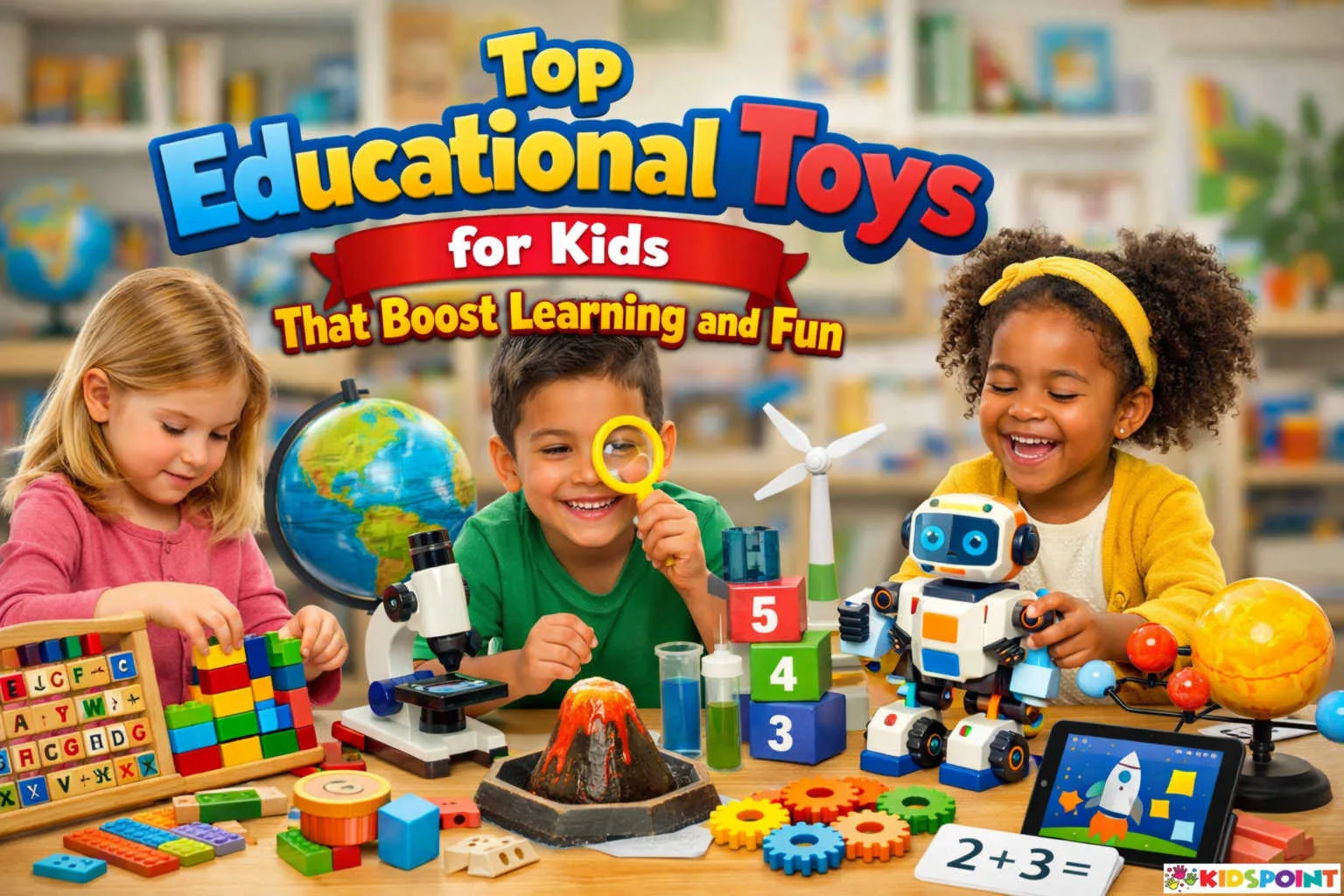
In today’s fast-paced digital world, finding meaningful ways to support children’s development is more important than ever. Educational toys provide a powerful balance between fun and learning, helping children grow intellectually, socially, emotionally, and physically. Rather than passive entertainment, these toys encourage curiosity, creativity, and critical thinking.
At The Kids Point, we believe that play is not just recreation—it is the foundation of learning. Carefully chosen educational toys can transform everyday playtime into an enriching experience that builds lifelong skills.
This comprehensive guide explores the top educational toys for kids across different age groups, highlights their benefits, and provides expert tips for choosing the right options for your child.
Why Educational Toys Are Important for Child Development
Educational toys are designed with purpose. They stimulate different areas of development while keeping children engaged and entertained.
Cognitive Development
Educational toys strengthen memory, concentration, reasoning, and logical thinking. Puzzles, matching games, and building sets challenge children to solve problems and think independently. These activities help lay the groundwork for academic success.
Language and Communication Skills
Toys that involve storytelling, alphabet recognition, or interactive play enhance vocabulary and communication. When children describe what they are building or narrate stories, they practice forming sentences and expressing ideas clearly.
Social and Emotional Growth
Board games, role-play toys, and collaborative building kits teach sharing, patience, cooperation, and empathy. Playing with others also helps children manage emotions and understand teamwork.
Motor Skill Development
Stacking blocks, art kits, and construction sets improve fine motor skills and hand-eye coordination. Gross motor toys such as balance boards and activity centers strengthen physical development.
Creativity and Imagination
Open-ended toys allow children to explore freely. Whether constructing imaginative cities or creating artwork, they learn to think creatively and innovate.
We encourage parents to see educational toys as tools that nurture both the mind and character of a child.
How to Choose the Right Educational Toy
Selecting the best toy requires thoughtful consideration. Here are essential factors to keep in mind:
Age Appropriateness
Choose toys that match your child’s developmental stage. A toy that is too simple may cause boredom, while one that is too complex can create frustration.
Skill Development Goals
Consider what skills you want to support:
- STEM and problem-solving
- Literacy and language
- Fine motor coordination
- Social interaction
- Creative expression
Child’s Interests
Children are more engaged when toys align with their natural interests. A child fascinated by animals may enjoy science kits related to wildlife, while a creative child may prefer art supplies.
Safety and Durability
Always prioritize non-toxic materials, sturdy construction, and smooth edges. High-quality educational toys are long-term investments.
Open-Ended Play Value
The best educational toys can be used in multiple ways. These toys grow with the child and encourage imagination.
Top Educational Toys by Age Group
Educational needs evolve as children grow. Below are the best categories and examples for each developmental stage.
Educational Toys for Infants and Toddlers (0–3 Years)
During the early years, sensory exploration and motor development are the primary focus.
Sensory Play Mats and Activity Centers
These stimulate sight, sound, and touch. They encourage tummy time and early movement, which strengthens muscles and coordination.
Shape Sorters and Stacking Toys
These classic toys teach spatial awareness, color recognition, and problem-solving. Toddlers learn cause and effect as they experiment with fitting shapes.
Musical Toys
Simple instruments introduce rhythm, sound patterns, and auditory awareness while enhancing coordination.
These early learning tools help toddlers explore the world safely and confidently.
Educational Toys for Preschoolers (3–5 Years)
Preschool children are curious and eager to explore letters, numbers, and imaginative play.
Alphabet and Number Blocks
These support early literacy and math skills. Children can spell simple words or count objects while building structures.
Magnetic Building Tiles
Magnetic tiles promote creativity and spatial reasoning. Children experiment with balance, symmetry, and design.
Storytelling Cards and Pretend Play Sets
Story-based toys develop imagination and language skills. Pretend play encourages role understanding and empathy.
We recommend toys that combine hands-on exploration with foundational learning during this stage.
Educational Toys for Early School-Age Children (6–8 Years)
Children at this age enjoy structured challenges and interactive problem-solving.
Beginner Science Kits
Hands-on experiments spark curiosity about the natural world. Simple chemistry or earth science kits introduce observation and reasoning skills.
Educational Board Games
Math-based games, word challenges, and logic puzzles make learning social and enjoyable. They build patience and strategic thinking.
Creative Craft Kits
Art and craft projects develop fine motor skills and self-expression. Completing a project also boosts confidence.
These toys bridge classroom learning with interactive play, reinforcing concepts in enjoyable ways.
Educational Toys for Tweens (9–12 Years)
Older children are ready for deeper intellectual challenges.
Coding and STEM Kits
Introductory robotics and coding toys teach logical sequencing, computational thinking, and problem-solving. These tools prepare children for future technological literacy.
Advanced Construction Sets
Engineering-based kits require planning and precision. They strengthen perseverance and analytical skills.
Strategy and Logic Games
Brainteasers and complex puzzles sharpen reasoning abilities and patience.
At this stage, educational toys help children discover passions and develop independence in learning.
Key Categories of Educational Toys That Promote Learning and Fun
Beyond age groups, certain toy categories consistently deliver meaningful educational benefits.
Building and Construction Toys
Construction toys support spatial awareness, critical thinking, and collaboration. Children learn trial and error as they experiment with balance and design. These toys encourage persistence and resilience.
Art and Creativity Toys
Art supplies, clay modeling sets, and creative kits promote innovation and emotional expression. Creative play enhances problem-solving and confidence.
Science Exploration Toys
Science kits encourage observation, hypothesis formation, and experimentation. They cultivate curiosity and foster a love for discovery.
Literacy and Language Toys
Word puzzles, storytelling games, and reading-based toys strengthen vocabulary and communication skills. Early literacy is crucial for long-term academic success.
Math Learning Toys
Counting tools, number games, and pattern puzzles make math approachable and enjoyable. Children gain confidence with numbers through playful interaction.
Practical Tips for Maximizing Educational Toy Benefits
Educational toys are most effective when paired with meaningful engagement. Here are practical strategies from The Kids Point:
Play Together
Participate in playtime. Ask thoughtful questions and guide exploration without taking control.
Encourage Curiosity
Prompt children with open-ended questions such as, “What do you think will happen next?” or “How can we make this stronger?”
Rotate Toys
Switch toys periodically to maintain interest and prevent overstimulation.
Create Dedicated Learning Spaces
Organize areas for building, reading, or art. Structured spaces encourage focus and responsibility.
Blend Play With Real-Life Learning
Use educational toys to reinforce real-world experiences. Count groceries, spell household objects, or observe nature during outdoor walks.
Celebrate Effort
Praise persistence and creativity rather than perfection. Encouragement builds intrinsic motivation.
Budget-Friendly Educational Toy Ideas
Educational play does not require expensive purchases. Consider these cost-effective options:
- Multi-purpose building blocks
- DIY art materials
- Homemade flashcards
- Printable puzzles
- Household items for counting and sorting
The value of a toy lies in how it is used, not how much it costs.
The Long-Term Impact of Educational Toys
When children engage in purposeful play, they develop:
- Stronger cognitive abilities
- Improved communication skills
- Greater creativity
- Enhanced emotional intelligence
- Confidence in problem-solving
Educational toys cultivate curiosity, discipline, and independence—traits that extend far beyond childhood.
We are committed to helping families choose toys that inspire joy while building essential life skills. The right educational toy does more than entertain—it shapes the future.
Common Questions Parents Ask
What makes a toy educational?
A toy is educational if it promotes skill development such as problem-solving, language growth, creativity, or coordination while keeping children engaged.
How much time should children spend with educational toys?
Even 20 to 30 minutes of focused play daily can provide meaningful benefits.
Are digital educational toys effective?
Yes, when used in moderation. Digital learning tools should complement hands-on play rather than replace it.
Can educational toys replace traditional learning?
Educational toys support learning but should work alongside reading, conversation, and real-world exploration.
Do educational toys need to be expensive?
No. Simple, well-designed toys often provide more developmental value than costly electronic gadgets.
Final Thoughts
Educational toys offer one of the most effective ways to combine learning and enjoyment. Through thoughtful selection and active participation, parents can turn playtime into a powerful growth opportunity.
From sensory toys for toddlers to STEM kits for tweens, each stage of childhood benefits from purposeful play. At The Kids Point, we believe that every child deserves toys that spark imagination, strengthen skills, and nurture curiosity.
When learning feels like fun, children develop a lifelong love of discovery—and that is the greatest gift of all.