

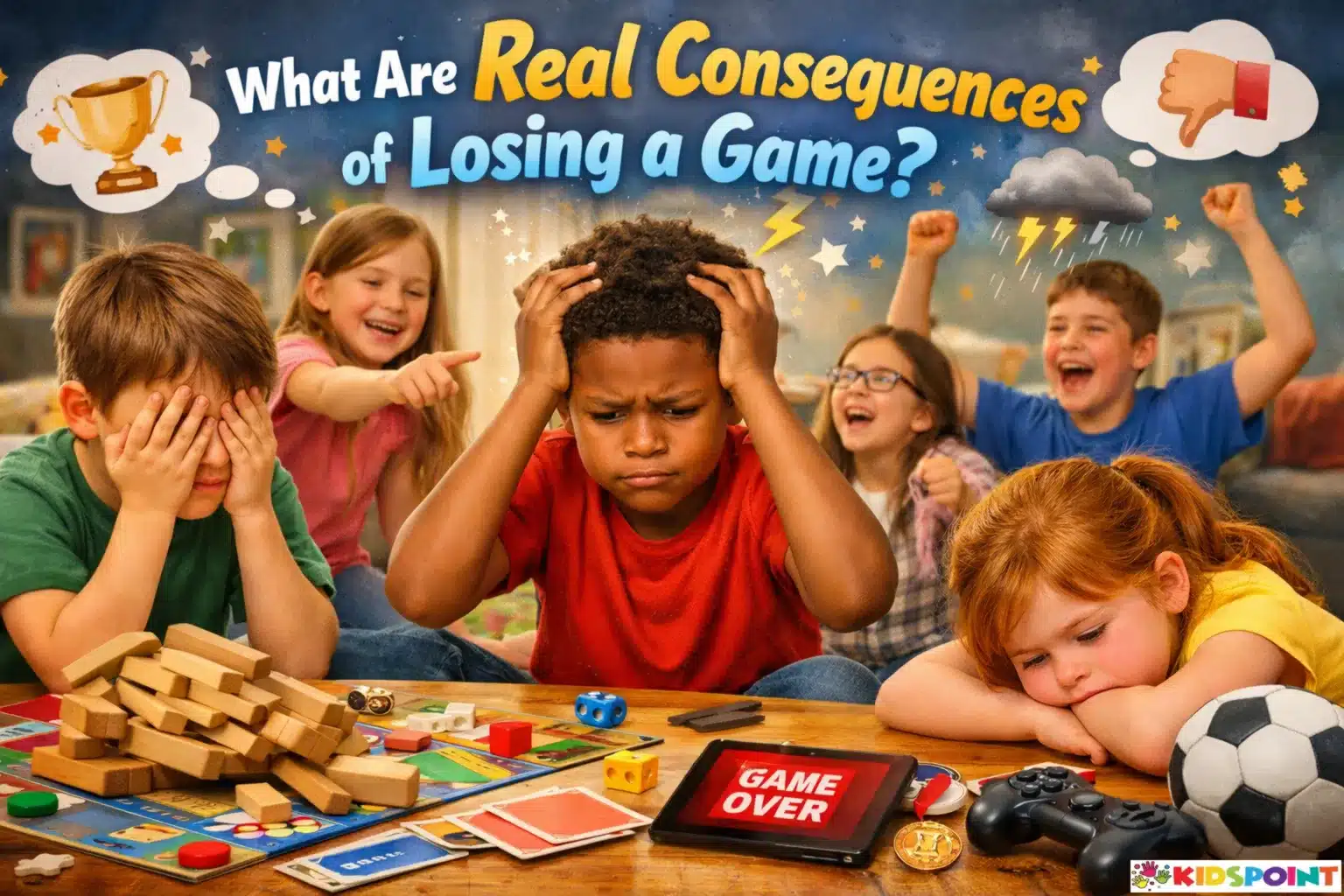
Losing a game can feel disappointing, frustrating, or even upsetting—especially for kids and teens who put their heart into playing. Whether it’s a board game at home, a school sports match, an online video game, or a classroom competition, losing is an experience everyone faces sooner or later. While winning is often celebrated, losing is rarely discussed in depth. Yet, losing can have real consequences—both positive and negative—that shape emotions, behavior, and personal growth.
At The Kids Point, we believe that understanding the real consequences of losing a game helps children, parents, and educators turn setbacks into powerful learning moments. In this article, we’ll explore the emotional, psychological, social, and educational effects of losing, how kids react at different ages, and how adults can guide children toward healthy coping skills.
Understanding What “Losing a Game” Really Means
Losing a game simply means not achieving first place or the desired outcome within a set of rules. However, for kids, losing often carries deeper meaning. It can feel like:
- A loss of pride
- Fear of embarrassment
- A sense of failure
- Disappointment in oneself
Children may not yet have the emotional tools to separate performance from self-worth. That’s why the experience of losing can feel intense.
Emotional Consequences of Losing a Game
Feelings of Disappointment and Sadness
The most immediate consequence of losing is disappointment. Kids may feel sad that their effort didn’t lead to success. Younger children, especially, may cry or withdraw because they haven’t yet learned emotional regulation.
This reaction is normal and healthy when supported properly.
Frustration and Anger
Losing can trigger frustration, especially if a child believes they “should have won.” In competitive environments, this frustration can turn into anger—toward teammates, opponents, or even themselves.
We encourage parents and teachers to see anger after losing as a signal, not bad behavior. It often means the child cared deeply.
Embarrassment and Shame
In group settings, losing can make kids feel embarrassed, especially if peers are watching. Some children may worry about being judged or laughed at.
Without guidance, repeated feelings of shame can discourage kids from trying again.
Psychological Consequences of Losing
Impact on Self-Confidence
Frequent losing without emotional support can lower a child’s confidence. Kids may start saying things like:
- “I’m bad at games.”
- “I never win.”
- “There’s no point in trying.”
However, when losing is framed as part of learning, it can actually strengthen confidence over time.
Fear of Failure
Some kids become so afraid of losing that they avoid games, sports, or competitions altogether. This fear can limit growth and prevent children from exploring new skills.
Helping kids understand that failure is temporary is key.
Development of Resilience
On the positive side, losing helps build resilience—the ability to bounce back after setbacks. Kids who learn to cope with loss develop emotional strength that benefits them throughout life.
We see resilience as one of the greatest hidden rewards of losing.
Social Consequences of Losing a Game
Learning Sportsmanship
Losing teaches children how to behave respectfully even when things don’t go their way. Saying “good game,” congratulating others, and managing emotions are valuable social skills.
Poor sportsmanship, on the other hand, often appears when kids don’t yet know how to handle loss.
Effects on Friendships
Games played with friends can strengthen bonds—but losing can sometimes create tension. Arguments, blame, or teasing may happen if emotions run high.
With guidance, kids learn that friendships matter more than winning.
Peer Perception
Some children worry about how others see them when they lose. This can affect social confidence, especially in school or team sports.
Adults can help by praising effort instead of outcomes.
Educational and Developmental Consequences
Learning Through Mistakes
Losing helps children identify what went wrong and how to improve. This problem-solving mindset is essential for academic success.
Mistakes are not failures—they are feedback.
Growth Mindset Development
A growth mindset means believing skills can improve with practice. Losing encourages kids to:
- Try new strategies
- Practice more
- Ask for help
We emphasize teaching kids that effort matters more than winning.
Building Patience and Self-Control
Games require turn-taking, rule-following, and emotional control. Losing tests these skills and helps children strengthen them over time.
How Different Age Groups React to Losing
Different age groups react to losing in unique ways: toddlers may cry, elementary kids feel frustration but learn sportsmanship, and teens take it personally, needing guidance to build resilience and emotional control.
Toddlers and Preschoolers
Young children often struggle the most with losing. They may cry, throw tantrums, or quit the game. This is developmentally normal.
They need reassurance and simple explanations.
Elementary School Kids
Kids in this age group start understanding rules and fairness. Losing may still hurt, but they can begin learning sportsmanship with adult guidance.
Teens and Adolescents
Teens may take losing very personally, especially in competitive sports or online games. Peer pressure and self-image play a bigger role.
Supportive conversations are essential during this stage.
Consequences of Not Learning How to Lose
Avoiding loss altogether can actually cause long-term problems, such as:
- Poor emotional regulation
- Fear of challenges
- Difficulty handling criticism
- Overreaction to setbacks
Learning to lose gracefully prepares kids for real-life situations like exams, job interviews, and personal challenges.
Positive Life Lessons Gained from Losing
Losing teaches valuable lessons that winning often doesn’t:
- Humility
- Empathy for others
- Persistence
- Emotional awareness
- Respect for rules
We believe these lessons are essential for raising confident and emotionally healthy kids.
How Parents and Teachers Can Help Kids Handle Losing
Normalize Losing
Explain that everyone loses sometimes—even adults and professionals.
Praise Effort, Not Just Results
Focus on how hard the child tried rather than the outcome.
Model Healthy Behavior
Kids copy adult reactions. Showing calm acceptance of loss teaches more than words.
Encourage Reflection
Ask questions like:
- “What did you learn?”
- “What would you try differently next time?”
Turning Loss into Growth Opportunities
Instead of seeing losing as a negative consequence, it can become a growth opportunity when handled correctly. Kids learn perseverance, adaptability, and emotional strength.
Games become tools for life skills—not just competition.
Why Losing Is Important for Emotional Health
Shielding kids from losing may feel protective, but it can limit emotional development. Experiencing loss in a safe environment helps children handle bigger challenges later in life.
We encourage balanced play—where winning is fun, but losing is safe and meaningful.
Common Questions About Losing Games and Child Development
Why is losing a game important for kids?
Losing helps kids build resilience, emotional control, and problem-solving skills that support long-term growth.
Is it normal for kids to get upset after losing?
Yes, feeling sad or frustrated after losing is normal, especially for younger children still learning emotional regulation.
How can parents help kids handle losing better?
Parents can praise effort, normalize losing, and talk calmly about what the child learned from the experience.
Can losing a game improve confidence?
Yes, when supported properly, losing teaches kids that improvement comes from practice, not just winning.
What happens if kids never learn how to lose?
They may struggle with failure, criticism, and emotional control in school, relationships, and adulthood.
Final Thoughts on Losing a Game
So, what are the real consequences of losing a game? The answer is complex. Losing can bring disappointment, frustration, and self-doubt—but it can also build resilience, confidence, empathy, and life skills when supported properly.
At The Kids Point, we believe losing is not something to fear or avoid. It’s a natural and necessary part of growing up. When children learn that losing doesn’t define them, they gain the courage to keep trying, keep learning, and keep growing.