

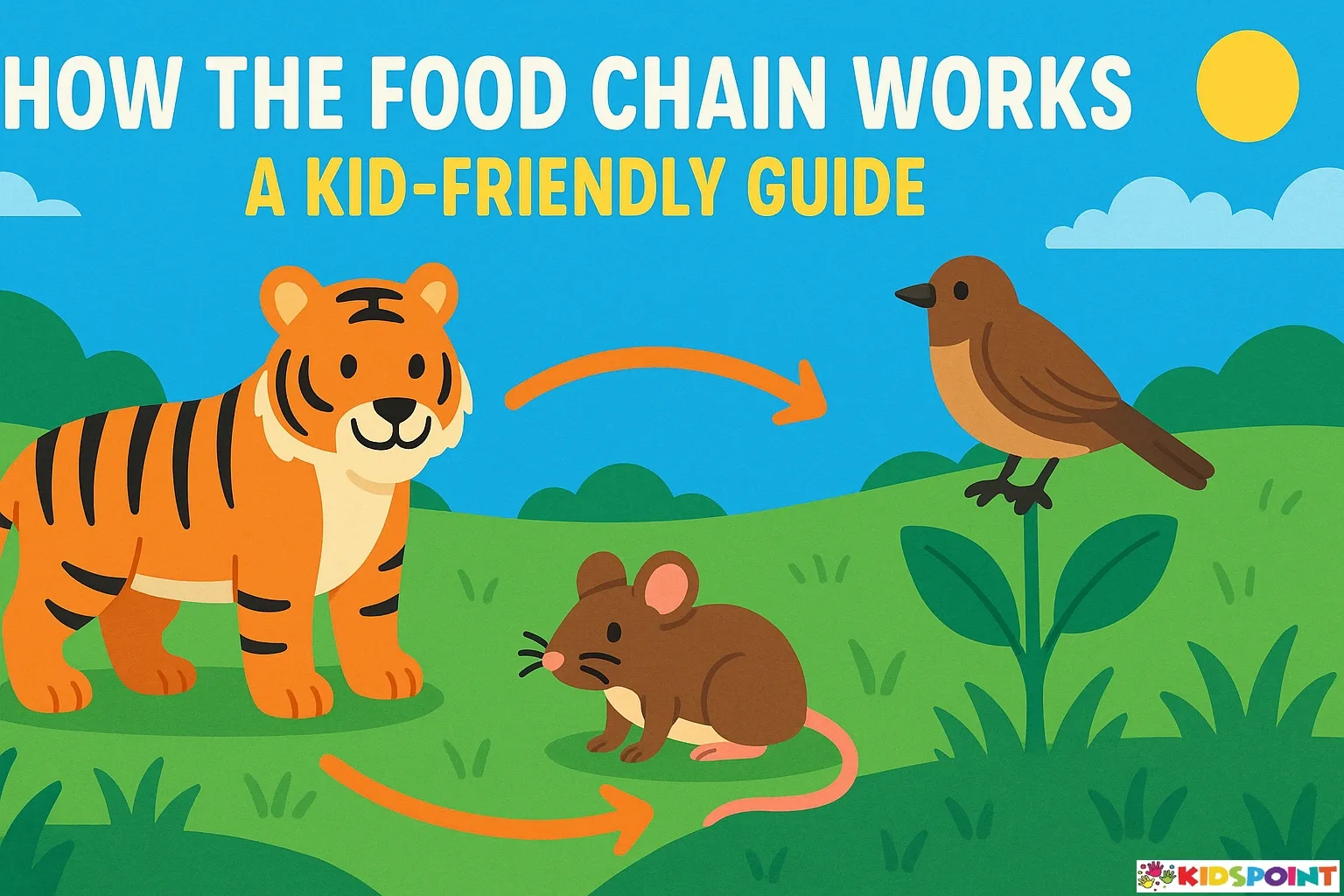
Understanding how living things survive might seem tricky at first, but once you explore the food chain, it all starts to make sense! Every plant, animal, insect, and even tiny microorganism plays a special part in nature’s big circle of life.
In this kid-friendly guide, The Kids Point explains the food chain in simple words so kids can learn how nature stays balanced — and why every creature matters.
What Is a Food Chain?
Imagine a long line where one living thing eats another to survive. That line is called a food chain. It shows how energy moves from plants to animals and eventually back to the earth again.
A food chain always follows this order:
- The Sun (the main source of energy)
- Producers (plants)
- Consumers (animals that eat plants or other animals)
- Decomposers (organisms that break down dead plants and animals)
Together, these steps show how energy flows in nature.
Why the Sun Is the Most Important Part
While the Sun doesn’t eat anything, it plays the most powerful role in the entire food chain. Without sunlight, plants couldn’t grow, animals couldn’t eat, and the food chain simply wouldn’t exist.
Plants use sunlight to make their own food through photosynthesis. This is why plants are considered the first and most important step in the chain.
Meet the Producers: Plants That Make Their Own Food
Producers are living things that create their own food. These include:
- Grass
- Trees
- Flowers
- Algae
- Seaweed
Plants produce food for themselves and become meals for other creatures. Producers are the base of every food chain, whether it’s in a forest, ocean, or even your backyard.
What Are Consumers?
Consumers are animals (including humans!) that cannot make their own food. They must eat plants or other animals to get energy. There are three main types of consumers:
Herbivores (Plant Eaters)
These animals eat only plants. Examples include:
- Cows
- Deer
- Rabbits
- Elephants
- Caterpillars
Herbivores get their strength directly from plants.
Carnivores (Meat Eaters)
Carnivores eat other animals. They are often strong, fast, and excellent hunters. Examples include:
- Lions
- Tigers
- Sharks
- Eagles
- Frogs (small carnivores that eat insects)
Omnivores (Plant + Meat Eaters)
These animals eat both plants and animals. Examples include:
- Humans
- Bears
- Raccoons
- Chickens
- Monkeys
Omnivores can adapt easily because they have flexible diets.
Top of the Chain: Apex Predators
An apex predator sits at the very top of the food chain. These animals have no natural enemies and are powerful hunters. Some examples include:
- Tigers
- Wolves
- Killer whales (orcas)
- Eagles
- Crocodiles
Apex predators help keep the population of other animals balanced.
What About Decomposers?
Decomposers are tiny organisms that break down dead plants and animals. They help return nutrients to the soil, making it rich for plants to grow again.
Examples include:
- Earthworms
- Bacteria
- Fungi (like mushrooms)
- Termites
Without decomposers, the Earth would be covered in dead plants and animals!
How Energy Moves Through the Food Chain
Here’s a simple way to imagine how energy flows:
Sun → Plants → Herbivores → Carnivores → Decomposers
Every time one organism eats another, it gets energy.
For example:
- The Sun helps grass grow.
- A rabbit eats the grass.
- A fox eats the rabbit.
- When the fox dies, decomposers break it down.
- The nutrients go back into the soil for new plants.
This never-ending cycle helps nature stay alive and balanced.
Simple Food Chain Examples for Kids
Forest Food Chain
Sun → Oak Tree → Deer → Tiger → Decomposers
Ocean Food Chain
Sun → Algae → Small Fish → Bigger Fish → Shark → Decomposers
Pond Food Chain
Sun → Water Plants → Insects → Frog → Snake → Decomposers
Grassland Food Chain
Sun → Grass → Grasshopper → Bird → Hawk → Decomposers
These examples help kids visualize how animals and plants depend on each other.
Food Web: A Bigger, Better Version of the Food Chain
While a food chain is simple and straight, nature is a lot more complicated. Many animals eat more than one type of food, which creates a food web.
A food web is like a spider’s web made of many food chains linked together. It shows how different plants and animals are connected.
For example:
- A frog might eat insects.
- A bird might also eat insects.
- A snake might eat frogs and birds.
- A hawk might eat snakes.
Everything is linked! If one species disappears, the whole web can become unbalanced.
Why Each Living Thing Matters
Every organism — big or small — plays an important role:
- Plants give oxygen and food.
- Herbivores keep plants from becoming overgrown.
- Carnivores control herbivore populations.
- Decomposers keep the Earth clean and fertilized.
Even tiny insects help keep nature running smoothly.
What Happens When a Food Chain Is Disturbed?
When part of the food chain is removed, big problems can happen:
If Producers Disappear:
Animals that eat plants would starve.
If Herbivores Disappear:
Plants would grow too much. Carnivores would lose food.
If Carnivores Disappear:
Herbivores might multiply too quickly and destroy plant life.
If Decomposers Disappear:
Nutrients would not return to the soil. Plants would not grow well.
This is why protecting the environment is so important.
Fun Ways for Kids to Learn the Food Chain
We believe learning should always be fun! Here are engaging ways for kids to explore the food chain:
Create a Food Chain Craft
Kids can draw arrows connecting plants to animals.
Play “Who Eats Who?” Game
Lay out cards with animals and foods. Kids match them correctly.
Watch Nature Videos
Documentaries help kids visualize real-life food chains.
Outdoor Exploration
A quick walk outside helps children see plants, insects, and birds in action.
Build a Food Web Using Yarn
Kids sit in a circle holding pictures of animals. Yarn is passed around to show connections.
These hands-on activities help children remember concepts faster.
Food Chain in Different Habitats
Every ecosystem has unique food chains. Here are some simple breakdowns:
Desert Food Chain
Sun → Cactus → Insects → Lizard → Snake → Decomposers
Arctic Food Chain
Sun → Algae → Fish → Seal → Polar Bear → Decomposers
Rainforest Food Chain
Sun → Fruit Trees → Parrots → Jaguars → Decomposers
Ocean Food Chain
Sun → Plankton → Small Fish → Dolphins → Sharks → Decomposers
Kids can see how different climates create different food chains.
Important Food Chain Vocabulary for Kids
Here are key terms children should learn:
- Producers: Living things that make their own food.
- Consumers: Animals that eat plants or other animals.
- Herbivores: Animals that eat only plants.
- Carnivores: Animals that eat only meat.
- Omnivores: Animals that eat both plants and animals.
- Decomposers: Organisms that break down dead material.
- Energy: Power living things need to survive.
- Food Chain: A sequence showing who eats what.
- Food Web: Many food chains linked together.
- Apex Predator: The strongest animal in a food chain.
These definitions help kids build strong science vocabulary.
How Kids Can Protect the Food Chain
Children can play a small but meaningful role in caring for the environment:
- Plant trees and flowers.
- Avoid littering.
- Save water and energy.
- Protect insects and small creatures.
- Learn about endangered animals.
- Reduce pollution by recycling.
Small habits can make a big difference.
Fun Facts About the Food Chain
- Earthworms improve soil so plants grow better.
- Sharks have been top predators for millions of years.
- Some plants, like the Venus flytrap, can eat insects!
- Bees help plants grow by pollinating flowers.
- Without decomposers, the food chain would collapse.
Nature is full of surprises!
Common Questions Kids Ask About the Food Chain
What is a food chain?
A food chain shows how energy moves from plants to animals through eating relationships in nature.
Who are producers in a food chain?
Producers are plants and algae that make their own food using sunlight.
What are consumers?
Consumers are animals that eat plants, animals, or both to get energy.
Why are decomposers important?
Decomposers recycle dead plants and animals, returning nutrients to the soil.
What is the difference between a food chain and a food web?
A food chain is a simple line of who eats whom; a food web links many food chains together.
Final Thoughts
The food chain is one of nature’s most powerful systems. It shows how every living thing — from tiny insects to giant sharks — depends on others for survival. When kids understand the food chain, they learn how nature stays balanced and why caring for the planet is so important.
At The Kids Point, we aim to make learning easy, interactive, and fun for every child. Whether it’s understanding the food chain or exploring other science topics, curiosity is the key to discovering the wonders of our world.