

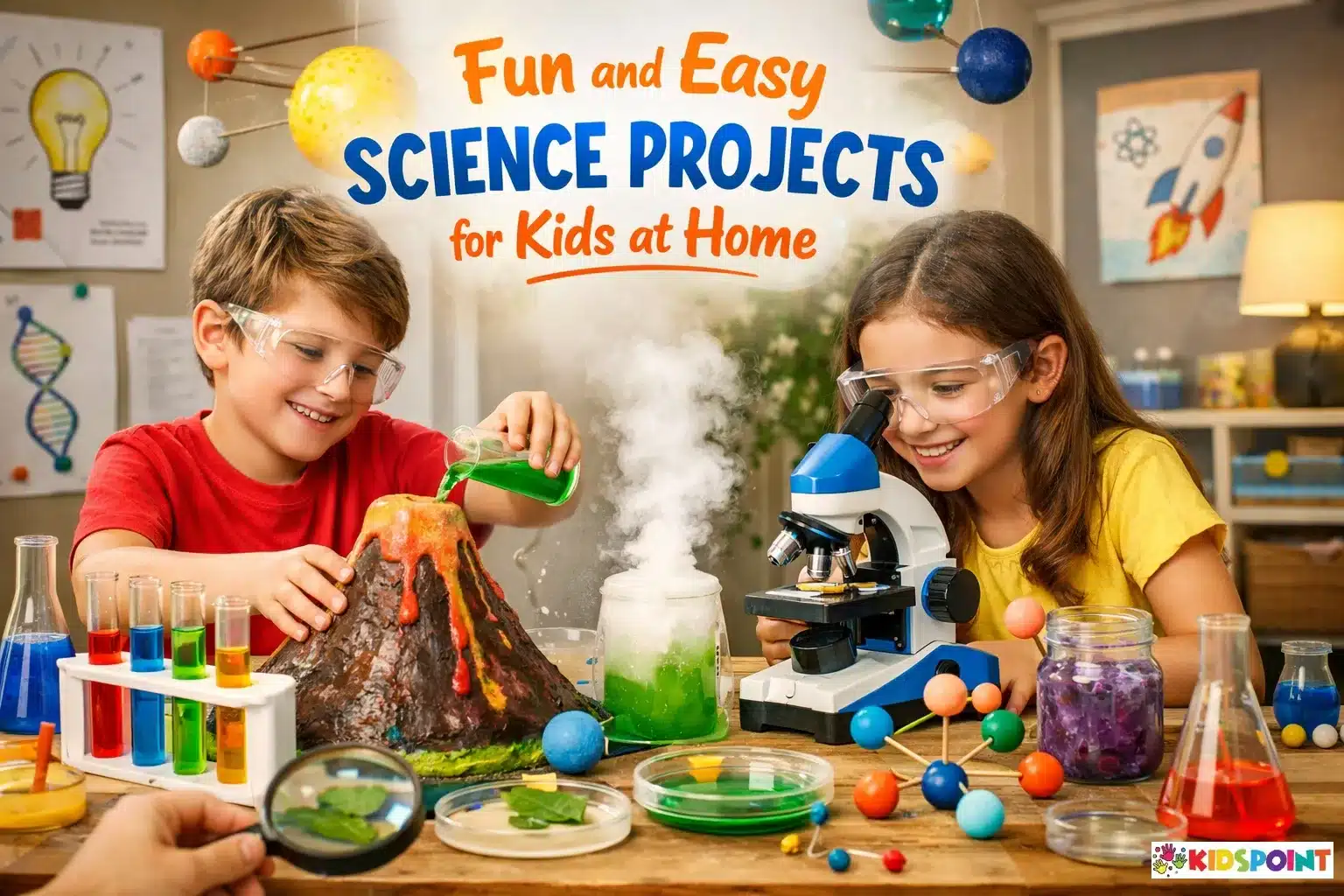
Children are natural scientists. They love asking questions, mixing things together, and watching what happens next. With a little guidance, those everyday curiosities can turn into meaningful learning experiences right at home. At The Kids Point, we believe that science should feel like play, not pressure. That’s why we’ve created this complete guide to fun and easy science projects for kids that parents can do without expensive tools or complicated setups.
Whether your child is a preschooler exploring colors or a middle schooler curious about energy and nature, these activities will keep them engaged, thinking, and smiling.
Why At-Home Science Projects Are So Important
Home science projects do more than teach facts. They help kids develop:
- Observation skills – noticing small changes and patterns
- Critical thinking – making predictions and testing ideas
- Creativity – using imagination to solve problems
- Confidence – feeling proud of their discoveries
- Family bonding – learning together creates lasting memories
We always encourage families to turn their living rooms, kitchens, and balconies into little science labs.
Getting Started: What You Need at Home
You don’t need a lab coat or microscope to start. Most projects use simple items such as:
- Paper cups, bowls, jars
- Food coloring, vinegar, baking soda
- Straws, balloons, rubber bands
- Cardboard, plastic bottles, tape
A small tray, notebook, and towel for cleanup are also helpful.
Science Projects for Preschool and Kindergarten Kids
Color Explosion Milk
Materials: Milk, food coloring, dish soap, cotton swabs
What Kids Learn: Chemical reactions and color movement
How to Do It: Pour milk into a shallow dish, add drops of food coloring, and touch the center with a soap-dipped cotton swab. Watch the colors dance!
Ice Rescue Mission
Materials: Ice cubes, salt, string
What Kids Learn: Freezing and melting
How to Do It: Freeze small toys inside ice cubes. Sprinkle salt and lay string over the ice to lift the toy as it melts.
Bubble Shapes
Materials: Bubble solution, straws, paper plates
What Kids Learn: Surface tension and geometry
How to Do It: Blow bubbles and notice the shapes. Try using different straw shapes to compare bubbles.
Elementary-Level Science Projects
Homemade Lava Lamp
Materials: Clear bottle, oil, water, food coloring, fizzy tablets
What Kids Learn: Density and chemical reactions
How to Do It: Fill the bottle with oil and water, add color, and drop in a tablet. Enjoy the bubbling lava effect.
Shadow Tracing
Materials: Paper, pencil, sunlight
What Kids Learn: Light and shadows
How to Do It: Trace shadows at different times of day and compare how they change.
Egg in a Bottle
Materials: Glass bottle, hard-boiled egg, paper
What Kids Learn: Air pressure
How to Do It: Light paper inside the bottle and place the egg on top. Watch the egg get pulled inside.
Nature Science Projects for Outdoor Fun
Leaf Classification
Materials: Collected leaves, notebook
What Kids Learn: Plant science and observation
How to Do It: Sort leaves by size, shape, and color.
Mini Weather Station
Materials: Notebook, thermometer, jar
What Kids Learn: Weather patterns
How to Do It: Record daily temperature, clouds, and rain.
Soil Layers in a Jar
Materials: Sand, dirt, pebbles, jar
What Kids Learn: Earth science
How to Do It: Layer materials in a jar to show how soil forms.
Physics Projects That Feel Like Magic
Floating Paperclip
Materials: Paperclip, tissue paper, water
What Kids Learn: Surface tension
Balloon Rocket
Materials: Balloon, string, straw
What Kids Learn: Motion and force
Sound Vibrations
Materials: Plastic wrap, rice, bowl
What Kids Learn: Sound waves
Chemistry Projects with Safe Household Items
Baking Soda Volcano
Materials: Baking soda, vinegar, food coloring
What Kids Learn: Acids and bases
Invisible Ink
Materials: Lemon juice, cotton swab, paper
What Kids Learn: Oxidation
Crystal Garden
Materials: Salt, water, jar
What Kids Learn: Evaporation and crystallization
Science Projects for Middle School Kids
Water Filter Challenge
Materials: Plastic bottle, sand, charcoal
What Kids Learn: Environmental science
Solar Cooker
Materials: Pizza box, foil
What Kids Learn: Solar energy
Homemade Compass
Materials: Needle, magnet, water
What Kids Learn: Magnetism
Tips for Parents
- Let kids make mistakes—it’s part of learning
- Ask “What do you think will happen?”
- Keep sessions short and fun
- Display their science journals proudly
FAQs – Fun and Easy Science Projects for Kids at Home
What age group are these science projects for?
These projects are suitable for preschool to middle school children with adult supervision.
Do I need special science kits?
No, most activities use simple household items like salt, paper, bottles, and food coloring.
How long should a science project session last?
About 20–30 minutes is perfect to keep kids interested and focused.
Are these projects safe to do at home?
Yes, all projects are designed to be safe when supervised by an adult.
How does it help parents with science learning?
We provide easy, fun, and educational ideas to make home learning exciting.
Why Kids Love Learning
Our mission is to make education joyful and accessible for every family. These simple science projects turn everyday moments into exciting discoveries and inspire children to see the world as a place full of wonder.
Start today, and watch your child become a confident little scientist—right at home.