

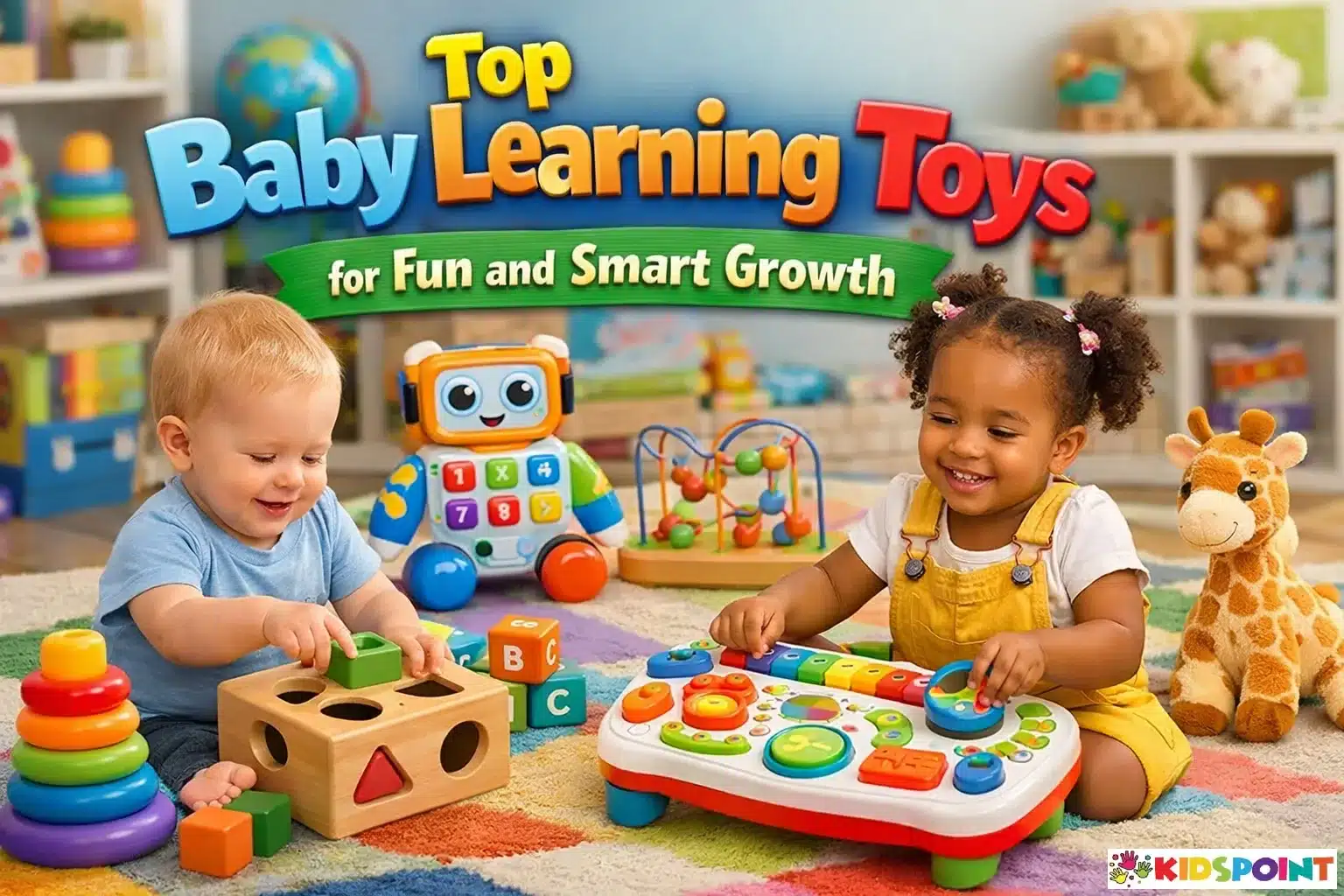
As parents and caregivers, one of the most exciting and essential parts of early childhood is watching a baby learn and grow. From the first smile to the first words and wobbly steps, babies experience rapid development in their cognitive, physical, emotional, and social skills. One powerful way to support this growth is through toys that are not just entertaining — but educational.
At The Kids Point, we believe that play is learning. Investing in high-quality learning toys for babies sets the foundation for future skills, from language acquisition and problem-solving to motor development and creativity. In this comprehensive guide, we’ll explore the top baby learning toys that spark joy while supporting smart and purposeful growth.
Why Baby Learning Toys Matter
Boost Early Brain Development
Babyhood is a period of extraordinary brain growth. Learning toys encourage neural connections that support memory, attention, and learning speed. Sensory play — through textures, sounds, and colors — stimulates multiple senses and helps form strong cognitive pathways.
Support Multi-Skill Growth
Well-designed toys help babies develop multiple skills simultaneously:
- Motor skills — grasping, stacking, movement coordination
- Language skills — sounds, rhythm, word recognition
- Social skills — turn-taking, interaction with caregivers
- Emotional development — confidence, curiosity, self-expression
Encourage Exploration and Curiosity
Babies are natural explorers. Toys that respond to their actions (lights, sounds, movement) teach cause-and-effect — an important cognitive concept.
Strengthen Parent-Baby Bonding
Many learning toys invite participation. When parents play with their babies, they foster emotional security and language development through interaction and shared joy.
How Learning Toys Help in Key Development Areas
Cognitive Development
Toys that involve sorting, problem-solving, matching shapes or colors help babies form early reasoning skills. These toys encourage observation, memory, and attention span.
Language and Communication
Audio toys, books, and singing toys support sound recognition, rhythm, and eventually vocabulary. Clear, repetitive sounds help babies mimic patterns and practice early communication.
Motor Skills and Coordination
From muscles in the hands to gross motor skills like crawling and walking, toys that encourage reaching, grasping, pushing, or pulling build strength and coordination.
Sensory Stimulation
Textures, lights, and sounds help babies feel engaged and curious. These toys strengthen sensory processing — a foundational skill for learning and adapting to new environments.
Choosing the Right Learning Toys for Your Baby
Not all toys are created equal. As you choose toys for your baby, keep these important factors in mind:
Age Appropriateness
Toys should match your baby’s developmental stage. Labels like “0–6 months” or “6–12 months” are helpful guides but observe your baby’s skills too.
Safety First
Ensure toys have no small parts, sharp edges, or toxic materials. Look for BPA-free plastics and non-toxic paints.
Open-Ended Play
Toys that can be used in multiple ways grow with your baby. They spark creativity and longer engagement.
Development Focus
Choose toys that support specific goals — motor skills, language, sensory play, or problem-solving.
Durability
Babies explore through mouths and hands — toys must withstand chewing, banging, and extended use.
Top Baby Learning Toys Categorized by Age
Below are the most effective learning toys for each major stage of baby development. Each toy type supports growth through play and exploration.
0–6 Months: Sensory and Reflex Toys
In the first six months, babies are mastering basic sensory processing and reflexes. Toys at this stage should be high-contrast, soft, and easy to grasp.
High-Contrast Black & White Sensory Books
Babies are attracted to high-contrast patterns early in life. These books strengthen focus and visual tracking skills.
Benefits:
✔ Visual development
✔ Early attention training
✔ Engagement during tummy time
Soft Sensory Blocks
Lightweight soft blocks with varied textures and sounds help babies explore touch and sound.
What to Look For:
✔ Different textures
✔ Rattling or crinkle sounds
✔ Easy-to-grasp shapes
Rattles and Grasping Toys
Handheld toys that make gentle sounds reinforce cause-and-effect and motivate reaching.
Development Focus:
✔ Hand-eye coordination
✔ Early motor control
Tummy Time Mats with Mirrors
Tummy time is important for neck and core strength. Mats with bright patterns and baby-safe mirrors keep babies engaged.
6–12 Months: Motor Skills and Cause-Effect Toys
At this stage, babies are sitting, crawling, and perhaps taking first steps. Toys that encourage movement, exploration, and early problem-solving are invaluable.
Shape Sorters
Classic but essential, shape sorters teach problem-solving and fine motor skills.
How It Helps:
✔ Hand-eye coordination
✔ Shape recognition
✔ Patience and persistence
Stacking Rings
Babies learn size relationships and improve dexterity as they stack and unstack rings.
Tips for Play: Encourage naming colors or counting rings aloud to build language skills.
Push-and-Pull Toys
As babies become more mobile, toys that move with them encourage walking and balance.
Development Benefits:
✔ Gross motor skills
✔ Confidence building
Interactive Sound Toys
Toys that play melodies or respond to button presses teach cause-and-effect and auditory processing.
12–24 Months: Early Problem-Solving and Imagination Toys
By age one, babies love more challenge and imaginative play. At this stage, toys that tell stories, involve role-play, and stimulate thinking are ideal.
Activity Cubes
These multi-function cubes with sliders, knobs, shapes, and sounds keep toddlers engaged for long periods.
Skills Strengthened:
✔ Fine motor precision
✔ Cognitive processing
✔ Patience and exploration
Board Books with Textures and Flaps
Interactive books invite toddlers to touch, feel, and lift flaps — building language, curiosity, and memory.
Simple Puzzles
Large-piece puzzles teach problem-solving and spatial reasoning.
Pretend Play Sets
Toy phones, kitchen sets, and animal figures foster social and imaginative development.
Best Learning Toy Picks by Category
Here’s a curated list of top toys you might consider for your baby’s learning journey. These can easily feature on your product page or recommendations list.
Sensory & Sensory-Motor Toys
- Soft crinkle books
- Textured blocks
- Teething toy sets with varied surfaces
- Light & sound sensory balls
Motor Skill Development
- Rolling toys
- Ride-on walkers
- Pull-along animals
- Soft stacking blocks
Cognitive & Problem-Solving Toys
- Shape sorters
- Nesting cups
- Simple puzzles
- Object permanence boxes
Language & Music Toys
- Baby keyboards
- Interactive storybooks
- Song-playing plush toys
- Talking blocks or letters
Open-Ended Imagination Toys
- Pretend food sets
- Toy telephones
- Animal figurines
- Play tunnels
How to Maximize Learning Through Play
Learning toys are tools — but how you use them matters even more. Here are effective ways to enhance your baby’s experience:
Be an Active Play Partner
Babies learn best with interaction. Narrate what you’re doing:
- “Here’s the blue block!”
- “Can you stack it on top?”
Talking through actions builds language skills and strengthens your connection.
Follow Your Baby’s Lead
If your baby loves music, play more sound toys. If they enjoy stacking blocks, introduce taller stackers. Interest-based play increases engagement and learning.
Create a Learning Play Space
Set up a safe area with toys that are rotated weekly. A changing environment keeps babies curious and eager to explore.
Balance Challenge and Support
Offer toys that are just a bit harder than your baby’s current skill level. Too easy — and they lose interest. Too hard — and they get frustrated. The “just right” challenge builds confidence.
Celebrate Every Win
Clap, cheer, and smile when your baby succeeds. Positive reinforcement makes learning joyful and encourages persistence.
Safety Tips for Baby Learning Toys
Safety is non-negotiable. Follow these essential toy safety guidelines:
Inspect Toys Regularly
Check for loose parts, wear and tear, or sharp edges.
Watch for Choking Hazards
Avoid small detachable pieces. Recommended sizes are usually printed on packaging.
Clean Toys Frequently
Baby toys pick up germs fast. Wash washable toys and wipe others with baby-safe disinfectant.
Keep a Clutter-Free Play Area
Too many toys can overwhelm. Rotate toys to maintain interest and reduce mess.
The Role of Parents in Early Learning
While learning toys are powerful tools, the parent or caregiver’s involvement is the multiplier. A toy alone won’t help a baby learn as much as a child playing with a loving adult.
We emphasize enhancing play with:
- Encouragement
- Conversation
- Shared laughter
- Repetition and routine
Your presence — smiling, narrating, singing, and celebrating — makes every toy a gateway to learning.
Common Questions Parents Ask About Baby Learning Toys
At what age should babies start using learning toys?
Babies can start using simple sensory learning toys from birth, especially soft, high-contrast, and sound-based toys.
Are learning toys really important for baby development?
Yes, learning toys support early brain growth, motor skills, language development, and problem-solving abilities.
How many learning toys does a baby need?
A small, rotating selection of quality toys is better than too many at once to keep babies engaged.
What safety features should I look for in baby toys?
Choose non-toxic materials, no small parts, smooth edges, and age-appropriate labeling.
How can parents help babies learn while playing?
Parents can talk, sing, demonstrate actions, and play together to boost learning and bonding.
Helping Your Baby Thrive Through Playful Learning
Babies grow fast — and every month brings new milestones. Choosing the right learning toys gives them a head start on cognitive, physical, and emotional development in a joyful way. From sensory toys for newborns to problem-solving toys for toddlers, each stage has its own best tools.
The perfect toy is one that encourages curiosity, supports development, and invites joy. At The Kids Point, we want to help parents and caregivers make smart choices that maximize learning through play.