

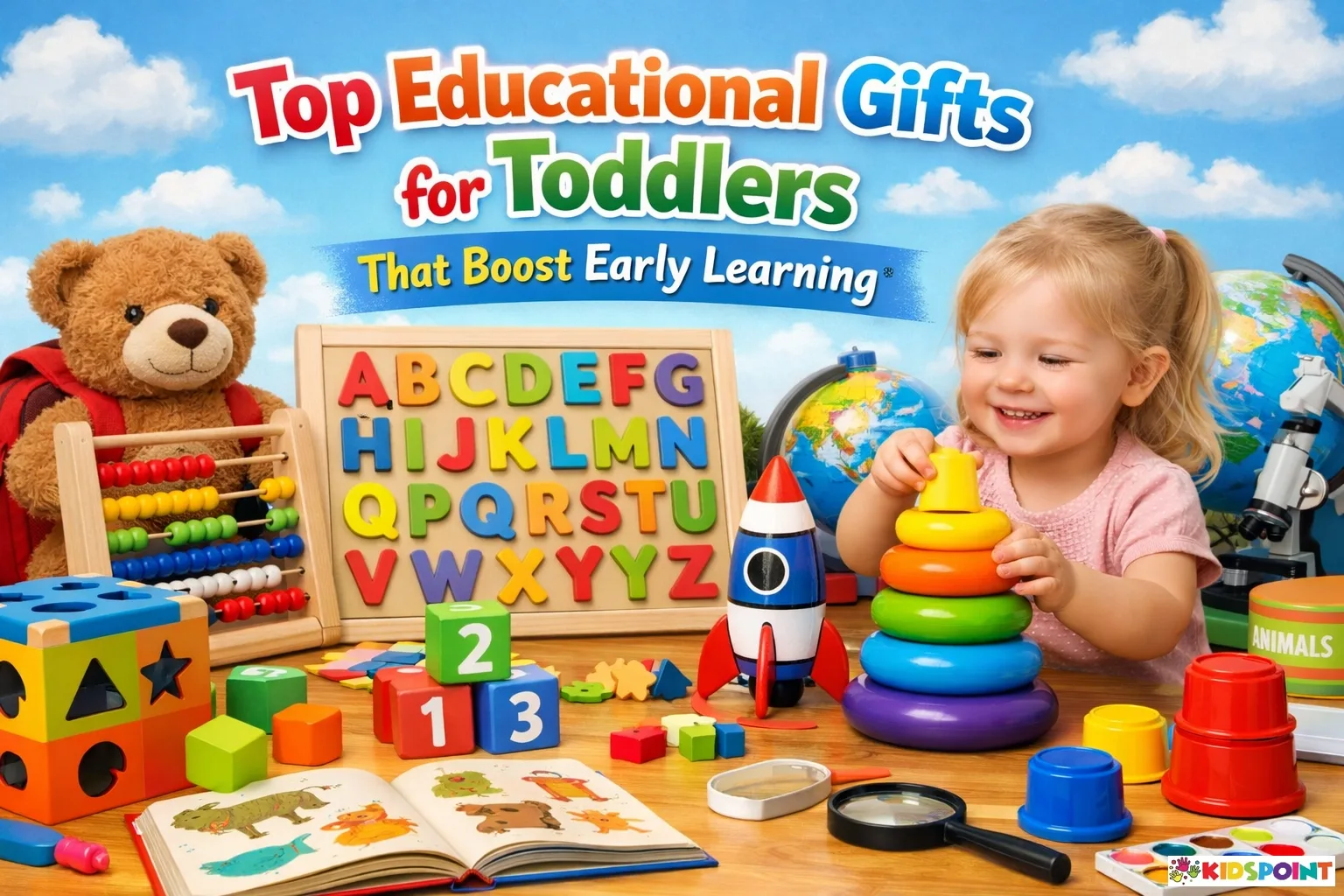
Choosing the perfect gift for a child isn’t just about fun—it’s about fueling curiosity, creativity, and confidence. At The Kids Point, we believe smarter playtime builds brighter futures. Whether you’re shopping for a birthday, holiday, or a simple surprise, selecting age-appropriate gifts ensures children learn while they play.
This complete guide breaks down the best gifts for kids by age, helping parents, relatives, and teachers make thoughtful choices that support development at every stage.
Why Age-Appropriate Gifts Matter
Kids’ brains grow rapidly during their early years. Each stage of childhood comes with unique physical, emotional, and cognitive milestones. A toy that’s perfect for a 6-year-old may frustrate a toddler or bore a teenager.
Smart gifts should:
- Encourage problem-solving
- Build motor skills
- Inspire imagination
- Promote social and emotional learning
- Reduce screen dependency
Gifts for Babies (0–12 Months)
Development Focus:
- Sensory awareness
- Hand-eye coordination
- Auditory recognition
Best Gift Ideas:
| Gift Type | Benefits |
| Soft cloth books | Visual tracking & bonding |
| Musical rattles | Sound recognition |
| Baby gyms & play mats | Tummy time & muscle strength |
| Mirror toys | Self-awareness |
| Teething toys | Soothing gums |
Why they matter: At this stage, babies learn by touching, hearing, and seeing. Simple sensory toys stimulate brain connections and emotional bonding.
Gifts for Toddlers (1–2 Years)
Development Focus:
- Walking & movement
- Early speech
- Cause and effect learning
Best Gift Ideas:
| Gift Type | Benefits |
| Push & pull toys | Balance and coordination |
| Stacking blocks | Fine motor skills |
| Shape sorters | Problem-solving |
| Talking flashcards | Vocabulary building |
| Musical instruments | Rhythm and expression |
Smart Tip: Choose toys with large parts and rounded edges for safety.
Gifts for Preschoolers (3–4 Years)
Development Focus:
- Creativity
- Language development
- Social interaction
Best Gift Ideas:
| Gift Type | Benefits |
| Pretend play kitchens | Imagination |
| Building blocks | Spatial reasoning |
| Puzzle games | Logic skills |
| Art & craft kits | Creativity |
| Picture storybooks | Early reading habits |
Preschoolers love role-playing and storytelling—gifts that allow pretend play are golden.
Gifts for Kindergarten Kids (5–6 Years)
Development Focus:
- Early literacy
- Numbers & patterns
- Group play
Best Gift Ideas:
| Gift Type | Benefits |
| Word board games | Vocabulary |
| LEGO starter kits | Engineering basics |
| Beginner science kits | Curiosity |
| Board games | Turn-taking |
| DIY craft sets | Patience & creativity |
This is the age when curiosity explodes—feed it wisely.
Gifts for Early School Kids (7–8 Years)
Development Focus:
- Logic & reasoning
- Teamwork
- Reading fluency
Best Gift Ideas:
| Gift Type | Benefits |
| Robotics kits | STEM thinking |
| Geography puzzles | World knowledge |
| Chapter books | Reading confidence |
| Strategy games | Planning skills |
| Sports kits | Physical fitness |
Children now enjoy structured challenges and competition.
Gifts for Pre-Teens (9–10 Years)
Development Focus:
- Independence
- Advanced creativity
- Goal setting
Best Gift Ideas:
| Gift Type | Benefits |
| Coding kits | Digital literacy |
| Journals & diaries | Emotional intelligence |
| DIY science experiments | Problem-solving |
| Art sketchbooks | Artistic growth |
| Outdoor adventure sets | Confidence |
We recommend gifts that combine creativity and responsibility at this age.
Gifts for Tweens (11–12 Years)
Development Focus:
- Critical thinking
- Identity exploration
- Social skills
Best Gift Ideas:
| Gift Type | Benefits |
| 3D puzzle models | Engineering logic |
| Creative writing kits | Expression |
| Debate & trivia games | Communication |
| Musical instruments | Discipline |
| DIY electronics kits | Innovation |
Tweens want gifts that feel mature—give them challenges that build confidence.
How to Choose the Perfect Gift
Before buying, ask yourself:
- Does it encourage creativity?
- Is it safe for their age?
- Will it grow with them?
- Can it be played offline?
- Does it teach real-life skills?
Smart Gift Trends in 2026
- Screen-free learning toys
- Montessori-inspired materials
- STEM & robotics kits
- Eco-friendly wooden toys
- Emotion-focused learning games
Parents now value meaningful play more than ever.
Budget-Friendly Gift Ideas
Not all smart gifts are expensive.
| Budget Range | Examples |
| Under $10 | Flashcards, storybooks |
| $10–$25 | Puzzles, craft kits |
| $25–$50 | Science kits, board games |
| $50+ | Robotics sets, tablets for learning |
Benefits of Smarter Playtime
- Improves academic readiness
- Reduces screen addiction
- Builds emotional strength
- Encourages family bonding
- Boosts creativity
We believe smarter toys build smarter kids.
Common Mistakes to Avoid
- Buying toys above skill level
- Ignoring safety labels
- Choosing trend over function
- Overloading with electronics
- Not considering child’s interests
Questions Parents Often Ask
What is the best educational gift for toddlers?
Stacking blocks and shape sorters are ideal.
Are STEM toys good for kids?
Yes, they boost problem-solving and future readiness.
How many toys should a child have?
Fewer meaningful toys are better than too many.
Should toys always be educational?
Fun is also learning—balance both.
What is smarter playtime?
Play that develops skills, not just entertains.
Final Thoughts
Buying gifts isn’t just about making kids smile—it’s about shaping who they become. With the right age-based gifts, children grow smarter, happier, and more confident.
Let The Kids Point be your trusted guide in choosing toys that don’t just entertain—but educate, empower, and inspire.