

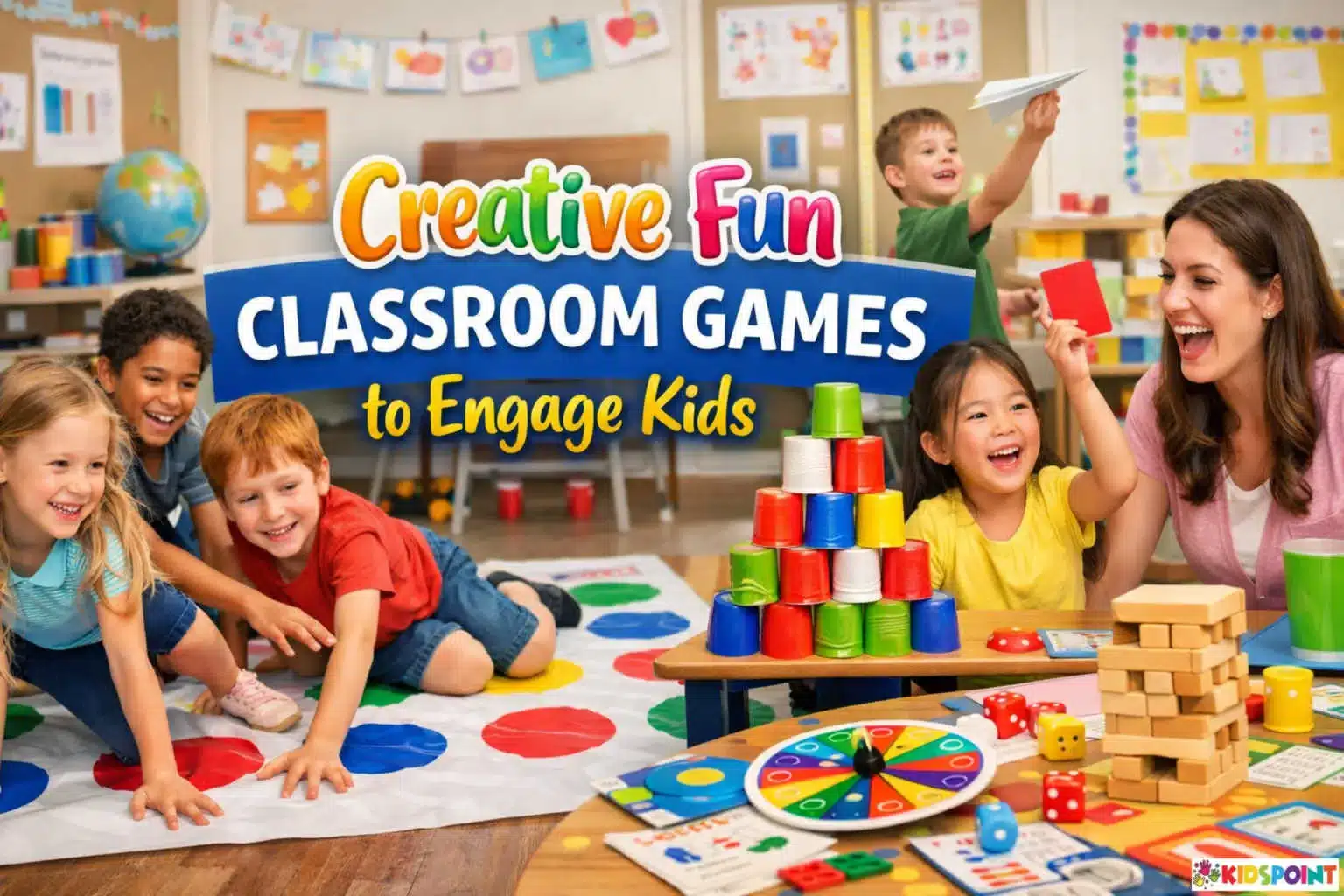
Keeping children focused and excited in the classroom can sometimes feel like a challenge—especially in today’s fast-paced, tech-driven world. However, one powerful and timeless solution continues to stand out: creative classroom games. When thoughtfully designed, games transform lessons into adventures, spark curiosity, and encourage teamwork. At The Kids Point, we believe that learning should feel joyful, interactive, and meaningful.
In this comprehensive guide, we’ll explore a wide variety of creative, fun classroom games that engage kids academically, socially, and emotionally. Whether you’re a teacher, homeschooling parent, or educational coordinator, these ideas will help you energize your classroom and inspire young learners.
Why Classroom Games Matter
Before diving into specific games, it’s important to understand why they’re so effective.
Boost Engagement
Children naturally enjoy play. When learning feels like a game, participation increases dramatically.
Encourage Active Learning: Games require movement, problem-solving, communication, and decision-making.
Strengthen Social Skills: Team-based games help children learn cooperation, leadership, and empathy.
Improve Memory Retention: When students associate lessons with fun experiences, they remember information longer.
Support Different Learning Styles: Visual, auditory, and kinesthetic learners all benefit from game-based learning.
We encourage educators to blend curriculum goals with playful interaction to create balanced, engaging classrooms.
Icebreaker Classroom Games
Icebreakers are perfect for the beginning of the school year or when introducing new students.
Two Truths and a Lie
How to Play:
- Each student says two true facts and one false fact about themselves.
- The class guesses which statement is the lie.
Skills Developed:
- Listening
- Critical thinking
- Social interaction
This game helps students learn about one another in a relaxed way.
Human Bingo
Create bingo cards with statements like:
- “Has a pet dog”
- “Likes math”
- “Can ride a bike”
Students mingle and find classmates who match each statement.
Benefits:
- Encourages communication
- Builds confidence
- Promotes classroom bonding
Academic Learning Games
These games reinforce curriculum concepts in exciting ways.
Vocabulary Charades
Students act out vocabulary words while classmates guess the term.
Subjects:
- Language Arts
- Science
- Social Studies
This is especially helpful for younger students who benefit from movement-based learning.
Math Relay Race
How to Play:
- Divide students into teams.
- Each team solves math problems one at a time.
- The first team to complete all problems correctly wins.
Why It Works:
- Promotes teamwork
- Improves speed and accuracy
- Makes math fun and competitive
Classroom Jeopardy
Inspired by the TV format of Jeopardy!, this game is excellent for review sessions.
Create categories related to:
- History
- Science
- Grammar
- Math
Students choose categories and answer questions for points.
Creative Thinking and Problem-Solving Games
Build the Tallest Tower
Materials:
- Marshmallows
- Toothpicks
- Paper
- Tape
Students work in groups to build the tallest freestanding tower.
Skills Developed:
- Engineering thinking
- Creativity
- Collaboration
Mystery Box Challenge
Place an unknown object inside a box. Students ask yes/no questions to guess what it is.
Learning Focus:
- Logical reasoning
- Question formulation
- Critical thinking
Story Chain Game
One student begins a story with a single sentence. Each student adds one sentence until a complete story is formed.
Benefits:
- Encourages creativity
- Improves listening skills
- Enhances language development
We recommend using story prompts related to lesson themes for even deeper engagement.
Movement-Based Classroom Games
Young learners need physical activity throughout the day.
Four Corners
Label classroom corners with:
- True/False
- Multiple choice answers
- Vocabulary meanings
Teacher asks a question, and students move to the correct corner.
Benefits:
- Active participation
- Instant assessment
- Keeps energy levels balanced
Simon Says
Inspired by the classic format popularized through children’s entertainment such as Sesame Street, this game improves listening skills.
Rules:
- Students only follow instructions that begin with “Simon says.”
- If the instruction does not include “Simon says,” they must remain still.
Scavenger Hunt
Create clue-based hunts related to:
- Science facts
- Vocabulary words
- Historical events
Students move around the classroom solving clues.
Team-Building Games
Escape Room Challenge
Design a classroom “escape room” with puzzles tied to lesson topics.
Example:
- Solve math equations to unlock clues.
- Decode vocabulary words.
- Answer history questions to find a key.
This promotes:
- Collaboration
- Strategic thinking
- Time management
The Silent Line-Up
Students must line up by:
- Birthday
- Alphabetical order
- Height
Without speaking.
This builds:
- Non-verbal communication
- Cooperation
- Patience
Creative Art and Expression Games
Draw and Guess
One student draws a concept on the board while others guess.
Subjects:
- Science diagrams
- Vocabulary
- Geography
Freeze Dance Learning Edition
Play music. When it stops, students must answer a question before moving again.
You can use instrumental children’s tracks from movies like Encanto to keep the atmosphere cheerful.
Brain-Boosting Quick Games
Perfect for short attention spans.
Would You Rather?
Example:
- Would you rather live in space or underwater?
- Would you rather read a book or build something?
Encourages:
- Critical thinking
- Speaking skills
STEM Classroom Games
Egg Drop Challenge
Students design protective containers for eggs dropped from a height.
Skills:
- Engineering
- Testing
- Problem-solving
Coding Without Computers
Teach simple programming logic using directional commands.
Example:
- One student gives instructions.
- Another student follows them to reach a goal location.
This introduces:
- Algorithms
- Logical sequencing
- Computational thinking
Literacy-Based Games
Reading Detectives
Students search a text for:
- Main ideas
- Clues
- Vocabulary meanings
Word Scramble Race
Teams race to unscramble vocabulary words.
Social-Emotional Learning Games
Emotion Charades
Students act out emotions while classmates guess.
This improves:
- Emotional awareness
- Empathy
- Communication
Compliment Circle
Students sit in a circle and give compliments to one another.
Encourages:
- Kindness
- Positive classroom culture
- Confidence
We emphasize games that support emotional growth alongside academic development.
Quiet Classroom Games
Perfect for rainy days or calmer periods.
Puzzle Stations
Set up:
- Logic puzzles
- Word puzzles
- Math puzzles
Rotate students through stations.
Memory Match
Create cards with:
- Vocabulary pairs
- Math problems and answers
- Historical events and dates
Students flip cards to find matches.
Outdoor Classroom Games
Nature Bingo
Students search for:
- Leaves
- Rocks
- Insects
- Colors
Relay Learning Race
Students answer academic questions between physical relay segments.
Digital-Free Alternatives to Screen Time
In an age dominated by devices, hands-on classroom games offer refreshing alternatives.
We advocate for:
- Physical interaction
- Creative collaboration
- Real-world problem-solving
These experiences build deeper cognitive connections compared to passive screen time.
Tips for Successfully Implementing Classroom Games
Set Clear Rules
Students should understand expectations before starting.
Keep Instructions Simple
Confusing rules reduce engagement.
Align With Learning Goals
Every game should reinforce curriculum objectives.
Balance Competition
Ensure healthy participation without excessive pressure.
Reflect After the Game
Ask students:
- What did you learn?
- What worked well?
- How can we improve?
Reflection deepens understanding.
How Games Support Different Age Groups
Preschool
- Focus on movement and simple rules.
- Use songs and repetition.
Elementary
- Introduce team challenges.
- Incorporate academic subjects.
Middle School
- Add strategy and problem-solving.
- Encourage leadership roles.
Games evolve as children grow, ensuring long-term engagement.
Creating Your Own Classroom Games
You don’t always need complex materials. Ask yourself:
- What is my lesson objective?
- Can I turn this into a challenge?
- How can students collaborate?
Simple adjustments can transform worksheets into interactive missions.
Common Mistakes to Avoid
- Overcomplicating rules
- Ignoring classroom management
- Letting competition overshadow learning
- Not adapting for different learning needs
Remember: the goal is engagement and education, not just entertainment.
Encouraging Inclusive Play
Ensure games:
- Include shy students
- Accommodate different abilities
- Promote respect
Offer varied participation roles such as:
- Timekeeper
- Scorekeeper
- Leader
- Observer
Inclusivity ensures every child benefits.
FAQs
Why are classroom games important for kids?
Classroom games increase engagement, improve memory retention, and help children develop social and problem-solving skills.
How often should teachers use games in the classroom?
Games can be used daily in short sessions or weekly for review activities, depending on lesson goals and student needs.
Can classroom games support academic learning?
Yes, well-designed games reinforce subjects like math, reading, science, and social studies while keeping learning fun.
Are classroom games suitable for all age groups?
Absolutely. Games can be adapted for preschool, elementary, and middle school students with age-appropriate rules and challenges.
How can teachers manage classroom behavior during games?
Set clear rules, assign roles, maintain structure, and balance competition to ensure positive participation.
Final Thoughts: Turning Learning Into Adventure
Creative classroom games are more than just time-fillers—they are powerful educational tools that transform learning into meaningful experiences. When children laugh, move, solve problems, and collaborate, they build lifelong skills.
At The Kids Point, we believe that joyful learning environments nurture confident, curious, and capable students. By integrating creative, fun classroom games into daily lessons, educators can inspire students to love learning—not just complete assignments.
With thoughtful planning and a playful mindset, every classroom can become a space where imagination meets education, and every child feels excited to participate.