

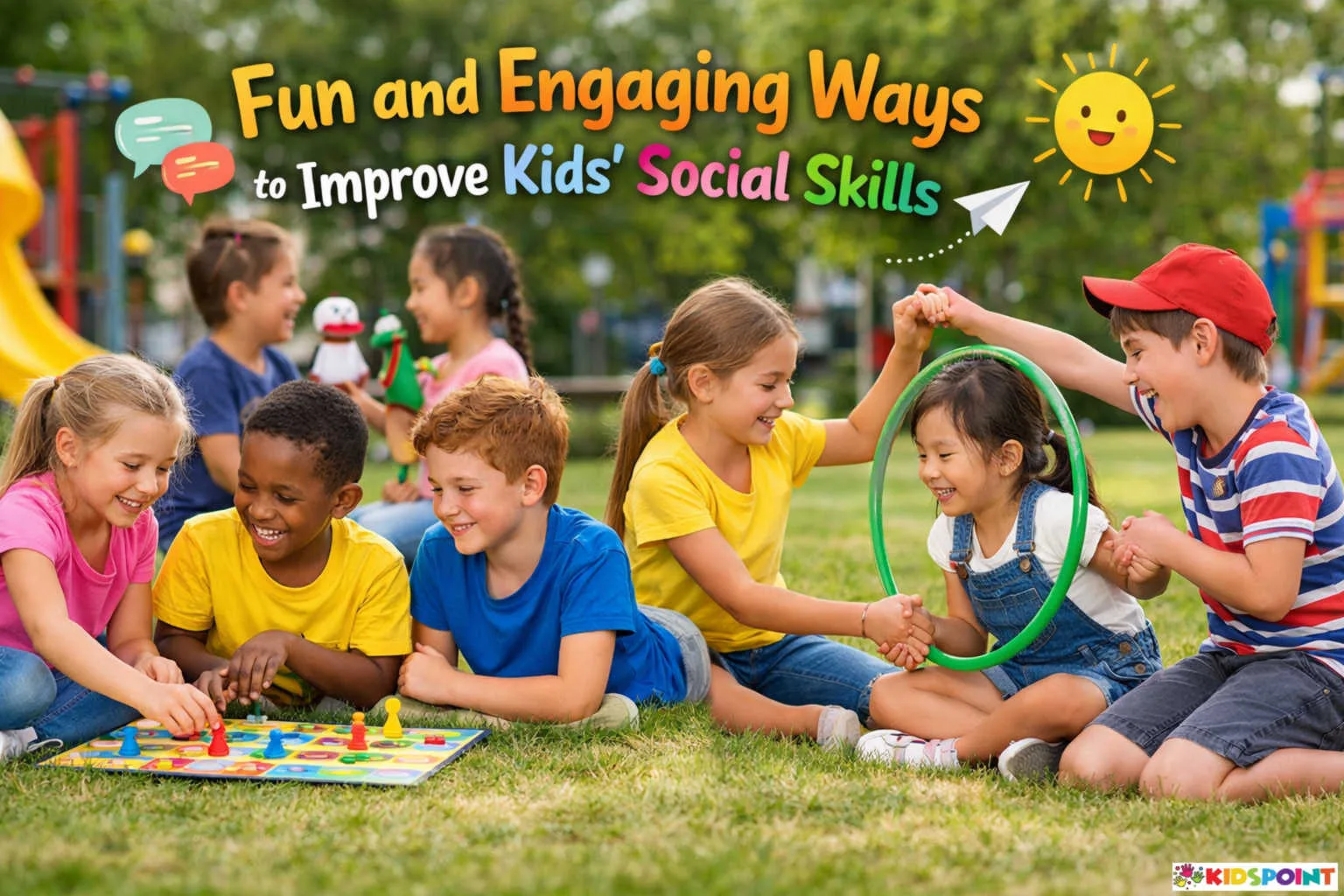
Helping children develop strong social skills is one of the most important responsibilities for parents, caregivers, and educators. Social skills influence how kids communicate, build friendships, express emotions, and navigate everyday interactions. In today’s fast-paced and increasingly digital world, nurturing these skills requires intentional effort and creative strategies.
At The Kids Point, we believe that learning social skills should be fun, interactive, and naturally woven into everyday life. This guide explores practical, engaging, and effective ways to help children grow socially while enjoying the process.
Why Social Skills Matter for Kids
Social skills are more than just saying “please” and “thank you.” They form the foundation for emotional intelligence, empathy, and healthy relationships.
Key Benefits of Strong Social Skills:
- Better communication abilities
- Improved self-confidence
- Stronger friendships
- Enhanced problem-solving skills
- Reduced behavioral issues
- Academic success through collaboration
Children who develop social skills early are more likely to thrive both personally and professionally later in life.
Understanding Core Social Skills for Kids
Before diving into activities, it’s helpful to understand the essential social skills children need to learn:
- Sharing and taking turns
- Listening actively
- Making eye contact
- Understanding emotions
- Using polite language
- Resolving conflicts peacefully
- Cooperating in group settings
Each child develops these skills at their own pace, so patience and consistency are key.
Role-Playing Real-Life Situations
Role-playing is one of the most effective ways to teach kids how to handle social interactions.
How to Do It:
Create simple scenarios such as:
- Meeting a new friend
- Asking to join a game
- Apologizing after a mistake
- Sharing toys
Let your child act out both sides of the situation. This helps them understand different perspectives and builds confidence.
Why It Works:
Kids learn best through practice. Role-playing gives them a safe space to make mistakes and learn appropriate responses.
Encourage Group Play Activities
Group play is essential for developing cooperation and communication.
Fun Group Activities:
- Board games
- Team sports
- Building projects (like LEGO)
- Outdoor games like tag or hide-and-seek
Skills Developed:
- Teamwork
- Patience
- Turn-taking
- Problem-solving
We recommend mixing structured and unstructured play to give children a balanced social experience.
Teach Emotional Awareness
Understanding emotions—both their own and others’—is crucial for social success.
Simple Ways to Teach Emotions:
- Use emotion flashcards
- Ask questions like, “How do you think they feel?”
- Discuss characters’ feelings in stories
Activity Idea:
Create a “feelings chart” where kids can point to how they feel each day.
Outcome:
Children become more empathetic and better at responding appropriately in social situations.
Practice Active Listening Skills
Listening is just as important as speaking.
How to Teach Active Listening:
- Encourage eye contact
- Teach kids not to interrupt
- Ask them to repeat what someone said
Fun Game:
Play the “Telephone Game,” where a message is whispered from one person to another.
Benefit:
Kids learn to focus, understand, and respond thoughtfully.
Model Positive Behavior
Children learn by observing adults.
What to Model:
- Politeness and respect
- Calm conflict resolution
- Kindness and empathy
Example:
If you handle disagreements calmly, your child is more likely to do the same.
Tip:
Narrate your actions occasionally:
“I’m listening carefully because it’s important to understand others.”
Use Storytelling to Teach Social Lessons
Stories are powerful tools for teaching social behavior.
What to Do:
- Read books with social themes
- Pause and discuss characters’ actions
- Ask open-ended questions
Example Questions:
- “Was that a kind choice?”
- “What could they do differently?”
Why It Helps:
Stories make abstract concepts relatable and memorable.
Organize Playdates
Playdates provide real-life opportunities to practice social skills.
Tips for Successful Playdates:
- Start with short durations
- Choose familiar environments
- Prepare your child beforehand
After the Playdate:
Discuss what went well and what could improve.
Outcome:
Kids gain confidence in interacting with peers.
Teach Conflict Resolution Skills
Conflicts are a natural part of social interaction.
Steps to Teach:
- Stay calm
- Listen to both sides
- Express feelings using words
- Find a solution together
Practice Activity:
Use puppets or toys to act out conflicts and solutions.
Result:
Children learn to handle disagreements respectfully.
Encourage Cooperative Games
Cooperative games focus on teamwork rather than competition.
Examples:
- Building something together
- Puzzle-solving as a group
- Treasure hunts
Benefits:
- Encourages collaboration
- Reduces stress of winning/losing
- Builds stronger connections
Limit Screen Time and Promote Face-to-Face Interaction
While technology has its benefits, too much screen time can hinder social development.
What to Do Instead:
- Encourage outdoor play
- Promote family conversations
- Engage in interactive games
Tip:
Set specific “no-screen” times, like during meals.
Teach Manners in a Fun Way
Good manners are essential social tools.
Make It Fun:
- Turn it into a game (e.g., “politeness challenge”)
- Reward positive behavior
- Practice during family meals
Key Manners to Teach:
- Saying “please” and “thank you”
- Waiting for their turn
- Respecting personal space
Encourage Participation in Group Activities
Joining clubs or classes helps children interact with diverse groups.
Examples:
- Sports teams
- Art classes
- Music groups
- Drama clubs
Skills Gained:
- Confidence
- Communication
- Adaptability
Use Positive Reinforcement
Recognizing good behavior encourages kids to repeat it.
How to Reinforce:
- Praise specific actions: “Great job sharing your toys!”
- Use reward charts
- Celebrate small achievements
Important Note:
Focus on effort, not just results.
Teach Empathy Through Everyday Situations
Empathy is the ability to understand and share others’ feelings.
Everyday Opportunities:
- Helping a sibling
- Comforting a friend
- Sharing with others
Ask Questions Like:
- “How would you feel in that situation?”
Outcome:
Children become more compassionate and socially aware.
Create a Safe and Supportive Environment
Children learn best when they feel safe and supported.
What This Means:
- Encouraging open communication
- Avoiding harsh criticism
- Being patient with mistakes
Tip:
Let your child know it’s okay to feel shy or make errors.
Practice Social Skills Daily
Consistency is key to mastering social skills.
Daily Opportunities:
- Greeting people
- Having conversations at dinner
- Playing with siblings
Small Actions Matter:
Even simple interactions build confidence over time.
Encourage Independence
Allow kids to solve minor social challenges on their own.
Examples:
- Ordering food at a restaurant
- Asking a question in class
- Introducing themselves
Benefit:
Builds confidence and self-reliance.
Teach Body Language and Non-Verbal Cues
Communication isn’t just verbal.
What to Teach:
- Facial expressions
- Eye contact
- Personal space
- Tone of voice
Activity Idea:
Play a “guess the emotion” game using facial expressions.
Use Games to Build Social Skills
Games naturally encourage interaction.
Great Options:
- Charades
- Simon Says
- Board games
Skills Developed:
- Listening
- Turn-taking
- Following rules
Be Patient and Consistent
Every child develops differently.
Important Reminders:
- Avoid comparisons
- Celebrate progress
- Provide gentle guidance
Long-Term Impact:
Consistent effort leads to lasting social confidence.
Common Challenges and How to Handle Them
Shyness
- Encourage small interactions
- Avoid forcing participation
Aggression
- Teach emotional regulation
- Model calm behavior
Difficulty Sharing
- Practice turn-taking games
- Use timers to manage turns
Tips for Parents and Teachers
- Be a role model
- Provide consistent guidance
- Create opportunities for interaction
- Use positive reinforcement
- Stay patient and supportive
We emphasize that social skills are learned gradually through experience, guidance, and encouragement.
Frequently Asked Questions (FAQs)
At what age should kids start learning social skills?
Children begin developing social skills as early as infancy, but structured learning typically starts in toddler and preschool years.
How can I help a shy child improve social skills?
Encourage small, low-pressure interactions, use role-playing, and gradually introduce group activities to build confidence.
What are the most important social skills for kids?
Key skills include communication, sharing, empathy, listening, and conflict resolution.
How long does it take for kids to develop strong social skills?
It’s an ongoing process that develops over years with consistent practice and guidance.
Can games really help improve social skills?
Yes, interactive games teach teamwork, turn-taking, communication, and problem-solving in a fun and engaging way.
Final Thoughts
Helping kids develop social skills doesn’t have to be complicated or stressful. With fun activities, consistent practice, and a supportive environment, children can grow into confident, empathetic, and socially capable individuals.
By incorporating these engaging strategies into daily life, parents and educators can make social learning enjoyable and effective. Remember, every small step contributes to a child’s overall development.
At The Kids Point, we are committed to providing valuable resources that support children’s growth in every aspect of life—including the essential skill of connecting with others.